Upcycling old t-shirts into kitchen cleaning rags is a great way to reduce waste and promote sustainability. You’ll save money while using soft, absorbent materials that enhance your cleaning efficiency. Choose cotton or cotton blends for the best results, and take a few quick steps to transform your tees into functional rags. You’ll also discover creative storage solutions and maintenance tips to keep your rags fresh and effective. Learn more about the benefits and process ahead!
Why Upcycle Old T-Shirts Into Cleaning Rags?
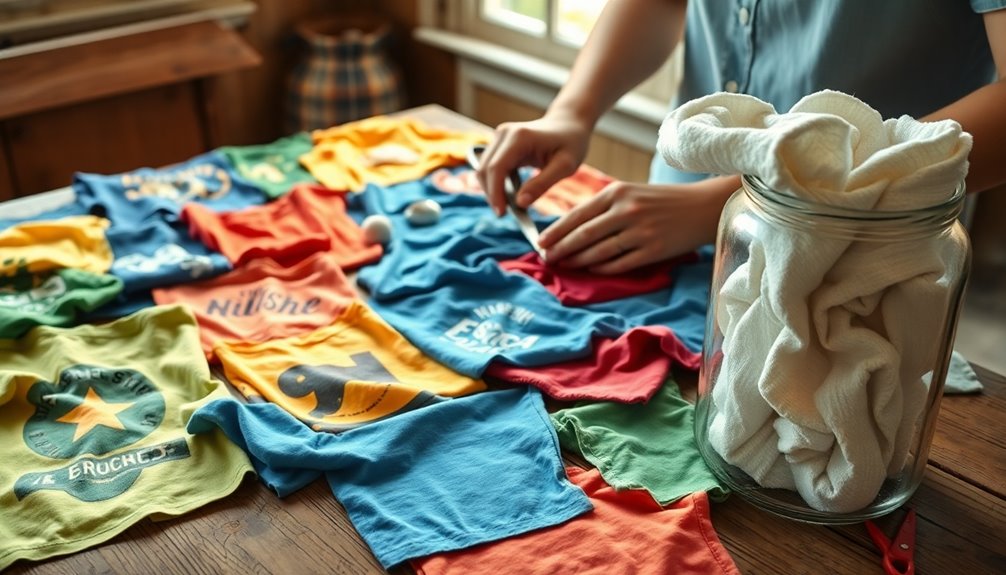
When you consider the countless old t-shirts lying around your home, it’s clear that upcycling them into cleaning rags not only benefits the environment but also adds practicality to your cleaning routine.
By embracing t-shirt sustainability, you reduce textile waste and promote a greener lifestyle. Instead of tossing those worn-out shirts, you can transform them into effective cleaning tools that help keep your kitchen organized.
Soft yet durable, these rags are perfect for wiping surfaces, soaking up spills, or even polishing. Plus, you can easily customize their sizes to fit your specific needs. This simple act of repurposing not only enhances your cleaning efficiency but also contributes to a more sustainable future, as it aligns with the principles of reducing reliance on single-use products.
Benefits of Using Upcycled T-Shirt Rags
Not only do upcycled t-shirt rags save you money, but they also offer a range of benefits that enhance your cleaning experience.
By repurposing old shirts, you contribute to a positive sustainability impact, reducing textile waste in landfills. Each rag you use helps minimize your environmental footprint while promoting a more eco-friendly lifestyle.
Additionally, since these rags are often made from soft, absorbent cotton fabric, they effectively tackle spills and dust without scratching surfaces.
You’ll enjoy the cost savings of not having to buy disposable paper towels or commercial cleaning cloths. Moreover, eco-friendly alternatives like upcycled rags help in reducing waste, aligning with sustainable cleaning practices.
With each use, you’re making a conscious choice that benefits both your wallet and the planet, making cleaning a more responsible and satisfying task.
How to Choose the Right T-Shirts for Upcycling
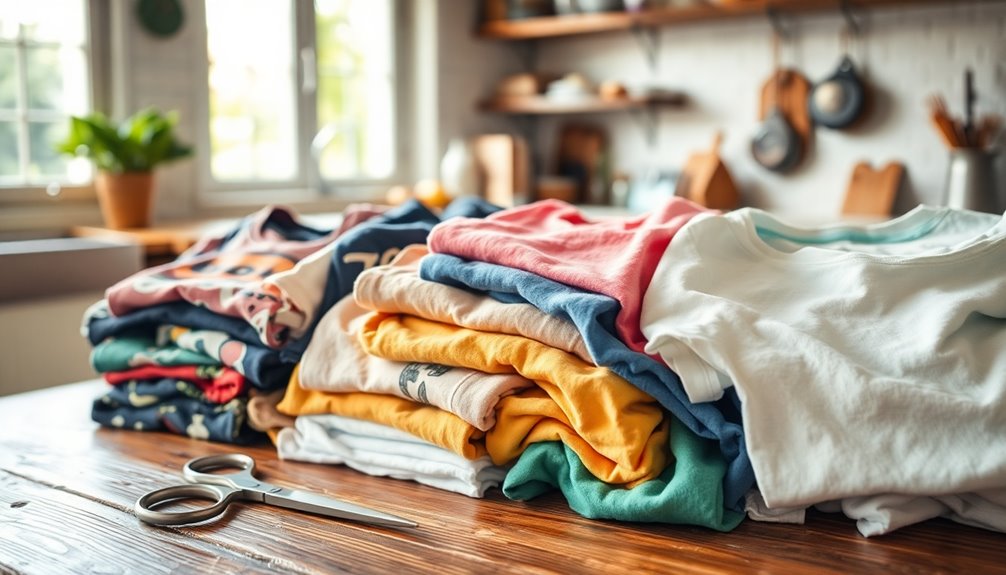
When choosing T-shirts for upcycling, consider the fabric material, as it affects durability and absorbency.
Pay attention to the age and wear patterns, since older shirts might’ve softer textures but could also be more worn out.
Finally, think about the colors and prints; they can add a fun touch to your cleaning rags while still being practical. Additionally, opting for shirts made from natural fibers can enhance eco-friendly cleaning practices, making your cleaning routine more sustainable.
Fabric Material Considerations
Selecting the right t-shirts for upcycling into cleaning rags can greatly influence their effectiveness, so it’s essential to take into account the fabric material.
Look for fabric types that offer high absorbency levels, like cotton or cotton blends, as they soak up spills and messes efficiently. Avoid synthetic materials, such as polyester, which often lack the absorbency you need.
Consider the thickness of the fabric, too; thicker t-shirts tend to be more durable and can withstand tougher cleaning tasks.
When choosing, think about the specific cleaning jobs you’ll tackle. A mix of different fabric types might even give you a versatile set of rags for various surfaces and cleaning needs.
Happy upcycling!
Age and Wear Patterns
While you might be tempted to upcycle any old t-shirt, paying attention to age and wear patterns can greatly enhance your cleaning rags’ performance.
Conducting a wear assessment helps you identify the best candidates for upcycling. Here are four factors to take into account:
- Fabric Durability: Look for thicker fabrics that can withstand scrubbing and cleaning.
- Stains and Damage: Avoid t-shirts with significant stains or tears unless you’re sure they won’t hinder performance.
- Stretch and Elasticity: Choose shirts that maintain their shape well, as this indicates better durability.
- Age: Older t-shirts may have softened over time, making them more absorbent, which is perfect for cleaning tasks.
Color and Print Choices
Considering the age and wear patterns of your t-shirts is just the beginning; color and print choices also play a significant role in upcycling them into effective cleaning rags.
When selecting t-shirts, think about the color combinations that can enhance your cleaning tasks. Bright colors or bold prints can help you easily identify rags for specific tasks, like scrubbing or drying.
Avoid prints that may fade or bleed, as this could transfer onto surfaces. Instead, opt for solid colors or simple print patterns that won’t interfere with your cleaning.
Step-By-Step Guide to Making Cleaning Rags From T-Shirts
To make effective cleaning rags from your old t-shirts, you’ll want to start by choosing the right fabric.
Next, you’ll need some cutting techniques to guarantee you get the best size and shape for your rags.
Finally, keep in mind a few care and maintenance tips to help your new cleaning rags last longer, including regular laundering to prevent cross-contamination.
Choosing Suitable T-Shirts
Choosing the right t-shirts is essential for creating effective cleaning rags. To help you with your t-shirt selection criteria, consider the following factors:
- Fabric Type: Look for 100% cotton or cotton blends, as they absorb liquids well.
- Condition: Check for any holes or heavy wear; choose t-shirts that are still intact.
- Weight: Opt for heavier fabrics; they’re more durable and withstand scrubbing.
- Color: Darker colors can hide stains but may not be as effective for visible cleaning tasks.
Cutting Techniques Explained
Once you’ve selected your t-shirts, it’s time to transform them into cleaning rags using simple cutting techniques.
Start by laying the shirt flat on a clean surface. Use sharp scissors for precision and choose your cutting method—whether you prefer straight cuts or more creative fabric shapes.
For basic rags, cut the shirt into squares or rectangles, about 10×10 inches. If you want some variety, try cutting strips or circles for different uses.
Remember to remove any seams or tags, as they can scratch surfaces.
Once you’ve cut your fabric shapes, you’re ready to tackle your cleaning tasks with your new eco-friendly rags. Enjoy the satisfaction of upcycling while keeping your home clean!
Care and Maintenance Tips
While you’ve successfully made your cleaning rags from t-shirts, proper care and maintenance will guarantee they last longer and perform effectively.
Follow these tips for ideal fabric care and rag maintenance:
- Wash regularly: Clean your rags after use to prevent grime buildup. Use warm water and mild detergent.
- Avoid fabric softeners: They can reduce absorbency. Stick to plain detergent for best results.
- Air dry: If possible, hang your rags to dry instead of using a dryer. This helps maintain their shape and texture.
- Store properly: Keep your rags in a dry place, away from moisture. This prevents mildew and odors.
Creative Ideas for Using Your New Cleaning Rags
Although upcycling your old t-shirts into cleaning rags is a sustainable choice, it also opens up a world of creative possibilities for tackling household chores.
You can use these rags not just for cleaning but also for organizing. Consider creating a decorative display by hanging a few colorful rags in your kitchen. Use them as a vibrant backdrop for your utensils or spices, adding a pop of color to your space.
Additionally, you can craft a creative storage solution by repurposing a small basket to hold your rags, keeping them accessible while adding charm to your countertops. By using absorbent fabrics like t-shirts, you can enhance the effectiveness of your cleaning efforts, ensuring a thorough clean for various surfaces.
With a little creativity, your upcycled rags can enhance both functionality and aesthetics in your home.
Tips for Maintaining and Caring for Your Upcycled Rags
To keep your upcycled rags in top shape, it’s important to establish a proper care routine.
Establishing a proper care routine is essential to keep your upcycled rags in top shape.
Here are some cleaning tips to guarantee your rags last longer:
- Wash Regularly: Clean your rags after every use to prevent odors and bacteria buildup.
- Use Gentle Detergents: Opt for mild detergents to maintain the fabric’s integrity while still getting them clean.
- Air Dry: Whenever possible, hang your rags to air dry instead of using a dryer to prevent shrinkage and wear.
- Proper Storage: Store your rags in a dry, cool place to keep them fresh and ready for use. Consider cleaning your kitchen sponge regularly to minimize contamination risks, as sponges can harbor millions of germs.
Eco-Friendly Alternatives to Traditional Cleaning Products
If you’re looking for effective ways to clean without harming the environment, consider using eco-friendly alternatives to traditional cleaning products. You can easily make your own cleaning solutions using simple ingredients like vinegar, baking soda, and lemon juice. These natural substances not only clean effectively but also promote sustainable living by reducing harmful chemicals in your home. Incorporating white vinegar’s antimicrobial properties into your cleaning routine enhances your efforts to maintain a healthy environment.
Switching to eco-friendly products means you’re contributing to a healthier planet while keeping your space tidy. Look for brands that prioritize sustainability, using biodegradable packaging and non-toxic ingredients.
Conclusion
To sum up, transforming your old t-shirts into charming kitchen cleaning rags not only breathes new life into worn fabric but also lightens your environmental footprint. By embracing this simple craft, you’re not just decluttering; you’re creating delightful, eco-friendly tools that make cleaning a breeze. So, gather those forgotten tees, have some fun, and enjoy the satisfaction of knowing you’ve turned the ordinary into something extraordinary for your home. Happy upcycling!