To keep your vinyl plank flooring in the kitchen looking great, use a flat microfiber mop or a spray mop. They’re gentle yet effective at trapping dirt. Stick to pH-neutral cleaning solutions or a mix of warm water and mild dish soap for best results. Make sure to dry the floor completely to prevent water damage and discoloration. Want to learn more about the best techniques and products for maintaining your floors?
Importance of Cleaning Vinyl Floors
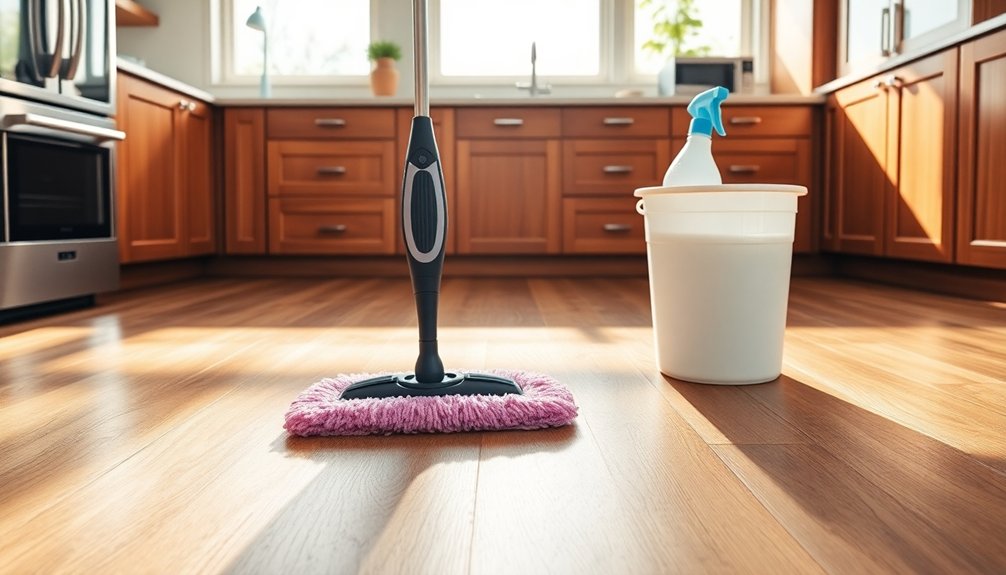
Cleaning vinyl floors is essential if you want to keep them looking great and lasting for years. Regular cleaning helps maintain the appearance and prolongs the lifespan of your vinyl flooring, ensuring it stays in excellent condition.
Start by sweeping or vacuuming to remove debris, preventing dirt from scratching the surface while you mop. Use a damp microfiber mop to gently clean the floors, as this method protects the protective layer of your vinyl.
Avoid harsh chemicals and abrasive tools, as they can cause irreversible damage. By establishing a consistent cleaning schedule and using appropriate cleaning solutions, you can prevent dirt buildup and maintain the beauty of your vinyl plank flooring in the kitchen. Additionally, using pH-neutral solutions is recommended to protect delicate materials during the cleaning process.
Recommended Mop Types for Vinyl Flooring
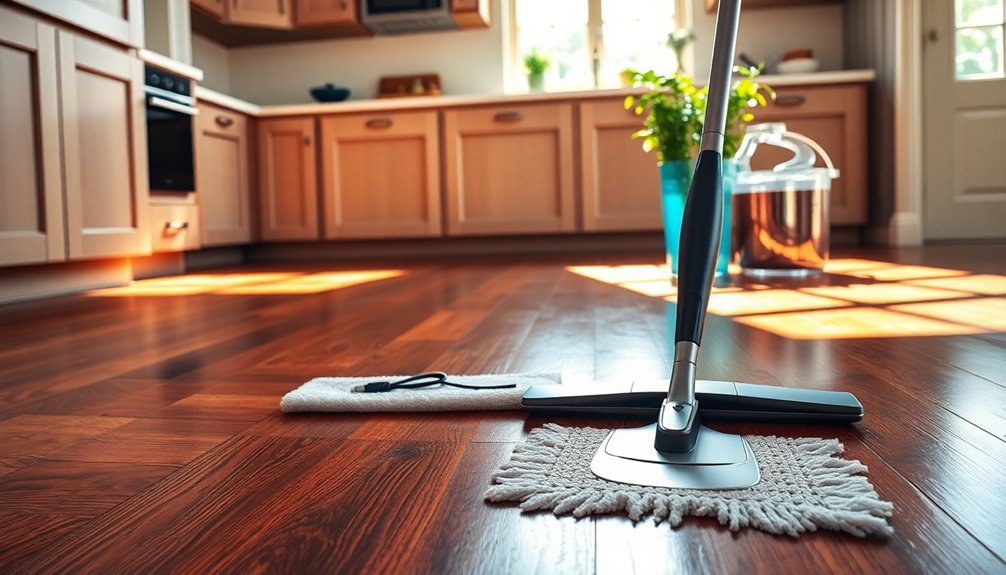
Maintaining the beauty of your vinyl plank flooring also means choosing the right tools for cleaning. For the best mop options, consider flat mops with microfiber pads, as they effectively trap dirt while being gentle on your floors.
Spray mops are another excellent choice, especially for your cleaning routine, since they feature a built-in spray mechanism that’s perfect for quick touch-ups.
Consider spray mops for their built-in spray mechanism, making them ideal for quick and efficient touch-ups during your cleaning routine.
Microfiber mopheads stand out for their durability and absorbency, helping to prevent mildew by drying quickly.
While string mops can be used, they’re generally less efficient due to slower drying times.
Always opt for mops made with non-abrasive materials to keep your vinyl flooring’s protective finish intact.
Additionally, regularly emptying dust bags or canisters will help maintain optimal cleaning performance, ensuring your flooring stays sparkling clean.
Choose wisely for a sparkling clean!
Best Mops Reviewed for Kitchen Use
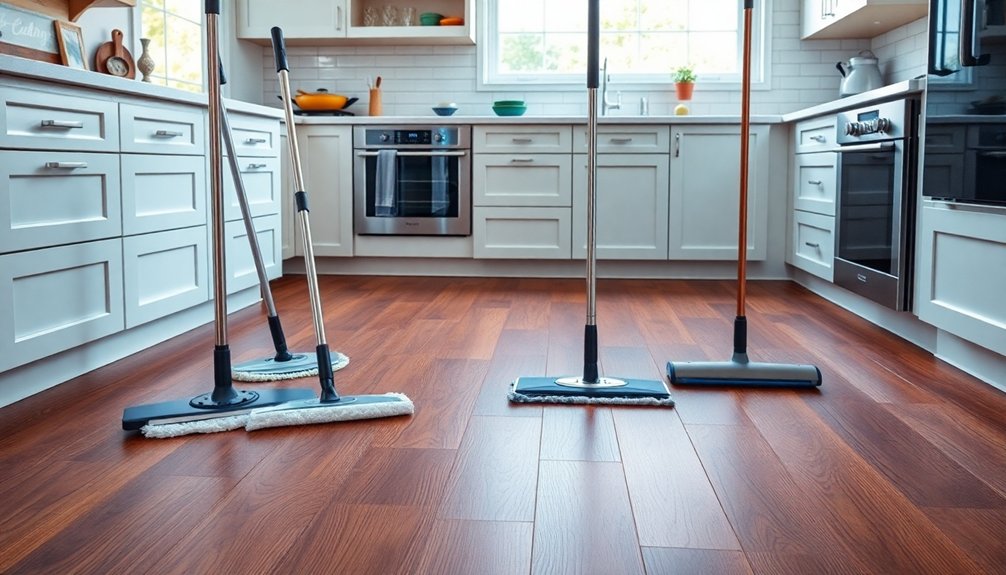
When it comes to keeping your kitchen spotless, choosing the right mop is essential. The Rubbermaid Reveal Microfiber Spray Mop stands out with its machine-washable pads and built-in spray mechanism, perfect for quick clean-ups on your luxury vinyl plank flooring.
If you need to reach tight spaces, the Mexerris Microfiber Spray Wet Mop, with its lightweight design and 360-degree rotating head, is a great choice.
For busy kitchens, the O-Cedar ProMist Max Microfiber Spray Mop’s dual-sided pad allows for efficient cleaning.
If you’ve got a large area to cover, consider the Microfiber Wholesale 18-Inch Mop System for wider coverage.
Finally, the Bona Premium Spray Mop is designed specifically for vinyl, ensuring a clean finish without streaks. Regular cleaning agents should be selected based on the flooring material to maintain its appearance and durability.
Effective Cleaning Solutions for Vinyl Floors
To keep your vinyl floors looking their best, using the right cleaning solutions is essential. A great option is a mixture of one gallon of warm water with a few drops of mild dish soap. This solution effectively cleans without damaging your flooring.
For ideal care, consider pH-neutral or LVP-specific cleaning solutions, like Bona Hard-Surface Floor Cleaner, which maintain the integrity of vinyl plank flooring. Avoid abrasive or acidic cleaners, as they can scratch or weaken the surface.
For regular cleaning, a diluted vinegar solution (one cup of vinegar per gallon of water) is a safe alternative. Regular cleaning with these suitable solutions helps prevent dirt buildup, ensuring the longevity and appearance of your vinyl floors. Additionally, regular maintenance promotes a tidy kitchen and ensures a safe and healthy environment.
Mopping Techniques for Optimal Results
For the best results with your vinyl plank flooring, using the right mopping techniques is crucial.
Start by using a damp microfiber mop with clean mop pads to effectively remove dust and dirt without scratching your LVP flooring. Mop in sections, beginning at one corner and moving towards the exit to avoid stepping on freshly cleaned areas.
Confirm the mop is lightly damp—too much moisture can damage the seams of your vinyl planks. Rinse the mop frequently to prevent spreading dirt around.
For regular maintenance, dry mopping can help maintain cleanliness between deeper cleans. If you encounter stubborn stains, gently use a soft-bristled brush with an appropriate solution for effective lifting without harming your floor. Additionally, employing efficient mopping techniques can help avoid spreading dirt and ensure a thorough clean.
Spot Cleaning Tips for Stubborn Stains
When stubborn stains hit your vinyl plank flooring, quick action is key. You’ll want to use effective stain removal techniques along with recommended cleaning solutions to tackle the problem. Act swiftly to address stains for best results by using the correct cleaner based on the stain type for effective removal. Let’s explore the best tools and methods to keep your floors looking pristine.
Effective Stain Removal Techniques
Although stubborn stains can be a challenge, you can effectively tackle them with the right techniques.
For food stains like tomato sauce, mix baking soda with warm water to form a paste, apply it to the stain, and let it sit briefly before wiping with a damp cloth.
If you’re dealing with grease or oil stains, gently rub a microfiber cloth with rubbing alcohol on the stain, moving from the outer edge towards the center to prevent spreading.
Remember, immediate action is essential; addressing spills promptly can help maintain your vinyl plank flooring’s integrity.
For scuff marks, spray WD-40 directly on the mark and buff it out with a clean microfiber cloth for a flawless finish.
Recommended Cleaning Solutions
While stubborn stains can be frustrating, using the right cleaning solutions makes it easier to restore your vinyl plank flooring’s appearance.
For luxury vinyl plank (LVP) flooring, a diluted dish soap mixed with warm water effectively lifts grime.
For tough stains, create a paste with baking soda and water; let it sit for a few minutes before gently scrubbing with a soft microfiber cloth.
Rubbing alcohol on a microfiber cloth works wonders for ink or grease stains—apply it from the edge toward the center to avoid spreading.
For scuff marks, spray a bit of WD-40 directly onto the mark and buff with a clean microfiber cloth.
Always test any cleaning products on a hidden area first to guarantee they won’t cause damage.
Tools for Spot Cleaning
Spot cleaning stubborn stains on vinyl plank flooring requires the right tools to effectively tackle the issue without causing damage.
Start with a microfiber flat mop or a soft-bristled brush to gently work in a pH-neutral cleaner or a baking soda paste. These tools can help lift stains without scratching the surface.
Always address spills immediately with absorbent microfiber towels to prevent stains from setting. For tough marks, a little WD-40 can work wonders; just spray it on the scuff and buff with a clean cloth.
Regular maintenance, including spot cleaning and removing loose dirt and debris, minimizes the likelihood of stubborn stains developing, keeping your vinyl flooring looking its best.
Drying Techniques to Preserve Vinyl Floors
After mopping your vinyl floors, it’s essential to guarantee they dry completely to avoid damage. You can use soft towels or microfiber cloths to absorb excess moisture and speed up drying by promoting air circulation with fans or open windows. Additionally, regularly checking expiration dates on cleaning products ensures that you’re using effective solutions that won’t harm your flooring.
Air Circulation Importance
To preserve the integrity of your vinyl plank floors, it’s important to guarantee proper air circulation during the drying process. This helps prevent moisture accumulation, which can lead to warping and long-term damage.
Open windows or use fans to enhance airflow, reducing drying time and minimizing the risk of mold growth. A completely dry surface is essential; standing water can compromise the vinyl’s integrity and lead to discoloration or peeling.
By using a soft towel or cloth to manually dry the floor after mopping, you can greatly enhance drying efficiency and prevent water spots.
Maintaining air circulation during drying is crucial to preserve quality and appearance, ensuring your floors look great for years to come.
Manual Drying Methods
While mopping your vinyl floors, it’s essential to follow up with effective manual drying techniques to avoid water damage and maintain their pristine appearance.
Start by using a soft absorbent towel or microfiber cloth to manually dry the surface, which helps prevent water spots and eliminates standing moisture.
To enhance the drying process, guarantee adequate air circulation by opening windows or using fans.
Remember, lightly dampening your mop instead of letting it drip excessively will protect the seams of your vinyl flooring.
Incorporating these manual drying methods into your maintenance routine won’t only keep your floors looking great but also prolong their lifespan by preventing water damage.
Regularly drying after mopping is key!
Maintenance Tips for Long-Lasting Vinyl Flooring
Maintaining your vinyl plank flooring is essential for its longevity and appearance. Follow these tips for effective care:
Proper maintenance of vinyl plank flooring is key to ensuring its durability and aesthetic appeal.
- Dust mop or vacuum at least once a week, especially in high-traffic areas, to prevent dirt buildup and scratches.
- Use a damp microfiber mop with a pH-neutral cleaner, like Bona Hard-Surface Floor Cleaner, to clean Luxury Vinyl Plank without damage.
- Wipe up spills immediately to avoid stains and potential water damage; steer clear of ammonia or abrasive cleaners.
- Regularly inspect your mop pads and wash them after each use to guarantee you’re not redistributing dirt while cleaning. Additionally, ensure that you are using appropriate cleaning products to maintain the integrity of your flooring.
User Experiences and Recommendations
Many homeowners have found that using the right tools makes a significant difference in keeping their vinyl plank flooring looking pristine.
Microfiber mops are highly recommended for effectively trapping dirt and grime without scratching the surface. Many users rave about the O-Cedar EasyWring Spin Mop, praising its ergonomic design that prevents excess water damage.
Additionally, Bona cleaning products receive positive feedback for their gentle yet effective cleaning capabilities tailored for LVP surfaces.
For quick, efficient cleaning in high-traffic areas, spray mops like the Rubbermaid Reveal Microfiber Spray Mop are also popular.
Regular maintenance is key; users suggest a weekly cleaning routine to prevent buildup and maintain the appearance of your beautiful vinyl flooring. Incorporating eco-friendly cleaning products can also enhance indoor air quality and promote a healthier environment for your home.
Community Engagement and Discussion
Let’s talk about the best cleaning techniques for your vinyl plank flooring.
Many in our community have shared their favorite products and methods that really work, like using microfiber mops and specific cleaners.
What’s been your experience, and what products do you swear by for keeping your floors spotless? Additionally, using a vacuum and mop combo can greatly enhance wet and dry pickup performance to achieve a thorough clean.
Cleaning Techniques Shared
While keeping your vinyl plank flooring spotless might seem challenging, community members have shared effective cleaning techniques that make the task easier.
Here are some tips to enhance your cleaning jobs:
- Use microfiber pads for mopping, as they trap dirt without scratching LVP floors.
- Opt for pH-neutral or LVP-specific cleaning solutions like Bona to maintain your flooring’s integrity.
- Avoid excess water by using damp mops instead of soaking wet ones to prevent damage.
- Address spills promptly; a baking soda paste works wonders for food-related stains.
Recommended Products Exchange
As you explore the best products for cleaning your vinyl plank flooring, you’ll find a wealth of recommendations from fellow community members enthusiastic to share their experiences.
Many users strongly endorse microfiber pads, which effectively trap dirt without scratching your floors. Bona cleaning products frequently come up in discussions, praised for maintaining the beauty of luxury vinyl.
For routine maintenance, consider a gentle cleaning solution, like warm water mixed with mild dish soap, to avoid damage. If you’re looking for quick daily clean-ups, the O-Cedar EasyWring spin mop is a popular choice among participants.
Regular dust mopping and addressing spills immediately are also key tips exchanged within the community to keep your vinyl floors looking pristine.
Conclusion
In wrapping up, keeping your vinyl plank flooring in tip-top shape doesn’t have to be a chore. With the right mop and a sprinkle of care, you can easily dance your way through kitchen clean-ups. Remember, a little love goes a long way in preserving that shiny look you adore. So, roll up your sleeves and enjoy the process—your floors will thank you with every step you take! Happy mopping!