You might be making common cleaning mistakes that could harm your surfaces. Spraying cleaners directly can cause streaks, so always apply them to a cloth. Don’t skip the dwell time; give products a few minutes to work. Avoid feather dusters, which just spread dust around. Keep your sponges clean to prevent bacteria. Be cautious with chemical cleaners on devices, and skip steam mops on hardwood floors to avoid warping. There’s plenty more to learn about effective cleaning practices!
Spraying Cleaner Directly on Surfaces
Many people make the mistake of spraying cleaner directly on surfaces, which can lead to streaks and residue buildup. This method often causes excess moisture that may penetrate wood surfaces, warping them over time.
Instead, you should spray the cleaner onto a microfiber cloth to minimize airborne particles and achieve an even application. By doing this, you not only avoid streaking but also reduce the inhalation of harmful fumes, particularly in poorly ventilated areas, which poses health risks.
While direct spraying might be necessary for disinfecting surfaces, it’s essential to let the disinfectant remain wet for the recommended dwell time. Using products like Clorox Free & Clear Multi-Surface Spray Cleaner can enhance your cleaning efficacy while being safer for your home.
Making this simple switch in your cleaning routine can enhance effectiveness and protect your surfaces.
Not Allowing for Dwell Time
If you’re not allowing for dwell time, you might be wasting your cleaning efforts.
Many products need to sit on surfaces for a few minutes to effectively kill germs and break down grime. For instance, disinfectants like hydrogen peroxide are most effective when left on surfaces for 5 to 10 minutes to ensure thorough disinfection.
Importance of Contact Time
Contact time, or dwell time, is essential for effective cleaning, often requiring three to ten minutes for products to break down dirt and germs.
If you skip this vital step, your cleaning agents may not fully eliminate surface contaminants, resulting in a need for repeated cleaning efforts.
To enhance your cleaning routine, remember these key points:
- Disinfectants often specify their required contact time on the label.
- Rushing the cleaning process wastes time and resources.
- Incorporating dwell time allows for multitasking, improving overall efficiency.
Common Dwell Time Mistakes
Not allowing for adequate dwell time can seriously undermine your cleaning efforts.
Many make the cleaning mistake of wiping surfaces immediately after applying a cleaner, which prevents the cleaning agents from achieving maximum effectiveness.
Dwell time is critical for these products to effectively kill germs and break down dirt, typically requiring three to ten minutes.
Skipping this step often leads to inadequate cleaning, forcing you to reapply products and prolonging the overall process.
Always refer to product labels for specific dwell time instructions, ensuring you’re allowing sufficient time for the cleaner to work.
Optimizing Cleaning Efficiency
Maximizing cleaning efficiency goes hand in hand with understanding and respecting dwell time. When you allow cleaning agents to sit for the recommended duration, you enhance their ability to break down dirt and germs, ensuring adequately clean surfaces.
Here are some tips to optimize your cleaning routine:
- Schedule cleaning tasks to include dwell time, allowing for multitasking.
- Always follow dwell time instructions on cleaning solutions for maximum cleaning efficacy.
- Avoid wiping away cleaners immediately; give them time to work.
Using Feather or Disposable Dusters
Using feather or disposable dusters can lead to ineffective cleaning, as they merely push dust particles around, increasing allergens in the air. Instead, opt for microfiber cloths, which attract and hold dust more efficiently. For proper dusting techniques, consider incorporating a vacuum with a brush attachment before dusting to remove larger debris and enhance surface cleanliness. Remember to regularly change disposable dusters or wash reusable ones to prevent bacteria spread. Additionally, using a HEPA-filter vacuum can significantly improve indoor air quality by capturing small particles during cleaning.
Neglecting to Clean Your Sponge

You mightn’t realize it, but your kitchen sponge can harbor more bacteria than your toilet. Regularly sanitizing it is essential to prevent cross-contamination and keep your surfaces clean. Don’t forget to rinse your sponge after each use and replace it when it starts to look worn or smell bad. Additionally, using non-toxic cleaners can enhance your cleaning routine while ensuring safety for your family.
Germs in Sponges
Kitchen sponges, often overlooked in cleaning routines, can become a hotbed for germs if not sanitized regularly. They can harbor more bacteria than toilets, posing a significant risk to your hygiene.
To keep your sponges in check, consider these tips:
- Sanitize sponges weekly in the dishwasher or with a bleach/vinegar solution.
- Rinse thoroughly after cleaning to eliminate any lingering cleaning agents and bacteria.
- Replace sponges when they look soiled or smell unpleasant to avoid cross-contamination.
Designating specific sponges for different cleaning tasks, like kitchen and bathroom use, can further minimize germ spread.
Regular Sanitation Practices
Neglecting to clean your sponge can turn this seemingly harmless kitchen tool into a breeding ground for bacteria.
To maintain a clean kitchen, incorporate regular sanitation practices into your cleaning routine. After each use, rinse dirty sponges thoroughly and wring them out to remove excess moisture, which helps prevent bacterial growth.
Sanitize sponges weekly by soaking them in a bleach solution or running them through the dishwasher. Don’t forget to replace kitchen sponges every month or sooner if they smell bad or look soiled.
To further minimize cross-contamination, consider using separate sponges for dishes and surfaces.
Using Chemical Cleaners on Devices
Many people unknowingly risk damaging their electronics by using chemical cleaners on devices.
These products often contain alcohol or ammonia, which can strip protective coatings from screens, leading to costly repairs.
To keep your devices safe, consider these tips:
- Always use a damp microfiber towel or suede cloth for effective smudge removal.
- Avoid using paper towels or rough fabrics that can scratch delicate surfaces.
- Check the manufacturer’s guidelines for safe maintenance recommendations.
Additionally, opting for eco-friendly cleaning methods can help ensure that your devices remain protected while minimizing environmental impact.
Over-Cleaning Surfaces
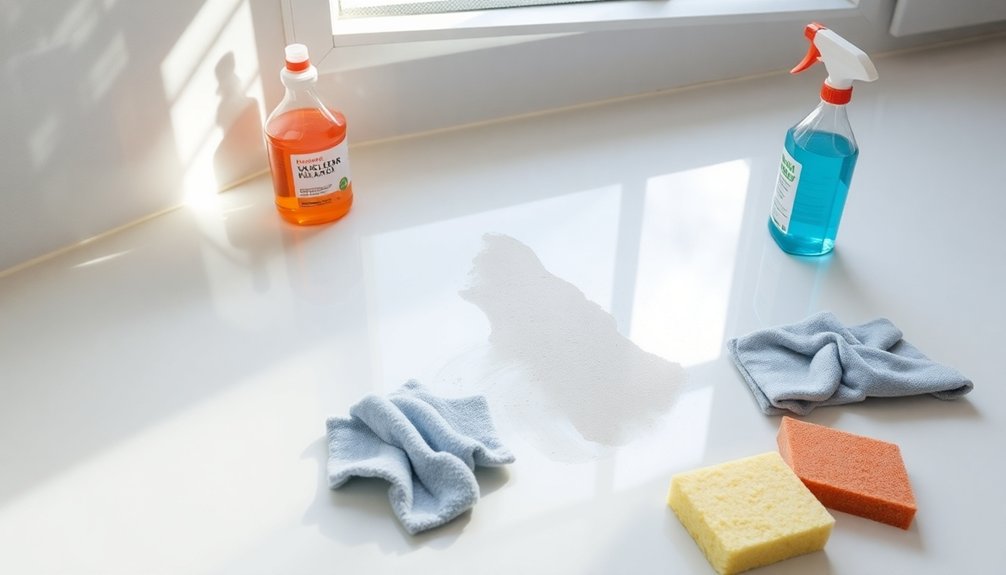
Over-cleaning surfaces, especially high-touch areas, can lead to increased allergy risks and significant wear and tear. Excessive cleaning may strip protective coatings, leaving surfaces vulnerable. Ideally, you should clean high-touch surfaces daily, while low-touch areas can be maintained weekly to avoid unnecessary over-cleaning. Signs of over-cleaning include visible damage or fading, often from harsh chemicals or abrasive tools. Additionally, daily cleaning routines can help maintain a hygienic environment while reducing the risk of over-cleaning. Establishing a balanced cleaning routine based on surface usage and occupancy is key. Regular maintenance and spot cleaning can help you minimize the need for deep cleaning sessions, protecting your surfaces and ensuring they stay in good condition.
Using a Steam Mop on Hardwood Floors
While steam mops seem like a convenient solution for cleaning hardwood floors, they can actually do more harm than good.
The heat and excess water from steam mops can warp your flooring and lead to issues like mold growth.
Instead, consider these alternatives:
- Use a damp microfiber mop with a hardwood-specific cleaner.
- Always avoid standing water to protect your floors.
- Perform regular maintenance with the right cleaning tools and solutions. Additionally, using pH-neutral solutions ensures that your hardwood floors remain protected during cleaning.
Applying Abrasive Cleaners
Although abrasive cleaners may seem effective for tough stains, they can easily damage high-shine surfaces.
Using them on glass or delicate finishes can lead to scratches, requiring costly repairs or even replacement.
Instead, consider using non-abrasive cleaners for most cleaning tasks, as they provide effective results without risking surface integrity.
If you must use abrasive cleaners, reserve them for truly tough jobs and apply them with selective use.
Always test on a small, inconspicuous area first to gauge their effect before applying them more broadly.
This simple step can help you prevent damage and maintain the beauty of your surfaces, ensuring you won’t be faced with expensive fixes later on. Additionally, using gentle cleaners can protect various fabric types while still effectively removing stains.
Conclusion
To sum up, avoiding common cleaning mistakes can make a significant difference in your home’s cleanliness and longevity. Did you know that 70% of people use the wrong cleaning products on their surfaces? By being mindful of how you clean—like allowing dwell time and choosing the right tools—you’ll not only achieve better results but also protect your belongings. So, next time you tackle a cleaning task, remember these tips and keep your space sparkling!