To degrease kitchen cabinets without ruining the finish, start by identifying your cabinet material—wood, painted, or laminate. Use gentle solutions like a vinegar-water mix or a baking soda paste, applying them with a soft microfiber cloth. Avoid harsh chemicals and abrasive tools that can damage surfaces. Regular maintenance can help prevent buildup. Want to learn the best techniques for each material and essential tips for keeping your cabinets looking great?
Understanding the Importance of Degreasing Kitchen Cabinets
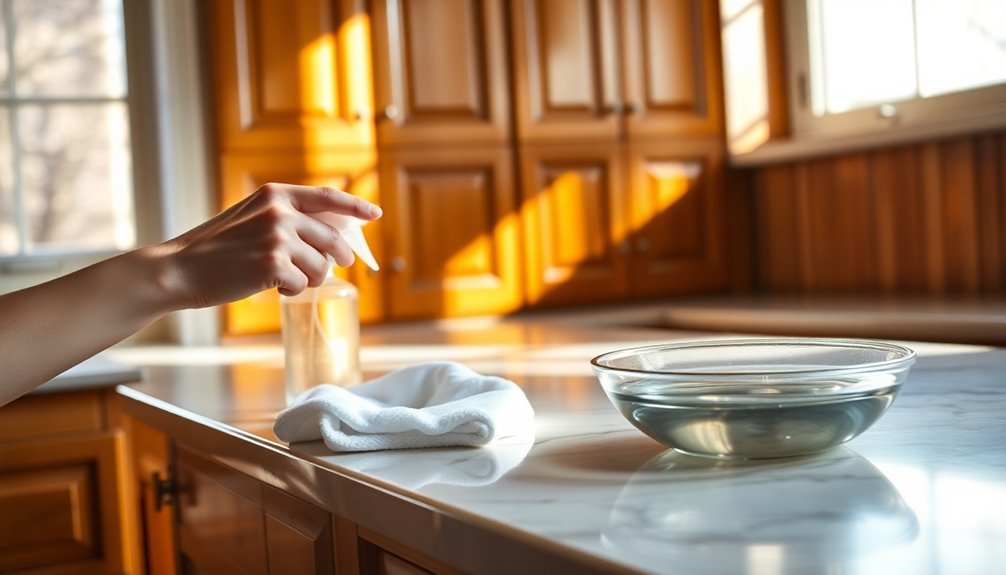
Understanding the importance of this task can greatly enhance your kitchen’s appearance and hygiene. Neglecting grease buildup not only leads to unsightly stains but can also attract pests and create unpleasant odors. By prioritizing cabinet maintenance, you’ll reap the benefits of a cleaner, healthier cooking environment. Regularly degreasing helps preserve your cabinets’ finish and extends their lifespan, saving you money in the long run. Plus, a clean kitchen boosts your enjoyment of cooking and entertaining. Additionally, using effective disinfectants for bathroom surfaces can help maintain overall cleanliness in your kitchen as well. So, don’t overlook this vital aspect of kitchen upkeep; make degreasing your cabinets a part of your routine for a more inviting space.
Assessing Your Cabinet Material: Wood, Paint, or Laminate?
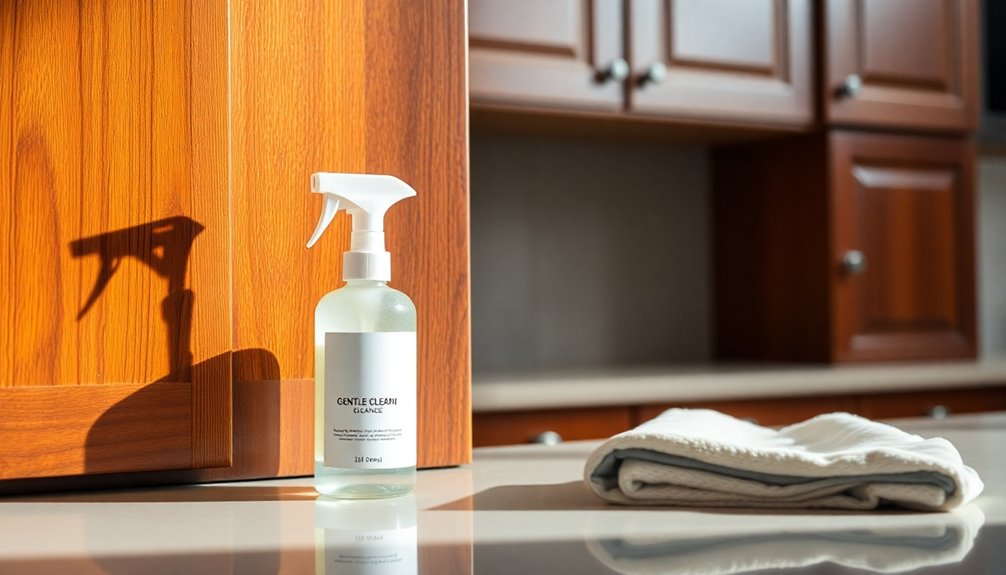
How do you know which cleaning method is best for your kitchen cabinets? First, assess your cabinet material.
If you have wood cabinets, consider the type of wood finishes used. Some finishes can withstand more rigorous cleaning, while others may require gentler methods to avoid damage.
For painted cabinets, identify the paint types; oil-based paints typically resist grease better than water-based options. Use caution when cleaning, as harsh chemicals can strip the paint.
Ultimately, if your cabinets are laminate, you can usually use a mild cleaner without worry, but avoid abrasive pads that can scratch the surface. Additionally, it’s important to use a pH neutral cleaner to effectively remove grease without damaging your cabinet’s finish.
Essential Tools for Degreasing Without Damage
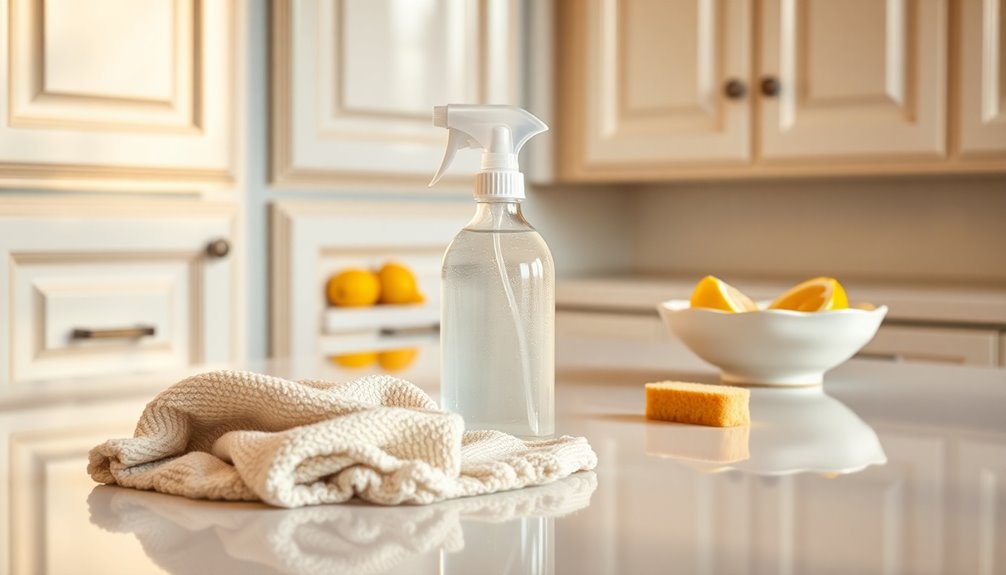
Having the right tools is crucial for effectively degreasing your kitchen cabinets without causing damage.
Start with soft microfiber cloths to gently wipe surfaces without scratching. You’ll also need a spray bottle to mix your eco-friendly cleaners, like vinegar or a baking soda solution.
A non-abrasive sponge or brush can help tackle stubborn grease spots while being gentle on finishes. Consider a bucket for rinsing your tools and a ladder if your cabinets are high.
Don’t forget gloves to protect your hands during this process. These essential tools, combined with DIY degreasing tips, will make your cleaning task easier and safer, ensuring your cabinets look great without risking damage to their finish. Additionally, using reusable cleaning cloths can significantly reduce waste while providing effective cleaning power.
Natural Solutions: Vinegar, Baking Soda, and More
When it comes to natural solutions for degreasing your kitchen cabinets, vinegar and baking soda are your best friends. You can easily whip up an effective vinegar solution or a baking soda paste to tackle tough grease. Additionally, vinegar contains 4-6% acetic acid that is effective against bacteria and odors, making it a powerful cleaning agent. Let’s explore how these simple ingredients can make your cabinets shine again.
Effective Vinegar Solutions
Vinegar is a powerhouse when it comes to degreasing kitchen cabinets, and you’ll find it’s both effective and eco-friendly.
To harness its vinegar benefits, mix equal parts of water and white vinegar for a gentle solution. If your cabinets are heavily soiled, consider increasing the vinegar concentration to tackle stubborn grease.
Simply spray the solution onto the cabinets, let it sit for a few minutes, then wipe with a soft cloth. This method not only removes grime but also leaves your cabinets looking fresh without damaging the finish.
For added effectiveness, you can repeat the process as needed. Embrace this natural solution, and you’ll enjoy a cleaner kitchen without harsh chemicals!
Baking Soda Paste Method
One effective way to tackle grease on your kitchen cabinets is by using a baking soda paste.
To create this natural cleaning solution, mix equal parts baking soda and water until you form a thick paste. Apply the paste directly to the greasy spots on your cabinets, letting it sit for about 10–15 minutes.
The baking soda works wonders for grease removal, breaking down stubborn residues without damaging the finish. After the time’s up, gently scrub the area with a soft cloth or sponge, using circular motions.
Rinse the cabinets with a damp cloth to remove any baking soda residue. This method not only cleans effectively but also keeps your cabinets safe from harsh chemicals.
Enjoy your sparkling clean kitchen!
Step-by-Step Guide to Degreasing Wooden Cabinets
When it comes to degreasing your wooden cabinets, choosing safe cleaning solutions is key. You’ll want to avoid harsh chemicals that can damage the finish. Once you’ve got the right product, use gentle scrubbing techniques to lift the grease without scratching the wood. Regular maintenance simplifies future cleaning tasks, making it easier to keep your cabinets looking their best and prolonging their lifespan by enhancing appearance.
Choose Safe Cleaning Solutions
Choosing safe cleaning solutions is essential for effectively degreasing wooden cabinets without causing damage.
Start by considering eco-friendly options that won’t harm your cabinets or the environment. Vinegar mixed with water is a popular choice; it cuts grease and leaves a fresh scent. You can also create homemade cleaners by combining baking soda and water into a paste, which works wonders on tougher stains.
Avoid using harsh chemicals or abrasive cleaners, as they can strip the finish and dull the wood. Always test your chosen solution on a small, inconspicuous area first to verify it won’t cause any discoloration or damage.
Use Gentle Scrubbing Techniques
Get ready to tackle those greasy cabinets with gentle scrubbing techniques that won’t damage the wood.
Start by gathering your scrubbing tools—soft sponges or microfiber cloths work best. Avoid anything abrasive, as it can scratch the surface. Dampen your chosen cloth with the safe cleaning solution you prepared earlier.
Gently rub the greasy areas in circular motions, applying just enough pressure to lift the grime without harming the finish. For stubborn spots, you can use a soft-bristled toothbrush, ensuring it’s clean and dry.
Always rinse your cloth frequently to avoid spreading grease around. After scrubbing, wipe the cabinets with a dry cloth to remove any moisture. Your cabinets will look refreshed and shiny without damage!
How to Safely Clean Painted Cabinet Surfaces?
How can you effectively clean painted cabinet surfaces without damaging the finish?
Start by choosing the right cleaning products to maintain surface protection. Here’s a quick guide:
Choosing the right cleaning products is essential for preserving your cabinet’s finish and ensuring long-lasting beauty.
- Mild Soap and Water: Mix a few drops of dish soap in warm water. Use a soft cloth to wipe down the surfaces gently.
- Vinegar Solution: Combine equal parts of vinegar and water in a spray bottle. Lightly mist the cabinets and wipe with a microfiber cloth.
- Baking Soda Paste: For tougher stains, create a paste with baking soda and water. Apply it sparingly, scrub gently, and rinse thoroughly.
Always test any cleaning solution on a small, inconspicuous area first to verify it won’t harm the finish. Using eco-friendly methods such as natural alternatives can help maintain both your cabinets and the environment.
Degreasing Laminate Cabinets: Best Practices
When it comes to degreasing laminate cabinets, using safe cleaning solutions is key to preserving their finish. You’ll want to employ gentle scrubbing techniques to avoid scratching the surface. Keeping up with regular maintenance tips will help keep your cabinets looking fresh and clean. Additionally, using eco-friendly floor cleaning products can ensure effective results without compromising the integrity of your cabinets.
Safe Cleaning Solutions
Although laminate cabinets are durable, they can accumulate grease and grime over time, making it essential to use safe cleaning solutions.
Here are three effective options that won’t harm your finish:
- Vinegar and Water: Mix equal parts of white vinegar and water in a spray bottle for a natural degreaser.
- Baking Soda Paste: Combine baking soda with a little water to form a paste. Apply it to greasy spots, let it sit, and wipe clean.
- Eco-Friendly Dish Soap: Use a few drops of eco-friendly dish soap mixed with warm water to gently clean surfaces.
Homemade cleaners like these aren’t only safe but also effective, ensuring your laminate cabinets stay fresh without any damage.
Gentle Scrubbing Techniques
Start by choosing the right tools for gentle scrubbing to protect your laminate cabinets while effectively removing grease.
Opt for soft sponges or microfiber cloths, as these gentle materials won’t scratch the surface. To apply effective scrubbing techniques, dampen your sponge with a safe cleaning solution and gently wipe the greasy areas in a circular motion.
Avoid using abrasive pads or harsh chemicals, as they can damage the finish. For stubborn spots, add a bit of baking soda to your sponge for extra scrubbing power without risking scratches.
Rinse your sponge frequently to prevent grease buildup, and always finish by wiping down the cabinets with a clean, damp cloth to remove any residue.
Regular Maintenance Tips
To keep your laminate cabinets looking fresh and grease-free, regular maintenance is essential.
By establishing a consistent cleaning frequency, you’ll prevent buildup and extend their lifespan.
Here are three best practices to include in your maintenance schedule:
- Wipe Down Weekly: Use a damp microfiber cloth to remove dust and grease.
- Deep Clean Monthly: Apply a gentle cleaner specifically designed for laminate surfaces to tackle stubborn grime.
- Inspect and Repair: Regularly check for any damages or peeling edges, and address them promptly to avoid further issues.
The Role of Microfiber Cloths in Cabinet Cleaning
Microfiber cloths play an essential role in effectively cleaning kitchen cabinets, thanks to their unique fibers that trap dirt and grease without scratching surfaces.
When using these cloths, you benefit from their ability to absorb moisture and oils, making cleanup faster and more efficient. For best results, employ specific cleaning techniques: dampen the cloth slightly and use a gentle circular motion to lift grime.
You’ll notice that microfiber benefits extend beyond just cleaning; they also reduce the need for harsh chemicals, preserving your cabinet finish. Plus, these cloths are reusable and durable, making them eco-friendly. Additionally, using microfiber sponges in conjunction with cloths can enhance your cleaning routine by providing superior absorbency and dirt-lifting capabilities.
Incorporating microfiber into your cabinet cleaning routine guarantees you achieve a spotless look while keeping your cabinetry safe from damage.
Common Mistakes to Avoid When Degreasing Cabinets
When it comes to degreasing kitchen cabinets, avoiding common pitfalls can make a significant difference in your results.
Avoiding common pitfalls in degreasing kitchen cabinets can greatly enhance your cleaning results.
Here are three common degreasing mistakes to watch out for:
1. Using Harsh Chemicals****: Many people think stronger means better, but harsh chemicals can damage the cabinet finish.
Stick to gentle solutions instead.
2. Skipping the Test Patch****: Always test your cleaning solution on a small, inconspicuous area first.
This helps prevent any unwanted reactions with the finish.
3. Over-Wetting Cloths: Using overly wet cloths can lead to water damage.
Make sure your cloth is damp, not soaked, to protect your cabinets. Additionally, consider using natural ingredients like vinegar to create safer cleaning solutions that won’t harm your cabinets.
Maintaining Your Cabinets After Degreasing
After successfully degreasing your kitchen cabinets, maintaining their cleanliness and integrity is key to keeping them looking great.
Start by regularly wiping down your cabinets with a soft, damp cloth to remove dust and grime. Avoid harsh chemicals that can damage the finish; instead, use mild soap and water when needed. Consider applying protective finishes to shield against future grease buildup and wear. This not only enhances the appearance but also prolongs the life of your cabinets. Additionally, using distilled water when cleaning can help prevent water stains and maintain the cabinet finish.
Schedule routine cabinet maintenance every few months to inspect for any signs of damage or wear. By staying proactive, you’ll guarantee your cabinets remain in top shape, looking fresh and inviting for years to come.
When to Seek Professional Cleaning Services for Your Cabinets?
How can you tell if your kitchen cabinets need a professional touch?
Sometimes, a DIY approach just isn’t enough. Here are three signs it might be time to call in the cleaning specialists for a professional evaluation:
- Stubborn Stains: If grease and grime have built up over time and simple cleaning methods won’t budge them, it’s best to seek help.
- Damaged Finish: Notice any peeling, chipping, or discoloration? Professionals can restore or protect your cabinets without causing further harm.
- Time Constraints: If you’re busy and can’t dedicate hours to deep cleaning, hiring experts can save you time and effort.
Don’t hesitate to reach out for a professional cleaning service to guarantee your cabinets look their best!
Conclusion
Now that you know how to degrease your kitchen cabinets without damaging their finish, imagine the satisfaction of seeing them gleam like new. With the right tools and natural solutions, you can restore their beauty while preserving their integrity. Remember, a little care goes a long way. So, roll up your sleeves, grab that microfiber cloth, and transform your kitchen into a sparkling haven where every meal feels like a gourmet experience. Your cabinets deserve it!