To keep your home clean while potty training, set up a designated potty area and gather essential supplies like wipes and cleaning tools. Stick to a consistent schedule and monitor fluid intake to predict bathroom needs. When accidents happen, use enzyme cleaners and quick spot treatment techniques to manage spills effectively. Encourage your toddler’s involvement in clean-up with fun activities. You’ll discover other helpful tips and strategies that make this process easier and more manageable.
Understanding the Potty Training Process
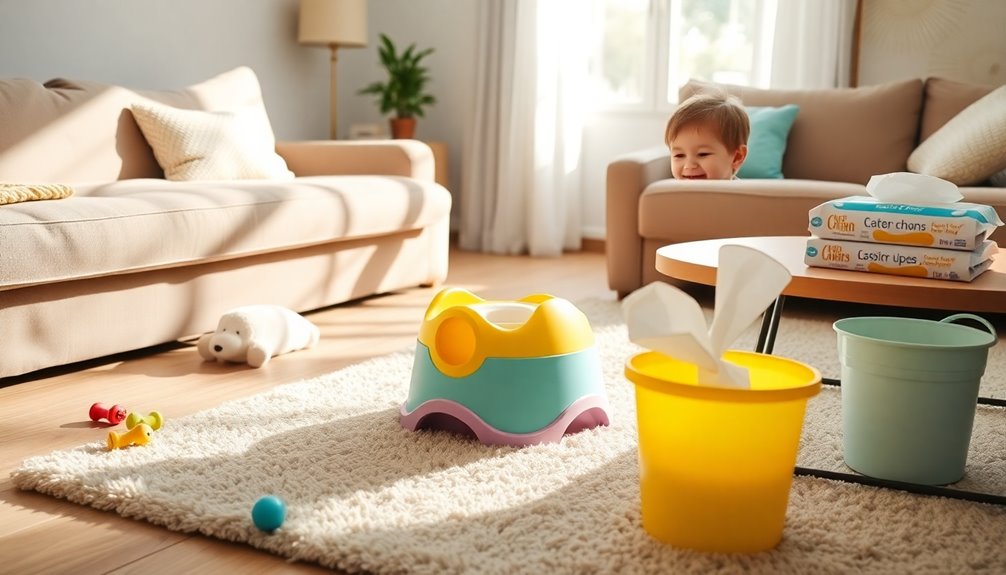
Potty training can feel like an intimidating journey for both you and your child, but understanding the process can make it smoother.
Start by familiarizing yourself with the potty training basics. Look for child readiness signs, such as your little one showing interest in the bathroom, staying dry for longer periods, or communicating their needs. When you notice these signs, it’s time to introduce the potty.
Make it a positive experience by using encouragement and praise. Consistency is key, so establish a routine that works for both of you. Additionally, maintaining a clean environment during this process can help reduce stress and enhance your child’s focus on learning to use the potty.
Essential Supplies for a Clean Potty Training Experience
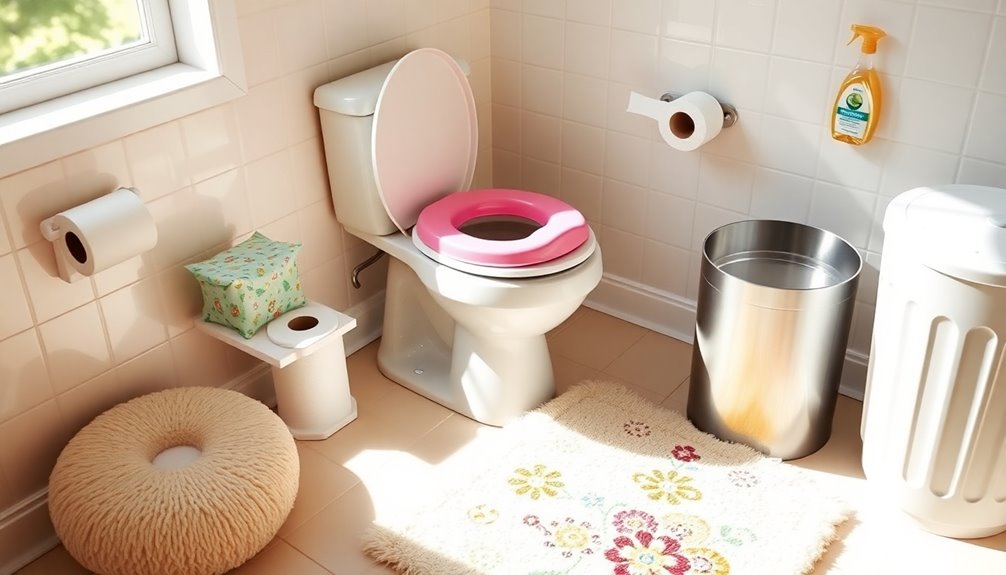
To guarantee a clean potty training experience, you’ll want to gather a few essential supplies. Start with a reliable potty chair or seat that your child feels comfortable using.
Next, stock up on disposable wipes and paper towels for quick cleanups. Having a dedicated trash bin nearby makes disposal easy, too.
Consider investing in a waterproof mat or pad to protect floors during accidents. Additionally, keep a gentle cleaner on hand for tougher stains—look for pet-friendly options, as they’re often safe for kids. Using eco-friendly solutions can provide a safer cleaning environment while ensuring effective sanitation.
Finally, establish cleaning routines to tackle messes promptly. By having these potty training essentials ready, you’ll maintain a cleaner home and make the process smoother for both you and your child.
Setting Up a Designated Potty Area in Your Home
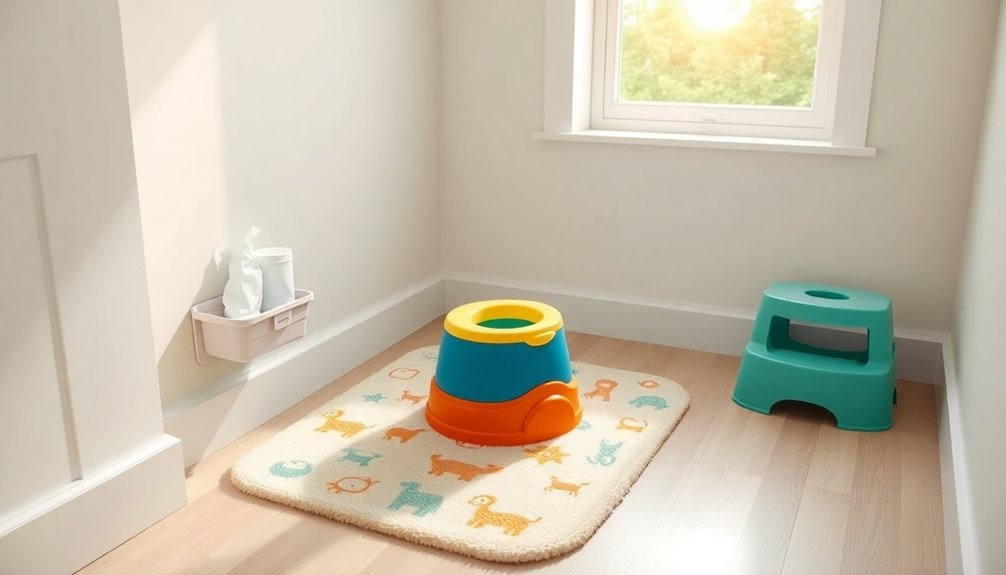
When setting up a designated potty area in your home, it’s essential to choose the right location that’s both convenient and accessible for your child. Opt for easy-to-clean materials to minimize mess and make your life simpler during this training phase. Additionally, consider implementing eco-friendly methods to ensure a cleaner environment while managing potty training.
Choose the Right Location
Where should you set up a designated potty area in your home to make the process easier for both you and your child?
Consider placing the potty in a quiet, low-traffic spot that’s easily accessible. Look for a location near where your toddler plays or spends time, so they feel comfortable and can quickly reach it when needed.
This potty location should have enough privacy to encourage independence but also be close enough for you to supervise. Make certain it’s well-lit and free of distractions.
Use Easy-to-Clean Materials
Setting up a designated potty area means thinking about the materials you use as well.
Choose cleanable fabrics for any furniture or accessories in that space. Options like vinyl or microfiber are easy to wipe down and resist stains, making them ideal for those inevitable accidents.
When selecting surfaces, go for stain resistant options like laminate or tile. These materials aren’t only durable but also simplify your cleaning routine.
Consider using washable rugs or mats to provide comfort while ensuring easy maintenance.
By investing in these easy-to-clean materials, you’ll create a practical potty area that minimizes mess and keeps your home looking tidy during the potty training process.
You’ll be grateful for the foresight when accidents happen!
Creating a Consistent Potty Training Schedule
To successfully potty train your child, you’ll want to establish regular bathroom times throughout the day. Keeping an eye on their fluid intake can also help you predict when they’ll need to go. Additionally, maintaining a clean environment during this process is essential to ensure comfort and hygiene for your child.
Establish Regular Bathroom Times
Creating a consistent potty training schedule can greatly ease the process for both you and your child. Establishing regular bathroom times is key to developing a solid bathroom routine.
Choose specific intervals throughout the day, like after meals and before bedtime, to encourage your child to use the potty. This timing consistency helps them recognize when it’s time to go, reducing accidents at home.
Make it fun by using a timer or a lively song as a cue, and celebrate their successes to keep them motivated. By sticking to this routine, you’ll create a sense of security for your child, making them more likely to follow through and helping you maintain a cleaner home during this adjustment phase.
Monitor Fluid Intake Schedule
Alongside establishing regular bathroom times, monitoring your child’s fluid intake can greatly support their potty training journey.
By implementing fluid intake tracking, you can guarantee your child stays hydrated without overwhelming their bladder. Aim for consistent hydration monitoring throughout the day, especially before nap times and bedtime.
Offer water and other fluids at set intervals, making it easier to predict when they’ll need to use the potty. Keep a chart or use an app to track their intake, helping you adjust as needed.
If you notice they’re drinking more than usual, it might be time to increase bathroom breaks. This proactive approach can minimize accidents and make the process smoother for both you and your child.
Encouraging Your Toddler’s Independence and Responsibility
While potty training can feel overwhelming, it’s a perfect opportunity to encourage your toddler’s independence and sense of responsibility.
Potty training may seem daunting, but it’s a valuable chance to nurture your child’s independence and responsibility.
You can help them develop essential independence skills and responsibility lessons by making the process engaging. Here are some ways to foster their growth:
- Let them choose their own potty or training pants.
- Encourage them to communicate when they need to go.
- Celebrate their successes to boost confidence.
- Involve them in cleanup (with your guidance).
- Create a reward chart for milestones.
Additionally, establishing daily cleaning routines can help maintain a tidy environment during this transition.
Managing Accidents With Ease: Tips for Quick Clean-Up
Potty training can lead to some messy situations, but you can handle them with the right approach.
Having essential cleaning supplies on hand and knowing quick spot treatment techniques will make clean-up a breeze.
Plus, taking preventive measures can help minimize accidents in the first place. Regularly using non-toxic cleaners can ensure a safe and hygienic environment for your child during this learning process.
Essential Cleaning Supplies Needed
Accidents are an inevitable part of potty training, so having the right cleaning supplies on hand can make all the difference.
Creating a cleaning checklist guarantees you’re prepared for those messy moments. Here are some of your favorite supplies that will help you manage accidents with ease:
- Enzyme cleaner: Breaks down stubborn stains and odors.
- Microfiber cloths: Super absorbent and reusable for quick clean-ups.
- Rubber gloves: Keep your hands protected while cleaning.
- Paper towels: For fast, disposable clean-up of larger messes.
- Baking soda: A natural deodorizer that tackles lingering smells.
With these essentials, you’ll feel more equipped to handle accidents, making the potty training journey smoother for both you and your little one.
Quick Spot Treatment Techniques
When your little one has an accident, quick action is key to preventing lasting stains and odors. Start by quickly blotting the area with paper towels to absorb as much liquid as possible.
Avoid rubbing, as this can spread the mess. Next, apply a spot treatment specifically designed for pet or child accidents; these often contain enzymes that help with odor elimination. Let it sit for the recommended time to break down the stain.
Afterward, rinse with cold water and blot again. If the smell lingers, sprinkle baking soda over the area to absorb any remaining odors and vacuum it up after a few hours.
With these techniques, you can manage accidents smoothly and keep your home fresh.
Preventive Measures for Accidents
Creating a proactive approach can greatly reduce the chances of accidents during potty training. By implementing preventive strategies, you can make this process smoother for both you and your child.
Here are some proactive measures you can take:
- Establish a routine: Regular potty breaks can help your child anticipate when to go.
- Use training pants: They provide a safety net while still encouraging independence.
- Create a comfortable space: A welcoming bathroom environment makes your child more willing to use it.
- Stay positive: Celebrate successes to boost your child’s confidence.
- Keep cleaning supplies handy: Quick access to cleaning products minimizes stress during accidents.
Incorporating Training Pants: Pros and Cons
How can you decide if training pants are the right choice for your potty training journey?
Consider the training pants benefits and drawbacks. On the plus side, training pants can help your child feel more independent, making the change easier. They’re often more absorbent than regular underwear, which can prevent messes during accidents.
However, training pants drawbacks include potential confusion for your child, who might think they’re still in diapers. Plus, they can be more expensive than traditional underwear.
Weighing these factors will help you determine if training pants fit your approach. Ultimately, it’s about what works best for you and your child during this important developmental stage. Additionally, consider using kid-friendly cleaning products to maintain a clean home while navigating potty training challenges.
Choosing the Right Potty Chair or Toilet Seat
Choosing the right potty chair or toilet seat can make a big difference in your child’s potty training experience.
You want to guarantee comfort and confidence, so consider these factors when selecting:
- Potty chair types: Choose between standalone chairs or removable seats for your regular toilet.
- Comfort: Look for padded seats or ergonomic designs that fit your child well.
- Stability: Confirm the chair has a sturdy base to prevent tipping.
- Fun designs: Pick a chair or seat with fun colors or characters to make potty time exciting.
- Easy cleaning: Opt for models with removable parts or smooth surfaces for quick cleanup. Additionally, choosing models that are easy to clean can help maintain hygiene and reduce the stress of accidents during potty training.
Keeping Your Home Organized During Potty Training
Once you’ve picked the right potty chair or toilet seat, the next step is keeping your home organized during potty training.
Start by designating a specific area for the potty supplies, like extra underwear, wipes, and cleaning supplies. Use baskets or bins to store these items neatly, making them easily accessible.
Implementing these potty training tips helps minimize chaos and makes it simpler for you to grab what you need during those urgent moments. Encourage your toddler to use the same bathroom consistently, reinforcing familiarity and comfort.
Finally, maintain a regular cleaning schedule to keep everything tidy. Incorporating efficient time management strategies can further streamline your cleaning efforts during this busy time. With a little thought and planning, home organization during potty training can be manageable and stress-free, making this change smoother for both you and your child.
Involving Your Toddler in Clean-Up: Teaching Responsibility
Teaching your toddler to take part in clean-up can turn a chaotic moment into a valuable learning experience. By involving them in the process, you foster a sense of responsibility and make it fun!
Here are some ideas to inspire clean-up games:
- Race against the clock: Set a timer and see how many toys they can put away.
- Sing a clean-up song: Turn clean-up into a musical adventure.
- Color coordination: Sort items by color while cleaning.
- Treasure hunt: Look for hidden toys while cleaning up.
- Responsibility rewards: Create a reward chart for their efforts.
These activities not only encourage tidiness but also teach your toddler the importance of taking responsibility for their space. Additionally, celebrating small successes can help build their confidence and self-esteem as they learn to tackle chores independently.
Maintaining Hygiene: Best Practices for a Clean Bathroom
To guarantee your bathroom stays clean and hygienic during the potty training process, it’s essential to establish consistent cleaning routines.
Start by organizing your bathroom essentials, so everything’s easily accessible for both you and your toddler. Keep disinfectant wipes and toilet cleaners within reach to make quick clean-ups a breeze.
Set a hygiene routine where you and your child regularly wipe surfaces and sanitize the toilet after each use. Encourage your little one to wash their hands thoroughly, reinforcing this habit as part of their potty training.
Celebrating Milestones to Keep Motivation High
As your child reaches potty training milestones, celebrating these achievements can greatly boost their motivation and confidence.
Using milestone rewards as positive reinforcement not only encourages your little one but also makes the process enjoyable. Here are some fun ideas to celebrate their successes:
- Stickers: Create a sticker chart for each successful potty use.
- Special Treats: Reward them with their favorite snack or dessert.
- Fun Outings: Plan a trip to the park or a playdate after a week of successes.
- Praise and High-Fives: Shower them with verbal praise and enthusiastic high-fives.
- Small Toys: Surprise them with a small toy or book as a reward for reaching bigger milestones.
These celebrations can make potty training a positive experience for both of you!
Conclusion
As you navigate the colorful journey of potty training, remember that keeping your home clean is like tending a blossoming garden—patience and care are key. By embracing routines and involving your little one, you’ll cultivate independence and responsibility. Celebrate each small victory, and soon, your home will flourish with cleanliness and joy. With a sprinkle of encouragement and a dash of organization, you’ll transform this temporary mess into a beautiful milestone in your child’s growth.