To store homemade cleaners safely and effectively, use glass or BPA-free plastic containers and always label them clearly. Keep cleaners in dark, cool places to protect them from light and temperature changes. Make certain they’re out of reach of children and pets, using childproof cabinets if possible. Regularly check for changes in smell or appearance, discarding any that seem off. There are more tips and techniques to keep your cleaning supplies safe and effective.
Why Proper Storage of Homemade Cleaners Matters
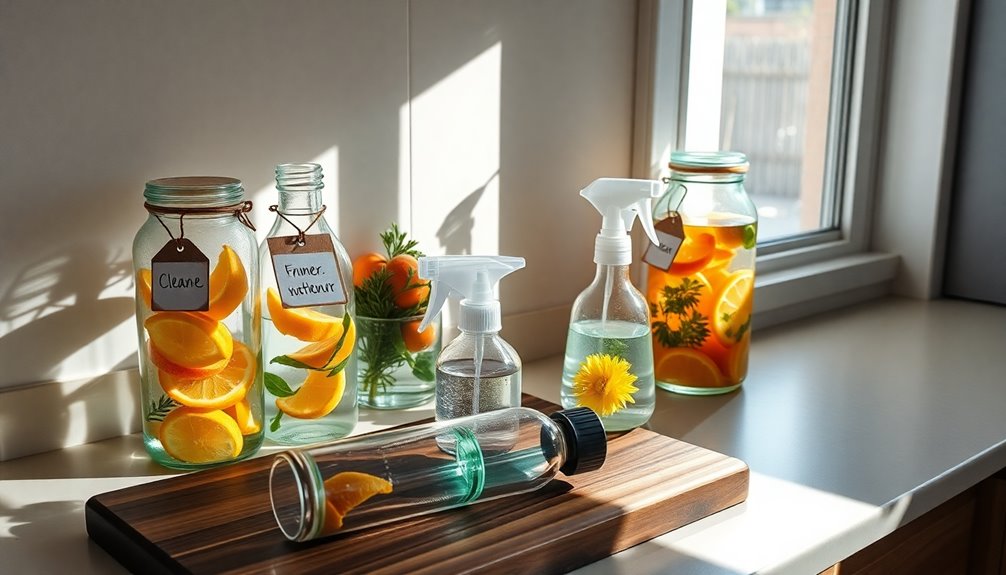
While you might whip up homemade cleaners with the best intentions, proper storage is key to keeping them effective and safe. Neglecting this can lead to dangerous ingredient interactions that can render your cleaners ineffective or even harmful.
For instance, mixing vinegar and baking soda might create a fizzy reaction, but storing them together can cause pressure buildup and potential spills. Always follow safety precautions when storing your cleaners; use labels to identify contents and keep them out of reach of children and pets.
Furthermore, verify you’re using appropriate containers that can withstand the ingredients’ chemical properties. By prioritizing storage, you’re not only maintaining the effectiveness of your cleaners but also safeguarding your home and family. Additionally, ensure you understand the chemical properties of vinegar, as this knowledge can help prevent unsafe combinations.
Best Container Choices for DIY Cleaners
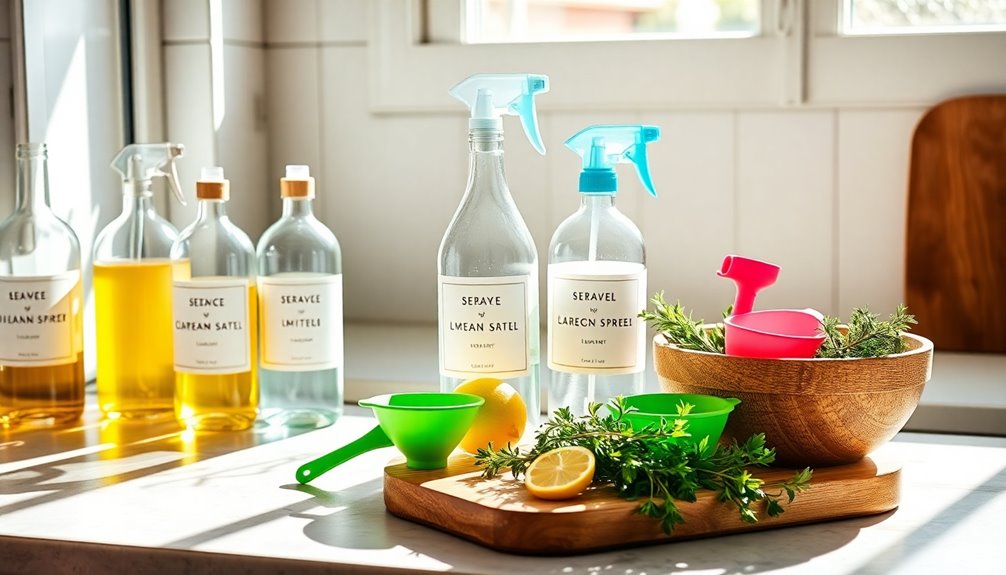
Choosing the right containers for your DIY cleaners is essential for maintaining their potency and safety. Here are some great options to evaluate:
Selecting appropriate containers for your DIY cleaners is crucial for preserving their effectiveness and ensuring safety.
- Glass bottles: These are perfect for acidic or essential oil-based cleaners, as they won’t react with the ingredients.
- Plastic spray bottles: Ideal for water-based solutions, they’re lightweight and easy to use. Just make sure they’re BPA-free to avoid any harmful chemicals.
- Amber or cobalt containers: These protect light-sensitive ingredients, extending the shelf life of your cleaners. Additionally, using eco-friendly methods can contribute to a healthier home environment by minimizing exposure to harsh chemicals.
Essential Labeling Practices for Homemade Cleaners
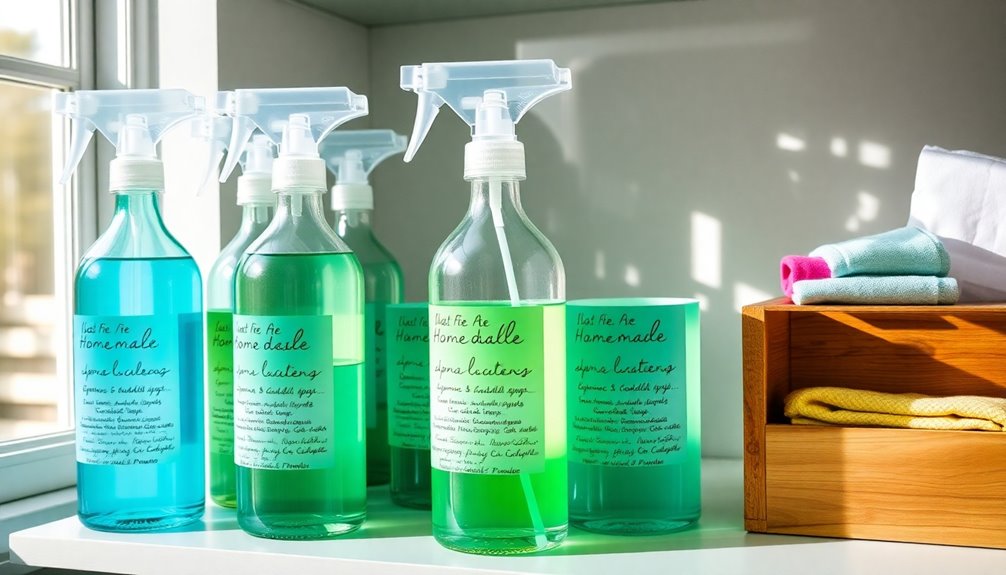
Labeling your homemade cleaners is essential not just for organization, but also for safety. Start by using clear, waterproof labels that can withstand spills and moisture.
Include the name of the cleaner, its intended use, and any warnings about the ingredients. For effective ingredient identification, list out the main components—this helps anyone using the cleaner understand what’s inside.
You might consider using color-coded labels for different types of cleaners, making it easier to grab the right one quickly. Employ simple labeling techniques, like bold fonts and easy-to-read sizes, to guarantee clarity.
Regularly check and update labels as needed, especially if you change ingredients or create new formulas, to maintain safety and efficacy in your cleaning routine. Additionally, ensure that the labels also reflect the main components of each cleaner, as this is crucial for identifying their cleaning properties.
How to Protect Your Cleaners From Degradation
To keep your homemade cleaners effective, you need to choose the right storage containers. Opt for dark glass or BPA-free plastic to shield them from light and air exposure. Additionally, store them in a cool, stable temperature to prevent degradation. Using biodegradable ingredients in your homemade cleaners can also enhance their effectiveness and environmental safety.
Proper Storage Containers
Selecting the right storage container is essential for maintaining the effectiveness of your homemade cleaners. Using the appropriate containers can prevent degradation and guarantee your cleaners remain potent.
Here are some tips to help you choose wisely:
- Glass containers: These are excellent for long-term storage, as they don’t leach chemicals and protect against UV light.
- Plastic bottles: If you prefer lightweight options, opt for high-density polyethylene (HDPE) or polypropylene, which are more durable than standard plastic.
- Label your containers: Always label your storage with the contents and date made, so you know when to replace them.
Ideal Temperature Conditions
Once you’ve chosen the right storage containers, it’s important to evaluate the temperature conditions where you’ll keep your homemade cleaners.
Aim for a stable environment with ideal humidity levels, ideally between 30% and 50%. Too much humidity can lead to mold growth, while too little can dry out your cleaners, affecting their effectiveness.
Avoid storing them in areas with significant temperature fluctuations, like near windows or heating vents. Extreme heat can degrade the active ingredients, while cold temperatures may cause separation.
Instead, opt for a cool, dark place, like a pantry or cupboard. By maintaining these conditions, you can guarantee your homemade cleaners stay potent and effective for longer, making your cleaning efforts more efficient.
Safe Storage Locations: Where to Keep Your Cleaners
When storing your homemade cleaners, choose dry and cool areas to maintain their effectiveness. It’s essential to keep them in childproof cabinets, ensuring little ones can’t access them. Additionally, keeping your home dry can help prevent the growth of mold and bacteria in your cleaning solutions.
Dry, Cool Areas
To guarantee your homemade cleaners remain effective and safe, store them in dry, cool areas away from direct sunlight and heat sources.
Proper humidity control and temperature regulation are essential for preserving the integrity of your cleaners. High temperatures and moisture can cause them to break down or lose potency.
Here are some ideal storage locations:
- Cabinets in a climate-controlled room: Keep them away from kitchens and bathrooms where humidity levels can fluctuate.
- Basements or storage rooms: These areas often provide cooler temperatures and less sunlight.
- Pantry shelves: Verify these shelves aren’t near heat-generating appliances.
Childproof Cabinets
While you want your homemade cleaners to be easily accessible, it’s crucial to store them in childproof cabinets to prevent accidents.
Installing cabinet locks is a simple yet effective childproof measure that keeps your cleaning supplies out of reach. Look for locks that are easy for you to operate but challenging for little ones.
Consider placing these cabinets in high locations or using additional safety latches for extra security. Always make sure you educate older children about the importance of not accessing these areas without supervision.
By taking these precautions, you can create a safer home environment while still having your homemade cleaners within reach when needed.
Prioritize safety, and you’ll enjoy peace of mind.
Tips for Preventing Accidental Spills and Mix-Ups
Accidental spills and mix-ups can easily happen if you don’t take the right precautions with your homemade cleaners.
To guarantee effective spill prevention and mix-up avoidance, follow these simple tips:
- Label all containers clearly: Use waterproof labels to identify the contents and any hazards.
- Use consistent storage locations: Always return your cleaners to the same spot, making it easier to find and avoid confusion.
- Keep lids tightly sealed: Confirm all containers are securely closed to prevent leaks and spills.
- Store sponges in a dry place: This helps minimize bacteria growth and ensures they remain effective for cleaning when needed.
How to Know When to Discard Homemade Cleaners?
Wondering how to tell when it’s time to toss your homemade cleaners? Look out for expiration signs like changes in color, texture, or smell.
If your cleaner smells off or has separated, it’s best to discard it. Additionally, if it’s been over six months since you made it, consider throwing it away, even if it seems fine. Natural cleaning alternatives like hydrogen peroxide can also lose effectiveness over time, so it’s crucial to ensure your cleaners are fresh.
If your cleaner has an off smell or has separated, it’s time to toss it out, especially if it’s older than six months.
To safely dispose of homemade cleaners, check local regulations for proper discard methods. Some ingredients can be harmful to the environment, so don’t just pour them down the drain. Instead, use designated hazardous waste facilities in your area.
Staying aware of these signs and methods guarantees you’re using effective and safe cleaners in your home.
Common Mistakes to Avoid When Storing Cleaners
When storing homemade cleaners, it’s essential to avoid common mistakes that can compromise their effectiveness and safety.
One of the most prevalent common misconceptions is using inappropriate containers. Always choose glass or high-quality plastic bottles to prevent chemical reactions.
Additionally, neglecting to label your cleaners is a mistake; it can lead to confusion and accidental misuse.
Finally, improper storage techniques, such as keeping cleaners in areas with extreme temperatures, can degrade their potency. Regularly check for changes in smell or appearance to ensure your cleaners remain effective.
- Use the right containers for chemical safety.
- Always label your cleaners clearly.
- Store in a cool, dark place away from heat sources.
Conclusion
By following these storage tips, you can guarantee your homemade cleaners remain effective and safe to use. Remember, proper storage not only protects your cleaners but also keeps your home safe. So, why take chances with potentially hazardous mixtures? With the right containers, labels, and locations, you’ll maintain the quality of your DIY solutions. Keep these practices in mind, and you’ll have peace of mind while enjoying the benefits of your homemade cleaners!