An organized kids’ room boosts focus and creativity while reducing stress. Involve your kids in decluttering by creating fun categories to decide what to keep, donate, or toss. Get creative with storage solutions like shelves and labeled bins, and establish a daily tidy routine for everyone. Don’t forget to implement a donation system to teach responsibility. By incorporating these tips, you can transform chaos into an inviting space, and there’s even more to explore on making it truly functional!
Understanding the Importance of an Organized Space
When you organize your child’s room, you’re not just tidying up; you’re creating a space that enhances their focus and creativity. A cluttered environment can impede concentration, leading to frustration and mental fatigue.
By decluttering and organizing their kids’ room, you reduce stress and foster a sense of control, benefiting both you and your child. An organized space encourages independence, teaching kids the value of responsibility for their belongings.
It simplifies their daily routines, making it easier for them to engage in play and learning activities. Establishing a routine for maintaining this organization instills lifelong habits, contributing to their overall sense of order. Ultimately, you’re not just creating a tidy space; you’re setting the foundation for their growth and development. A clutter-free environment promotes relaxation and mental clarity, enhancing their overall well-being.
Involving Kids in the Decluttering Process
Involving your kids in the decluttering process can empower them to make choices about their belongings. By turning it into a fun activity, you’ll not only lighten the load but also teach them valuable skills. Together, you can create a clutter-free space that fosters responsibility and teamwork. Additionally, engaging in this process helps promote emotional well-being as they learn to let go of items they no longer need.
Empowering Kids’ Choices
Empowering kids to make choices about their belongings can transform the decluttering process into a valuable life lesson. When you involve them, it not only lightens the clutter but also instills responsibility.
Here are some effective organization tips to implement:
- Create categories: keep, donate, and toss.
- Encourage ruthlessness: items not used in six months can go.
- Set aside a weekend for family decluttering fun.
- Use days-of-the-week bins for outfit planning.
These small changes let kids take charge of their space and learn to keep things organized. By fostering their autonomy, you help them develop decision-making skills that will serve them well beyond their childhood.
Fun Decluttering Activities
Decluttering can be a fun adventure that you and your kids commence on together, turning a chore into an enjoyable experience.
Start by creating three distinct piles: keep, donate, and toss. Encourage your children to decide what stays and what goes.
Organize a treasure hunt where they search for toys or clothes they no longer use, making it a game! Set a timer for a quick decluttering session; see who can find the most items in a friendly competition.
Use themed bins like “toys,” “clothes,” and “books” to help with organization ideas.
Finally, celebrate your success with a small reward or treat, reinforcing positive feelings about decluttering and encouraging future participation.
Creative Storage Solutions for Small Spaces
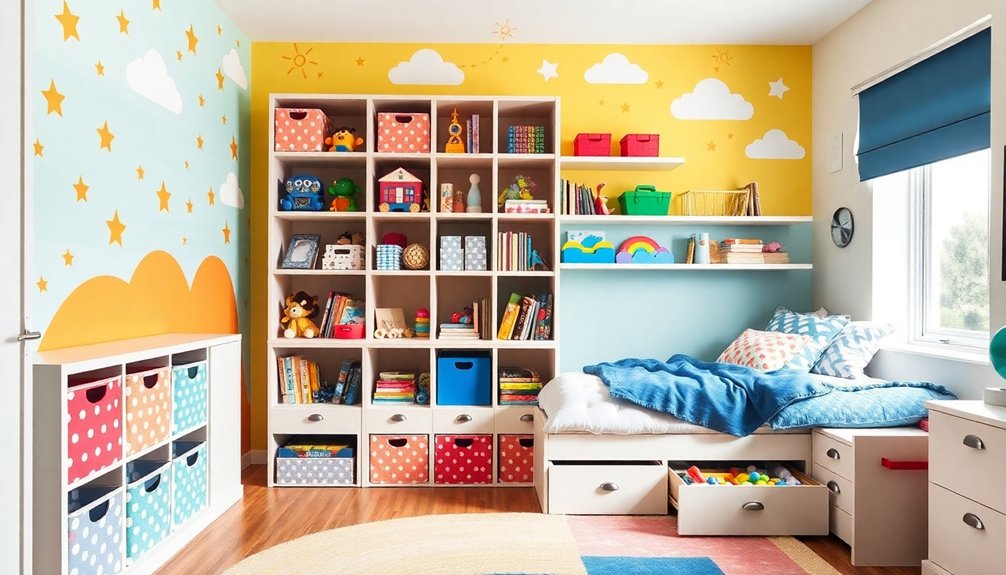
When you’re working with a small room, maximizing storage can feel like a challenge, but creative solutions can transform the space. By thinking outside the box, you can enhance organization while keeping everything accessible for your kids.
Maximizing storage in a small room can be a challenge, but innovative solutions can simplify organization and accessibility for your kids.
Here are some effective ideas:
- Install shelves and wall-mounted organizers to free up floor space.
- Use under-bed storage bins or rolling drawers for off-season clothes and bulky toys.
- Implement labeled bins and baskets to categorize toys, books, and art supplies.
- Choose multi-functional furniture like storage ottomans or desks that double as craft stations.
- Regularly assess the organization of the cupboard to ensure it remains functional and accessible for your kids.
These creative storage solutions not only keep small spaces tidy but also encourage your kids to maintain their organization, making clean-up a breeze!
Establishing a Daily Tidy Routine
Creative storage solutions make a significant difference, but maintaining that organization requires a daily tidy routine. Setting a timer for 10-minute family clean-up sessions makes tidying fun and manageable. Encourage everyone to pitch in without feeling overwhelmed. Incorporating music or games can motivate your kids to participate actively, turning cleaning into an enjoyable activity.
Assign specific tasks to each family member during these tidy sessions to guarantee accountability and distribute the workload evenly. This consistent daily tidy routine fosters good habits in your children, teaching them the importance of organizing and maintaining their space. Plus, engaging in family clean-up sessions not only creates a cleaner environment but also strengthens family bonds through teamwork and shared goals, even amidst the hustle of kids’ school activities. Implementing a 10-minute tidy helps maintain a cleaner home while making cleaning less daunting for everyone.
Effective Sock and Clothing Management
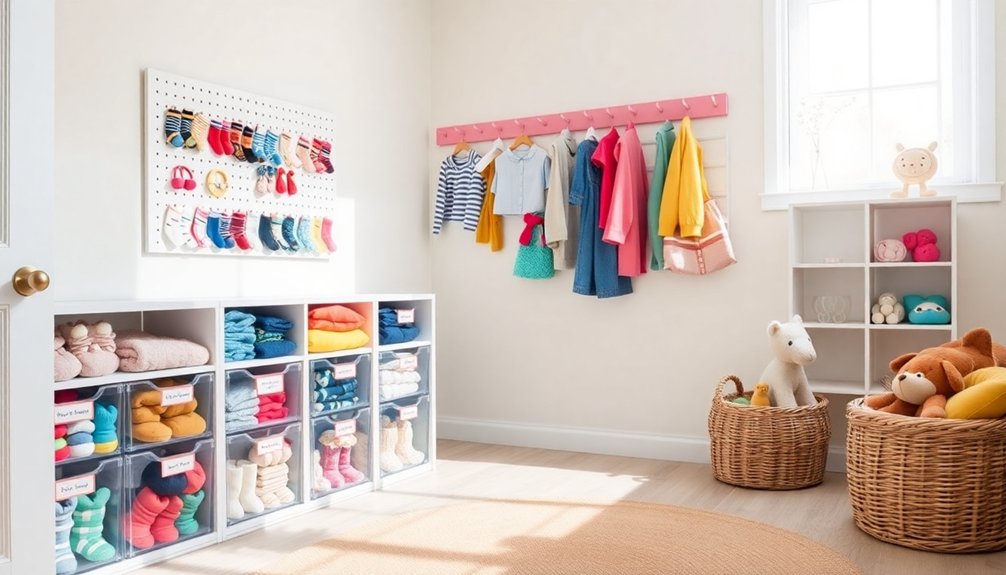
Managing socks and clothing can feel overwhelming, but with a few simple strategies, you can streamline the process.
Start by creating a designated home for socks, like a basket in the mudroom, to ease morning chaos and make laundry sorting easier.
Implement a clothing organization system by decluttering wardrobes, keeping only essential items. This helps kids choose outfits quickly and reduces decision fatigue.
Encourage a daily outfit organizer system, allowing children to pre-select outfits for the week.
Use labeled bins for socks and clothes, so kids can easily access and return items.
- Move socks to a dedicated area
- Declutter wardrobes regularly
- Pre-select weekly outfits
- Label bins for easy access
Incorporating multifunctional furniture can further optimize space in kids’ rooms, ensuring that storage solutions are both practical and functional.
Streamlining Schoolwork and Art Supplies
To keep schoolwork and art supplies organized, start with a weekly clean-out of your child’s backpack to sort through unnecessary papers.
Set up a designated space for important art projects and supplies, ensuring they only keep what truly matters.
This simple system not only reduces clutter but also teaches kids to value their creations and stay organized. Consider incorporating creative shelving systems to further enhance storage options for art supplies and schoolwork.
Weekly Backpack Clean-Outs
Every week, set aside time for a backpack clean-out to keep your child’s schoolwork and art supplies organized. This weekly clean-out session helps reduce clutter and teaches valuable skills.
Encourage your kids to actively participate in sorting through their papers, deciding what to keep and what to recycle.
Here are some tips to streamline the process:
- Designate a box or shelf for keepsakes to limit the amount of paper brought home.
- Sort through art supplies to guarantee only the essentials are kept.
- Create a system for important documents to avoid losing anything vital.
- Review items at the end of the year to celebrate achievements and decide what to keep or digitize.
This organization routine fosters responsibility and efficiency.
Designated Art Supply Storage
Creating a designated art supply storage system can transform your child’s creative space into a more organized and inspiring environment.
Use a rolling cart to keep all art supplies together, making it easy for your kids to access what they need and manage their projects independently.
Designate specific bins or labeled containers for different supplies, like markers, crayons, and paper, which streamlines organization and simplifies cleanup after art activities.
Establish a routine for checking and restocking supplies to guarantee your children always have what they need when inspiration strikes.
Encourage them to participate in the organization process, allowing them to decide where to store items, fostering a sense of ownership and responsibility for their workspace.
Keep Only Essentials
While it might be tempting to keep every piece of your child’s artwork or school project, streamlining their collection can lead to a more organized and focused space.
Schedule regular clean-out sessions to help your kids identify and retain only their most meaningful creations. Use these strategies:
- Designate a specific box or folder for important schoolwork and art projects.
- Implement a photo documentation method for preserving memories while recycling old toys and art supplies.
- Encourage kids to take ownership of their collections by involving them in decision-making.
- Conduct a weekly or monthly review to assess which supplies are still in use.
Implementing a Donation System
To foster a culture of giving in your home, consider implementing a donation system that makes it easy and rewarding for your kids to part with outgrown or unused items.
Start by establishing a designated donation box in a visible area, encouraging regular contributions. Schedule monthly donation clean-outs to create a consistent decluttering routine.
Teach your kids to assess their belongings by using the “one in, one out” rule—ensuring they donate an item for every new one they receive. Involve them in the selection process to help them appreciate the value of giving.
Finally, partner with local charities to establish a clear destination for these items, reinforcing the positive impact of their contributions on others in need. Additionally, regularly purging unwanted items from their rooms can create a more organized space that reflects their personal style and fosters a sense of ownership over their belongings through the 80/20 rule.
Tips for Maintaining a Clean and Organized Room
Maintaining a clean and organized room can feel overwhelming, but with a few simple strategies, you can make it manageable and even enjoyable.
Here are some tips to help you keep things in order:
- Establish a daily tidy routine with a quick 10-minute clean-up session—set a timer and make it a family activity!
- Implement a designated storage system for toys, clothes, and school supplies with labeled bins for easy access.
- Use a “one-in, one-out” rule for new items to maintain space and organization.
- Conduct regular decluttering sessions with your kids to sort through items they no longer use or need.
- Incorporate time-saving strategies that allow for focused cleaning sessions, making it easier to maintain a tidy space amidst a busy schedule.
Engaging Kids With Fun Cleaning Activities
Getting kids involved in cleaning can transform a mundane chore into an enjoyable activity. Set a timer for a 10-minute family clean-up session to create a fun race against the clock, engaging kids in speedy cleaning activities.
Use upbeat music or games to foster a lively atmosphere that encourages participation and teamwork. Assign specific tasks based on each child’s abilities, allowing them to feel responsible for their space.
Establish a reward system with stickers or small treats to motivate them further. Turn cleaning into a treasure hunt, asking kids to find and categorize items, making the process interactive and exciting. Additionally, implement a 10-minute tidy-up routine to instill a sense of responsibility and organization in their daily habits.
Maximizing Functionality With Multi-Purpose Furniture
While kids’ rooms can quickly become cluttered, maximizing functionality with multi-purpose furniture can make a significant difference. By incorporating smart pieces, you’ll enhance both organization and storage.
Here are some tips to evaluate:
- Desks that convert into art stations: Perfect for creative kids and saves space.
- Storage ottomans: Dual-purpose seating that hides toys neatly.
- Beds with built-in drawers: Utilize vertical space for off-season clothes or bulky items.
- Convertible cribs: Adapt as your child grows, reducing the need for replacements.
Investing in multi-purpose furniture not only keeps the room tidy but also adapts to your child’s changing needs, making it a practical choice for busy parents. Additionally, utilizing mindful storage solutions can further prevent clutter buildup and ensure everything has a designated place.
Conclusion
An organized kids’ room isn’t just a dream; it can be your reality with a bit of effort and creativity. Did you know that children who have tidy spaces are 30% more likely to stay focused and be productive? By involving your kids in the cleaning process and establishing fun routines, you’re not only creating a clutter-free environment but also teaching them valuable life skills. Embrace these tips, and watch their rooms transform into organized havens!