To remove wax buildup from your kitchen floors, start by checking for signs like dullness, stickiness, or discoloration. Use essential tools like a putty knife and a microfiber mop, and apply a wax remover according to the manufacturer’s instructions. Rinse thoroughly afterward. For a more eco-friendly solution, try a vinegar and water mixture or a baking soda paste. Maintaining your floors regularly can prevent future buildup. Keep going to discover more tips and methods for floor care.
Understanding Wax Buildup on Kitchen Floors
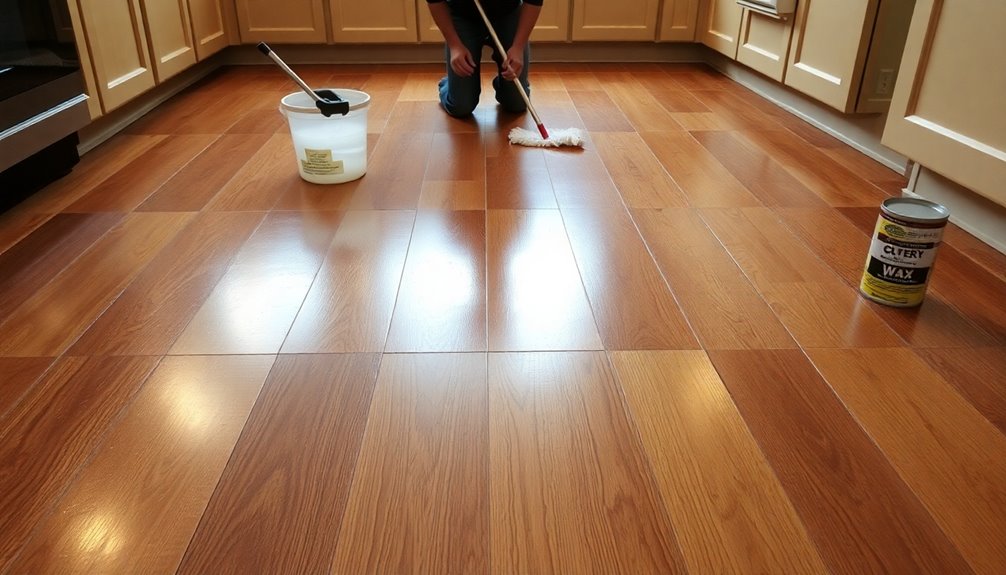
When you apply wax to your kitchen floors, it can create a beautiful shine, but over time, it may build up and lead to a dull, sticky surface.
Applying wax to kitchen floors adds shine, but neglecting maintenance can cause dullness and stickiness over time.
Different wax types, such as paste, liquid, or spray, can affect how the buildup appears on various floor materials. For instance, hardwood, tile, and vinyl each respond differently to wax application and maintenance.
If you don’t regularly strip and reapply the wax, it can accumulate, trapping dirt and grime underneath. This buildup not only detracts from your floor’s appearance but can also make cleaning more difficult. Understanding the characteristics of the wax types you use and how they interact with your floor materials is essential for maintaining a pristine kitchen environment. Additionally, regular maintenance with effective tile cleaners can help mitigate the effects of wax buildup and keep your floors looking their best.
Signs Your Kitchen Floor Has Wax Buildup?
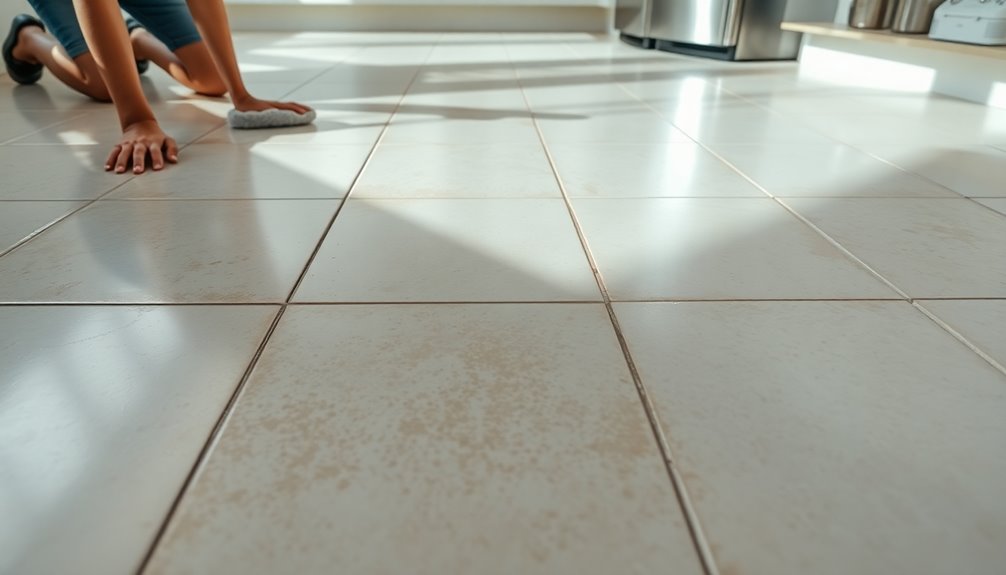
Identifying signs of wax buildup on your kitchen floor can help you maintain its shine and cleanliness. One of the first signs is a dull or cloudy appearance, which often occurs due to the accumulation of layers.
You might also notice sticky spots, especially after cleaning, indicating the causes of buildup. If your floor feels slippery, that’s another clue; wax buildup can create an unsafe surface.
Additionally, if you see discoloration or yellowing, it’s time to investigate further. Regular disinfection prevents bacterial growth and is essential for keeping your floors in good condition.
Regularly checking for these signs can save you time and effort in the long run, ensuring your kitchen remains a welcoming space.
Why Wax Buildup Is a Problem for Your Floors
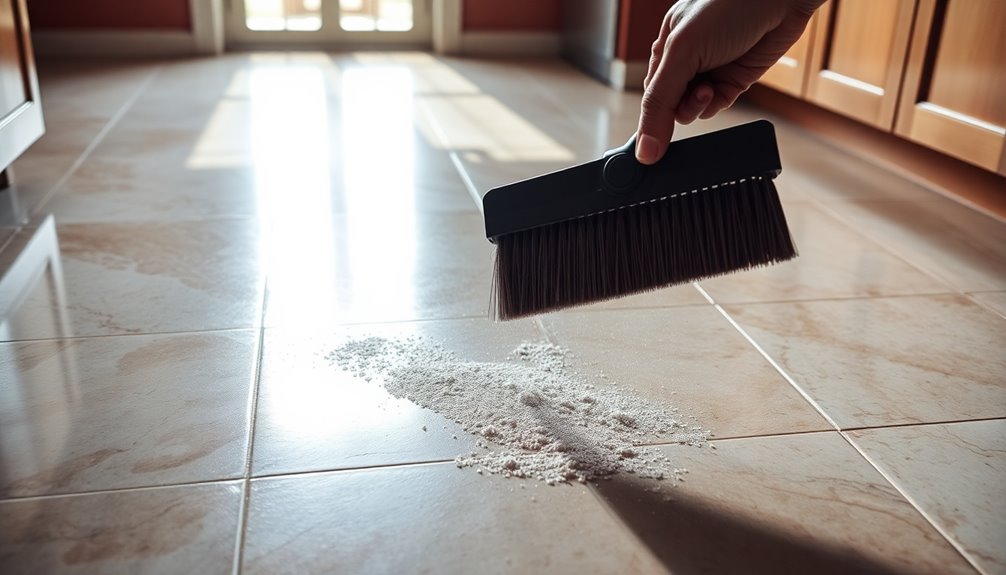
Wax buildup can make your kitchen floors look dull, taking away their shine and appeal. It also creates a slippery surface, which can be a safety hazard for you and your family. Plus, the more buildup there is, the harder it becomes to clean your floors effectively. Regular maintenance and mindful usage of cleaning products can help prevent excessive buildup and keep your floors looking their best.
Dull Appearance Over Time
As time goes by, many homeowners notice their kitchen floors losing that vibrant shine, which can often be attributed to wax buildup.
This buildup creates a dull finish that diminishes the overall appeal of your space. Instead of showcasing the rich colors and textures of your flooring, the layers of wax obscure their beauty, leaving them looking tired and worn.
Regular maintenance is essential for floor restoration, as it allows you to address the issue before it escalates. By removing the excess wax, you can revive the original luster of your floors and restore their inviting appearance.
Don’t let wax buildup rob your kitchen of its charm—take action to keep your floors looking fresh and vibrant.
Slippery Surface Hazard
When you allow wax buildup to accumulate on your kitchen floors, you not only compromise the appearance but also create a slippery surface hazard.
This excess wax can make your floors dangerously slick, increasing the risk of slips and falls, especially in a high-traffic area like the kitchen. You mightn’t realize it, but even a thin layer of wax can greatly reduce floor safety.
It’s essential to maintain a clean surface to prevent these slippery hazards from becoming a serious issue. Regular cleaning and stripping of wax will help restore traction and keep your family safe.
Don’t overlook the importance of a well-maintained floor; it’s vital for both aesthetics and safety in your home.
Difficult Cleaning Process
Removing wax buildup isn’t just a matter of aesthetics; it can be a challenging and time-consuming process. You might find that the difficult techniques needed to strip away layers of wax are more than just a hassle.
Different flooring materials can present challenging surfaces that require specialized approaches. For instance, hardwood floors demand gentler methods, while tile might need harsher chemicals.
As you tackle the buildup, you’ll realize that improperly handled wax can lead to scratches or damage. This makes it vital to understand the right tools and techniques to use.
Skipping steps or using the wrong products can’t only prolong the cleaning process but also create more issues down the line. Prioritize a careful approach for the best results.
Essential Tools for Removing Wax Buildup
To effectively tackle wax buildup on your kitchen floors, you’ll need a few essential tools at your disposal.
Having the right floor cleaning tools will make your wax removal techniques more efficient and effective. Here’s a quick list of what you should gather:
- Putty Knife – For scraping off thick layers of wax.
- Mop – A microfiber mop works well for cleaning and absorbing residue.
- Wax Remover – Choose a commercial product or a homemade solution that’s safe for your floor type.
- Bucket – For mixing cleaning solutions and rinsing your mop.
By ensuring that you have the right tools, you can maintain ideal airflow and efficiency in your cleaning process. With these tools on hand, you’ll be well-prepared to remove wax buildup, leaving your kitchen floors clean and shiny.
Step-by-Step Guide to Removing Wax Buildup
To tackle wax buildup on your kitchen floors, you’ll want to start by gathering all the necessary supplies.
Next, you’ll apply a wax remover to break down the buildup effectively.
Finally, cleaning and rinsing the area will leave your floors looking fresh and shine-free. Regular maintenance, like using eco-friendly solutions, can help prevent future wax buildup and maintain the overall appearance of your floors.
Gather Necessary Supplies
Before diving into the process of eliminating wax buildup from your kitchen floors, you’ll need to gather the right supplies to guarantee a smooth and effective cleanup.
This supplies checklist will help you collect all the cleaning essentials you’ll need for the task.
- Wax remover – Choose a product designed specifically for your floor type.
- Mop or scrub brush – A good-quality mop or brush helps with the removal process.
- Bucket – You’ll need this for mixing your cleaning solution.
- Rags or towels – These are essential for drying the floor and wiping up any residue.
Having these items on hand will set you up for success in tackling that pesky wax buildup!
Apply Wax Remover
Once you’ve gathered your supplies, it’s time to apply the wax remover to tackle that stubborn buildup.
Start by choosing the right wax remover type—liquid, spray, or gel—based on your floor material and the severity of the buildup.
For liquid removers, pour a small amount onto a clean cloth or mop. If you’re using a spray, mist it evenly over the affected area.
Use a scrub brush or a microfiber cloth to work the remover into the wax. Apply gentle pressure and use circular motions to break down the buildup effectively.
Be sure to follow the manufacturer’s instructions for best results and let the remover sit for the recommended time before moving on to the next step.
Clean and Rinse
After allowing the wax remover to sit for the recommended time, it’s time to clean and rinse the area to confirm all residue is removed.
Using effective cleaning techniques will guarantee your kitchen floor remains in top shape. Follow these steps for proper floor maintenance:
- Use a clean mop: Wring it out thoroughly to avoid excess water.
- Prepare a bucket of warm water: Add a few drops of mild dish soap for added cleaning power.
- Mop the area: Work in sections, using gentle pressure to lift any remaining wax.
- Rinse the mop frequently: This prevents spreading residue and guarantees a thorough clean.
Once finished, allow the floor to dry completely before walking on it. Your kitchen floor will thank you!
Alternative Methods for Tackling Wax Residue
When dealing with stubborn wax residue on your kitchen floors, several alternative methods can help restore their shine without harsh chemicals.
One effective natural solution is a vinegar mixture. Combine equal parts white vinegar and warm water in a spray bottle. Spray it directly onto the waxy areas and let it sit for a few minutes to break down the residue. Then, use a soft cloth or mop to wipe it away.
Another option is using baking soda. Sprinkle it over the affected areas, add a little water to form a paste, and gently scrub with a soft brush. Rinse thoroughly with clean water afterward.
These methods aren’t only safe but also environmentally friendly. Additionally, using these natural ingredients aligns with the benefits of eco-friendly products, promoting a healthier home environment while effectively tackling stubborn wax buildup.
How to Prevent Future Wax Buildup
To keep wax buildup from becoming a problem in your kitchen, you should establish a regular cleaning routine.
Consistent preventive measures are key to maintaining your floors and avoiding sticky situations.
Preventive measures are essential for preserving your floors and steering clear of sticky challenges.
Here are four tips to help you with regular maintenance:
- Mop Weekly: Use a damp mop to clean your floors weekly, preventing wax accumulation.
- Limit Wax Application: Only apply wax when necessary, and avoid multiple layers.
- Choose the Right Wax: Use a high-quality wax designed for your specific floor type.
- Spot Clean Spills: Quickly clean up spills to prevent sticky residues that attract dirt and wax buildup.
Additionally, consider using eco-friendly disinfectants that can enhance your cleaning routine while being safe for your floors.
Choosing the Right Floor Cleaner for Your Kitchen
Choosing the right floor cleaner for your kitchen is essential, especially if you want to maintain a clean and inviting space.
Start by considering the type of floor you have, as different materials require specific cleaners for best results. For example, hardwood, tile, and laminate floors all have unique needs.
Look for eco-friendly cleaners that won’t harm your family or the environment. These options often provide effective cleaning power without harsh chemicals.
Always check for floor material compatibility on the label to avoid damaging your surfaces.
With the right cleaner, you can effortlessly remove dirt and grime while keeping your kitchen looking its best. Additionally, consider using cleaners that are eco-friendly with plant-derived cleaning agents to ensure safety for kids and pets.
Invest time in choosing wisely, and you’ll enjoy a sparkling, safe cooking area.
The Best Products for Wax Removal
After selecting the right floor cleaner for your kitchen, it’s important to address any wax buildup that may have accumulated over time.
To effectively remove wax, consider using some of the best wax removers available. Here are four options, including eco-friendly choices:
Consider using top wax removers, including eco-friendly options, to effectively tackle wax buildup on your kitchen floor.
- Citrus-based Wax Remover – This natural option cuts through wax while leaving a fresh scent.
- Commercial Wax Stripper – Look for a product specifically designed for floor wax removal.
- Vinegar Solution – A mixture of vinegar and water can effectively break down wax buildup.
- Eco-friendly Multi-Surface Cleaner – Many brands offer eco-friendly options that are safe for both your floors and the environment.
Additionally, using a vinegar solution not only helps in removing wax but also promotes a healthier kitchen environment. Choose the right product to restore your kitchen floor’s shine!
Tips for Maintaining Your Kitchen Floor’s Shine
While you may have successfully removed wax buildup from your kitchen floor, maintaining its shine requires consistent care and attention.
Start by sweeping or vacuuming regularly to prevent dirt and debris from scratching the surface. Use a damp mop with a gentle cleaner specifically designed for your floor type; avoid harsh chemicals that can dull the shine. Consider applying a floor protector or sealer every few months to enhance shine maintenance and safeguard against future damage. When spills happen, clean them up immediately to prevent staining. Finally, place mats in high-traffic areas to minimize wear. Additionally, establishing a routine cleaning schedule is essential for maintaining a healthy and welcoming home, preventing the buildup of dirt and grime.
Common Mistakes to Avoid When Cleaning Floors
Maintaining a shiny kitchen floor is important, but cleaning mistakes can hinder your efforts.
Here are some common pitfalls to avoid when using cleaning techniques for floor maintenance:
- Using Too Much Water: Excess moisture can damage your flooring and lead to mold growth.
- Skipping Regular Sweeping: Neglecting to sweep can result in dirt buildup, making your cleaning less effective.
- Using Harsh Chemicals: Strong cleaners can strip your floor’s finish, diminishing its shine over time.
- Not Rinsing Properly: Residue left from cleaning solutions can attract dirt, negating your hard work.
When to Call a Professional for Floor Cleaning?
Knowing when to call a professional for floor cleaning can save you time and frustration, especially if you’re struggling with stubborn stains or extensive wax buildup.
If your DIY efforts aren’t yielding results or if the wax buildup is severe, it’s time to hire professional services. Professionals have specialized equipment and expertise to effectively remove wax without damaging your floors.
Additionally, if you’re unsure about the best cleaning method for your specific floor type, reaching out for help can prevent costly mistakes.
Don’t hesitate to call in the pros when you notice discoloration or if your floors look dull despite your efforts.
Ultimately, knowing when to hire a professional can restore your kitchen floor’s beauty efficiently.
Conclusion
To sum up, tackling wax buildup on your kitchen floors doesn’t have to be a Herculean task. With the right tools and techniques, you can restore that gleaming shine in no time. Remember, just like in a classic detective story, the key to solving the mystery of dull floors lies in knowing when to dig deeper. Keep your floors clean, and they’ll reflect your efforts, making your kitchen the heart of your home—just like a good old-fashioned dinner party!