To clean silicone baking moulds effectively, stick with gentle methods. Use natural cleaners like vinegar and baking soda for grease and stains, or opt for eco-friendly commercial products designed for silicone. Avoid harsh chemicals and abrasive tools that might damage your moulds. For stubborn stains, a mixture of vinegar and warm water works wonders. Proper cleaning and storage can prevent odors and maintain quality. Discover more tips and techniques to keep your moulds looking new.
Why Clean Silicone Baking Moulds Regularly?
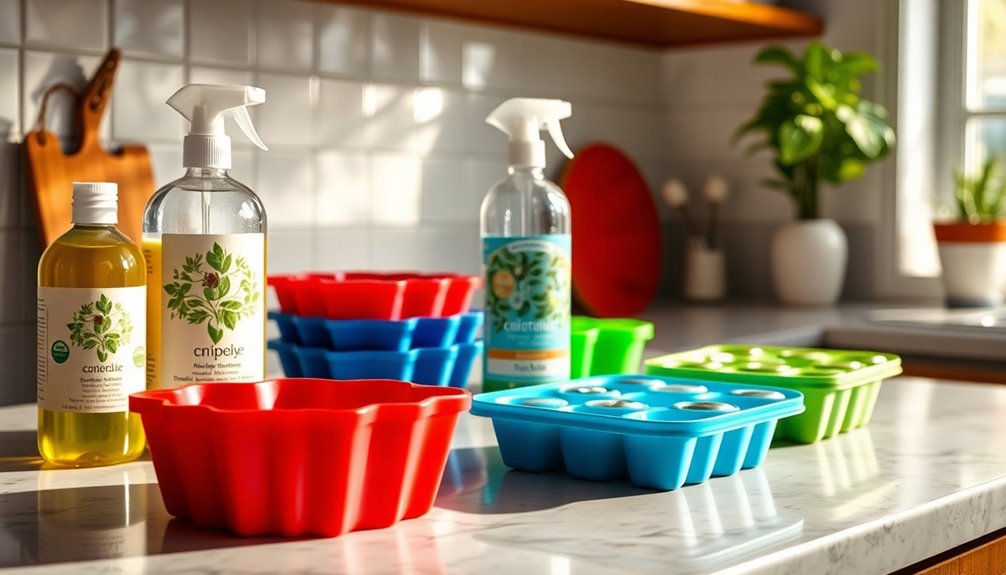
Although silicone baking moulds are known for their non-stick properties, it’s essential to clean them regularly to maintain their performance and longevity.
Neglecting proper mold maintenance can lead to the buildup of residue, which not only affects your baked goods but could also compromise the integrity of the silicone. Over time, grime can cause discoloration and may even make the moulds less effective at releasing your treats. By keeping your silicone moulds clean, you guarantee they remain in top shape, enhancing their longevity. Regular cleaning also helps you avoid unpleasant odors or flavors transferring to your baked items. Additionally, using natural cleaning solutions can help you effectively maintain your silicone baking moulds without harsh chemicals.
Best Practices for Cleaning Silicone Baking Moulds
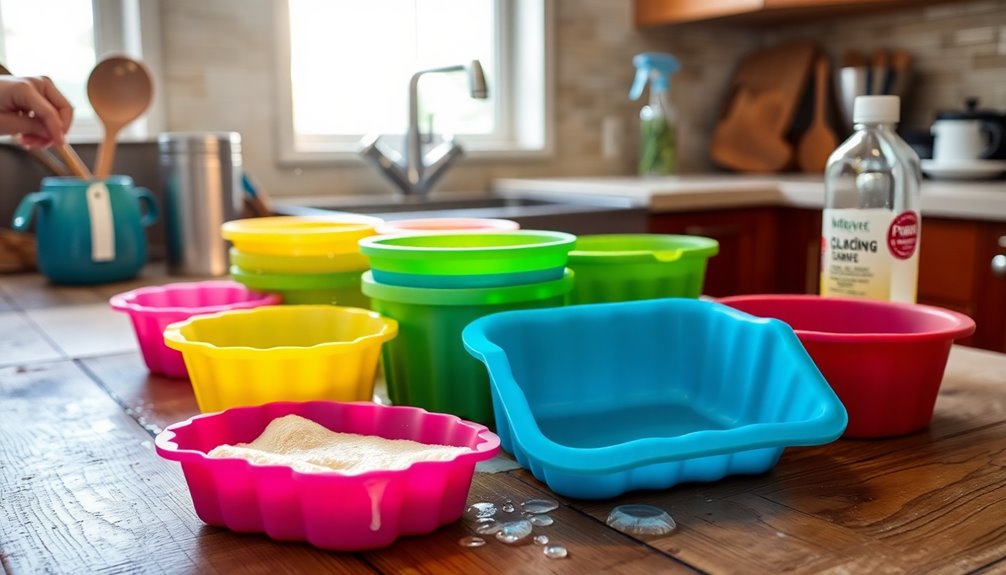
Keeping your silicone baking moulds in great shape requires understanding the best cleaning practices. First, use soft cleaning tools like sponges or cloths to avoid scratching the surface.
To maintain your silicone baking moulds, always use soft cleaning tools to prevent scratches.
For tougher stains, soak the moulds in warm, soapy water before scrubbing gently. Avoid harsh chemicals, as they can damage the silicone.
After cleaning, rinse thoroughly to remove any soap residue, and let them air dry completely to prevent mold growth.
If you notice lingering odors, consider using a mixture of baking soda and water for a deeper clean. Regular use of non-toxic cleaners helps maintain the moulds’ flexibility and longevity, ensuring your baking experience remains enjoyable.
Follow these practices, and your silicone moulds will serve you well for years to come.
Natural Cleaners You Can Use at Home
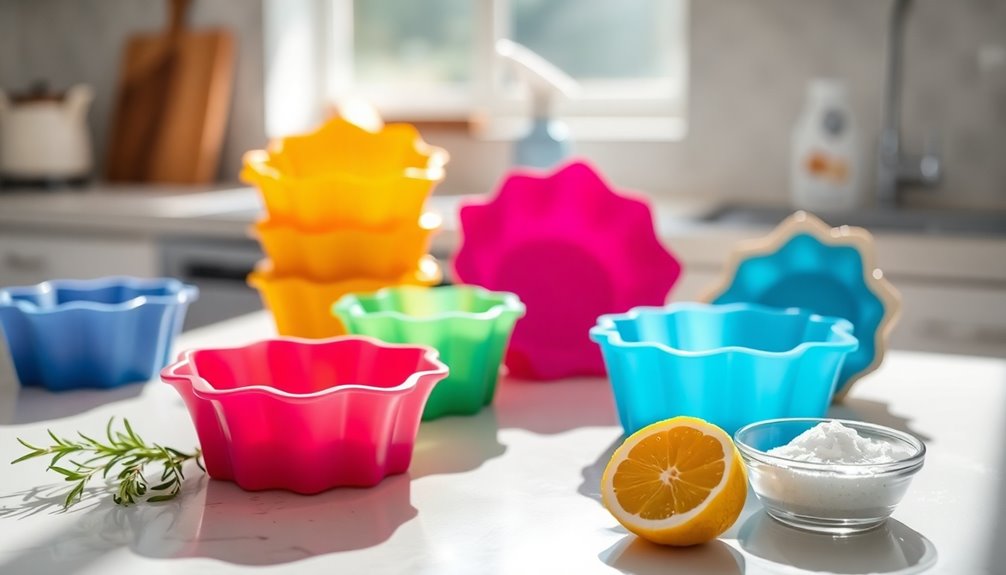
Wondering what natural cleaners you can whip up at home to keep your silicone baking moulds spotless? You don’t need harsh chemicals; simple homemade cleaners work wonders!
One of the best options is a vinegar solution, which effectively cuts through grease and grime. Additionally, using white vinegar as a natural disinfectant not only cleans but also helps eliminate odors.
Here are some other natural cleaners you can try:
- Baking soda paste: Mix baking soda with water to create a paste, great for scrubbing.
- Lemon juice: Its acidity helps eliminate odors and stains.
- Salt: Use as a gentle abrasive to remove stuck-on residues.
- Castile soap: This plant-based soap is perfect for a deep clean without chemicals.
With these easy-to-make solutions, you’ll keep your silicone moulds looking brand new!
Commercial Cleaners: Top Products to Consider
When it comes to cleaning silicone baking moulds, commercial cleaners can offer effective solutions tailored to your needs. You’ll find eco-friendly options that are tough on grime, heavy-duty stain removers for those stubborn marks, and versatile multi-purpose sprays that simplify your cleaning routine. Additionally, some products, such as Dawn Powerwash’s refillable bottle system, promote sustainable consumption while delivering excellent cleaning results. Let’s explore some top products that can help keep your baking tools in pristine condition.
Eco-Friendly Cleaning Solutions
If you want to maintain the quality of your silicone baking moulds while being kind to the environment, choosing eco-friendly cleaning solutions is essential.
Opting for biodegradable cleaners not only protects your bakeware but also contributes to a healthier planet.
Here are some sustainable materials and cleaning options you can consider:
- Vinegar: A natural disinfectant that cuts grease.
- Baking soda: Gentle yet effective for scrubbing away stubborn stains.
- Castile soap: A versatile cleaner made from plant oils.
- Lemon juice: A natural bleach alternative that leaves a fresh scent.
Heavy-Duty Stain Removers
While eco-friendly solutions are great for regular maintenance, sometimes your silicone baking moulds need a heavy-duty clean to tackle tough stains and residue.
For this, you’ll want to take into account heavy-duty products specifically designed for stain removal. Look for cleaners that contain powerful enzymes or oxygen bleach to penetrate and break down stubborn stains.
Some popular choices include commercial stain removers that target grease, food particles, and burnt-on residue.
When using these products, follow the instructions carefully to guarantee effectiveness without damaging your moulds. Remember to rinse thoroughly to remove any leftover cleaning agents.
With the right heavy-duty cleaner, your silicone baking moulds will look as good as new and ready for your next baking adventure!
Multi-Purpose Cleaning Sprays
Multi-purpose cleaning sprays are a game changer for anyone looking to keep their silicone baking moulds in top shape.
These sprays offer multi-surface effectiveness, making them perfect for tackling both your baking essentials and your kitchen surfaces.
When choosing the right product, consider the following:
- Non-toxic ingredients: Verify chemical safety for your family and pets.
- Streak-free finish: Enjoy spotless moulds without residue.
- Fast-acting formula: Save time with quick cleaning solutions.
- Versatility: Use on various surfaces beyond silicone, like countertops and utensils.
Using multi-purpose sprays not only simplifies your cleaning routine but also guarantees you’re using safe products.
How to Remove Stubborn Stains From Silicone
Even though silicone baking moulds are praised for their non-stick properties, stubborn stains can still cling to them after repeated use.
For effective stain removal, start by soaking your moulds in warm, soapy water for about 30 minutes. This helps loosen the stains.
Next, use a soft sponge or cloth to gently scrub the stained areas. If stains persist, create a paste of baking soda and water, apply it to the stains, and let it sit for 15-20 minutes before scrubbing. Rinse thoroughly.
Additionally, consider using vinegar or lemon juice for their natural cleaning properties. These eco-friendly methods not only help restore your silicone moulds but also align with natural alternatives that minimize environmental impact, keeping them in great condition for future baking adventures.
Tips for Preventing Odors in Silicone Moulds
To keep odors at bay in your silicone moulds, focus on proper cleaning techniques right after use. Make sure to store them in a cool, dry place to prevent moisture buildup. Additionally, consider using mild non-abrasive cleaners to maintain the freshness of your baking tools. Following these simple steps can help maintain the freshness of your baking tools.
Proper Cleaning Techniques
While silicone baking moulds offer great flexibility and durability, they can sometimes retain odors if not cleaned properly.
To maintain fresh-smelling moulds, focus on your cleaning frequency and silicone care. Here are some effective techniques to prevent lingering smells:
- Rinse your moulds immediately after use to remove food residue.
- Soak them in a mixture of warm water and vinegar for about 30 minutes.
- Use a soft sponge and mild soap to gently scrub the surface, avoiding harsh abrasives.
- Dry completely before storing to prevent moisture buildup.
Storage Recommendations
Proper cleaning sets the foundation for effective storage of your silicone baking moulds. Once they’re clean and dry, consider silicone stacking for ideal storage. Nest your moulds together to save space, but verify they’re completely dry to prevent moisture buildup, which can lead to odors.
For mould organization, store them in a cool, dry place away from direct sunlight. You might use a breathable container or a fabric bag to keep them well-ventilated.
To further prevent odors, you can place a small, open box of baking soda or activated charcoal in the storage area. This will absorb any lingering smells.
Following these tips will keep your silicone moulds fresh and ready for your next baking adventure!
The Role of Baking Soda and Vinegar in Cleaning
Baking soda and vinegar are a dynamic duo when it comes to cleaning silicone baking moulds. Their combination packs a powerful punch against grime and stains, making your cleaning routine effortless.
Baking soda and vinegar create a powerful cleaning duo for silicone moulds, effortlessly tackling grime and stains.
You’ll enjoy the baking soda benefits, such as its gentle abrasiveness that helps lift stubborn residues, while vinegar properties provide natural antibacterial qualities.
- Baking soda neutralizes odors, leaving your moulds fresh.
- Vinegar cuts through grease and hard water stains.
- Together, they create a foaming reaction that breaks down tough messes.
- This eco-friendly duo is safe and non-toxic for your kitchen. Vinegar contains acetic acid that is effective against bacteria and odors, which enhances its cleaning capabilities.
Next time you tackle those silicone moulds, reach for this cleaning powerhouse to restore their shine and keep your baking experience enjoyable!
How to Properly Store Silicone Baking Moulds
After giving your silicone baking moulds a thorough cleaning with baking soda and vinegar, storing them correctly guarantees they stay in great shape for your next baking adventure.
For the best storage, stack your moulds neatly, but avoid placing heavy items on top to prevent deformation. Keep them in a cool, dry place to maintain mold prevention; moisture can lead to unpleasant odors and growth. Regular cleaning with natural remedies like vinegar spray solution can help keep your moulds fresh and free of odors.
You might also consider using a container or drawer dedicated to your baking supplies, which helps in organizing and protecting your moulds. If you have multiple sizes, nesting them can save space while keeping them safe.
With proper storage, your silicone baking moulds will be ready whenever inspiration strikes!
Common Mistakes to Avoid When Cleaning Silicone
While cleaning silicone baking moulds may seem straightforward, there are several common mistakes that can lead to damage or reduced performance.
Understanding the silicone material properties is essential to maintaining your bakeware. Here are some pitfalls to avoid:
Knowing the properties of silicone is crucial for preserving the quality of your bakeware.
- Using abrasive cleaners or scrubbers that can scratch the surface.
- Ignoring cleaning frequency guidelines, which can lead to buildup and odors.
- Overheating silicone in the dishwasher, which can warp its shape.
- Skipping thorough drying, as moisture can promote mold growth. Additionally, using eco-friendly products can minimize the risk of damaging your silicone bakeware while being safer for your health and the environment.
Conclusion
In the end, your silicone baking moulds deserve the best care. With the right cleaning techniques and products, you can maintain their quality and guarantee every bake is a success. But imagine if you let stubborn stains linger or neglect proper storage—what could that mean for your next batch of cookies? Don’t wait until it’s too late. Embrace these cleaning tips today, and access the full potential of your silicone moulds for years to come.