To reduce dust and pollen in your home, start by identifying common allergens like pet dander and dust mites. Create a regular cleaning schedule, and use an allergy-friendly vacuum cleaner with HEPA filters. Dust with microfiber cloths, change HVAC filters frequently, and wash bedding weekly. Opt for fragrance-free cleaning products and implement a no-shoes policy indoors to keep allergens out. Educating your family about these habits will also help maintain a healthier environment, and there’s more to explore!
Understand Common Allergens in Your Home
When you think about allergens lurking in your home, it’s essential to recognize the most common culprits. Dust mites, pet dander, mold, and pollen are all significant allergen sources that can trigger allergy symptoms like sneezing, itchy eyes, and respiratory issues.
These irritants often accumulate in carpets, upholstery, and hidden corners, making it easy for you to breathe them in without realizing it. Additionally, certain foods and fragrances can also provoke reactions. Identifying these allergens is the first step toward creating a more comfortable living environment. By understanding what’s causing your symptoms, you can take proactive measures to reduce exposure and improve your indoor air quality, ultimately leading to a healthier, happier home. Maintaining humidity levels can also significantly reduce dust mite populations and improve overall air quality.
Create a Regular Cleaning Schedule
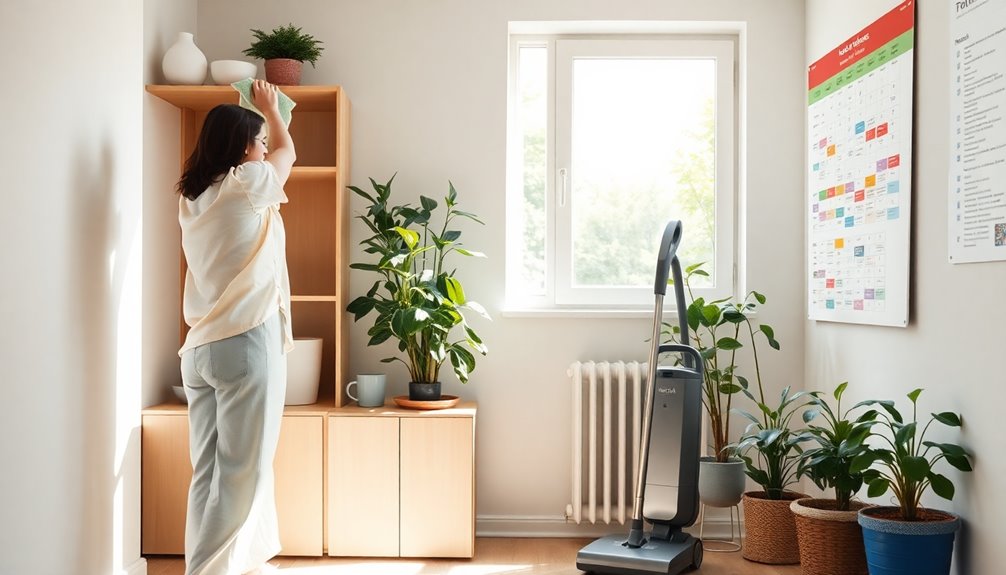
Creating a regular cleaning schedule is key to managing allergens in your home.
You can start with daily quick cleanups, move on to weekly deep cleaning, and plan for seasonal maintenance tasks. Additionally, incorporating a chore chart can help distribute cleaning responsibilities among family members, ensuring a consistent effort to maintain an allergy-friendly environment. Sticking to this routine will help keep your space fresh and allergy-friendly.
Daily Quick Cleanups
Establishing a regular cleaning schedule can considerably reduce allergens in your home, making it a healthier space for you and your family.
Daily quick cleanups can be a game-changer. Focus on surface cleaning to remove dust and pollen that accumulates throughout the day. Set aside just 10-15 minutes each day to tidy up high-traffic areas like the living room and kitchen.
Make it a habit to wipe down surfaces, vacuum, or sweep floors, and declutter spaces. Get the whole family involved—this not only lightens your load but also fosters tidy habits in everyone.
Weekly Deep Cleaning
While daily quick cleanups are essential, incorporating a weekly deep cleaning routine can greatly enhance your home’s allergy-friendly environment.
Set aside time each week to tackle areas that often get overlooked. Start by dusting surfaces, using eco-friendly products to avoid harsh chemicals. Pay special attention to allergy-safe surfaces, such as hardwood floors and non-toxic furniture.
Vacuum carpets and upholstery with a HEPA filter to capture allergens effectively. Don’t forget to wash bedding and curtains, as they can harbor dust and pollen.
Seasonal Maintenance Tasks
As you embrace allergy-friendly cleaning habits, incorporating seasonal maintenance tasks into your regular cleaning schedule can make a significant difference.
Start with seasonal decluttering, which helps eliminate dust-collecting items you no longer need. Dedicate time each season to sort through belongings, ensuring you keep only what’s necessary.
Next, implement allergy-proofing strategies, like using allergen-proof covers on pillows and mattresses.
Change air filters regularly and consider deep cleaning carpets and upholstery during spring and fall.
Use an Allergy-Friendly Vacuum Cleaner
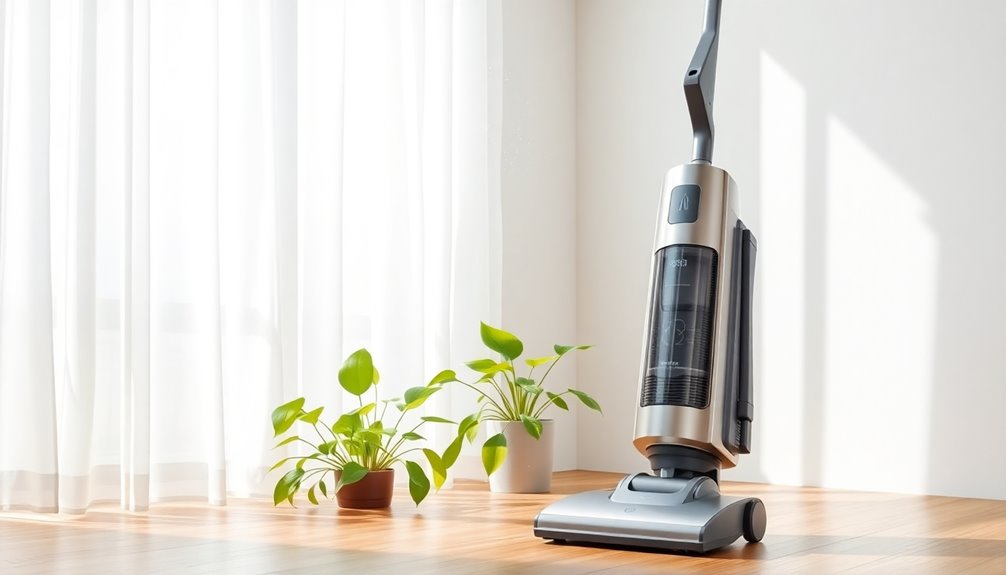
Choosing an allergy-friendly vacuum cleaner can make a significant difference in your home’s air quality.
Look for vacuum cleaner features like HEPA filters, which trap tiny particles that can trigger allergies. These filters can capture dust, pollen, and pet dander, ensuring they don’t recirculate into your living space.
Additionally, consider models with allergy-friendly attachments, such as specialized brushes and nozzles designed to remove allergens from carpets and upholstery. Using these attachments helps you clean more effectively, getting rid of hidden irritants.
Models like the Dyson V12 Detect Slim offer advanced filtration systems, which are crucial for keeping allergens at bay.
Remember to vacuum regularly, as it’s a key step in maintaining a healthier environment.
Change HVAC Filters Frequently
Changing your HVAC filters frequently is key to improving your indoor air quality.
When you keep those filters clean, you prevent allergens from accumulating in your home.
Make it a habit, and you’ll breathe easier and feel better. Additionally, using eco-friendly methods for cleaning can further enhance the healthiness of your living environment.
Improve Indoor Air Quality
To guarantee your indoor air quality remains ideal, regularly changing your HVAC filters is essential.
Dirty filters can trap dust, pollen, and other allergens, which can greatly affect your breathing techniques. By replacing these filters every one to three months, you’ll guarantee that your system runs efficiently, circulating cleaner air throughout your home.
Consider using high-efficiency particulate air (HEPA) filters for added protection against allergens.
Additionally, remember to schedule routine maintenance for your HVAC system to keep it in top shape. As you breathe easier, you’ll notice a positive impact on your overall well-being.
Staying proactive about your indoor air quality not only helps with allergies but also creates a healthier environment for everyone in your home.
Prevent Allergens Accumulation
Maintaining a clean indoor environment is essential for preventing allergens from accumulating in your home. One effective way to do this is by changing your HVAC filters frequently.
These filters trap various allergen sources like dust, pet dander, and pollen, ensuring they don’t circulate in your air. When you neglect to change them, they become clogged, allowing allergens to build up and affect your indoor air quality.
Alongside this, use effective cleaning techniques such as vacuuming with a HEPA filter and dusting surfaces regularly. By combining these practices, you can considerably reduce allergens in your home, creating a healthier space for you and your family.
Stay proactive, and your efforts will pay off in improved comfort and well-being.
Dust With Microfiber Cloths
Microfiber cloths are a game changer when it comes to dusting your home. They trap dust and allergens effectively, making them ideal for allergy sufferers.
By incorporating effective dusting techniques with microfiber cloths, you can greatly reduce dust and pollen in your space. Here are some microfiber cloth benefits:
- High absorbency: They hold up to seven times their weight in water.
- Electrostatic properties: Attracts and holds onto dust particles.
- Reusable: Washable and durable, saving money in the long run.
- Non-abrasive: Safe for all surfaces, preventing scratches.
Additionally, cleaning your kitchen sponge regularly can also contribute to a healthier environment by minimizing bacteria growth.
Using microfiber cloths will enhance your cleaning routine and help maintain a healthier environment.
Make the switch, and you’ll notice the difference in your home’s air quality.
Wash Bedding Weekly in Hot Water
Regularly washing your bedding in hot water is essential for minimizing allergens in your home. Dust mites, pollen, and pet dander can easily accumulate in bedding materials, exacerbating allergy symptoms.
To effectively remove these allergens, use washing techniques that involve setting your machine to the hottest water safe for your specific fabrics. Most cotton and polyester blends can withstand high temperatures, while delicate materials may require gentler handling.
Utilize the hottest water safe for your fabrics to effectively eliminate allergens from your bedding.
Make it a habit to wash pillowcases, sheets, and duvet covers weekly, and don’t forget to include blankets and mattress covers occasionally. This consistent practice helps create a cleaner sleeping environment, ensuring you wake up feeling refreshed and allergy-free. Additionally, washing pillows regularly is key to maintaining a healthy sleep environment and reducing allergens in your bedding.
Plus, fresh bedding is always a nice touch for your home!
Keep Windows Closed During High Pollen Days
When pollen counts soar, keeping your windows closed can make a significant difference in managing allergens in your home.
You’ll want to stay informed by checking pollen forecasts regularly. This can help you decide when to limit outdoor exposure and keep your indoor air cleaner.
Closing your windows not only prevents pollen from entering but also reduces the strain on your window screens, which can collect dust and pollen particles over time. Maintaining indoor air quality is crucial for reducing allergens and ensuring a healthier living environment.
Consider these tips:
- Use air conditioning to cool your home.
- Keep doors closed to prevent outside air from coming in.
- Regularly clean window screens to minimize trapped allergens.
- Plan outdoor activities for times when pollen levels are lower.
Use Air Purifiers for Cleaner Indoor Air
Air purifiers can be a game changer for anyone looking to reduce allergens in their home. They considerably improve your indoor air quality by trapping dust, pollen, and other irritants.
When choosing an air purifier, pay attention to the filter types. HEPA filters are excellent for capturing small particles, while activated carbon filters can help eliminate odors.
Position your air purifier in high-traffic areas or near sources of allergens, like pet bedding or dusty corners. Running it continuously can help keep your air clean, especially during peak allergy seasons. Additionally, selecting an air purifier with a suitable Clean Air Delivery Rate (CADR) ensures it effectively filters the air in your specific room size.
Regularly check and replace filters according to the manufacturer’s recommendations to guarantee top performance. With the right air purifier, you’ll notice a marked difference in your breathing comfort at home.
Declutter Your Living Spaces
To create an allergy-friendly home, you need to declutter your living spaces.
Start by minimizing clutter accumulation and organizing your storage solutions effectively.
Regularly disposing of unused items can make a significant difference in reducing allergens and improving your indoor air quality. Additionally, implementing smart storage solutions can help maintain an organized environment that minimizes dust and pollen accumulation.
Minimize Clutter Accumulation
Even if you love your belongings, excessive clutter can trigger allergies and make cleaning a challenging task.
To embrace clutter control and move towards minimalist living, it’s essential to regularly minimize clutter accumulation in your spaces.
Here are some tips to help you get started:
- Assess your belongings: Decide what you truly need and what can go.
- Set limits: Establish boundaries for items in each room.
- Create a decluttering schedule: Tackle one area at a time to avoid overwhelm.
- Donate or recycle: Give away items that no longer serve you.
Organize Storage Solutions
After minimizing clutter accumulation, the next step is to implement effective storage solutions that keep your living spaces organized and allergy-friendly.
Start by using storage bins to categorize items by type or frequency of use. This helps you find what you need quickly while reducing dust accumulation. Opt for clear bins so you can easily see the contents.
Incorporate labeling systems to guarantee everything has its place. Labels help you and your family return items to their proper spots, preventing clutter from piling up again.
Consider placing frequently used items at eye level for easy access. By organizing your storage solutions this way, you’ll create a tidy environment that’s less likely to harbor allergens, making your home more comfortable.
Regularly Dispose Unused Items
Regularly tossing out unused items is essential for maintaining an allergy-friendly home. A cluttered space can trap dust and pollen, making it harder for you to breathe easily.
Embracing a minimalist lifestyle not only enhances your living environment but also simplifies your cleaning routine. Consider organizing a donation drive to give your unused items a new life while keeping your space fresh and airy.
- Old clothes
- Expired products
- Broken electronics
- Unused kitchen gadgets
Choose Hard Flooring Over Carpeting
Choosing hard flooring over carpeting can markedly reduce allergy triggers in your home. Carpets trap dust, pet dander, and pollen, making it harder to keep your space clean.
With hard surface benefits, like easier cleaning and fewer allergens, you can breathe easier. Consider flooring options such as hardwood, laminate, or tile, which don’t harbor allergens like carpets do. Regularly sweeping or mopping these surfaces helps eliminate dust and allergens, providing a healthier environment. Plus, hard flooring is more durable, so you won’t have to worry about stains or wear and tear. Additionally, keeping the tops of cabinets clean can further improve air quality by reducing dust accumulation.
Avoid Indoor Plants That Attract Allergens
If you’re sensitive to allergens, you should steer clear of certain indoor plants that can trigger your symptoms.
Some common plants release pollen or mold, which can make your home less comfortable.
Instead, let’s explore low-allergen plant alternatives and maintenance tips to keep your space allergy-friendly.
Common Allergenic Indoor Plants
While indoor plants can brighten your space, some can also trigger allergies or worsen respiratory issues. It’s important to be mindful of the types you choose.
Here are common allergenic indoor plants to avoid:
- Ficus: Releases latex and can cause respiratory problems.
- Pothos: Its leaves can irritate your skin and lungs.
- Peace Lily: Produces pollen and can cause allergic reactions.
- Spider Plant: Can harbor dust and mold, aggravating allergies.
Instead, consider allergen friendly succulents or hypoallergenic houseplants that won’t contribute to your allergy woes.
Low-Allergen Plant Alternatives
To create a healthier indoor environment, consider opting for low-allergen plant alternatives that won’t exacerbate your allergies.
Low maintenance plants like the snake plant or ZZ plant are excellent choices, as they not only thrive in various conditions but also produce minimal pollen.
If you’re looking for color, try hypoallergenic flowers such as orchids or peace lilies, which are less likely to trigger allergic reactions.
These options provide a touch of nature without the sneezing or itchy eyes that come from traditional houseplants.
Maintenance Tips for Allergies
When creating an allergy-friendly home, it’s vital to steer clear of indoor plants that attract allergens. Certain plants can be significant allergy triggers, making it hard to maintain a comfortable environment.
By avoiding these, you can implement effective prevention strategies to minimize allergens in your space.
Consider these plants to avoid:
- Ficus: Produces airborne allergens.
- English Ivy: Can cause respiratory issues.
- Bamboo Palm: Attracts dust mites and mold.
- Spider Plant: May harbor dust and allergens.
Opt for low-allergen plant alternatives instead.
Keeping your indoor air clean and free from these triggers will help you breathe easier and enjoy a healthier home.
Prioritize your well-being by making informed choices about your indoor greenery.
Clean Pet Areas Regularly
Cleaning pet areas regularly is essential for maintaining a healthy environment in your home. Accumulated fur, dander, and dust can trigger allergies, so it’s vital to stay on top of the cleaning.
Start by vacuuming carpets and upholstery where your pets spend time, using a vacuum with a HEPA filter to trap allergens effectively. Don’t forget to wash your pet’s bedding weekly in hot water.
For pet grooming, brush your furry friend outside to minimize indoor allergens. Opt for hypoallergenic products when bathing or cleaning their spaces, as these are less likely to cause allergic reactions.
Use Allergen-Proof Covers on Pillows and Mattresses
One effective way to reduce allergens in your home is by using allergen-proof covers on pillows and mattresses.
These specially designed covers offer significant allergen proof benefits, ensuring you breathe easier while you sleep. By investing in pillow protection, you can create a healthier sleeping environment.
- They block dust mites and other allergens.
- They’re washable, making maintenance easy.
- They help prolong the life of your pillows and mattresses.
- They provide a barrier against moisture and odors.
With allergen-proof covers, you can enjoy restful nights without the worry of allergens disturbing your sleep.
Make this simple change today to improve your indoor air quality and enhance your overall well-being.
Opt for Fragrance-Free Cleaning Products
Since many cleaning products contain strong fragrances that can trigger allergic reactions, opting for fragrance-free alternatives is a smart choice for maintaining a healthier home.
Choosing fragrance-free cleaning products can help you maintain a healthier home by reducing the risk of allergic reactions.
By choosing natural alternatives, you can effectively clean without exposing yourself to irritating chemicals. Look for eco-friendly solutions that prioritize your family’s well-being while also being kind to the environment.
Many brands offer fragrance-free options that utilize plant-based ingredients, ensuring a thorough clean without harmful side effects. You can create your own cleaning solutions using simple ingredients like vinegar and baking soda, which are both effective and safe.
Making this switch not only reduces allergens but also promotes a fresher indoor atmosphere, giving you peace of mind as you maintain your space.
Implement a No-Shoes Policy Indoors
Creating a healthier indoor environment goes beyond using fragrance-free cleaning products; it also involves controlling what enters your home.
Implementing a no-shoes policy is a simple yet effective way to reduce dust and pollen. By keeping shoes at the door, you limit allergens from spreading throughout your living space.
Consider the following tips:
- Set up designated shoe storage near the entrance.
- Encourage family members to wear indoor footwear only.
- Provide cozy slippers or house shoes for comfort.
- Use a welcome mat to trap dirt and allergens before they enter.
This practice not only keeps your home cleaner but also promotes a healthier atmosphere for you and your loved ones.
You’ll notice the difference in air quality and overall comfort.
Educate Family Members About Allergy Management
Educating family members about allergy management is essential for maintaining a healthy home environment. Start by sharing important information about allergies and their triggers. Encourage open discussions so everyone understands the impact allergens can have on health.
Family involvement is key—assign chores like dusting and vacuuming to reduce allergens. Create a schedule to keep everyone accountable and engaged.
Involving the whole family in cleaning tasks helps minimize allergens and fosters a collaborative, healthier home environment.
Consider hosting a family meeting to discuss allergy education, where you can explain why specific cleaning habits matter. Also, teach them how to recognize allergy symptoms and what steps to take if someone is affected.
When everyone’s on the same page, it fosters a supportive atmosphere and helps everyone contribute to a cleaner, safer home.
Conclusion
In the end, keeping your home allergy-friendly might seem like a full-time job, but hey, who wouldn’t want to spend weekends vacuuming instead of sneezing? By adopting these habits, you’re not just fighting dust and pollen; you’re also transforming your home into a sneeze-free oasis. So, embrace the irony: the cleaner your space, the less you’ll be cleaning up after a sneeze attack. Remember, a little effort now can save you from a lot of sniffles later!