To achieve a sparkling home, you’ll want a thorough cleaning checklist that covers daily, weekly, monthly, and seasonal tasks. Start with simple daily chores like making your bed and wiping kitchen surfaces. Weekly, focus on vacuuming and mopping floors. Monthly tasks should include deep cleaning carpets and organizing closets. Don’t forget seasonal checklists to keep everything in order. Stick around for handy tips on green cleaning practices and essential supplies to elevate your cleaning routine.
Daily Cleaning Tasks
When you tackle daily cleaning tasks, you set the stage for a more organized and inviting home.
Start your daily routine by making your bed each morning; it instantly enhances your bedroom’s appearance and boosts your mood.
After meals, wipe down kitchen surfaces to prevent stains and germs, ensuring a healthier cooking space.
Promptly doing the dishes keeps unpleasant odors at bay and maintains a clean kitchen atmosphere.
Spend a few minutes tidying up clutter to create a consistently clean environment, which reduces the stress of bigger cleaning projects later on.
Don’t forget to take out the trash regularly; this simple task keeps your living space fresh and inviting, making your home a more enjoyable place to be. Additionally, incorporating simple habits into your daily routine can lead to a significantly tidier home.
Weekly Cleaning Tasks
To maintain a clean and healthy home, you should incorporate weekly cleaning tasks into your routine. These tasks are essential for reducing allergens and keeping your space sparkling.
Incorporating weekly cleaning tasks is vital for a healthy home and reduces allergens while keeping your space sparkling.
Here’s a quick cleaning checklist to help:
- Dust Surfaces: Wipe down shelves and furniture to minimize allergens.
- Vacuum Carpets: Remove dirt, pet hair, and allergens to improve indoor air quality.
- Mop Floors: Use appropriate cleaning solutions for a polished, shiny finish. Regular vacuuming can remove up to 80% of dirt and debris from carpets and rugs.
Don’t forget to clean bathrooms thoroughly each week, scrubbing sinks, toilets, and showers to prevent grime buildup.
Also, change your bedding weekly to promote a fresh sleeping environment while reducing dust mites.
Incorporating these weekly cleaning tasks into your routine will keep your home looking and feeling its best.
Monthly Cleaning Tasks
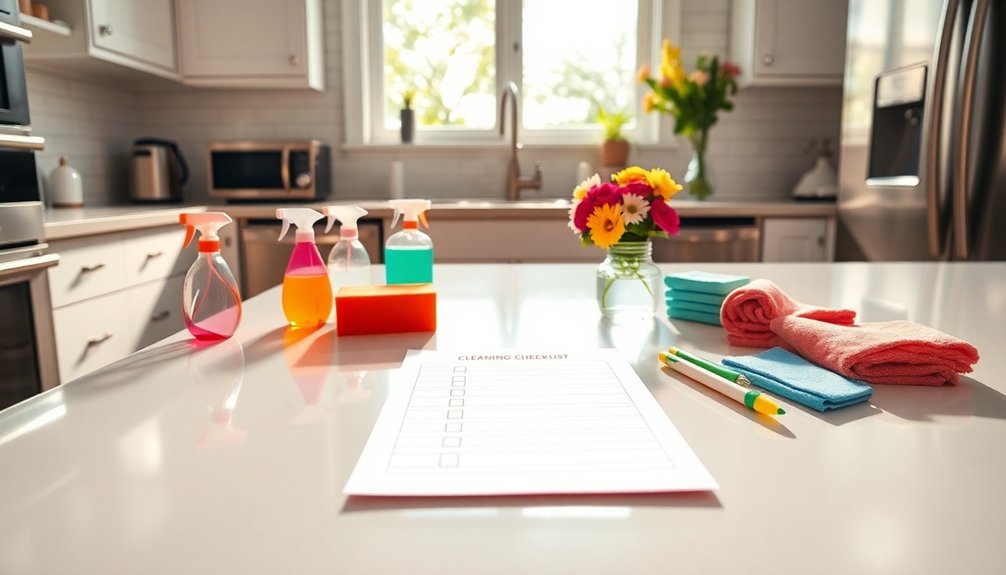
Incorporating monthly cleaning tasks into your routine can greatly enhance your home’s cleanliness and air quality.
Start with a thorough cleaning of carpets to remove embedded dirt and stains, considerably improving indoor air quality. Don’t forget to clean your air vents and replace HVAC filters to guarantee efficient heating and cooling while reducing allergens.
Dust and wipe down light fixtures and ceiling fans to prevent dust accumulation that can trigger allergies. Organizing closets by sorting clothes and donating unneeded items not only maximizes space but also promotes a streamlined wardrobe.
Finally, clean behind and under furniture monthly to eliminate hidden dust and allergens, contributing to a healthier living space. These monthly cleaning tasks are essential for maintaining a sparkling home. Additionally, consider implementing seasonal cleaning tasks to ensure that your home remains fresh and tidy throughout the year.
Seasonal Cleaning Tasks
Here are three key seasonal cleaning tasks to focus on:
- Wash Windows: Clean your windows inside and out during spring and fall to enhance clarity and let natural light in.
- Clean Gutters: In spring, clear your gutters to prevent water damage and maintain proper drainage before heavy rainfall.
- Deep Clean HVAC System: Before winter sets in, deep clean your HVAC system in the fall to improve air quality and guarantee efficient heating. Regular HVAC system inspection ensures optimal performance and can help identify potential issues early.
Entryway Organization
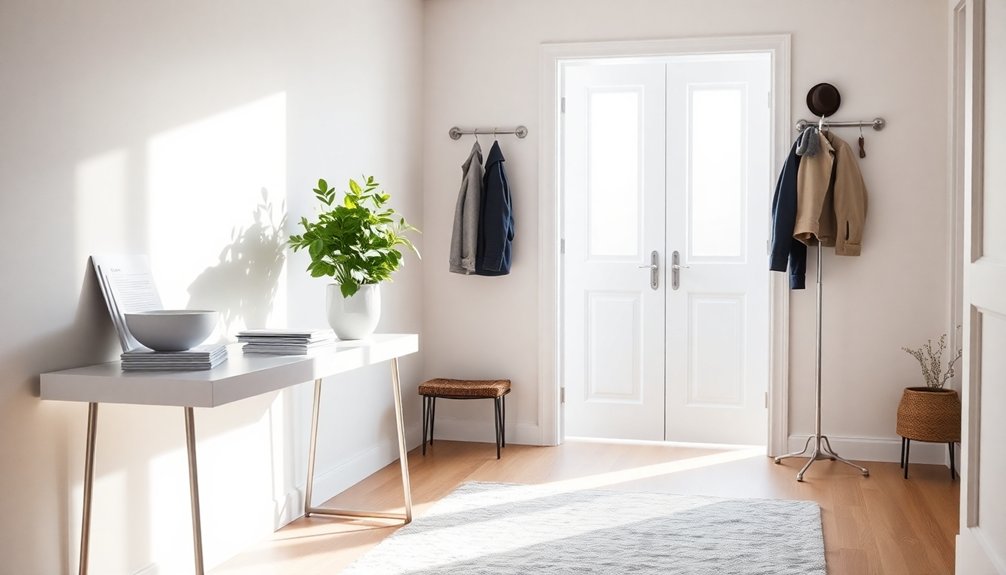
Creating an organized entryway can transform the first impression of your home, making it feel more inviting and less cluttered.
Start by shaking out and cleaning the doormat regularly to keep dirt at bay. Stow away shoes in designated storage to reduce clutter, ensuring your entryway remains tidy.
Don’t forget to clean the entryway mirror and sanitize the door handle for a polished look. File away or recycle any letters on the entryway table, and wipe it down to maintain a clear surface.
Finally, vacuum and mop the entryway floor frequently to eliminate dust and allergens. Additionally, consider implementing a regular cleaning routine to ensure cleanliness in high-traffic areas like your entryway.
With these simple steps in place, you’ll achieve a clean and organized home that welcomes guests with open arms.
Living Room Maintenance
To keep your living room feeling fresh and inviting, regular maintenance is essential.
Here are three key tasks to incorporate into your routine:
- Dust all surfaces – Start from the top and work your way down, including electronics and shelves, to eliminate allergens and avoid re-dusting.
- Vacuum and fluff – Regularly vacuum upholstered furniture and fluff cushions to maintain comfort while removing dust and pet hair.
- Clean windows and floors – Enhance natural light by cleaning windows and mirrors. Additionally, utilizing gravity-based cleaning techniques can help ensure that dust doesn’t settle on already cleaned areas.
Don’t forget to focus on high-traffic areas when vacuuming carpets or mopping hardwood/tile flooring.
Kitchen Cleaning Essentials
A clean kitchen is essential for both hygiene and efficiency, and incorporating a few fundamental cleaning tasks can make all the difference.
Start by scrubbing your sinks and wiping down countertops regularly to prevent bacterial growth. Deep clean major appliances like the microwave, stovetop, and oven with appropriate solutions to eliminate grease and guarantee food safety. Consider using Clorox Free & Clear Multi-Surface Spray Cleaner for effective disinfecting of your kitchen surfaces.
Organize your pantry and refrigerator by discarding expired items and using clear containers for better accessibility. Don’t forget to vacuum and mop your floors frequently to remove dirt and allergens.
Finally, establish a daily dishwashing routine to keep odors at bay and maintain an orderly kitchen atmosphere. If you need help, consider hiring a cleaning service to tackle those tougher tasks.
Bathroom Deep Cleaning
When it comes to bathroom deep cleaning, having the right supplies makes all the difference. You’ll want to follow a step-by-step process to tackle every corner effectively. Plus, I’ll share some common tips to make your cleaning routine smoother and more efficient. Incorporating effective disinfectants like hydrogen peroxide can enhance your cleaning routine and ensure a hygienic environment.
Essential Cleaning Supplies Needed
Deep cleaning your bathroom requires the right tools to guarantee every corner sparkles and stays hygienic.
Investing in essential cleaning supplies will make this task easier and more effective. Here are three must-have items:
- Disinfectant wipes or sprays – These are perfect for sanitizing surfaces, ensuring a germ-free environment.
- Toilet brush with cleaner – A durable toilet brush is vital for scrubbing and sanitizing the toilet bowl, helping prevent buildup and odors.
- Microfiber cloths – Use these for cleaning mirrors and surfaces; they trap dust and reduce streaks for a clear finish.
With these essential cleaning supplies, you’ll be well-equipped to tackle your bathroom deep cleaning and maintain a fresh atmosphere.
Step-by-Step Cleaning Process
With your cleaning supplies in hand, you’re ready to tackle the bathroom deep cleaning process.
Start by wiping down the sink, countertop, and toilet seat with disinfectant wipes to eliminate germs.
Next, grab a toilet brush and give the toilet bowl a thorough clean, ensuring you reach under the rim. Don’t forget to replace the toilet paper for convenience.
Scrub the tiles and grout to remove soap scum and check for any mold, treating affected areas as needed.
For a sparkling finish, clean the mirrors with glass cleaner for that streak-free shine.
Finally, vacuum and mop the floor, and wipe down light fixtures and the exhaust fan to maintain hygiene and improve air quality.
Common Bathroom Cleaning Tips
To keep your bathroom clean and hygienic, regularly disinfect high-touch surfaces like faucet handles, light switches, and toilet handles. This simple step minimizes the spread of germs.
Here are three essential cleaning tips to enhance your bathroom routine:
- Scrub tiles and grout with a baking soda and vinegar mixture to remove soap scum and prevent mold.
- Use a toilet brush with a disinfectant cleaner to guarantee a thorough toilet bowl clean, and replace toilet paper as needed.
- Clean mirrors and glass surfaces with a streak-free cleaner for a polished look.
Finally, vacuum and mop the bathroom floor weekly, focusing on corners and under fixtures for a complete clean.
These tips will keep your bathroom sparkling and fresh!
Bedroom Refreshing Techniques
A fresh bedroom can profoundly improve your mood and sleep quality. Start by laundering your bedding every one to two weeks to keep it fresh and allergen-free. Regular changes reduce allergens such as dust mites and promote better sleep quality. Vacuum your mattress regularly and rotate or flip it every three to six months to extend its life. Next, declutter the bedroom by removing non-essential items and organizing your belongings. This not only enhances the overall aesthetic but also creates a calming atmosphere. Organize your closet by color-coordinating and categorizing clothing, making it easier to find what you wear most often. Finally, dust all surfaces, including nightstands and dressers, from top to bottom to eliminate dust and allergens, ensuring a clean and inviting space for relaxation.
Office Decluttering Strategies
To create an efficient workspace, you need smart storage solutions like filing cabinets and desk organizers. Regularly decluttering your office by sorting through documents helps keep everything in order. Additionally, organized spaces enhance focus and efficiency, contributing to a conducive work environment.
Efficient Storage Solutions
Efficient storage solutions can transform your office by minimizing clutter and boosting productivity.
To effectively declutter your workspace, consider these strategies:
- Drawer Dividers & Desk Organizers: Use these to sort office supplies, making it easy to find what you need quickly.
- Labeling System: Implement labels for files and storage bins to enhance identification and access to essential documents.
- Digital Solutions: Move towards cloud storage to reduce physical clutter while keeping important files easily retrievable.
Regular Decluttering Schedule
Maintaining an organized office goes beyond just finding efficient storage solutions; it requires a regular decluttering schedule to keep things in check.
Start by sorting through papers and supplies every month, aiming to discard or recycle at least 10% of items. Implement a bi-weekly routine to review and organize your office supplies, keeping only the essentials within reach to boost productivity.
Utilize drawer dividers and file folders to categorize documents, making it easier to locate important files and reduce clutter. Involve your family members by assigning specific decluttering tasks to foster a sense of shared responsibility.
Finally, adopt a “one in, one out” policy for office supplies, ensuring every new item leads to the removal of an old one.
Laundry Room Tips
A well-organized laundry room can make a big difference in your laundry routine. To keep it efficient and tidy, follow this cleaning checklist:
- Declutter Supplies: Organize detergents, dryer sheets, and fabric softeners for easy access.
- Regular Maintenance: Clean dryer vents and washing machines to enhance performance and prevent fire hazards.
- Maximize Space: Install hanging rods for air-drying clothes or freshly ironed items.
Additionally, make it a habit to wipe down surfaces, including your washer and dryer, to maintain hygiene.
Don’t forget to sweep or vacuum the floor frequently to prevent lint buildup.
Pantry Organization Hacks
Start by decluttering your pantry, tossing out any expired items that could be taking up valuable space.
Next, use clear containers to organize your dry goods and label everything clearly so you can easily find what you need.
These simple steps will transform your pantry into a more efficient cooking space.
Declutter Expired Items
While it might be tempting to let expired items linger in your pantry, regularly decluttering these goods is essential for maintaining a healthy food environment.
Discard expired items to prevent foodborne illnesses and keep your pantry organized. Here are three tips to help you tackle this task:
- Check expiration dates: Regularly inspect your pantry items, and discard expired goods promptly.
- Group similar items: Organize shelves by type, like canned goods, grains, and snacks, to make it easier to spot expired items.
- Implement a FIFO system: Place newer items behind older ones, ensuring you use older products first before they expire.
Use Clear Containers
After decluttering expired items, organizing your pantry becomes much more manageable.
One of the best ways to achieve this is by using clear containers. These containers make it easy to see pantry contents at a glance, helping you keep track of what you have and reducing food waste.
By utilizing uniform clear containers, you create a visually appealing space that simplifies organizing pantry items. This approach maximizes space efficiency, allowing you to fit more items while ensuring easy access.
Plus, clear containers protect food from pests and moisture, extending the shelf life of your staples.
Label Everything Clearly
One of the simplest yet most effective pantry organization hacks is to label everything clearly. This practice not only maintains organization but also saves you time during meal prep.
Here are three tips to get started:
- Use Waterproof Labels: Choose labels that can withstand spills and humidity for lasting readability.
- Categorize and Label: Organize items by category—like grains, canned goods, and snacks—and label each section for easy access.
- Update Regularly: Regularly reassess your pantry inventory and update your labels to guarantee everything remains categorized and easy to find.
Kid’s Playroom Cleanup
Cleaning up your kid’s playroom can be a fun and rewarding task that transforms chaos into order. Start by decluttering; remove broken or unused toys to create an organized space that encourages engagement.
Use bins, baskets, or shelves as storage areas, making it easier for your kids to access and put away their toys. Implement a labeling system for these containers to help them learn to categorize their belongings.
Every few weeks, rotate toys to keep the playroom fresh and exciting, sparking their imagination. Involve your children in the cleanup process by establishing a fun routine.
This not only fosters responsibility but also strengthens teamwork, ensuring your playroom contributes to a clean home that everyone can enjoy.
Outdoor Area Maintenance
Maintaining your outdoor area is just as important as keeping your kid’s playroom organized.
A well-kept outdoor space enhances your home’s appeal and safety. Here’s a quick checklist to help you with outdoor area maintenance:
- Mow the lawn weekly to promote healthy grass growth and keep everything looking neat.
- Clean outdoor furniture regularly to prevent dirt buildup, ensuring your items last longer.
- Sweep patios and walkways every week to remove debris and maintain safety.
Additionally, trim bushes at least twice a year, and inspect gutters each season to prevent water damage.
Electronics Cleaning Guide
When you clean your electronics, it’s essential to choose safe products and techniques.
Proper dusting methods can make a big difference, and caring for screens with the right tips will keep them looking great.
Let’s explore how to maintain your devices effectively and safely.
Safe Cleaning Products
To keep your electronics in top shape, using safe cleaning products is crucial. You want to avoid harsh chemicals that can damage your devices.
Here are three tips to guarantee your cleaning routine is effective and safe:
- Microfiber Cloths: Use these to clean screens and delicate surfaces without scratching or leaving lint.
- Specialized Cleaners: Skip ammonia-based cleaners; opt for electronics-specific solutions instead to protect coatings.
- Compressed Air: Regularly use this to blow out dust and debris from keyboards and vents without using liquid cleaners.
Always spray cleaning solutions onto the cloth, never directly on the device, to prevent liquid damage.
Dusting Techniques
After ensuring your cleaning products are safe for your electronics, it’s time to focus on effective dusting techniques.
Start by powering off and unplugging your devices for safety. Use a microfiber cloth for dusting all surfaces; it effectively traps dust and minimizes static electricity, protecting sensitive components.
Gently wipe down your electronics, ensuring you don’t apply too much pressure. For remote controls and keyboards, use disinfectant wipes to remove dust and reduce germ buildup, since these items get frequently handled.
Incorporate this dusting routine into your monthly cleaning schedule, especially in high-traffic areas. By maintaining a regular cleaning habit, you can enhance your electronics’ performance and hygiene, keeping your home sparkling and healthy.
Screen Care Tips
Proper screen care is essential for maintaining the clarity and longevity of your devices. Following these screen care tips will help you clean screens effectively:
- Use a microfiber cloth: This material removes dust and smudges without scratching your screen.
- Create a cleaning solution: Mix distilled water with 70% isopropyl alcohol to disinfect, ensuring no streaks or residue.
- Wipe gently: Spray the solution onto the cloth, not directly onto the screen, and use gentle, circular motions to clean.
Regularly cleaning your screens reduces dirt and fingerprints, improving visibility and extending the lifespan of your devices.
Furniture Care and Maintenance
While maintaining your furniture might seem like a chore, it plays an essential role in enhancing both its appearance and longevity.
Regular dusting and cleaning surfaces can reduce allergens, improving indoor air quality. For upholstered furniture, vacuum at least once a week to remove dirt and pet hair, keeping it looking its best.
Wooden pieces benefit from polishing every few months with a suitable cleaner to remove scratches and protect the finish.
Don’t forget leather furniture—condition it every 6 to 12 months to prevent drying and cracking.
For fabric-covered items, tackle stains immediately with appropriate cleaners to prevent permanent damage.
With these simple furniture care tips, you’ll enjoy a beautiful and lasting home environment.
Seasonal Cleaning Checklist
When the seasons change, it’s the perfect time to tackle specific cleaning tasks that keep your home fresh and organized.
Spring cleaning essentials like washing windows and organizing storage areas can boost your living space, while fall maintenance tips, such as deep cleaning your HVAC system, prepare your home for colder months.
Let’s explore how you can make the most of these seasonal cleaning opportunities.
Spring Cleaning Essentials
Spring cleaning is an essential ritual that transforms your home and sets the tone for a fresh season.
To make the most of your spring cleaning, focus on these key tasks:
- Wash windows inside and out: This enhances clarity and brightness, making your home feel more inviting.
- Clean gutters: Prevent water damage and guarantee proper drainage as the rainy season approaches.
- Declutter and organize: Donate unneeded items and tidy your storage areas to improve accessibility.
Additionally, don’t forget to clean air vents and replace HVAC filters for better air quality.
Fall Maintenance Tips
As the leaves change color and temperatures drop, it’s crucial to prepare your home for the upcoming winter months. Start with these fall maintenance tips to guarantee your home stays in prime shape.
First, inspect your gutters and downspouts to prevent water damage; clear them to assure proper drainage during winter storms.
Next, deep clean your HVAC system by replacing filters and cleaning vents to maintain peak air quality.
Organize storage areas by sorting seasonal items, making it easier to access summer gear while prepping for winter essentials.
Don’t forget to wash windows inside and out to enhance natural light.
Finally, check weather stripping on doors and windows to improve energy efficiency and reduce heating costs—key points in your all-encompassing house cleaning checklist.
Green Cleaning Practices
Incorporating green cleaning practices into your routine not only benefits the environment but also enhances your home’s air quality.
By switching to environmentally friendly products, you can reduce indoor air pollution and chemical exposure.
Here are three simple green cleaning practices to get you started:
- Use vinegar and baking soda: These natural ingredients tackle tough stains and odors without harmful chemicals.
- Choose essential oils: Adding a few drops of oils like tea tree or lavender not only freshens your home but also acts as a natural disinfectant.
- Make your own cleaners: Many effective solutions can be created from common household items, saving you money and reducing waste.
Embracing these practices can lead to a healthier home and a lower carbon footprint.
Cleaning Supplies Essentials
To maintain a clean and healthy home, having the right cleaning supplies on hand makes all the difference.
Cleaning supplies essentials like multipurpose cleaners, disinfectants, microfiber cloths, sponges, mops, and vacuum cleaners are essential for maintaining hygiene across various surfaces. A well-stocked cleaning caddy streamlines your process, giving you easy access to brushes, gloves, and scrubbers as you move from room to room.
Essential cleaning supplies, from multipurpose cleaners to microfiber cloths, ensure hygiene and efficiency in your home.
Consider eco-friendly options like vinegar and baking soda, which are safe and effective alternatives to harsh chemicals. Regularly check your supplies and replenish them to avoid interruptions during cleaning sessions.
Investing in quality tools, such as a high-efficiency vacuum with HEPA filters, can also improve air quality and reduce allergens in your home.
Creating a Cleaning Routine
Creating a cleaning routine not only simplifies your chores but also helps maintain an organized and inviting home.
To make your routine effective, consider these three key components:
- Daily Tasks: Make beds, wipe down surfaces, and tidy clutter to create a consistently organized environment.
- Weekly Tasks: Incorporate vacuuming, mopping, and deep cleaning bathrooms to maintain hygiene and prevent dirt buildup.
- Monthly Tasks: Designate time for thorough activities like deep cleaning carpets and organizing closets, ensuring your home stays in top shape.
Don’t forget to customize your cleaning checklist regularly to reflect your household’s unique needs.
Conclusion
With this ultimate cleaning checklist, you’ll transform your home into a sparkling oasis that rivals even the cleanest five-star hotel! By sticking to daily, weekly, and seasonal tasks, you’ll create a space that feels fresh and inviting. Plus, embracing green cleaning practices not only protects your family but also the planet. So grab your supplies, stick to your routine, and watch as your home becomes the shining gem of the neighborhood!