Cleaning a toilet bowl with vinegar and baking soda can loosen light buildup and freshen the bowl, but it is not a reliable stand-alone method for removing stains, mineral rings, or germs. When you combine the two, they fizz because they react and neutralize each other, and that fizz does not measure how much dirt is removed. The method works best as a gentle routine clean, not as a replacement for a product or tool suited to heavy staining.
Key Takeaways
- Vinegar and baking soda react to form carbon dioxide gas, sodium acetate, and water, so the fizz shows a chemical reaction rather than proof of cleaning power.
- Once the reaction finishes, the mixture is mostly sodium acetate and water, so the acid and base that could work on stains are largely used up.
- Vinegar and baking soda can help with light soap scum and odor, but they are not labeled as disinfectants and may not remove mineral rings.
- Never mix vinegar with bleach or hydrogen peroxide, because these combinations can release harmful gases or corrosive chemicals.
- If you breathe in fumes or get a cleaner in your eyes, act quickly, and call Poison Help at 1-800-222-1222 in the United States for guidance.
What Happens When Vinegar Meets Baking Soda?
Vinegar and baking soda undergo an acid-base reaction that produces carbon dioxide gas, a salt called sodium acetate, and water. An acid-base neutralization is a reaction in which an acid and a base cancel each other’s acidity, forming a salt and water. Vinegar is a dilute solution of acetic acid, and baking soda is sodium bicarbonate, a base.
The American Chemical Society explains that the bubbling comes from carbon dioxide produced by this reaction, and that dish detergent makes the bubbles last longer in its classroom demonstration (American Chemical Society’s Gas Sudsation experiment). The ACS answer key for a middle school chemistry lesson lists the products as sodium acetate, water, and carbon dioxide gas (ACS answer key for Chapter 6, Lesson 2).
The same ACS lesson has students examine the equation for acetic acid reacting with sodium bicarbonate, and it states that the carbon in the carbon dioxide comes only from the sodium bicarbonate (ACS lesson on controlling the amount of products in a chemical reaction). The Orlando Science Center describes the mixture as an acid-base neutralization that forms water and a salt, and it gives the full balanced equation (Orlando Science Center’s Baking Soda Eruption project).
Does the Fizz Actually Clean the Toilet Bowl?
Not by itself. The fizz shows that a reaction is happening, but bubbles do not confirm that grime is being lifted. The reaction also finishes quickly, so the active ingredients have a short window to work.
Why the fizz is not a measure of cleaning
Bubbling is a sign of gas release. Gas can dislodge loose debris in a brief burst, but most of the physical cleaning comes from brushing. In a toilet bowl, the mixture also gets diluted with water every time you flush, which further reduces its strength.
What the evidence shows and its limits
The sources cited in this article explain the chemistry of the reaction, but none of them tests how well the mixture cleans toilet bowls. Cleaning claims for this method therefore rest on general chemistry and common household practice rather than controlled trials. That makes it reasonable for light maintenance, but it does not prove the method removes stains or germs.
How Does It Compare With Other Toilet Cleaners?
Vinegar and baking soda suit light, routine cleaning, while stains, mineral rings, and germs usually need a product or tool made for that job. The table below compares the common options and their main limits.
| Method | Best for | Main limitation |
|---|---|---|
| Vinegar and baking soda fizz | Light soap scum and mild odor during routine upkeep | Reaction ends quickly; may not remove mineral rings; not labeled as a disinfectant |
| Vinegar soak alone | Thin hard-water film | Needs longer contact time than the fizz provides |
| Baking soda scrub | Surface stains with gentle scouring | Mild abrasive; can leave residue; not a disinfectant |
| Labeled toilet bowl cleaner | Stains, rings, and disinfection when the label says so | Follow label directions; some products are harsh on skin and eyes |
| Bleach-based cleaner | Disinfection and stubborn staining | Must never be mixed with vinegar or other acids |
How Do You Clean a Toilet Bowl With Vinegar and Baking Soda?
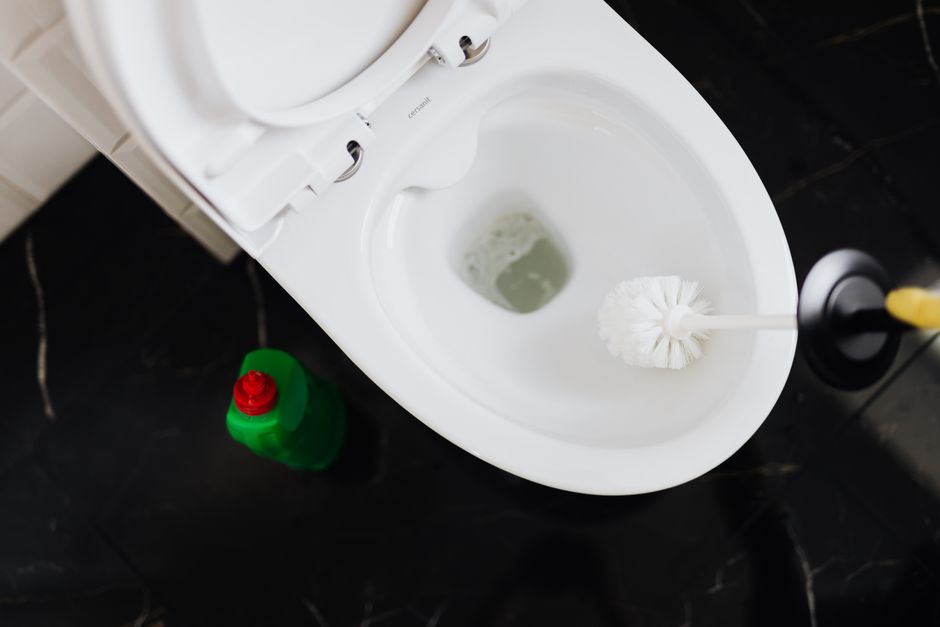
Use a short, ventilated routine: lower the water, add baking soda, add vinegar, let it sit briefly, then scrub and flush. Keep the room ventilated and do not add any other cleaner during the process.
- Put on gloves and open a window or turn on the exhaust fan.
- Flush once, then use a cup or sponge to remove most of the remaining water so the mixture stays on the bowl surfaces.
- Sprinkle about half a cup of baking soda around the bowl, especially under the rim.
- Pour about one cup of white vinegar slowly over the baking soda and let it fizz.
- Let the mixture sit for about 30 minutes, then scrub the bowl with a brush, including under the rim.
- Flush, rinse the brush, and wipe the seat and outside surfaces with a separate cloth.
Longer soaks are not shown to improve results in the sources cited here, so a half-hour window is a practical default. If the bowl still looks dirty afterward, repeat the scrub or switch to a product labeled for stains.
When Do Vinegar and Baking Soda Fall Short?
They fall short on stubborn stains, mineral deposits, and disinfection. If a stain returns after cleaning, or the bowl still looks dirty after a full soak and scrub, a different product or tool is usually needed.
Mineral rings and stains
Hard water leaves mineral deposits, and dark rings are commonly linked to bacteria and mineral buildup near the waterline. Vinegar can help with some thin mineral films, but baking soda is a mild abrasive and will not reliably lift a thick ring. For that problem, read our guide to solutions for removing black rings from a toilet bowl.
Disinfection limits
Vinegar and baking soda are not labeled as disinfectants, so they should not be relied on to kill germs. If someone in your home is ill or you need to sanitize after an illness, use a product registered as a disinfectant and follow its label for contact time. Good ventilation and handwashing remain important, and a doctor can advise on infection concerns.
What Should You Never Mix With Vinegar?
Never mix vinegar with bleach or hydrogen peroxide, and do not combine either with other cleaners in the toilet. Bleach combined with an acid such as vinegar can release chlorine gas, and vinegar mixed with hydrogen peroxide can form peracetic acid, which is corrosive. Rinse the bowl thoroughly with water before you use a different product.
For a full list of combinations to avoid, read our guide to cleaning products you should never mix.
If you breathe in fumes and develop coughing, chest tightness, or dizziness, move to fresh air and seek medical care right away. If a cleaner gets in your eyes, rinse with water for at least 15 minutes, then call Poison Help at 1-800-222-1222 or your local emergency number. See a doctor if symptoms continue after you have left the area.
What Tools Help Vinegar and Baking Soda Work Better?
A good brush and a regular schedule do more than any single mixture. Clean the bowl weekly to prevent buildup, and use a brush that reaches under the rim, where residue collects.
Check our guide to toilet bowl brushes and holders for options that store the brush hygienically between uses. If you prefer a foaming option that clings to the bowl, try this homemade foaming toilet bowl cleaner recipe.
Frequently Asked Questions
Is vinegar and baking soda safe for toilets?
Vinegar and baking soda are generally considered mild household ingredients, so they are a lower-risk choice for routine cleaning. Safety depends on what else is in the bowl, so never add bleach or hydrogen peroxide. If you have a septic system, ask a septic professional which routine cleaners they recommend.
Can I leave vinegar and baking soda in the toilet overnight?
The sources cited here do not show that long soaks improve cleaning, and the reaction is brief anyway. A soak of about 30 minutes is a practical default for most routine cleaning. If you are dealing with a stubborn stain, a labeled product is a better next step than a longer soak.
Does baking soda remove toilet bowl stains?
Baking soda is a mild abrasive, so it can help with light surface stains when you scrub. It is not reliable for thick mineral rings or deep discoloration. If the stain remains after scrubbing, try a product labeled for toilet stains.
Does the fizz mean the cleaner is working?
No. The fizz shows that carbon dioxide gas is being released by an acid-base reaction, but it does not measure how much dirt is removed. Judge results by how clean the bowl looks after scrubbing and flushing.
When should I call a professional?
Call a plumber if stains or rings return quickly, the toilet runs or overflows, or you notice water pooling around the base. If you have a health concern from chemical exposure, contact a doctor or Poison Help. A professional can also help you choose a product that fits your bowl and plumbing.
Conclusion
Cleaning a toilet bowl with vinegar and baking soda works best as low-cost routine upkeep for light buildup and odor, and the fizz reflects a real acid-base reaction. It does not reliably remove heavy stains, mineral rings, or germs, so choose a labeled product when those are the problem. Keep bleach and hydrogen peroxide out of the bowl whenever you use vinegar.
Always follow the product label, test on a hidden area first, and never mix cleaning products such as bleach and ammonia. Read our safety disclaimer and editorial policy.