Creating a DIY antibacterial spray for your everyday cleaning is simple and effective. You can mix equal parts white vinegar and water, and add 10-15 drops of essential oils like tea tree or lavender for extra antibacterial power and a rejuvenating scent. This natural solution is safer for your family, pets, and the environment. Plus, it can save you money. Discover more tips and tricks to customize your spray for different cleaning needs!
Why Use a DIY Antibacterial Spray?
When you consider the benefits of a DIY antibacterial spray, it’s clear that making your own can be a game changer for your home.
You get complete control over the ingredients, which means you can avoid harsh chemicals that raise safety concerns. By sourcing natural ingredients, like vinegar and essential oils, you create a safer cleaning solution for your family and pets.
Plus, you can tailor the spray to suit your specific needs, whether it’s tackling kitchen grime or bathroom mold. This personalized approach not only enhances effectiveness but also gives you peace of mind knowing exactly what you’re using. Additionally, using vinegar provides effective antibacterial properties that can help eliminate germs and odors around your home.
Key Benefits of Homemade Cleaning Solutions
Homemade cleaning solutions offer a range of benefits that can transform your cleaning routine. One major advantage is that you’re using natural disinfectants, which are safer for your family and pets.
Unlike commercial cleaners filled with harsh chemicals, your DIY sprays can effectively kill germs without harmful side effects.
Plus, you’ll enjoy significant cost savings. By using everyday ingredients like vinegar, baking soda, and essential oils, you’ll save money while still achieving a sparkling clean home.
You can mix up a batch whenever you need it, ensuring freshness and effectiveness. Embracing homemade solutions not only supports a healthier environment but also empowers you to take control of what you use in your space. Using these solutions contributes to environmental sustainability by reducing plastic waste.
Enjoy the benefits of a cleaner, safer home!
Essential Ingredients for Your Antibacterial Spray
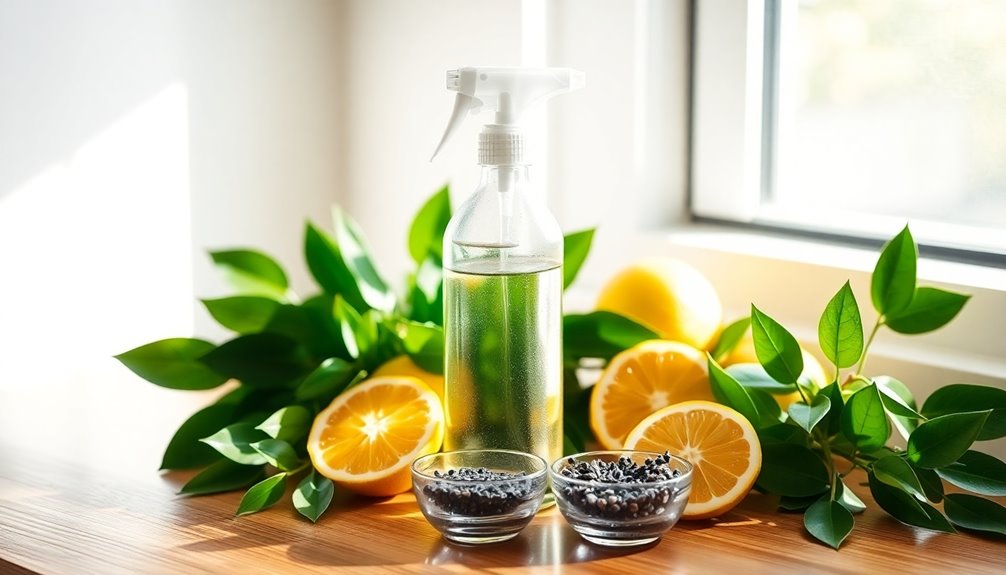
To create an effective antibacterial spray, you’ll want to focus on a few key ingredients. Common essential oils like tea tree and lavender not only smell great but also pack a powerful antibacterial punch. Plus, incorporating vinegar and natural surfactants enhances cleaning effectiveness while keeping your spray eco-friendly. Regular cleaning with non-toxic solutions ensures a safe and effective cleaning process.
Common Essential Oils
Creating an effective antibacterial spray starts with choosing the right essential oils, as these potent plant extracts offer natural antimicrobial properties.
Tea tree oil is a top choice due to its strong antibacterial and antifungal qualities.
Lavender oil not only adds a pleasant scent but also provides calming effects while fighting germs.
Eucalyptus oil boasts antiviral properties, making it a great addition for respiratory support.
When you combine these oils, pay attention to essential oil properties and use blending techniques to maximize their effectiveness.
Experiment with different ratios to find the perfect balance for your spray.
Vinegar’s Antibacterial Properties
While many people know vinegar as a versatile kitchen staple, its antibacterial properties make it an essential ingredient for your antibacterial spray.
Vinegar contains acetic acid, which effectively kills harmful bacteria and fungi. When you use vinegar in your spray, you harness these vinegar benefits to keep your home clean and safe.
Plus, it’s non-toxic, making it a great choice for households with kids and pets. If you’re looking for vinegar alternatives, consider options like hydrogen peroxide or lemon juice, but vinegar remains one of the most affordable and effective solutions.
Natural Surfactants Benefits
Vinegar’s antibacterial properties lay a solid foundation for your DIY antibacterial spray, but adding natural surfactants enhances its effectiveness.
Natural surfactants, like castile soap or coconut-based cleansers, help break down grime and grease, making it easier for the vinegar to do its job. They improve cleaning effectiveness by allowing the spray to penetrate surfaces more deeply, ensuring you’re tackling dirt and bacteria effectively.
Plus, these surfactants are gentle on the environment, making your cleaning routine eco-friendly. By incorporating them into your spray, you’ll not only boost its antibacterial power but also create a solution that leaves surfaces sparkling clean.
How to Choose the Right Essential Oils
Choosing the right essential oils for your antibacterial spray is key to both effectiveness and enjoyment.
You’ll want to contemplate popular options like tea tree, lavender, and eucalyptus while also keeping your scent preferences in mind.
Each oil brings unique benefits, so finding the perfect blend can enhance your cleaning routine. Additionally, opting for plant-based ingredients can further ensure a safe and eco-friendly cleaning experience.
Popular Antibacterial Essential Oils
When selecting antibacterial essential oils for your DIY spray, it’s essential to evaluate their effectiveness and scent.
Certain oils stand out for their antibacterial properties and can be combined to create powerful antibacterial blends. Here are three popular choices:
- Tea Tree Oil: Known for its potent antibacterial and antifungal properties, it’s a staple in many essential oil combinations.
- Lavender Oil: Not only does it smell delightful, but it also has antibacterial effects that can enhance your spray.
- Lemon Oil: Its fresh scent and natural antibacterial qualities make it an excellent addition to your blend.
Scent Preferences and Benefits
To create an effective antibacterial spray, it’s essential to take into account both your scent preferences and the benefits of each essential oil.
Start by considering which aromas uplift your mood or bring a sense of calm. For instance, lavender promotes relaxation, while lemon invigorates and energizes.
You can experiment with various scent combinations; mixing tea tree oil with eucalyptus can enhance both cleaning power and freshness.
Think about how aroma therapy can support your overall well-being. If you prefer a more floral scent, try combining geranium with rosemary.
Ultimately, choose oils that resonate with you, making your cleaning routine enjoyable and effective. A personalized scent won’t only disinfect but also create a pleasant atmosphere in your home.
Step-by-Step Guide to Making Your Antibacterial Spray
Creating your own antibacterial spray is a simple and effective way to keep your home clean and germ-free. Here’s how you can make it:
- Gather your ingredients: You’ll need water, white vinegar, and essential oils for your desired scent combinations.
- Choose your spray containers: Opt for glass or high-quality plastic spray bottles to guarantee durability and safety.
- Mix the solution: Combine one cup of water with one cup of white vinegar and add 10-15 drops of your favorite essential oils. This mixture takes advantage of the natural antibacterial properties of essential oils for enhanced cleaning effectiveness.
Once you’ve mixed everything in your spray container, shake it well before each use.
Enjoy the fresh scent while you disinfect surfaces around your home!
Tips for Properly Mixing and Storing Your Spray
Properly mixing and storing your antibacterial spray guarantees its effectiveness and longevity. Start by using proper mixing techniques—shake the bottle gently to combine ingredients thoroughly, assuring an even distribution. Avoid vigorous shaking, which can introduce air bubbles and reduce potency.
When it comes to storage tips, keep your spray in a cool, dark place to prevent degradation from light and heat. Glass containers are ideal, as they don’t react with the ingredients like some plastics do. Additionally, using non-toxic cleaners ensures that your cleaning routine prioritizes family safety while being effective.
Label your spray with the date you made it and use it within a month for best results. Always give it a quick shake before each use to assure the ingredients are well combined. These steps will help you maintain a powerful cleaning solution.
Best Surfaces to Clean With Your Antibacterial Spray
While you can use your antibacterial spray on a variety of surfaces, some areas benefit more from its germ-fighting properties. Here are the top surfaces to clean:
- Kitchen countertops: These often harbor bacteria from food prep, so regular cleaning is essential.
- Bathroom fixtures: Faucets and sinks can quickly accumulate germs, making them prime targets for your spray.
- Door handles: High-touch areas like door handles are hotspots for germs, and a quick spritz can help keep them sanitized.
Don’t forget to hit electronic devices, toys surfaces, pet areas, gym equipment, and office desks as well. Additionally, be mindful of high-germ areas like toilets and showers, as these require effective disinfection to prevent bacteria growth.
Regularly treating these surfaces will help maintain a healthier environment for you and your loved ones.
Safety Precautions When Using Homemade Cleaners
Using homemade cleaners, like your DIY antibacterial spray, can be a great way to maintain a clean environment, but safety should always come first.
Start by considering sensitivity considerations; some people may react to certain ingredients. Always test your spray on a small area first to confirm it won’t cause any allergic reactions or damage.
For ingredient storage, keep your homemade cleaner in a clearly labeled, child-proof container to prevent accidental ingestion. Store it in a cool, dark place to maintain its effectiveness and prevent degradation.
Always wear gloves when mixing or using your spray, and confirm good ventilation in your cleaning area. Additionally, consider using eco-friendly methods to ensure your cleaning practices are safe for both your health and the environment.
How to Customize Your Spray for Different Needs
Customizing your antibacterial spray can enhance both its effectiveness and scent.
If you love a fresh aroma, consider adding citrus oils for a bright boost.
Alternatively, herbal scents can provide a calming touch, making your cleaning routine more enjoyable. Additionally, incorporating essential oils like tea tree can offer antibacterial properties that further enhance the cleaning power of your spray.
Citrus Freshness Boost
Wondering how to give your DIY antibacterial spray a rejuvenating twist? Try adding citrus blends for a revitalizing enhancement that invigorates your cleaning routine. Here’s how you can customize it:
- Lemon Zest: Add the zest of one lemon for a bright, uplifting scent.
- Orange Essential Oil: A few drops can infuse a sweet aroma that lingers after cleaning.
- Grapefruit Juice: Mix in a tablespoon for a brisk kick that fights odors.
These citrus additions not only boost the fragrance but also enhance the antibacterial properties of your spray.
Experiment with different combinations to find the perfect scent that makes cleaning feel like a breeze. You’ll love the fresh atmosphere it creates!
Herbal Scent Options
If you want to elevate your DIY antibacterial spray, incorporating herbal scents can make a significant difference. Herbal blends not only enhance the aroma but also offer additional antibacterial properties.
Consider using essential oils like lavender, rosemary, or tea tree to create unique scent profiles that match your preferences. For a calming effect, mix lavender with lemon; for a revitalizing vibe, combine eucalyptus with mint.
Experiment with different ratios to find what works best for you. Remember, a little goes a long way—start with a few drops of each oil and adjust as needed.
Comparing DIY Sprays to Store-Bought Options
When you weigh the benefits of DIY antibacterial sprays against store-bought options, you’ll find distinct advantages and drawbacks to each. Here’s a quick comparison:
- Store-Bought Convenience: You can grab a bottle and start cleaning immediately, saving you time on preparation.
- Cost Comparison: While DIY sprays require initial investments in ingredients, they can be cheaper in the long run, especially if you make large batches.
- Customization: DIY sprays allow you to choose your ingredients, making it easier to avoid allergens or harsh chemicals found in some store-bought options. Additionally, using eco-friendly alternatives can enhance your cleaning routine while promoting sustainability.
Ultimately, your choice depends on your priorities—whether you value convenience, cost, or the ability to tailor your cleaning solution to your needs.
Common Mistakes to Avoid When Making Your Spray
Making your own antibacterial spray can be rewarding, but it’s easy to make mistakes that undermine its effectiveness. One common error isn’t ensuring measurements accuracy. Using too much or too little of an ingredient can diminish the spray’s antibacterial properties. Always measure carefully to maintain the right balance.
Another pitfall is making ingredient substitutions without understanding their impact. For instance, swapping vinegar for alcohol might seem harmless, but it can alter the spray’s efficacy. Stick to the recommended ingredients whenever possible to achieve the best results.
Additionally, don’t forget to label your spray clearly, including the date you made it; this helps you track its freshness. Avoiding these mistakes will help you create a powerful cleaning solution.
How to Test the Effectiveness of Your Antibacterial Spray?
Testing the effectiveness of your antibacterial spray is important to confirm it works as intended. Here’s how you can perform effectiveness testing to guarantee your spray is up to par:
- Surface Swabs: After cleaning with your spray, use sterile swabs to collect samples from surfaces. Test these for bacterial presence.
- Control Group: Compare your spray with a commercial antibacterial product. Apply both to similar surfaces and swab after a set time to see which eliminates more bacteria.
- Time Trials: Spray a surface and wait varying amounts of time before swabbing. This helps you determine the best contact time for maximum effectiveness.
Eco-Friendly Practices for Everyday Cleaning
When it comes to cleaning, using natural ingredients can boost both your health and the environment.
By choosing DIY solutions, you not only reduce plastic waste but also create effective cleaners tailored to your needs.
Let’s explore how these eco-friendly practices can transform your everyday routine.
Natural Ingredients Benefits
Natural ingredients offer a powerful and eco-friendly alternative for your everyday cleaning needs. By opting for these natural solutions, you’ll not only protect the environment but also enjoy various benefits:
- Natural Preservatives: Ingredients like vinegar and essential oils act as natural preservatives, extending the shelf life of your cleaning solutions without harmful chemicals.
- Herbal Benefits: Many herbs, such as thyme and rosemary, possess antibacterial properties, making your cleaning effective while also providing a pleasant aroma.
- Non-Toxic Safety: Using natural ingredients guarantees a safer environment for your family and pets, eliminating exposure to harsh chemicals.
Reducing Plastic Waste
While choosing eco-friendly cleaning solutions, you can also take significant steps to reduce plastic waste in your home. Start by opting for products with sustainable packaging, like glass or metal containers, instead of single-use plastics. This helps cut down on the waste you generate.
Consider refilling your bottles at local stores that promote zero waste practices, allowing you to reuse your containers and minimize new plastic production. When you make your own antibacterial spray, use reusable spray bottles to further decrease plastic consumption.
DIY Cleaning Solutions
Creating your own cleaning solutions can be both simple and rewarding. By opting for DIY cleaning products, you embrace eco-friendly alternatives that benefit your home and the planet.
Here are three easy recipes to get you started:
- All-Purpose Vinegar Spray: Mix equal parts water and white vinegar in a spray bottle. This solution cuts through grime while being a natural disinfectant.
- Baking Soda Paste: Combine baking soda with a little water to form a paste. Use it to scrub sinks, tubs, and countertops, making it a great sustainable practice.
- Essential Oil Disinfectant: Add a few drops of tea tree or lavender oil to your vinegar spray for an extra antibacterial boost and a pleasant scent.
These methods not only clean effectively but also promote sustainable practices in your everyday routine.
Frequently Asked Questions About DIY Antibacterial Sprays
Have you ever wondered how effective DIY antibacterial sprays really are? Many people believe in common antibacterial myths, such as thinking that all homemade solutions are equally effective.
DIY antibacterial sprays can be misleading; not all homemade solutions deliver the same effectiveness against harmful bacteria.
In reality, the effectiveness often depends on the ingredients you use. For instance, vinegar and essential oils can be helpful, but they may not kill all harmful bacteria.
Proper spray storage is also essential; keep your mixtures in dark glass containers to protect them from light, which can degrade their potency.
Remember to shake the bottle before each use to guarantee even distribution of ingredients.
With the right knowledge and precautions, your DIY antibacterial spray can be a valuable cleaning tool.
Creative Uses for Your Antibacterial Spray Beyond Cleaning
Your DIY antibacterial spray can do more than just clean surfaces; it’s a versatile tool for various everyday tasks. Here are some creative alternative applications:
- Personal Care: Use the spray as a rejuvenating body mist. Combine essential oils for pleasant scent combinations, keeping you feeling fresh throughout the day.
- DIY Gifts: Bottle your antibacterial spray in decorative containers and give them as thoughtful gifts. Customize the scent to suit the recipient’s preferences.
- Air Freshener: Spritz your favorite scent combination around your home to eliminate odors while adding a new fragrance to the air.
With these ideas, you can transform your antibacterial spray into an essential part of your daily routine, enhancing both cleanliness and creativity.
Conclusion
Incorporating a DIY antibacterial spray into your cleaning routine not only boosts your home’s cleanliness but also fosters a healthier environment. As the saying goes, “An ounce of prevention is worth a pound of cure.” By using natural ingredients, you’re making a conscious choice for both your family and the planet. So, grab your essential oils and get started—your home will thank you for it! Embrace the power of homemade solutions today.