If you’re looking for the best natural substitute for bleach, try hydrogen peroxide. It’s a powerful disinfectant that effectively whitens without the harmful fumes of bleach. You can also use vinegar mixed with water or baking soda for versatile cleaning. Lemon juice serves as a natural stain fighter, while essential oils add pleasant scents and antibacterial properties. Shifting to these alternatives not only protects your health but also creates a safer home. Discover more effective options and tips to elevate your cleaning routine!
Understanding the Risks of Bleach
When you consider using bleach for cleaning, it’s crucial to understand the risks involved.
Bleach hazards include harmful fumes that can irritate your eyes, skin, and respiratory system. If you mix bleach with ammonia or other cleaning products, you could create toxic gases that pose serious health concerns.
Bleach can release harmful fumes that irritate eyes, skin, and lungs, especially when mixed with ammonia or other cleaners.
Even when used correctly, bleach can lead to long-term health issues like respiratory problems or skin sensitivity. Always guarantee proper ventilation and wear protective gear if you choose to use it. However, keep in mind that many effective cleaning solutions don’t require bleach, including natural cleaning alternatives that are safe and effective.
Why Choose Natural Alternatives for Cleaning?
Choosing natural alternatives for cleaning not only protects your health but also benefits the environment. When you opt for eco-friendly options, you reduce your exposure to harsh chemicals that can have a negative health impact.
Many conventional cleaners release toxins that can irritate your skin, eyes, and respiratory system. By switching to natural substitutes, you create a safer living space for yourself and your loved ones.
Plus, these alternatives often come with eco-friendly benefits, like being biodegradable and less harmful to aquatic life. You’ll find that natural cleaners are just as effective in tackling grime while promoting a healthier home. Additionally, using products that minimize indoor air pollution can significantly enhance your overall well-being.
Ultimately, choosing natural options aligns with a sustainable lifestyle, making a positive impact on both your well-being and the planet.
Top Natural Substitutes for Bleach
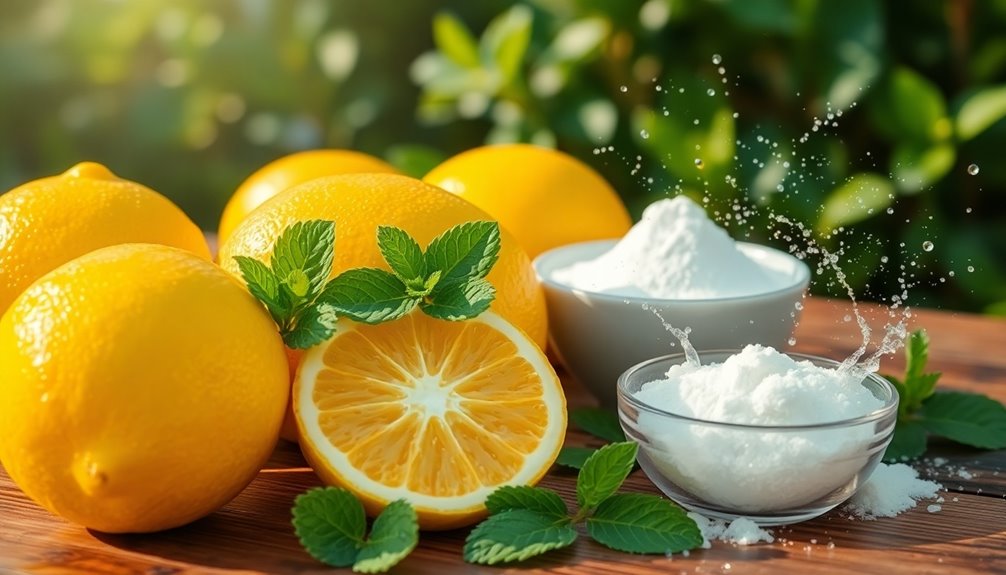
Several effective natural substitutes for bleach can help you achieve a clean, disinfected space without harsh chemicals.
One great option is hydrogen peroxide, which acts as a powerful disinfectant and can brighten whites.
You might also consider using baking soda, a versatile ingredient that deodorizes and cleans surfaces.
For a fresh scent and antibacterial properties, try essential oils like tea tree or lavender in your homemade cleaners.
Another eco-friendly option is lemon juice, which not only cleans but also leaves surfaces sparkling and tackles tough stains effectively.
Combining vinegar and water makes a potent cleaner that can tackle many tasks.
These natural alternatives not only protect your health but also contribute to a more sustainable environment.
How to Use Vinegar as a Disinfectant
Vinegar’s a powerful natural disinfectant that can tackle germs effectively. To get the most out of it, you’ll want to know how to dilute it properly and which surfaces are safe to use it on. Additionally, vinegar contains acetic acid, which enhances its effectiveness against various pathogens. Let’s explore these key points to make the most of vinegar in your cleaning routine.
Vinegar’s Disinfectant Properties
While many people reach for commercial disinfectants, you might find that vinegar offers a powerful and natural alternative. Its acetic acid content makes it effective against a variety of germs, providing vinegar benefits that you can easily incorporate into your cleaning routine.
Simply spray undiluted vinegar on surfaces like countertops or cutting boards, let it sit for a few minutes, and wipe it clean. This method not only disinfects but also helps eliminate odors.
When using vinegar, it’s important to take into account vinegar safety; avoid mixing it with bleach or hydrogen peroxide, as this can create harmful fumes.
How to Dilute Vinegar
If you’re ready to harness vinegar’s disinfectant properties, knowing how to dilute it effectively is key. Start with a typical vinegar concentration of 5% acetic acid, which is common in most grocery stores.
For general cleaning, mix equal parts vinegar and water in a spray bottle. This 50/50 solution maximizes vinegar benefits while making it safe for various surfaces.
If you’re tackling tougher grime, consider using a stronger concentration, like 10% vinegar, but always dilute it with water.
Remember, using vinegar undiluted can lead to damage on certain surfaces.
Safe Surfaces for Use
When using vinegar as a disinfectant, it’s essential to know which surfaces are safe to treat. Vinegar works well on many non-porous surfaces, making it a great choice for kitchen countertops, bathroom tiles, and glass.
However, avoid using it on surfaces like marble or granite, as the acidity can damage these materials. Always check for surface compatibility before applying vinegar, especially on finishes or painted areas.
For wood, diluted vinegar can be safe, but test it in a small spot first.
The Power of Baking Soda in Cleaning
Release the cleaning power of baking soda, a versatile natural alternative to harsh chemicals. This incredible ingredient acts as an effective odor neutralizer, making it perfect for freshening up carpets, refrigerators, and even shoes.
When it comes to tough stains, baking soda shines as a stain remover, tackling everything from coffee to grease with ease. Plus, its gentle abrasive properties allow you to scrub surfaces without scratching them, making it safe for various materials.
Simply mix it with water to form a paste, apply it to the stained area, and let it work its magic. With baking soda in your cleaning arsenal, you’ll achieve a spotless home without resorting to bleach or other harsh cleaners. Additionally, using baking soda aligns with the principles of eco-friendly cleaning practices, supporting a healthier living environment.
Lemon Juice: Nature’s Stain Fighter
Baking soda isn’t the only natural powerhouse for tackling stains; lemon juice deserves a spotlight too. This zesty fruit isn’t just invigorating; it’s a fantastic stain fighter with numerous lemon benefits. Its acidity helps break down tough stains, making your cleaning efforts more effective.
Here are some ways lemon juice can assist in stain removal:
- Brightening whites: Lemon juice can enhance the whiteness of your laundry.
- Tackling grease: It cuts through greasy stains effortlessly.
- Odor elimination: Its fresh scent neutralizes unpleasant odors.
- Natural disinfectant: Lemon juice has antibacterial properties, ensuring surfaces stay clean. Additionally, it can be used in conjunction with vinegar and water solutions for an even more effective cleaning method.
Essential Oils for a Fresh, Clean Home
While many people think of cleaning products as harsh chemicals, essential oils offer a rejuvenating and effective alternative for maintaining a clean home. You can create your own essential oil blends to tackle various cleaning tasks while infusing your space with delightful scents.
For instance, a mix of tea tree and lavender oils not only disinfects but also leaves a calming aroma. Use these blends for aromatic cleaning in kitchens and bathrooms, ensuring a fresh atmosphere. Simply add a few drops to water or vinegar for a natural spray.
You’ll find that essential oils can lift your spirits while keeping your home spotless, making cleaning a more enjoyable experience. Embrace these natural options for a healthier living environment! Additionally, oils like lemon and eucalyptus have proven antimicrobial properties that enhance their cleaning effectiveness.
Tips for Transitioning to Natural Cleaning Products
Switching to natural cleaning products can feel overwhelming, especially if you’re used to conventional cleaners.
To make the change smoother, start by incorporating eco-friendly habits into your routine. Here are some tips to help you embrace sustainable cleaning:
- Start small: Replace one conventional cleaner at a time with a natural alternative.
- Do your research: Learn about the ingredients in natural products to understand their benefits.
- DIY solutions: Experiment with simple recipes using vinegar, baking soda, and essential oils.
- Involve others: Share your journey with family or friends to create a supportive environment.
Conclusion
Switching to natural substitutes for bleach not only benefits your health but also the environment. Did you know that around 50% of household cleaning products contain harmful chemicals? By using options like vinegar, baking soda, and lemon juice, you’re reducing exposure to toxins while keeping your home fresh and clean. Plus, essential oils can add a pleasant aroma without the risk. Embrace these natural alternatives and enjoy a safer, more eco-friendly cleaning routine!