Get your kids involved with age-appropriate cleaning tasks for a fun family experience! Toddlers can sweep and wipe surfaces, while preschoolers can race to clean tables. Kindergarten kids can use chore charts, and early elementary kids can dust and sort toys. As kids grow, you can assign laundry and bathroom cleaning tasks to tweens and teens. Teamwork makes chores easier, and celebrating achievements motivates kids. Want more ideas for making cleaning fun and engaging?
Cleaning Tasks for Toddlers: Fun and Simple Activities
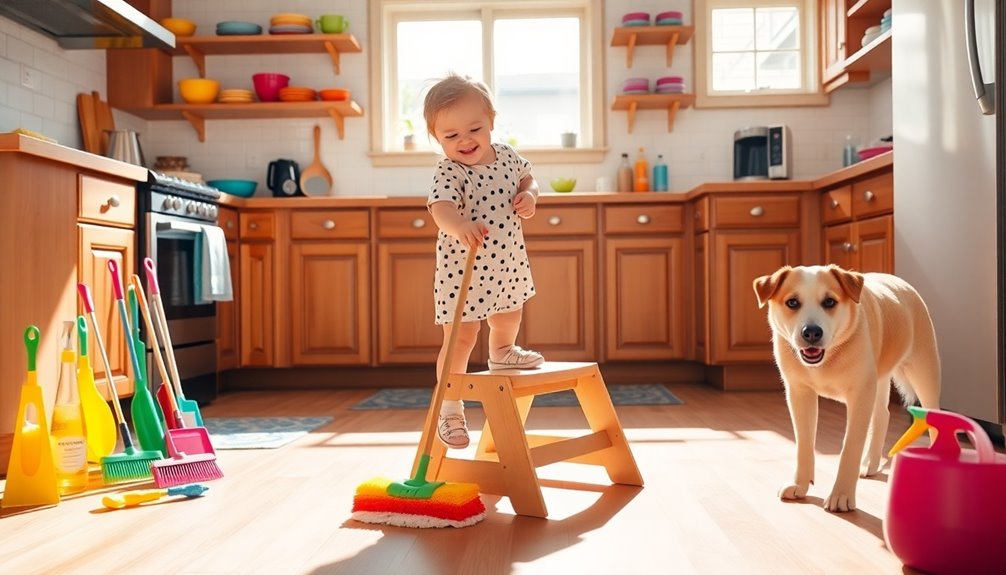
Cleaning can be a fun adventure for toddlers when you choose the right tasks. Engage your little ones with simple cleaning games that make chores feel like playtime.
You might hand them a small broom or a dustpan, letting them sweep up crumbs after snack time. Sorting laundry by colors can be another exciting toddler task; they’ll love matching socks and learning about colors.
You could also have them help wipe down surfaces with a damp cloth, turning it into a fun game of “find the dust.” By incorporating these playful activities, you’ll not only teach them the importance of cleaning but also foster a sense of accomplishment. Additionally, using eco-friendly solutions during cleaning can introduce toddlers to sustainable practices early on.
Age-Appropriate Chores for Preschoolers
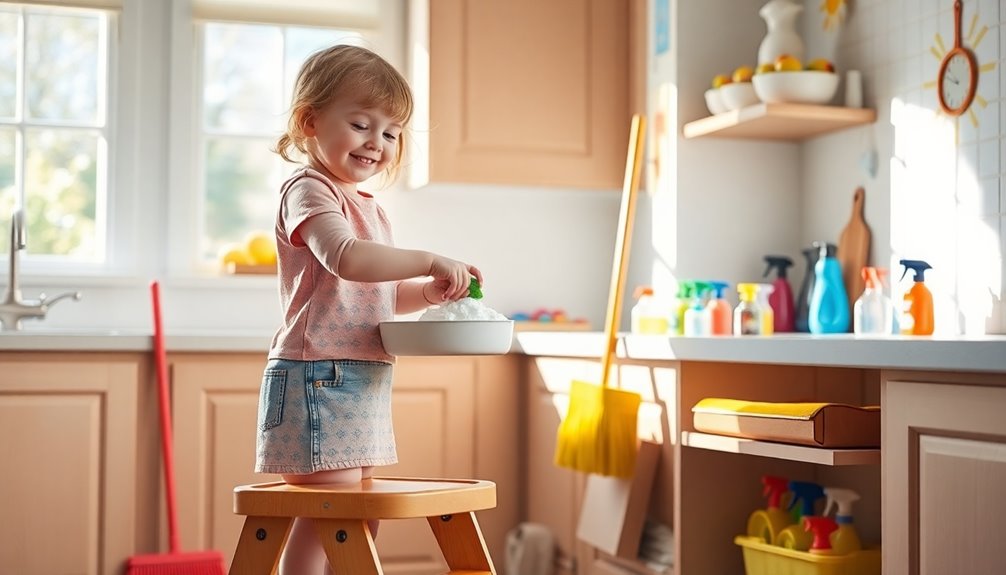
When it comes to age-appropriate chores for preschoolers, there are plenty of engaging tasks that can help them develop responsibility while having fun.
Encourage preschooler participation by giving them simple chores like sorting laundry by color, wiping down tables, or putting away toys. You can turn these tasks into cleaning games—set a timer and see how many toys they can pick up before time runs out or create a scavenger hunt to find items that need cleaning.
These activities not only teach valuable skills but also make cleaning enjoyable. Remember, your enthusiasm will inspire their willingness to help, making chores a positive experience for both you and your preschooler. Additionally, involving them in daily cleaning habits can lay the foundation for a lifetime of good practices.
Engaging Kindergarten Kids in Cleaning Routines
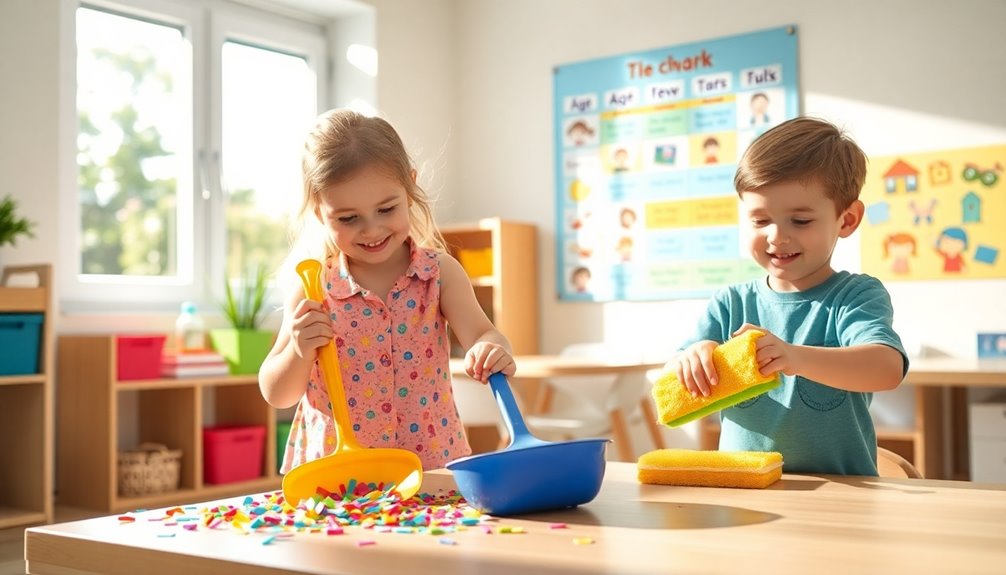
While it might seem challenging to get kindergarten kids involved in cleaning routines, you can make it a fun and rewarding experience. Start by creating colorful chore charts that outline their tasks, making it easy for them to understand what’s expected.
Incorporate cleaning songs to turn chores into a lively activity. Singing along while tidying up not only keeps them engaged but also makes the process enjoyable. Encourage them to pick their favorite songs and even dance a little as they clean.
Celebrate their accomplishments with praise or small rewards to motivate them further. By making cleaning a fun and interactive experience, you’ll help your kindergarten kids develop good habits while bonding over shared responsibilities. Additionally, introducing age-appropriate tasks can enhance their sense of accountability and accomplishment.
Chores for Early Elementary School Children
As your child enters early elementary school, they can take on more responsibility around the house. Simple dusting tasks, sorting laundry, and organizing toys can be fun and engaging ways for them to help. These chores not only teach them valuable skills but also foster a sense of accomplishment. Additionally, implementing a chore chart can help them stay organized and motivated to complete their tasks.
Simple Dusting Tasks
How can you make cleaning fun for your early elementary school kids? Simple dusting tasks can be a great way to involve them in household chores while keeping the mood light.
Use fun techniques like turning dusting into a game. Set a timer and see who can dust the most surfaces in just five minutes. You can also play their favorite music to create an upbeat atmosphere.
Encourage your kids to use colorful cloths or even old socks on their hands for a playful approach. Let them dust their own rooms or favorite toys, making it feel special.
Sorting Laundry Together
Sorting laundry together can be a fun way to teach your kids about teamwork and organization. Start by explaining the importance of separating laundry colors—darks, lights, and whites.
Let your child help you sort clothes into piles using simple sorting techniques. Encourage them to identify colors and patterns, making it an engaging learning experience. You can turn it into a game by timing how fast they can sort or asking them to find specific items.
As they help, they’ll gain responsibility and a sense of accomplishment. Plus, you’ll enjoy quality bonding time.
When the laundry’s done, don’t forget to celebrate your teamwork with a fun treat! Sorting laundry’s never been so enjoyable!
Organizing Toys Efficiently
Once you’ve tackled the laundry together, it’s time to turn your attention to organizing toys efficiently. Start by sorting toys into categories—like action figures, dolls, and puzzles. This makes it easier for your child to find what they need.
Implement toy rotation by keeping only a selection of toys accessible, while storing the rest in a designated storage solution. You can use bins or baskets labeled with pictures or words for clarity.
Encourage your child to help decide which toys to keep out and which to store away. This not only keeps their space tidy but also makes playtime more exciting when they rediscover hidden treasures.
With these strategies, you’ll create a more organized and enjoyable play area together.
Cleaning Tasks for Older Elementary Kids
As kids reach the older elementary stage, they can take on more responsibility around the house, making cleaning a fun and engaging way to foster independence.
You can encourage them to create chore charts, listing tasks like vacuuming, dusting, or tidying up common areas.
Turning cleaning into cleaning games can spark their interest, like timing how quickly they can pick up toys or racing to see who can sort laundry faster.
Transform chores into fun games by timing toy pickups or racing to sort laundry faster!
These tasks not only help maintain a clean home but also teach valuable skills.
By involving them in these activities, you’ll promote teamwork and make chores feel less like a burden.
Your kids will gain confidence and a sense of accomplishment as they contribute to the family’s well-being, and fostering teamwork can make the cleaning process more enjoyable for everyone.
Responsibility-Building Chores for Tweens
Giving tweens responsibility through age-appropriate chores can greatly boost their confidence and sense of accountability.
At this stage, you can introduce more significant tween responsibilities like doing laundry, cleaning their bathrooms, or preparing simple meals. These tasks not only teach essential life skills but also encourage them to take ownership of their space. A clean workspace can boost focus and efficiency, which is an important lesson for tweens to learn as they develop their own routines.
To keep them motivated, consider implementing chore incentives, such as earning screen time or a small allowance for completing their tasks. This approach helps them understand the value of hard work while making chores feel less like a burden.
Tasks for Teens: Taking on More Responsibility
While your teen is becoming more independent, it’s the perfect time to introduce them to tasks that require greater responsibility.
Encourage them to tackle independent chores like doing their own laundry or cleaning their bathrooms. These teen responsibilities not only help them develop essential life skills but also promote a sense of ownership over their space.
You can also assign them the task of meal prep, allowing them to plan and cook simple dinners. Additionally, let them take charge of their bedroom organization, giving them the chance to decide what to keep or discard. A clean laundry room is essential for maintaining efficiency in household chores, making it a great task for them to take on.
Decluttering: How Can Kids Help at Any Age?
Decluttering can be a fun and rewarding activity for kids of all ages. You can assign age-appropriate tasks that make it easier for them to contribute, and even turn it into a game. Involving your kids not only lightens your load but also teaches them valuable organizing skills. Additionally, creating designated play zones helps kids understand where to put their toys and encourages them to keep the space tidy.
Age-Appropriate Tasks
As you consider involving your kids in decluttering, it’s important to recognize that age plays a significant role in what tasks they can handle.
For younger children, age-appropriate tasks might include sorting toys into keep, donate, or toss piles. They can also help put away books and pick up clothes.
As kids grow, you can assign them more cleaning responsibilities, like organizing their own rooms or helping clean shared spaces.
Tweens and teens can tackle more complex tasks, such as decluttering closets or managing a family space.
Tailoring tasks to their age guarantees they feel accomplished and promotes a sense of responsibility.
Involving them actively in decluttering makes the process engaging and teaches valuable life skills.
Fun Decluttering Techniques
Getting kids involved in decluttering can be a fun and engaging experience that sparks their creativity.
Try incorporating creative decluttering games to make the process exciting. For example, set a timer and challenge them to see how many toys they can sort in five minutes. Use colorful bins for a fun sorting activity, where each color represents a different category, like keep, donate, or trash.
You could even create a point system, rewarding them for every item they successfully organize. Turn the task into a treasure hunt by asking them to find items they no longer use.
With these techniques, decluttering becomes less of a chore and more of an enjoyable activity for everyone involved!
Benefits of Involvement
Involving kids in cleaning tasks not only makes the process more enjoyable but also teaches them valuable life skills. When you let your children participate in decluttering, you’re helping them build confidence in their abilities. They learn to make decisions about what to keep or toss, which empowers them.
Plus, tackling these tasks together fosters teamwork, creating a sense of unity and shared accomplishment. By working side by side, you show them the importance of collaboration and responsibility. This involvement also instills a sense of pride in their environment, encouraging them to take better care of their belongings.
Ultimately, these experiences contribute to their growth, shaping them into capable and responsible individuals who appreciate the value of a tidy space.
Kitchen Cleanup: Age-Appropriate Tasks for Kids
While the kitchen can seem overwhelming, involving your kids in cleanup tasks not only lightens your load but also teaches them valuable life skills.
For younger kids, simple tasks like wiping down surfaces or sorting utensils can instill a sense of responsibility while ensuring they understand kitchen safety. As they grow, you can introduce them to meal prep tasks like washing vegetables or mixing ingredients.
Preteens can help with loading and unloading the dishwasher or sweeping the floor. By assigning appropriate tasks, you create a collaborative environment that fosters teamwork and independence. Additionally, incorporating age-appropriate chores into their routine helps children develop a sense of accomplishment and responsibility.
Bathroom Cleaning: What Can Kids Do?
Cleaning the bathroom can feel like a challenging task, but it’s another area where kids can pitch in and learn valuable skills. Depending on their age, you can assign them age-appropriate duties.
For younger kids, simple tasks like mirror wiping can be a great start; they’ll enjoy seeing the instant results of their work! As they grow older, they can take on more responsibility, like toilet scrubbing. Show them how to use a toilet brush safely and effectively, turning it into a fun challenge. You’ll not only lighten your workload but also teach them the importance of cleanliness. Encouraging kids to help with bathroom cleaning fosters independence and pride in their contributions. Additionally, involving them in cleaning tasks helps instill the importance of a clean bathroom, promoting hygiene and a healthy living environment.
Laundry: Teaching Kids to Sort and Fold
Sorting and folding laundry can be a fun way for kids to learn responsibility while helping out around the house.
You can teach them the benefits of sorting clothes by color and fabric, making it easier for everyone.
Plus, there are age-appropriate techniques that can turn folding into a game, keeping them engaged and motivated.
Benefits Of Sorting Laundry
Teaching kids to sort laundry not only lightens your workload but also instills essential life skills. When kids learn sorting techniques—like separating colors from whites—they develop organizational skills that’ll serve them well in other areas of life.
This task promotes responsibility, as they’ll understand the importance of taking care of their belongings. Plus, it’s a great opportunity for them to learn about color coordination and fabric care, enhancing their awareness of household tasks.
The laundry benefits extend beyond just clean clothes; they foster teamwork and communication as you work together. By involving your kids in sorting, you’re not just making laundry more manageable; you’re equipping them with valuable skills for the future.
Age-Appropriate Folding Techniques
Folding laundry can be a fun and engaging activity for kids when approached with age-appropriate techniques.
By teaching them how to properly fold clothes, you’re not only making the task manageable but also helping them develop essential life skills.
Here are some techniques tailored to their age:
- Toddlers (2-4 years): Simple pillowcase folding.
- Preschoolers (4-5 years): Basic shirt folding with assistance.
- Early Elementary (6-8 years): Folding towels and organizing linens.
- Middle Childhood (9-12 years): Mastering folding shirts and pants independently.
- Tweens (13+ years): Efficiently organizing all types of laundry.
Making It Fun
Laundry can become a lively adventure when you turn sorting and folding into a game. Create fun cleaning games by challenging your kids to sort clothes by color or type within a time limit. You could even reward them with points on their chore charts for completing tasks quickly and correctly!
To make folding more engaging, set up a “fold-off” where everyone races to see who can fold the most shirts in a minute. This not only teaches them valuable skills but also keeps their spirits high.
Don’t forget to celebrate their achievements—maybe with a special treat or extra screen time. By making laundry fun, you’ll instill a sense of responsibility and teamwork in your kids!
Organizing Toys and Personal Spaces
Organizing toys and personal spaces can be a fun and rewarding activity for kids, encouraging them to take pride in their environment.
Not only does it help them learn responsibility, but it also promotes creativity. Here are some tips to make organizing enjoyable:
- Create designated storage areas for toys
- Implement a toy rotation system to keep things fresh
- Use labels for easy identification
- Encourage kids to personalize their spaces
- Make it a family activity with music and snacks
Gardening and Outdoor Chores for Kids
Gardening offers a fantastic way for kids to connect with nature while helping you out.
You can plant flowers together, teaching them about different plants and their care.
Plus, tackling weeding and mulching tasks can be a fun way to bond and instill a sense of responsibility.
Planting Flowers Together
Getting your hands dirty in the garden can be a fun and rewarding experience for kids. Planting flowers together not only teaches them valuable skills but also fosters a love for nature.
Here are some ways to make it enjoyable:
- Choose colorful flowers that spark their interest.
- Teach simple planting techniques, like spacing and depth.
- Involve them in preparing the soil and selecting the right location.
- Discuss the importance of flower care, including watering and sunlight.
- Celebrate their hard work by enjoying the blooms together.
Weeding and Mulching Tasks
After planting those vibrant flowers, it’s time to keep the garden looking its best with weeding and mulching. Kids can be a big help here!
Start by teaching them simple weeding techniques, like pulling weeds out by the roots or using a small hand tool. This not only clears space for your flowers but also gives kids a sense of accomplishment.
Next, involve them in mulching tasks. Explain the benefits of mulching, like retaining moisture, suppressing weeds, and improving soil health.
They can spread mulch around the plants, making the garden look neat and tidy. With your guidance, they’ll learn valuable skills while enjoying the outdoors and contributing to a thriving garden.
Tips for Making Cleaning a Family Activity
While cleaning might seem like a chore, turning it into a family activity can make it enjoyable for everyone involved.
Here are some tips to make cleaning a fun experience that boosts family bonding and offers cleaning rewards:
- Create a cleaning playlist with everyone’s favorite songs.
- Set a timer for quick cleaning sprints to make it feel like a game.
- Turn tasks into friendly competitions with small prizes for completion.
- Involve kids in choosing the cleaning tasks they prefer, giving them a sense of control.
- Schedule regular family cleaning days, making it a routine everyone looks forward to.
Encouraging Teamwork: Cleaning Together as a Family
When you tackle cleaning tasks together as a family, you not only get the job done faster but also strengthen your bonds. Emphasizing teamwork benefits, you create an environment where everyone feels valued and involved.
Assign age-appropriate tasks, so each family member can contribute meaningfully. You’ll find that working side by side fosters communication and cooperation, making cleaning feel less like a chore and more like a fun family activity.
Plus, as you share laughs and stories, you enhance family bonding and create lasting memories. Celebrate your teamwork by enjoying a meal or a movie together afterward.
Ultimately, cleaning together cultivates responsibility, encourages collaboration, and instills a sense of pride in your home.
Celebrating Achievements: Rewarding Kids for Their Help
Celebrating achievements, even small ones, can greatly motivate kids to help with cleaning tasks. By implementing effective reward systems, you’ll encourage ongoing participation and make chores more enjoyable.
Here are some ideas for achievement recognition:
- Stickers or stamps for completed tasks
- A points system leading to a fun family outing
- Special privileges, like choosing the next movie night
- Personalized certificates for reaching cleaning goals
- A weekly showcase of their hard work on a family board
Conclusion
Involving your kids in cleaning can turn chores into a colorful adventure. Imagine little hands dusting shelves, giggles echoing as they sort toys, and bright smiles while they sweep. As you tackle tasks together, you’re not just tidying up; you’re building lasting memories and teamwork. Celebrate their efforts with high-fives and small rewards, transforming cleaning from a mundane chore into a joyful family tradition. Embrace the mess and laughter, and watch your home shine brighter than ever!