To create a realistic weekly cleaning schedule, start by evaluating your home’s cleaning needs and identifying high-traffic areas. Break down tasks by area and set designated daily, weekly, and monthly chores. Involve the whole family by assigning age-appropriate tasks and using a chore chart for accountability. Utilize timers for short bursts of focused cleaning, and be flexible to adjust your schedule as family dynamics change. Keep going, and you’ll discover more tips on making cleaning easier!
Understanding the Importance of a Cleaning Schedule

Establishing a cleaning schedule brings a sense of order and calm to your busy household. You’ll quickly discover the cleaning benefits, like reducing stress and improving your family’s overall well-being.
With a plan in place, you can tackle chores systematically rather than feeling overwhelmed. Plus, a cleaning schedule allows for schedule flexibility, letting you adapt tasks based on your family’s needs. Maybe Tuesday’s hectic, so you shift that vacuuming to Wednesday.
This adaptability guarantees you stay on top of your cleaning without sacrificing family time. By prioritizing tasks and keeping a routine, you’ll foster a clean environment that nurtures productivity and relaxation. Incorporating daily tidying practices can also significantly enhance your cleaning efficiency.
Embrace the structure a cleaning schedule offers, and watch how it transforms your home life.
How to Assess Your Home Cleaning Needs
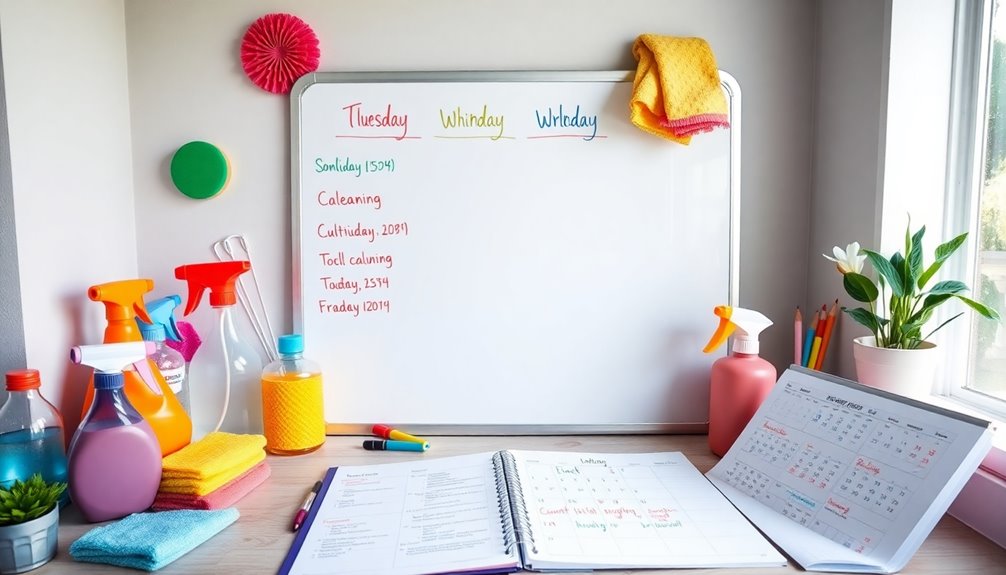
How can you determine your home cleaning needs? Start with a thorough home evaluation.
Walk through each room, noting areas that require more attention, like high-traffic zones or spots prone to dirt buildup. Identify your cleaning priorities based on your family’s lifestyle and the frequency of use for each space.
Evaluate each room to pinpoint high-traffic areas and prioritize cleaning based on your family’s lifestyle and usage frequency.
For example, kitchens and bathrooms often need more regular cleaning than guest rooms. Make a list of tasks that need to be done daily, weekly, or monthly. Efficient organization of toiletries can also enhance cleanliness and simplify your cleaning routine.
This will give you a clearer picture of what needs attention and help you allocate your time wisely. By evaluating your home and setting cleaning priorities, you can create a realistic cleaning schedule that fits your family’s needs.
Involving the Whole Family in the Cleaning Process

Involving your family in the cleaning process can make chores more manageable and fun.
Start by assigning age-appropriate tasks so everyone contributes, and consider creating a reward system to keep motivation high. This way, you’ll not only tackle the mess together but also build teamwork and responsibility in your household. Additionally, implementing a chore chart can help track tasks and encourage accountability among family members.
Assign Age-Appropriate Tasks
Creating a cleaning schedule that includes the whole family can make chores feel less intimidating and more manageable. To do this effectively, focus on age suitability when assigning tasks.
For younger kids, simple tasks like picking up toys or dusting low surfaces can be fun and engaging. As your children grow, you can introduce more complex responsibilities like vacuuming or wiping down countertops.
Task delegation is key; involve everyone based on their abilities. This not only teaches your kids valuable skills but also fosters a sense of teamwork.
Create a Reward System
To motivate everyone in the family, consider establishing a reward system that makes cleaning feel like a fun challenge rather than a chore.
You can create incentive programs that offer various reward ideas for completing tasks. For instance, set up a point system where each chore earns points, and family members can trade them for treats like a movie night or a special dessert.
You could also hold family competitions, with the winner receiving a small prize or extra privileges. Make certain to involve everyone in brainstorming reward ideas to guarantee they’re appealing.
Breaking Down Cleaning Tasks by Area
When it comes to cleaning, breaking tasks down by area makes it manageable and efficient.
Start by creating a kitchen cleaning checklist to tackle everything from countertops to appliances, then move on to the living room tasks that keep your space inviting. Regularly sanitize the sink ensures that your kitchen remains a safe and healthy environment for your family.
This approach helps you stay organized and guarantees no area gets overlooked.
Kitchen Cleaning Checklist
A well-organized kitchen cleaning checklist can make tackling this often-overlooked space much easier.
Start by decluttering your countertops, removing any items that don’t belong. Next, focus on your appliances; wipe down the refrigerator, oven, and microwave using effective deep cleaning strategies.
Don’t forget to clean out the inside of your microwave and fridge regularly. Move on to your cabinets—dust the exteriors and organize the interiors with useful kitchen organization tips.
Scrub your sink and faucet, then sweep and mop the floor. Finally, take a moment to sanitize high-touch areas like cabinet handles and light switches.
Following this checklist not only keeps your kitchen clean but also creates a more pleasant cooking environment for you and your family.
Living Room Tasks
The living room often serves as the heart of your home, making it essential to keep it tidy and inviting. Start by rearranging the furniture for ideal flow and comfort.
Regularly dust surfaces and vacuum carpets to maintain a clean environment. Don’t forget to check under the furniture for hidden messes!
Next, pay attention to decorative accents; keep them organized and dust-free. Rotate cushions and throws to keep the space looking fresh.
Every week, set aside time to declutter magazines, toys, or anything that’s out of place.
Finally, consider wiping down light fixtures and windows to enhance the room’s brightness. With these tasks, your living room will shine as a welcoming space for family and guests alike.
Setting Realistic Timeframes for Each Task
While juggling parenting responsibilities, it’s essential to set realistic timeframes for each cleaning task to guarantee you don’t feel overwhelmed. Start by evaluating the time allocation for each chore.
Break down larger tasks into smaller, manageable steps. For instance, instead of dedicating an entire afternoon to deep cleaning, allocate 30 minutes each day to specific areas. Daily cleaning tasks can help maintain organization and reduce stress.
Task prioritization is key—focus on high-traffic zones first, like the kitchen and living room, before moving to less frequented spaces. Use timers to keep yourself accountable and avoid drifting into distractions.
Creating a Weekly Cleaning Calendar
Creating a weekly cleaning calendar can streamline your chores and make daily tasks feel less intimidating. Start by evaluating your cleaning frequency—decide how often you need to tackle each area, whether it’s daily, weekly, or bi-weekly. Use this information to prioritize tasks; for instance, focus on high-traffic areas like the kitchen and living room.
Break your calendar down by day, assigning specific tasks to each one. For example, you might vacuum on Mondays, dust on Wednesdays, and clean bathrooms on Fridays. This way, no task feels overwhelming, and you’ll maintain a tidy home effortlessly. Incorporating a cleaning checklist boosts motivation and provides a sense of accomplishment.
Incorporating Daily, Weekly, and Monthly Tasks
To effectively manage your cleaning responsibilities, it’s vital to incorporate daily, weekly, and monthly tasks into your schedule. Start by defining your cleaning frequency—daily tasks might include tidying up and wiping surfaces, while weekly chores could involve vacuuming, mopping, or dusting.
Monthly tasks, like deep-cleaning appliances or organizing closets, guarantee your home remains in top shape. Task prioritization is key; identify which chores are most important and fit them into your schedule accordingly.
For instance, if you have kids, daily cleaning may need to focus on high-traffic areas. This structured approach helps you maintain a clean environment without feeling overwhelmed, allowing your family to thrive in a tidy home. Additionally, consider incorporating a January Declutter Checklist to streamline your cleaning process and enhance organization throughout your household.
Tips for Staying Motivated and Consistent
Staying motivated and consistent with your cleaning schedule becomes much easier when you establish a routine that works for you.
Here are some effective cleaning motivation techniques and consistency strategies to help you stay on track:
- Set specific goals: Break tasks into manageable chunks to avoid feeling overwhelmed.
- Create a reward system: Treat yourself after completing a cleaning task or week.
- Involve the family: Make cleaning a fun family activity to lighten the load.
- Use timers: Set a timer for 15-30 minutes to focus on a task without distractions.
- Track your progress: Keep a checklist to visually see what you’ve accomplished.
- Incorporate efficient cleaning habits to maintain tidiness and make your routine more manageable.
Adjusting Your Schedule as Your Family Grows
As your family grows, adjusting your cleaning schedule becomes essential to accommodate new needs and responsibilities.
Family dynamics change as kids get older, and their activities can impact your routine. You might find that your once-comfortable cleaning times no longer fit with sports practices or school events.
Embrace schedule flexibility and be willing to shift tasks around. For instance, if weekends are packed, consider tackling bigger chores during the week when you have a little more time.
Involve your family in the process; assign age-appropriate tasks to children to lighten your load and teach them responsibility. Additionally, create a thorough overview of cleaning requirements to prioritize effectively and ensure nothing is overlooked.
Regularly reassess your schedule to verify it meets everyone’s needs, keeping your home clean and organized in harmony with your family’s lifestyle.
Tools and Resources to Help You Stay Organized
Staying organized can be a game changer when managing your cleaning schedule. Digital planning apps offer convenient reminders, while printable checklists keep you on track. Let’s explore how these tools can simplify your weekly routine. Additionally, incorporating a wall planner into your system can help visually track daily, weekly, and monthly tasks effectively.
Digital Planning Apps
Many parents find that digital planning apps can be a game-changer when it comes to organizing their cleaning schedules.
These apps help with task prioritization and guarantee you never miss a cleaning reminder.
Here are five features to look for in a good app:
- Customizable schedules: Tailor your cleaning tasks to fit your family’s needs.
- Automated reminders: Get notifications for each cleaning task.
- Progress tracking: Visualize your achievements to stay motivated.
- Collaboration tools: Share tasks with family members for teamwork.
- User-friendly interface: Easily navigate the app for quick access.
Printable Cleaning Checklists
There’s something satisfying about checking off tasks on a cleaning checklist, and printable options can be incredibly useful for busy parents. Printable templates allow you to customize your cleaning routine, ensuring you cover all necessary tasks without the hassle of digital devices.
You can create a weekly checklist that includes daily, weekly, and monthly chores, helping you stay organized and focused.
While cleaning apps offer convenience, having a physical checklist can be easier to reference, especially when you’re juggling kids and chores. Simply print your templates, hang them on the fridge, or keep them in a binder.
This way, you’ll always have a clear visual of what needs to be done, making your cleaning routine more efficient and manageable.
Conclusion
By creating a realistic weekly cleaning schedule, you not only keep your home tidy but also foster teamwork among your family. Remember, it’s not just about cleaning; it’s about building habits that last. As your family evolves, so can your schedule—flexibility is key. With the right tools and a little motivation, you’ll turn chaos into harmony, making your home a welcoming space for everyone. So, grab that checklist and start transforming your cleaning routine today!