To keep your toy space organized for the long haul, start by creating designated toy zones that make cleanup easy. Use clear storage bins for visibility and label everything for quick recognition. Implement a toy rotation system to keep playtime fresh, and encourage your kids to follow the one-in, one-out rule. Maximize vertical space with shelves and create specific zones for different types of play. There’s so much more you can explore to enhance your toy organization!
Create a Designated Toy Zone for Easy Cleanup
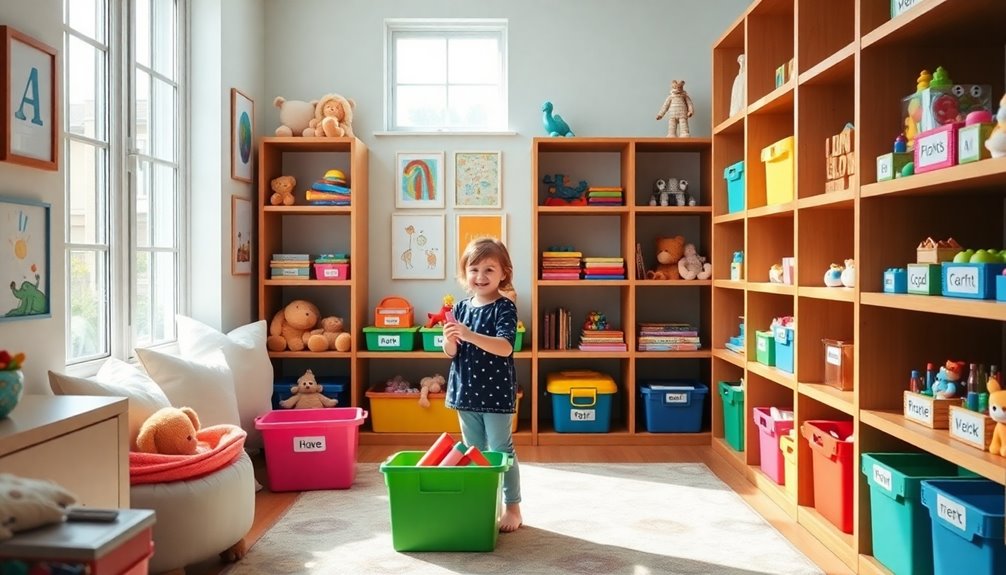
Creating a designated toy zone can simplify cleanup and keep your space organized. By setting aside a specific area for toys, you encourage your kids to play in that space, making it easier for you to manage the mess.
Establishing toy zones helps everyone understand where toys belong, which can lead to more efficient cleanup strategies. Use baskets or shelves to define these areas clearly. Encourage your children to return toys to their designated spots after playtime.
This not only teaches responsibility but also helps reduce the time you spend tidying up. When toys have a home, you’ll find it’s much easier to maintain a clutter-free environment, allowing your living space to feel more open and inviting. Additionally, incorporating specific cleaning tasks into your routine can further enhance organization and cleanliness throughout your home.
Use Clear Storage Bins to Identify Contents
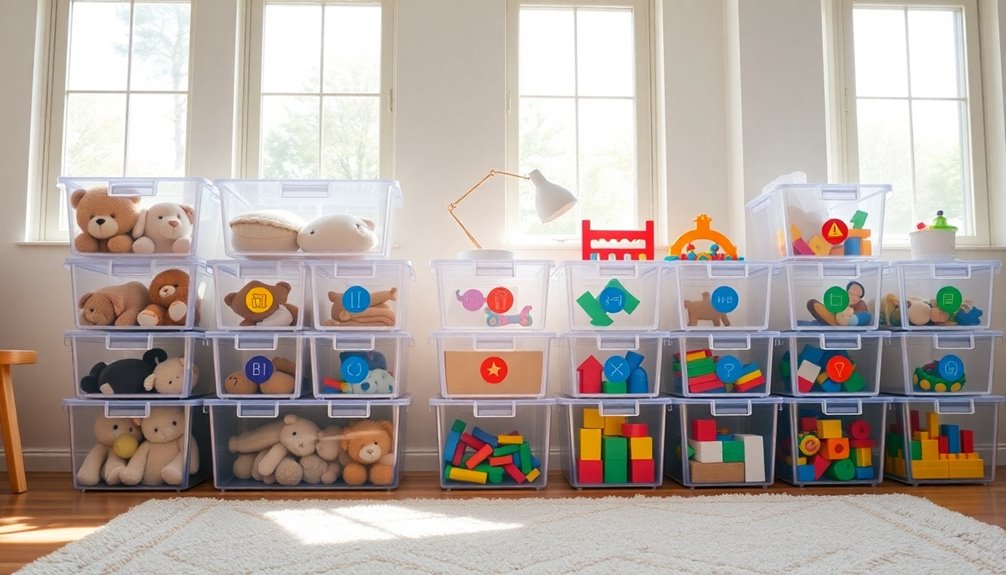
Using clear storage bins makes it easy to see what’s inside, so you won’t waste time searching for specific toys. You can also add labels for quick identification, helping kids find their favorites faster. Plus, stackable designs let you maximize your space, keeping everything organized and tidy. Additionally, incorporating eco-friendly cleaning options helps maintain a clean environment for your children’s play area.
Labels for Easy Identification
While organizing your child’s toys can feel overwhelming, clear storage bins with labels make the task much simpler.
Using labeling techniques helps you easily identify what’s inside each bin, saving you time and frustration. Choose bins that are transparent so you can quickly spot the contents.
Create creative labels that are fun and easy for your child to recognize. Consider using colorful pictures or simple words to represent different toy categories, like “blocks,” “action figures,” or “art supplies.”
This not only makes it easier for you to find items but also encourages your child to help with cleanup. Remember, consistent labeling fosters independence and helps maintain the organization you’ve worked hard to achieve.
Stackable Designs Maximize Space
Stackable storage bins can be a game changer when it comes to maximizing space in your child’s play area. By using clear storage bins, you not only enhance space efficiency but also make it easy to identify contents at a glance.
Choose various sizes to fit different toys, and stack them neatly to utilize vertical space. This approach keeps your child’s play area organized and clutter-free. When you can see what’s inside, your child can quickly find their favorite toys, encouraging independent play and clean-up.
Plus, stackable designs make it simple to rearrange as your child’s toy collection grows. Embrace the power of stackable storage and transform your space into an organized, functional play zone!
Implement a Rotation System for Toys
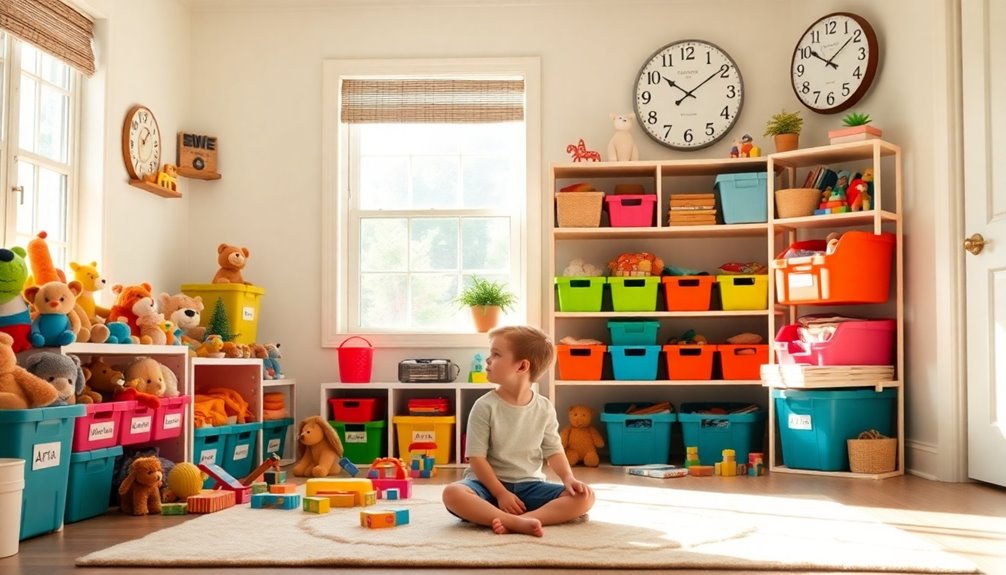
Implementing a rotation system for toys can breathe new life into playtime, keeping your child engaged and their space organized.
Start by sorting toys into groups based on categories or themes. Each week or month, swap out a selection of toys, allowing your child to rediscover favorites and explore new ones. This toy rotation keeps their interest piqued and helps prevent overwhelm.
Sort toys into themed groups and regularly rotate them to keep playtime engaging and prevent overwhelm.
Consider seasonal swaps, where you introduce toys that match the time of year, like beach toys in summer or holiday-themed items in winter. Not only does this strategy declutter your space, but it also fosters creativity and imagination as your child interacts with different toys regularly. Additionally, implementing a quick evening tidy-up routine can help maintain organization in your child’s play area.
Plus, it’s a fun way to keep playtime fresh and exciting!
Label Everything for Quick Recognition
Labeling is essential for keeping your toy area organized and efficient.
You can choose clear labeling materials and even use a color-coding system to make everything easy to find at a glance.
Plus, involving your kids in the labeling process can make it fun and teach them about organization. Additionally, daily cleaning habits can help maintain the tidiness of the toy area, ensuring that everything stays in its designated spot.
Choose Clear Labeling Materials
When it comes to organizing toys, using clear labeling materials makes a big difference. You want to guarantee that everything is easily recognizable, so choosing the right label types and material choices is essential.
Here are four effective options to take into account:
- Vinyl Labels: Durable and waterproof, perfect for messy play areas.
- Magnetic Labels: Easily removable and repositionable, great for metal bins.
- Clear Plastic Pockets: Insert labels for a customizable approach that’s easy to change.
- Washi Tape Labels: Fun and colorful, ideal for kids’ rooms but still easy to read.
Use Color-Coding Systems
Using a color-coding system can transform your toy organization game. By assigning specific colors to different categories, you’ll not only enhance the aesthetic appeal of your storage area but also leverage color psychology for better recognition.
For example, you might use blue for vehicles, red for blocks, and green for crafts. This visual cue makes it easy for you to locate toys quickly, saving time during clean-up.
The organizing benefits are significant; kids can easily associate colors with types of toys, which encourages them to return items to their rightful places.
Plus, a tidy, color-coordinated space can create a more inviting play environment. So, grab those colored labels or bins and start organizing with style!
Involve Kids in Labeling
Getting your kids involved in the labeling process can make organization fun and educational. When they participate, they’ll learn valuable skills while making their space more organized.
Here are some effective labeling techniques to try with kid-friendly labels:
- Use Pictures: Incorporate images of the toys for quick recognition.
- Color-Coding: Assign different colors to various categories, like blocks or dolls.
- Personal Touch: Let your kids decorate their labels with stickers or drawings.
- Interactive Labels: Create labels that they can easily change as their interests evolve.
Make Use of Vertical Space With Shelving
Maximizing your space often means looking up—shelves can be your best friend in toy organization. By incorporating various shelving styles, you can transform your walls into functional vertical displays.
Consider floating shelves for a sleek look or sturdy bookcases for more storage. Use baskets or bins on these shelves to keep smaller toys contained and easily accessible. Group similar items together, making it easier for your child to find what they’re looking for.
Don’t shy away from creative arrangements; mixing different heights and depths can add visual interest while maximizing storage. With a little planning, your vertical space can become a tidy, organized haven for toys, leaving more floor space for playtime. Additionally, using clear containers can enhance visibility and accessibility, making it easier for children to find and put away their toys.
Use Multi-Purpose Furniture in Play Areas
Incorporating multi-purpose furniture into play areas can markedly enhance both functionality and organization. By choosing the right pieces, you can create a space that adapts to your family’s needs.
Here are some great options to contemplate:
- Multi-purpose sofas: These offer comfortable seating and often include hidden storage for toys and games.
- Convertible tables: Use these for playtime and then transform them into a workspace for homework or crafts.
- Storage ottomans: Perfect for footrests, they also provide extra storage for smaller items.
- Foldable chairs: Easy to stow away when not in use, they keep the area tidy and spacious.
With these versatile pieces, you’ll maximize your play area’s potential while keeping it organized. Additionally, a well-organized space can create a peaceful environment, promoting relaxation and enhancing overall well-being.
Introduce Toy Baskets for Quick Collection
Toy baskets can be a game-changer for keeping play areas tidy and organized. By introducing these handy containers, you’ll enjoy the numerous toy basket benefits, including easy access and quick collection of toys.
Place a few baskets in strategic locations around the play area, and watch how effortlessly your kids can toss in their toys when playtime is over. This not only speeds up clean-up but also encourages a sense of responsibility. Implementing the One in and One Out method can further help in maintaining a clutter-free environment by ensuring that new toys do not overwhelm the space.
Choose baskets that are lightweight and colorful to make them inviting and fun. With a designated spot for each type of toy, your space will look neat, and you’ll spend less time cleaning.
Opt for colorful, lightweight baskets to create an inviting space, ensuring toys have a designated home for easy organization.
Embrace toy baskets for a more organized and stress-free play environment!
Involve Kids in Decluttering Sessions
After setting up toy baskets, it’s time to take the next step in maintaining an organized play space: involving your kids in decluttering sessions.
Making decluttering a fun activity helps teach them responsibility while keeping the area tidy. Here are some engaging ideas:
- Toy Sorting Challenge: Set a timer and see who can sort their toys the fastest.
- Decluttering Games: Create a game where kids earn points for each toy they part with.
- Treasure Hunt: Search for forgotten toys to decide if they should stay or go.
- Storytime: Let kids share a story about their toys before deciding their fate.
Additionally, incorporating age-appropriate tasks during decluttering makes the process more enjoyable and manageable for children.
Set Up a Toy Donation Box for Unwanted Items
Setting up a toy donation box can make it easier for your kids to part with items they no longer play with, while also helping those in need.
Choose a designated spot in your home, like a corner of the playroom or a closet, and place a clearly labeled box there. Encourage your children to drop in toys they’ve outgrown or lost interest in.
Explain how their donations can contribute to a local donation drive, highlighting the positive community impact. You might even set a goal to fill the box by a certain date, turning it into a fun challenge. Additionally, discuss the importance of reducing stress that comes from maintaining a clutter-free environment.
Once it’s full, take your kids along to donate the toys, reinforcing the joy of giving and sharing.
Organize by Category: Games, Dolls, Building Blocks
Here are some tips to get started:
- Game Organization: Store board games on a dedicated shelf, keeping similar types together.
- Doll Storage: Use bins or dollhouses for easy access and display of dolls and their accessories.
- Block Sorting: Sort building blocks by size or color in labeled containers to encourage creativity.
- Category Benefits: Children can find what they need quickly, promoting independent play and reducing cleanup time. Additionally, using specialized cleaning tools can enhance the overall cleanliness of the playroom by ensuring that dust and debris are effectively removed from various surfaces.
Create a ‘Toy Library’ for Sharing With Friends
Creating a ‘Toy Library’ can be a fun way for you and your kids to share toys with friends while teaching responsibility.
By setting it up together, you’ll not only encourage cooperation but also help everyone appreciate the value of sharing.
Plus, it’s a great opportunity for your little ones to explore new toys without the clutter at home!
Benefits Of Toy Sharing
While sharing toys might seem like a simple idea, establishing a ‘Toy Library’ can greatly enhance playtime experiences for children and foster community connections.
Here are some sharing benefits you’ll notice:
- Diverse Play Options: Kids gain access to a wider variety of toys, encouraging imaginative play.
- Cost-Effective: You save money by borrowing rather than buying, making it easier to manage your budget.
- Cooperative Play: Children learn to share and collaborate, building essential social skills.
- Stronger Community Bonds: You’ll connect with other parents and families, creating a supportive network.
Setting Up The Library
Setting up a toy library can be a fun and rewarding experience for you and your friends. Start by creating a library layout that’s both inviting and organized.
Designate a specific area for the toy library, ensuring it’s easy to access. Add shelves or bins to store toys neatly, making it simple for everyone to find what they want.
Consider including a cozy reading corner with bean bags or cushions where kids can enjoy books related to the toys. This not only encourages play but also fosters a love for reading.
Make sure to regularly rotate the toys to keep things fresh and exciting, inviting friends over to explore and share in this delightful space.
Encouraging Responsibility Among Kids
To foster a sense of responsibility in kids, establishing a toy library for sharing with friends can be an excellent approach. This initiative not only encourages sharing but also teaches valuable lessons.
Here are some tips to implement this idea effectively:
- Set Up a Schedule: Use chore charts to assign kids days to manage the toy library.
- Create Rules: Outline how toys should be treated and returned to promote respect for others’ belongings.
- Introduce Responsibility Rewards: Offer small incentives for kids who consistently follow the rules, reinforcing positive behavior.
- Host Toy Swaps: Organize events where kids can exchange toys, fostering a sense of community and responsibility.
Use Hooks and Pegboards for Smaller Items
When you want to keep smaller toys organized and easily accessible, using hooks and pegboards can be a game changer.
Start by choosing the right pegboard designs that fit your space and style. You can paint them to match the room or leave them natural for a rustic look.
Next, consider hook placement carefully; hang items at a height your kids can reach, encouraging them to put toys away themselves. Use different hook styles for various items—think small baskets for tiny blocks or single hooks for action figures.
This method not only keeps toys visible but also adds a fun, creative element to their play area, making cleanup easier and more engaging for your little ones.
Establish a Daily Cleanup Routine
Creating a daily cleanup routine can transform chaos into order in just 10 minutes a day. By establishing daily habits, you’ll make tidying up a breeze.
Transform chaos into order with a simple daily cleanup routine—just 10 minutes a day makes tidying effortless!
Here’s a simple cleanup checklist to keep you on track:
- Set a Timer: Dedicate 10 minutes each day to focus on toy organization.
- Involve the Kids: Make cleanup a fun family activity to teach responsibility.
- Sort and Declutter: Quickly sort toys into keep, donate, or discard piles.
- Return Toys to Their Homes: Encourage kids to put toys back in designated spots after playtime.
With this routine, maintaining a tidy space becomes effortless, and you’ll foster positive habits in your children that last a lifetime.
Utilize Drawer Organizers for Smaller Toys
Using clear plastic bins for smaller toys can make a world of difference in keeping things tidy.
You can easily label each drawer, ensuring that everything has its place and is easy to find. This simple organization method not only saves time during cleanup but also encourages kids to participate in putting their toys away.
Clear Plastic Bins
Clear plastic bins are a game changer for organizing toys and keeping your space clutter-free. They offer clear bin benefits like visibility and easy access, making it simple for kids to find what they want.
Here are some organizing strategies to maximize their potential:
- Sort by Category: Group toys into categories like action figures, building blocks, or art supplies.
- Use Different Sizes: Combine small and large bins for various toy sizes, ensuring everything fits.
- Stack for Space: Utilize vertical space by stacking bins, keeping your area tidy.
- Easy Cleanup: Encourage kids to return toys to their designated bin, fostering a habit of organization.
With these tips, you’ll create a functional, organized play area!
Label Each Drawer
To take your toy organization to the next level, labeling each drawer can make a big difference, especially when it comes to smaller toys. With drawer labeling, you create a clear and efficient system that helps kids find what they need without digging through a mess.
Choose drawer organizers to separate toys like action figures, blocks, and art supplies. This not only keeps everything tidy but also teaches kids the importance of organization strategies.
Use bold, easy-to-read labels, and consider involving your kids in the process. They’ll feel a sense of ownership and responsibility.
Regularly check and update the labels as your toy collection changes, ensuring your system remains effective. You’ll notice how much smoother clean-up becomes!
Encourage Kids to Follow the One-In, One-Out Rule
While it might seem challenging to get kids on board with the idea of decluttering, teaching them the one-in, one-out rule can simplify the process. This rule helps kids understand that for every new toy they want, they need to let go of one they no longer use.
Teaching kids the one-in, one-out rule makes decluttering simple and fun, encouraging them to let go of unused toys.
Here are some tips to make it easier:
- Create a toy swap event with friends to encourage sharing and trading.
- Use reward systems to motivate kids; for example, offer a small treat for each toy they donate.
- Involve them in the decision-making process about which toys to keep or give away.
- Make it a fun challenge to find toys they’ve outgrown or forgotten.
This way, decluttering becomes a positive experience!
Create Zones for Different Types of Play
Creating zones for different types of play not only keeps your space organized but also encourages kids to engage in various activities.
Start by designating specific play zones for crafts, building, and imaginative play. For example, set up an arts and crafts corner with supplies neatly stored in bins.
Create a building area with blocks and construction toys, and reserve a section for dress-up clothes and role-playing props.
Label each zone clearly to help kids understand where to find their toys and where to return them after play.
This structure fosters independence and responsibility while making cleanup easier.
Engage in Seasonal Toy Assessments
To keep toy chaos at bay, set seasonal reminders to assess your kids’ toys.
Involving them in the decision-making process not only makes it fun but also teaches them valuable lessons about organization.
Set Seasonal Reminders
As the seasons change, it’s the perfect opportunity to assess your child’s toy collection and make necessary adjustments.
Setting seasonal reminders can help you stay on track with these toy assessments. Here are some tips to keep in mind:
- Schedule a quarterly reminder: Set a date every three months to review toys.
- Evaluate seasonal relevance: Check if certain toys are suitable for the upcoming season.
- Incorporate a checklist: List toys to donate, recycle, or keep based on condition and use.
- Create a rotation system: Keep some toys out of sight and rotate them to maintain interest.
These steps guarantee your child’s toy collection stays fresh and organized throughout the year!
Involve Kids In Decisions
Engaging your kids in the toy assessment process can make a big difference in how they perceive their belongings. When you involve them in decision-making, they’re more likely to take ownership of their toy preferences.
Start by setting aside time for seasonal assessments. Ask your kids to choose their favorite toys while discussing why they love them. This helps them develop critical thinking skills and appreciate their choices.
Encourage them to let go of items they no longer play with, emphasizing that the goal is to make space for new experiences. By actively participating in the process, your kids learn valuable lessons about organization and sharing, making the toy cleaning routine more meaningful and lasting.
Celebrate Achievements in Keeping Spaces Organized
While organizing toys and maintaining clutter-free spaces can feel like a formidable task, celebrating your achievements along the way makes the effort worthwhile. Acknowledging your progress helps you stay motivated and reminds you that each small step counts.
Here are some ways to celebrate your milestones:
- Create a Visual Chart: Track your organization progress and display it prominently.
- Reward Yourself: Treat yourself to something small after completing a major decluttering session.
- Share Success: Tell friends or family about your achievements; they’ll cheer you on!
- Host a Toy Party: Invite kids to showcase their organized spaces, turning cleaning into a fun event.
Conclusion
By implementing these 18 toy organization and cleaning tips, you can create a more manageable and enjoyable play environment for your kids. For example, Sarah, a busy mom of three, transformed her chaotic living room by using clear bins and rotating toys every month. Now, her kids not only help clean up but also appreciate their toys more. With a little effort and creativity, you can foster responsibility and keep your home organized, making playtime fun for everyone.