Managing your cleaning routine doesn’t have to be overwhelming. By breaking tasks into daily, weekly, and monthly chores, you can keep your home tidy and inviting. Make your bed daily, wipe down surfaces regularly, and don’t forget those monthly deep cleans for areas like baseboards and appliances. Involving your family makes it easier, too. Discover smart strategies and tips that make this process even simpler, ensuring your home stays fresh and organized.
Understanding the Importance of a Cleaning Routine
What’s great is that you can customize your routine for routine flexibility. You don’t have to stick to a rigid schedule; adapt it based on your lifestyle and needs.
Whether you prefer daily, weekly, or monthly tasks, finding what works for you makes the process less intimidating. Embracing this flexibility guarantees that cleaning becomes a manageable part of your life, ultimately leading to a happier, healthier home. Additionally, incorporating specific cleaning tasks ensures that all areas of your home receive regular attention.
Daily Cleaning Tasks for a Tidy Home
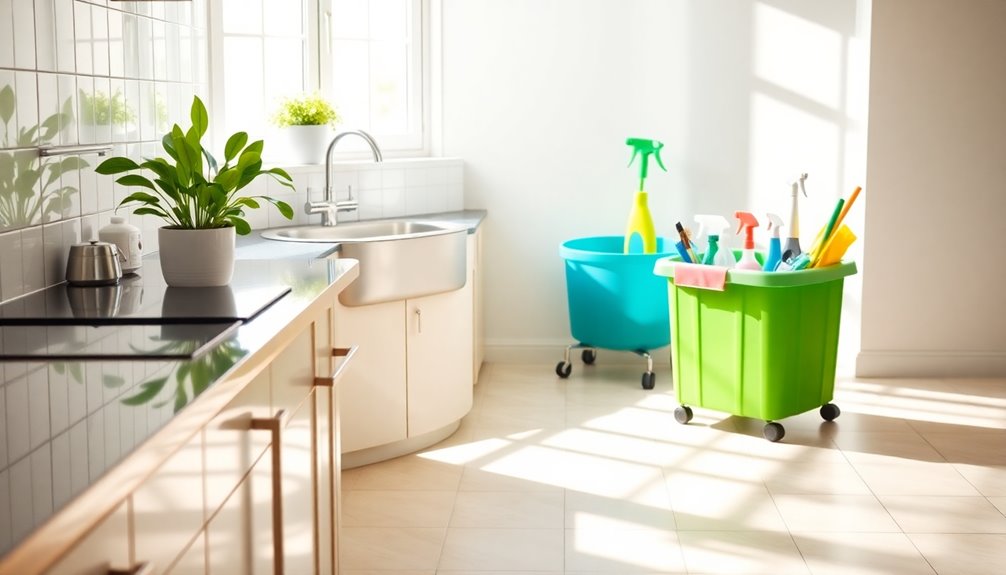
A tidy home starts with simple daily cleaning tasks that keep clutter at bay.
Begin each day by making your bed—this small act instantly elevates your room’s appearance. Use cleaning hacks like a microfiber cloth to quickly dust surfaces and eliminate allergens.
Set a timer for 15 minutes to tackle any visible mess; you’ll be amazed at how much you can accomplish. In the kitchen, wash dishes daily and wipe down counters to prevent buildup.
Consider a “one in, one out” rule for items to manage clutter effectively. These time-saving tips not only streamline your routine but also create a welcoming atmosphere. Incorporating a 20-minute rule into your daily cleaning can further enhance your efficiency.
Stay consistent, and you’ll enjoy a tidy home every day!
Essential Weekly Cleaning Chores to Schedule
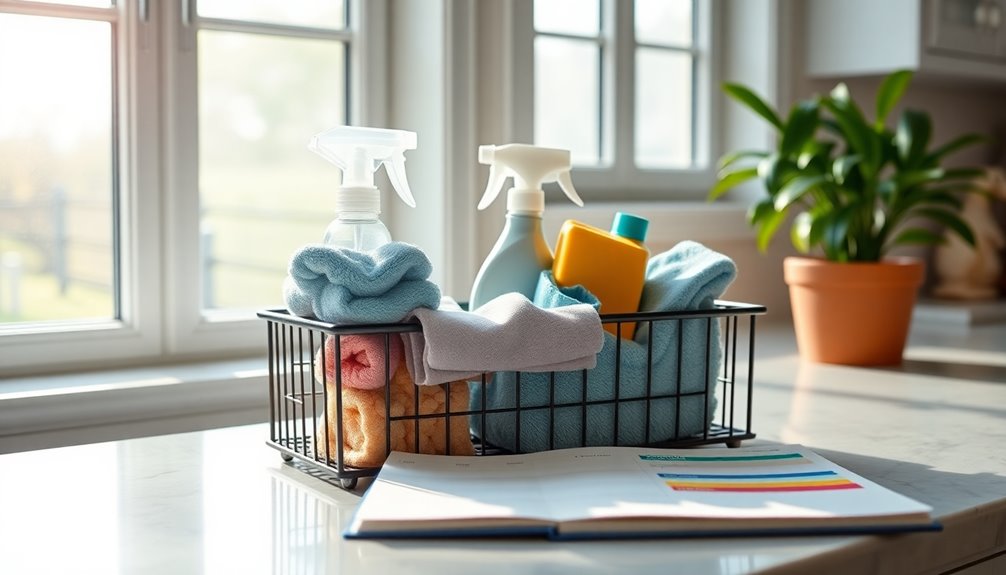
When it comes to weekly cleaning, you should prioritize high-traffic areas where dirt and clutter accumulate quickly. Don’t forget to include deep cleaning tasks to keep your home fresh and inviting. Scheduling these chores not only keeps things tidy but also prevents overwhelming cleaning sessions later on. Additionally, focusing on enhancing indoor air quality contributes to a healthier living environment.
Prioritize High-Traffic Areas
To keep your home looking its best, focus on high-traffic areas that accumulate dirt and grime quickly.
These high traffic hotspots, like entryways, kitchens, and living rooms, need your attention each week.
Start by sweeping or vacuuming these spaces to catch loose dirt and debris.
Wipe down surfaces with a suitable cleaner to eliminate stains and germs.
Don’t forget about floors; mopping can make a significant difference in appearance.
By prioritizing your cleaning efforts in these areas, you’ll maintain a fresher environment and reduce the need for deep cleaning later.
Regular attention to high-traffic spots not only keeps your home inviting but also simplifies your overall cleaning routine.
Make this a consistent part of your weekly schedule!
Include Deep Cleaning Tasks
While you’re tackling your weekly cleaning schedule, don’t overlook the importance of including deep cleaning tasks. These chores not only enhance your home’s appearance but also provide significant deep cleaning benefits, like improved air quality and reduced allergens.
Consider adding these tasks to your routine:
- Clean Appliances: Wipe down your refrigerator and oven. Grime can build up quickly!
- Wash Baseboards and Walls: Dust and dirt accumulate in these overlooked areas, so give them a thorough scrub.
- Seasonal Deep Cleaning: Rotate your deep cleaning tasks seasonally to tackle areas like windows and carpets, ensuring every corner of your home gets the attention it deserves.
Monthly Cleaning Tasks You Can’t Ignore
Although daily cleaning tasks often take center stage, monthly cleaning chores are just as essential for maintaining a healthy home. Focus on monthly maintenance by tackling overlooked areas like baseboards, light fixtures, and behind appliances.
Create cleaning checklists to streamline your process and enhance time management. Involve your family in these tasks to make it a collaborative effort, and don’t forget pet-related tasks like washing their bedding or cleaning toys. Consider seasonal deep cleaning for a thorough refresh, ensuring you use eco-friendly products for a healthier environment. Incorporate decluttering methods to keep spaces organized and free from unnecessary items. Prioritizing these monthly chores will contribute to effective surface sanitization and a more inviting home. Regularly inspect and clean appliances to maintain efficiency and prevent issues down the line.
Creating a Cleaning Schedule That Works for You
Creating a cleaning schedule that fits your lifestyle can transform your home into a more organized space. To get started, focus on your cleaning goals and create a personalized checklist that suits your needs.
Here are three tips to help you establish an effective routine:
- Schedule Flexibility: Allow room for changes; life happens!
- Task Rotation: Involve family members by assigning rotating tasks, making cleaning a shared effort.
- Technology Aids: Use apps to set reminders and track progress, enhancing your time management. Additionally, incorporating a chore chart can help visualize responsibilities and keep everyone accountable.
Incorporate motivation techniques and a reward system to celebrate your achievements.
As you build these habits, you’ll notice your cleaning routine becoming more manageable and enjoyable!
Tips for Staying Motivated While Cleaning
How can you keep your motivation high while tackling cleaning tasks? Start by setting personal goals and breaking them into manageable cleaning challenges.
Use time management techniques to allocate specific blocks for each task. Create a motivational playlist to energize your cleaning sessions.
Consider themed cleaning days to keep things fresh and exciting. Team up with cleaning buddies for accountability and fun, and celebrate your progress together.
Visual progress, like before-and-after photos, can boost your spirits. Implement a reward system; treat yourself to cleaning rewards after completing tasks.
Finally, use positive affirmations to remind yourself of your accomplishments, turning cleaning into a satisfying and motivating experience. Stay focused, and make it enjoyable! Additionally, incorporating efficient cleaning habits can help streamline your efforts and maintain a consistent routine.
Organizing Your Cleaning Supplies Efficiently
To make your cleaning routine smoother, it’s vital to organize your supplies effectively.
Start by creating an essential supplies checklist to guarantee you have everything you need. Then, explore storage solutions that fit your space and keep everything within reach. Consider efficient storage solutions to maximize space in your caddy for better organization.
Essential Supplies Checklist
A well-organized cleaning supplies checklist can save you time and effort, ensuring you have everything you need at your fingertips.
Start by gathering essential items that suit various surface types and meet your eco-friendly goals. Here’s a quick checklist to evaluate:
- Cleaning Tools: Microfiber cloths, mops, and scrub brushes.
- Eco-Friendly Supplies: Natural cleaners, reusable wipes, and biodegradable trash bags.
- Time-Saving Gadgets: Cordless vacuums and automatic scrubbers.
Don’t forget to include safety precautions and product recommendations for each item.
Use organization bins to keep everything sorted, and think about seasonal supplies for specific tasks.
Following these cleaning hacks will streamline your routine, making your home sparkle with minimal effort!
Storage Solutions Ideas
While keeping your cleaning supplies organized might seem challenging, efficient storage solutions can make all the difference.
Start by using storage bins to group similar items, making them easy to find. Closet organizers can maximize vertical space, while under bed storage helps you utilize every inch.
Consider multi-functional furniture, like a bench with hidden compartments, for added storage. Implement label systems on your bins and drawers to streamline your cleaning routine.
Modular shelving can adapt to your needs, and drawer dividers guarantee small items don’t get lost. Pegboard solutions are great for hanging racks, keeping tools visible and accessible.
With these strategies, you’ll turn your cluttered cleaning supplies into a neat and efficient system.
How to Tackle Clutter in Your Home
Clutter can quickly take over your home, making it feel chaotic and overwhelming.
Clutter can swiftly transform your home into a chaotic space, leaving you feeling overwhelmed and stressed.
To achieve clutter reduction, consider these decluttering strategies:
- Set a Timer: Spend 15 minutes daily tackling one area. This quick focus helps you avoid emotional attachment to items.
- Use Organizing Techniques: Implement storage hacks like clear bins for visibility. This promotes space optimization and keeps your space tidy.
- Digital Decluttering: Don’t forget your devices! Unsubscribe, delete old files, and organize your digital life.
Additionally, regular decluttering sessions can help you reassess belongings and maintain a more organized living environment.
Incorporating Family Members Into Your Cleaning Routine
Getting your family involved in cleaning can make the task easier and more enjoyable. Start by assigning age-appropriate tasks to each member, ensuring everyone contributes. Establishing a cleaning schedule helps keep everyone on track and accountable. Additionally, turning chores into engaging cleaning competitions can boost motivation and make the experience more fun for everyone.
Assign Age-Appropriate Tasks
Involving your family in cleaning can make the process more efficient and enjoyable. By assigning age-appropriate chores, you’ll not only lighten your load but also teach responsibility.
Here are some great tasks to delegate based on age:
- Toddlers (2-4 years): Let them pick up toys or wipe surfaces with a damp cloth.
- Kids (5-10 years): They can dust furniture, sort laundry, or help with meal prep.
- Teens (11+ years): Encourage them to vacuum, clean their bathrooms, or take out the trash.
Establish a Cleaning Schedule
When you establish a cleaning schedule, you not only create a structured approach to tidying up, but also assure everyone in the family knows their responsibilities.
Start by determining the cleaning frequency for each task, and use task delegation to guarantee everyone contributes. Personalized routines can boost cleaning motivation and make chores feel less burdensome.
Incorporate efficiency tips, like setting timers, to enhance time management. Encourage family involvement by making it a fun activity; consider implementing reward systems to celebrate achievements.
Habit formation is key, so establish consistent cleaning times. Finally, pair family members as accountability partners; this promotes teamwork and helps everyone stay on track.
A well-planned schedule transforms cleaning from a chore into a shared responsibility.
Strategies for Deep Cleaning Different Areas
While tackling deep cleaning might seem overwhelming, breaking it down by area can make the task manageable and efficient.
Breaking down deep cleaning by area transforms an overwhelming task into a manageable and efficient process.
Using effective deep cleaning techniques specific to each space helps you stay focused and organized. Here are three strategies to contemplate during your seasonal deep cleaning:
- Kitchen: Clear countertops and appliances, then scrub surfaces with a mixture of vinegar and baking soda to tackle tough stains. Regular maintenance can prevent malfunctions and keep your kitchen hygienic.
- Bathroom: Focus on grout and tile; use a steam cleaner for deep cleaning those hard-to-reach areas and disinfect surfaces thoroughly.
- Living Room: Move furniture to vacuum and dust hidden spots, and contemplate washing curtains and cushion covers for a fresh feel.
These targeted approaches will make your deep cleaning efforts more effective.
Common Cleaning Mistakes to Avoid
Many people inadvertently make common cleaning mistakes that can hinder their efforts and lead to unsatisfactory results. Relying on cleaning shortcuts might seem efficient, but it often overlooks important details.
Avoid procrastination; putting off tasks can lead to bigger messes. Be wary of common misconceptions and cleaning myths that suggest skipping tools or using improper techniques.
Surface cleaning alone isn’t enough—neglecting details can leave grime behind. Overusing products can create residue, making surfaces dirtier.
Additionally, timing mistakes, like cleaning when you’re rushed, can compromise your effectiveness. By recognizing these pitfalls, you can refine your cleaning routine for better results.
Adapting Your Routine for Seasonal Changes
As the seasons change, your cleaning routine should adapt to address new challenges and needs.
Embrace seasonal decluttering to make space for new items and tackle weather-specific tasks that arise. Here’s how to adjust your cleaning habits:
- Spring: Clear out winter clothes and deep clean your windows to let in more light.
- Summer: Focus on outdoor spaces; clean patios and organize outdoor gear for easy access.
- Fall: Prepare for colder months by dusting off heaters and checking for drafts around windows.
How to Maintain a Clean Home With Minimal Effort
To keep your home clean without feeling overwhelmed, it’s essential to adopt a few simple habits that fit seamlessly into your daily routine. Start with small cleaning hacks, like wiping down surfaces while you cook or making your bed each morning. These quick tasks take minimal time but create a significant impact.
For effortless organization, use baskets or bins to group similar items together. This not only declutters but also makes it easy to find what you need.
Set a timer for 10 minutes each day to tackle a specific area; you’ll be surprised at how much you can accomplish. By integrating these practices into your life, maintaining a clean home becomes a breeze, leaving you more time to enjoy your space.
Conclusion
By incorporating daily, weekly, and monthly cleaning tasks into your routine, you’ll see how easy it is to maintain a tidy home. You might think it’s overwhelming, but breaking it down makes it manageable—like piecing together a puzzle. Imagine a clean kitchen, a clutter-free living room, and fresh-smelling bathrooms. With a little effort each day, you’ll enjoy a home that feels welcoming and serene, proving that a clean space can be achieved without stress.