In a commercial kitchen, having essential cleaning supplies is crucial for health and safety. You’ll need effective sanitizers to eliminate germs, versatile all-purpose cleaners for various messes, and disinfectants for high-touch areas. Don’t forget about personal protective equipment to keep your staff safe. Eco-friendly options can minimize environmental impact while maintaining hygiene. Stay organized with regular inventory checks to prevent shortages. With the right supplies, you’ll guarantee a clean and safe kitchen environment. Learn more about optimizing your supply management!
The Importance of Cleaning Supplies in a Commercial Kitchen
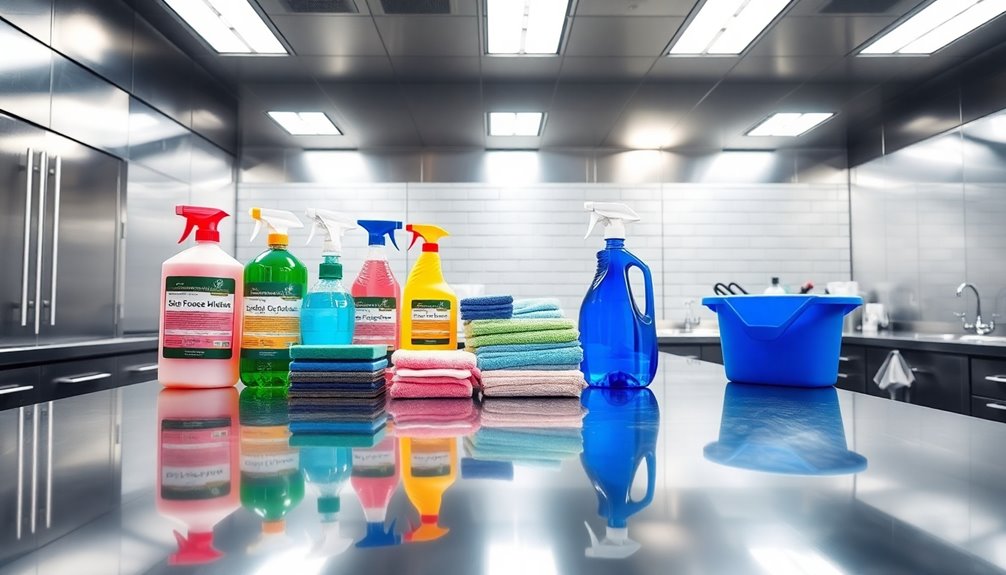
When you run a commercial kitchen, you know that cleanliness is non-negotiable. Maintaining strict cleaning protocols is vital for food safety and customer satisfaction. Without proper cleaning supplies, you can’t effectively manage the daily mess that comes with food preparation. From sanitizers to surface cleaners, each product plays an essential role in upholding hygiene standards. Additionally, investing in quality, especially eco-friendly options, guarantees a safer living environment for your kitchen staff and customers. You also need to keep a close eye on your supply inventory. Regularly checking what you have on hand guarantees you’re never caught short during busy service times. An organized inventory allows you to replenish supplies promptly, minimizing downtime.
Essential Sanitizers: Types and Uses
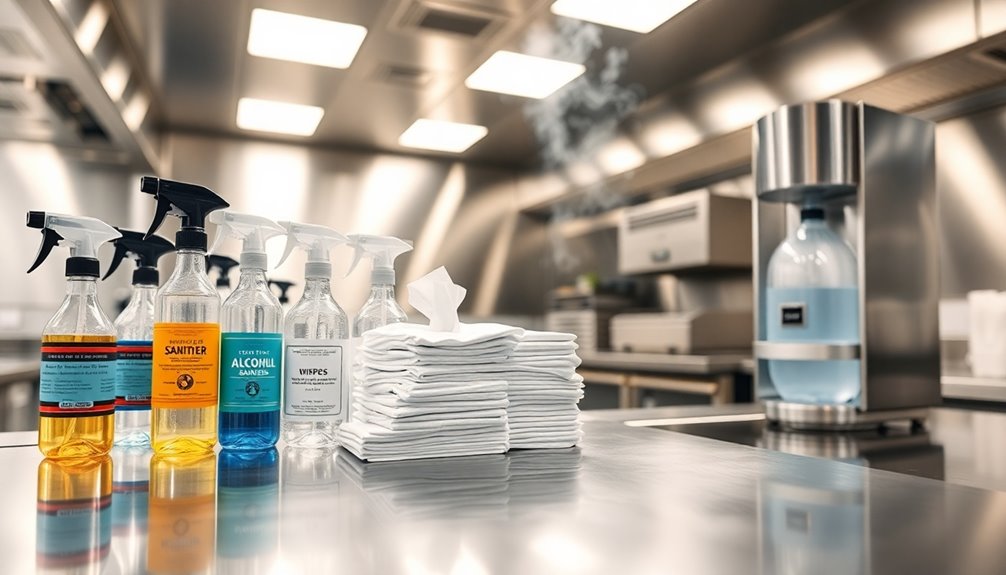
Sanitizers are essential in a commercial kitchen, helping to eliminate harmful bacteria and viruses from surfaces and equipment.
There are various types of sanitizers you can use, including chlorine-based, quaternary ammonium compounds, and hydrogen peroxide. Each has different sanitizer effectiveness depending on the surface and type of contamination.
Different types of sanitizers, like chlorine-based and hydrogen peroxide, vary in effectiveness based on surfaces and contamination types.
When applying a sanitizer, make sure you follow the manufacturer’s instructions for dilution and contact time to achieve the best results. Remember to clean surfaces before applying sanitizers, as this enhances their effectiveness. Additionally, consider using effective disinfectants like Lysol or hydrogen peroxide to ensure thorough sanitation in high-germ areas.
Regularly check expiration dates and replace products as needed to maintain the highest sanitation standards.
Disinfectants: Keeping Surfaces Safe From Germs
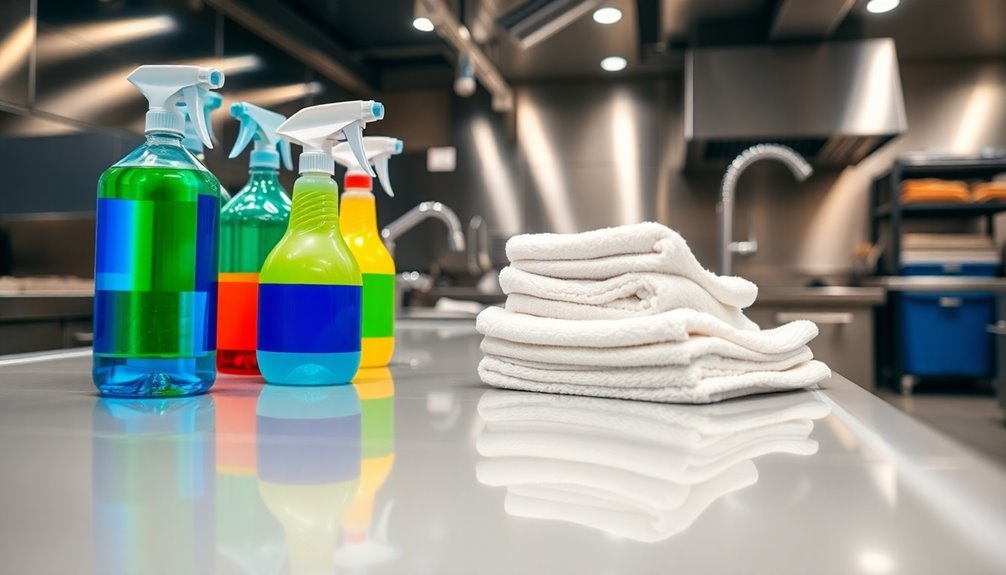
In addition to sanitizers, disinfectants play an essential role in maintaining a safe and hygienic commercial kitchen. You need to choose disinfectants with proven disinfectant effectiveness to guarantee that harmful germs and bacteria are eliminated from surfaces.
Regularly applying these products helps protect both your staff and customers from foodborne illnesses.
Focus on high-touch areas like countertops, cutting boards, and utensils, where germs can easily thrive. Always follow the manufacturer’s instructions for proper use and contact time to maximize surface safety.
Additionally, confirm that your chosen disinfectants are suitable for the various surfaces in your kitchen, preventing any damage while keeping them clean. Adopting eco-friendly methods ensures that your cleaning practices are safe for both the environment and health.
A well-disinfected kitchen not only promotes health but also enhances your kitchen’s overall efficiency.
All-Purpose Cleaners: Versatility in the Kitchen
While maintaining a commercial kitchen, having an all-purpose cleaner on hand is essential for tackling a variety of messes efficiently.
These versatile cleaners work well on multiple surfaces, from countertops to floors, making them a must-have in your cleaning arsenal. You can quickly wipe away spills, grease, and grime without needing a different product for each surface.
When choosing an all-purpose cleaner, prioritize those that promote kitchen safety by ensuring they’re safe for food contact areas. This way, you can maintain a hygienic environment while simplifying your cleaning routine. Incorporating eco-friendly scrub brushes into your cleaning toolkit can further enhance your kitchen’s cleanliness while minimizing environmental impact.
With the right all-purpose cleaner, you’ll save time and effort, allowing you to focus on what truly matters: delivering great food and service.
Specialty Cleaners for Kitchen Equipment and Appliances
When it comes to maintaining kitchen equipment and appliances, specialty cleaners are indispensable. Using the right products can greatly enhance cleanliness and performance.
Specialty surface cleaners target specific materials, ensuring you don’t damage sensitive finishes or components. For instance, stainless steel requires a cleaner that’s formulated to remove grease and smudges without scratching.
Additionally, equipment specific solutions are essential for appliances like ovens and fryers, where built-up grime can affect functionality. These cleaners are designed to cut through tough residues and sanitize effectively. Regular maintenance can help prevent compromised appliance efficiency and prolong the lifespan of your kitchen equipment.
Tools for Effective Cleaning: Brushes, Mops, and More
Specialty cleaners are just one part of the equation for maintaining a spotless commercial kitchen. To achieve thorough cleaning, you need the right tools like brushes, mops, and scrapers.
Brushes come in various sizes and bristle types, allowing you to tackle everything from stubborn grease on equipment to delicate surfaces. Mops are essential for maintaining floors, and you should choose ones that suit your specific cleaning techniques. For effective floor cleaning, consider using microfiber mops that trap dirt and dust while maximizing efficiency.
Regularly replacing worn-out tools will enhance your cleaning effectiveness. Incorporating these tools into your maintenance schedules guarantees that every corner of your kitchen remains hygienic.
The Role of Microfiber Cloths in Kitchen Hygiene
Microfiber cloths are essential for keeping your kitchen spotless and hygienic.
Their unique fibers effectively trap dirt and grime, ensuring you tackle even the toughest messes.
Plus, they help reduce bacterial contamination, making your kitchen a safer place to work. Additionally, their superior absorbency and dirt-lifting capabilities make them an excellent choice for streak-free cleaning in high-traffic areas.
Effective Dirt Removal
While maintaining a clean kitchen is essential for safety and efficiency, choosing the right cleaning tools makes all the difference.
Microfiber cloths are game-changers in effective dirt removal. Their unique fibers trap dirt, grease, and grime, ensuring a thorough clean without scratching surfaces.
For surface cleaning strategies, use a damp microfiber cloth to wipe down counters, appliances, and utensils. This method not only captures dirt but also reduces the need for harsh chemicals.
Pair these cloths with proper dirt removal techniques, like working from top to bottom, to prevent airborne particles from settling on already cleaned areas.
Reducing Bacterial Contamination
To maintain a hygienic environment in a commercial kitchen, it’s essential to focus on reducing bacterial contamination, and microfiber cloths play a key role in this effort.
These cloths effectively trap and lift dirt, dust, and bacteria, minimizing bacterial growth on surfaces. Unlike traditional cloths, microfiber can hold up to seven times its weight in dirt and moisture, making it a powerful tool for thorough cleaning.
When you incorporate microfiber into your sanitation protocols, you enhance your kitchen’s hygiene standards considerably. Regularly replacing and washing these cloths ensures they’re free from contaminants, further preventing cross-contamination.
Waste Management Solutions for a Clean Kitchen
Effective waste management solutions are vital for maintaining a clean and efficient commercial kitchen.
By implementing proper waste disposal methods and recycling initiatives, you can greatly reduce clutter and promote sustainability.
Here are four key strategies to reflect upon:
- Separate Waste Bins: Use clearly labeled bins for organic waste, recyclables, and general trash to streamline disposal.
- Regular Schedule: Establish a routine for emptying bins to prevent overflow and odors.
- Composting: Start a composting program for organic materials, reducing landfill waste while creating valuable compost.
- Training Staff: Educate your team on proper waste disposal and recycling practices to guarantee compliance.
Additionally, incorporating efficient cleaning habits can further enhance cleanliness and organization in a busy kitchen environment.
Personal Protective Equipment (PPE) for Cleaning Staff
Guaranteeing your cleaning staff has the right personal protective equipment (PPE) is essential for their safety and efficiency in a commercial kitchen.
PPE includes gloves, masks, goggles, and aprons, which protect against chemicals and spills. It’s vital to provide proper PPE training to your staff, so they understand how to use and maintain their gear effectively. Regularly check PPE availability to confirm everyone has what they need before starting their shifts. This not only fosters a safe working environment but also boosts morale and productivity. Additionally, using non-toxic cleaning alternatives helps ensure that the cleaning process is safe for both staff and customers alike.
Eco-Friendly Cleaning Supplies: Sustainable Options
When it comes to cleaning your commercial kitchen, opting for eco-friendly supplies can make a big difference. You’ll find biodegradable cleaning products and non-toxic disinfectants that not only keep your space spotless but also protect the environment. Choosing these sustainable options shows your commitment to health and sustainability. Additionally, using products from companies that prioritize sustainable practices can help ensure that your cleaning efforts align with environmental goals.
Biodegradable Cleaning Products
As you endeavor to maintain a clean and safe environment in your commercial kitchen, opting for biodegradable cleaning products can considerably reduce your ecological footprint.
These products not only offer biodegradable benefits but also guarantee eco-friendly effectiveness.
Here are some reasons to choose them:
- Less Environmental Impact: They break down naturally, minimizing pollution.
- Safer for Staff: Non-toxic ingredients reduce health risks for your team.
- Enhanced Cleanliness: Many biodegradable cleaners effectively remove grease and grime.
- Positive Brand Image: Customers appreciate businesses committed to sustainability.
Non-Toxic Disinfectant Alternatives
While conventional disinfectants can effectively kill germs, they often contain harsh chemicals that pose risks to both health and the environment.
You can opt for non-toxic disinfectant alternatives that support green sanitation without compromising cleanliness. Consider using natural cleaning solutions like vinegar, hydrogen peroxide, or essential oils, which are powerful yet safe for food preparation areas.
These options not only eliminate bacteria and viruses but also leave your kitchen smelling fresh. When switching to these eco-friendly supplies, you contribute to a healthier workspace and a safer planet.
Cost-Effective Bulk Purchasing of Cleaning Supplies
Purchasing cleaning supplies in bulk can save your commercial kitchen a significant amount of money.
By implementing effective bulk supply strategies, you can maximize your cost savings. Here are four tips to take into account:
- Identify High-Usage Items: Focus on supplies you use frequently, like disinfectants and detergents.
- Compare Suppliers: Research multiple vendors to find the best prices and deals on bulk orders.
- Negotiate Contracts: Establish long-term relationships with suppliers to secure better rates and terms.
- Monitor Inventory Levels: Keep track of your stock to avoid over-purchasing and verify you’re buying at ideal times.
Best Practices for Maintaining a Stocked Cleaning Supply Closet
Keeping your cleaning supply closet well-stocked is essential for ensuring a smooth operation in a commercial kitchen. To achieve this, create a detailed cleaning schedule that outlines when and how each area should be cleaned. This not only helps maintain cleanliness but also allows you to monitor supply usage effectively.
Next, implement a system for supply organization. Group similar items together and label shelves clearly, so staff can quickly find what they need.
Regularly check inventory levels and restock items before they run low. Encourage your team to communicate any shortages immediately, ensuring you stay ahead of supply needs.
Conclusion
In a bustling commercial kitchen, cleanliness is vital for both safety and efficiency. Did you know that 48% of foodborne illnesses stem from improper sanitation? By stocking up on essential cleaning supplies and adopting best practices, you can help prevent these risks. Remember, maintaining a well-organized supply closet not only supports a hygienic environment but also boosts your team’s morale. So, invest in quality cleaning products and keep your kitchen safe and welcoming for everyone!