A house cleaning schedule can transform your chaotic home into a tidy space. By prioritizing high-traffic areas and breaking tasks into daily, weekly, and monthly segments, you’ll streamline chores and reduce stress. Involving your family makes cleaning manageable and fun. Use quick daily tasks, like decluttering and surface wiping, to maintain cleanliness without feeling overwhelmed. Want to optimize your schedule and discover useful tools for a successful cleaning routine? There’s more to explore!
Understanding the Benefits of a Cleaning Schedule
When you create a cleaning schedule, you not only streamline your chores but also reduce stress.
The cleaning benefits are immediate; having a set plan helps you stay organized and focused. You won’t waste time wondering what to clean next, allowing you to tackle tasks efficiently. Additionally, a structured schedule encourages efficient cleaning habits that lead to a more organized living space.
Key Principles of an Effective House Cleaning Schedule

To create an effective house cleaning schedule, start by prioritizing high-traffic areas that need regular attention. Next, establish realistic timeframes for each task to keep yourself on track without feeling overwhelmed. This approach guarantees your home stays clean and manageable. Additionally, incorporating weekly cleaning tasks into your routine can help maintain a consistently tidy environment.
Prioritize High-Traffic Areas
Prioritizing high-traffic areas is essential for maintaining a clean home. Focus on spaces like the living room, kitchen, and entryway, where dirt and clutter accumulate quickly. By identifying these high-traffic zones, you can set your cleaning priorities effectively.
Start your weekly cleaning routine in these areas to make a noticeable difference. Dust surfaces, vacuum floors, and wipe down high-touch spots to keep these zones presentable.
It’s easier to tackle messes in smaller sections rather than overwhelming yourself with the entire house at once. Make it a habit to check these areas frequently and adjust your cleaning priorities as needed.
This way, you’ll create a welcoming environment that reflects your effort and care.
Establish Realistic Timeframes
Establishing realistic timeframes is essential, as it helps you manage your cleaning tasks without feeling overwhelmed. By setting achievable goals, you can improve your time management and maintain realistic expectations.
Here are four tips to help you create effective timeframes:
- Break tasks into smaller steps — This makes each task more manageable and less intimidating.
- Estimate time realistically — Consider how long similar tasks have taken in the past.
- Schedule breaks — Allow time for short breaks to recharge, which keeps you focused.
- Be flexible — Life happens, so adjust your schedule as needed without guilt.
How to Assess Your Cleaning Needs?
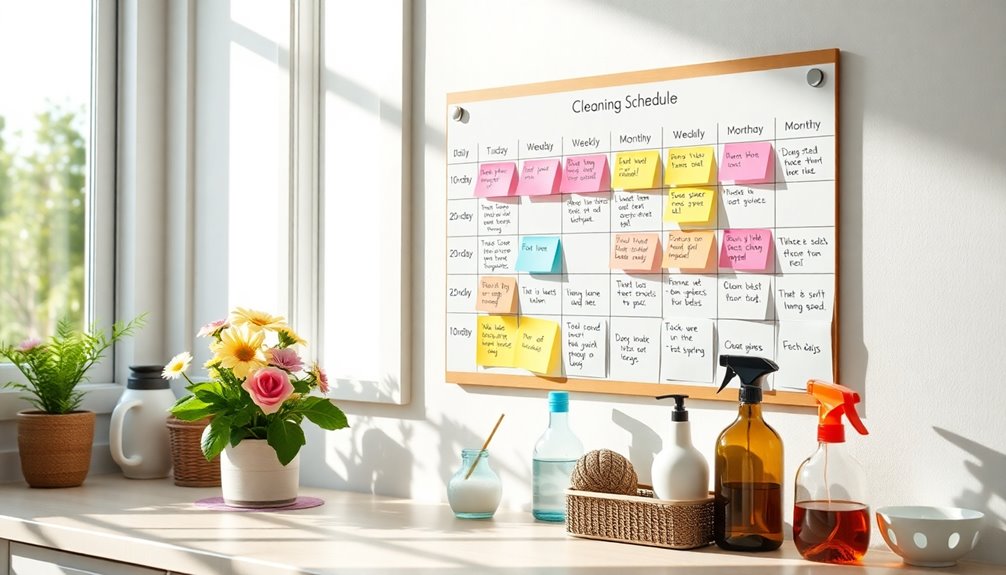
How can you effectively evaluate your cleaning needs? Start by identifying your cleaning priorities. Think about which areas of your home require the most attention and align those with your personal preferences.
Consider how family dynamics impact your cleaning tasks—do kids need to pitch in, or is it just you?
Next, evaluate your time management. How much time can you realistically dedicate to cleaning each week? This will help you determine your cleaning frequency.
Lastly, don’t hesitate to practice task delegation. If others in your household can take on certain chores, distribute them based on strengths and availability. Implementing a cleaning schedule can further streamline your efforts and ensure consistent upkeep.
Creating a Weekly Cleaning Overview
While creating a weekly cleaning overview might seem challenging, breaking it down into manageable tasks can simplify the process.
Focus on effective time management and organization strategies to keep things running smoothly. Here’s a quick list to guide you:
- Prioritize tasks: Identify which areas need attention first.
- Delegate tasks: Involve family members for better cooperation and shared responsibility.
- Gather cleaning tools: Make certain you have everything you need to avoid interruptions.
- Adjust routines: Be flexible and make routine adjustments based on your family’s schedule. Additionally, incorporating a cleaning checklist can boost motivation and provide a sense of accomplishment.
Daily Cleaning Tasks to Keep Your Home Tidy
Keeping your home tidy is all about consistency. Incorporate daily decluttering into your routine to prevent clutter from piling up. Spend just 10-15 minutes each day putting things back in their places. This quick cleaning can make a big difference in how your home feels.
Start with high-traffic areas like the living room and kitchen. Wipe down surfaces, tidy up stray items, and don’t forget to clean your dining table after meals.
In the bathroom, a quick scrub of the sink and a wipe of the counter can keep things fresh. By dedicating a little time each day, you’ll maintain a clean and inviting space, making it easier to tackle larger tasks later on. Additionally, consider small daily efforts that can significantly enhance overall cleanliness in your home.
Essential Weekly Cleaning Chores for Busy Families
When you juggle family life and a busy schedule, establishing a set of essential weekly cleaning chores can help maintain order in your home.
By implementing these cleaning hacks, you can boost your time management and keep your space inviting.
Boost your time management and create an inviting space with these essential cleaning hacks.
- Vacuum and mop all floors – This keeps dirt and allergens at bay, ensuring a healthier environment.
- Dust surfaces and furniture – A quick dusting can transform the look of your rooms.
- Clean bathrooms thoroughly – Focus on sinks, toilets, and showers to prevent buildup.
- Change bed linens – Fresh sheets promote better sleep and a cozy atmosphere. Additionally, implementing a quick evening tidy-up routine can help maintain cleanliness in areas that are less frequently used.
Monthly Deep Cleaning Tasks You Can’t Ignore
To maintain a clean and welcoming home, weekly chores alone aren’t enough. Monthly deep cleaning tasks play an essential role in your home maintenance routine.
Start with a deep cleaning checklist that includes dusting ceiling fans, washing windows, and scrubbing baseboards. Don’t forget to tackle your kitchen appliances; give the oven and fridge some extra attention.
Use seasonal cleaning tips to guide your efforts—like decluttering closets in spring or deep-cleaning carpets in fall. Incorporating a structured cleaning schedule ensures that you stay organized and efficient in your deep cleaning efforts.
These tasks not only enhance your home’s appearance but also improve air quality and hygiene. By dedicating time each month to these deep cleaning tasks, you’ll create a more comfortable living environment for you and your family.
Tips for Involving the Whole Family in Cleaning
Getting the whole family involved in cleaning can make the task more enjoyable and efficient.
Start by assigning age-appropriate tasks to each family member, and create a cleaning schedule that everyone can follow.
Don’t forget to use fun incentives to keep motivation high and make cleaning feel like a team effort! Involving children in cleaning fosters essential life skills that will benefit them in the future.
Assign Age-Appropriate Tasks
Involving the whole family in cleaning can be both effective and fun, especially when you assign age-appropriate tasks. Following age guidelines keeps everyone engaged while building responsibility.
Here are some tasks to contemplate:
- Toddlers (2-4 years): Sorting toys helps with skill development.
- Children (5-8 years): Dusting surfaces teaches teamwork benefits and time management.
- Tweens (9-12 years): Vacuuming and taking out the trash builds responsibility through task rotation.
- Teens (13+ years): Deep cleaning tasks encourage independence and motivation strategies.
Using chore charts can help track progress and encourage participation.
Create a Cleaning Schedule
While creating a cleaning schedule might seem intimidating, it’s an essential step in making cleaning a family affair. Start by involving everyone in the discussion; ask for input on tasks and preferences. This not only builds accountability but also fosters teamwork.
Break down your cleaning routines into daily, weekly, and monthly tasks, assigning specific responsibilities to each family member based on their age and ability. For household organization, consider color-coding tasks to make it visually appealing and easy to follow.
Use a shared calendar or app to keep everyone informed and motivated. Remember, consistency is key—stick to the schedule, and soon, cleaning will feel less like a chore and more like a collaborative effort.
Use Fun Incentives
To make cleaning feel less like a chore, consider using fun incentives that encourage the whole family to participate. Here are some creative ideas to boost motivation:
- Reward Systems: Set up an incentive jar where family members earn tokens for completing tasks, redeemable for treats or outings.
- Family Competitions: Organize friendly contests to see who can clean a room the fastest, with small prizes for the winners.
- Themed Cleaning Days: Assign themes like “Tidy Tuesday” or “Fun Cleaning Fridays” with special playlists that make cleaning enjoyable.
- Cleaning Challenges: Create challenges with progress tracking, and throw in surprise rewards for those who meet their goals.
Engaging everyone with these ideas can turn cleaning into a fun family affair!
Strategies for Staying Motivated With Your Schedule
Staying motivated with your house cleaning schedule can feel like a challenging task, but it doesn’t have to be. Start by setting small, achievable goals; breaking your tasks into manageable chunks makes it easier to stay on track.
To boost your cleaning motivation, create a reward system. For instance, treat yourself to a favorite snack or a short break after completing a task. This reinforces positive behavior and makes cleaning feel less intimidating.
You might also consider enlisting a friend or family member for accountability. Sharing your progress can make the process more enjoyable.
Finally, keep your schedule visible—having it in sight serves as a constant reminder to stay focused and committed to your cleaning routine. Additionally, incorporating daily cleaning habits can help you maintain a consistent routine and keep messes at bay.
Common Cleaning Mistakes to Avoid
Cleaning your home can quickly become a frustrating task if you fall into common pitfalls. To enhance your efficiency and avoid cleaning myths, steer clear of these mistakes:
- Ignoring Dusting First: Dust settles on surfaces, so always dust before vacuuming to avoid re-cleaning.
- Using Too Much Product: More isn’t always better; excessive cleaner can leave residue and require extra effort.
- Neglecting High-Touch Areas: Don’t forget light switches and doorknobs—they harbor germs and need regular attention.
- Skipping a Schedule: Without a cleaning schedule, tasks pile up, making it overwhelming. Regular cleaning helps maintain a healthier home environment.
Stick to your plan for smoother cleaning sessions.
Tools and Supplies to Make Cleaning Easier
While it might seem challenging, having the right tools and supplies can transform your cleaning routine into a breeze.
Start with cleaning gadgets that make tasks quicker, like vacuum attachments designed for pet hair or tight corners. Invest in eco-friendly supplies and multi-purpose cleaners to reduce clutter and protect the environment.
Time-saving tools, such as microfiber cloths, effectively trap dust without needing harsh chemicals. Use organizing bins to store your cleaning caddies, keeping everything accessible and tidy.
Don’t forget essential oils to add a pleasant scent while you clean. With the right storage solutions and tools, you’ll find that maintaining a clean home becomes a manageable and even enjoyable task.
Flexibility: Adjusting Your Schedule for Busy Weeks
Even when life gets hectic, you can still keep your home tidy by adjusting your cleaning schedule.
Even during busy times, a flexible cleaning schedule can help you maintain a tidy home.
Embrace flexible planning and implement a few strategies to manage unexpected changes. Here are some time-saving hacks for those busy weeks:
- Prioritize Tasks: Focus on high-traffic areas that need the most attention.
- Quick Clean Ups: Set a timer for 10 minutes to tackle clutter in key spaces.
- Last Minute Adjustments: Swap tasks around; it’s okay if you don’t clean everything as planned.
- Emergency Strategies: Keep essential supplies handy for fast clean-ups when unexpected guests arrive.
How to Track Your Cleaning Progress?
Staying on top of your cleaning tasks doesn’t just keep your home looking great; it also gives you a sense of accomplishment.
To effectively track your cleaning progress, consider using cleaning apps that allow you to set reminders and log completed tasks. These tools can help you visualize your efforts and stay motivated.
You can also create simple progress charts to mark off what you’ve done each week. Whether you prefer digital solutions or pen and paper, tracking your progress keeps you accountable.
Celebrate small victories, like completing a room or sticking to your schedule. By monitoring your efforts, you’ll not only maintain a tidy home but also take pride in your consistent hard work.
When to Seek Professional Cleaning Help?
Sometimes, you just can’t keep up with your cleaning tasks.
If you notice signs that your home is becoming overwhelming, or if time constraints are getting in the way, it might be time to contemplate professional help.
Special occasions also call for a level of cleanliness that’s tough to achieve on your own, so don’t hesitate to reach out for assistance.
Signs You Need Help
Have you noticed your cleaning tasks piling up or feeling overwhelmed by the mess? You might be experiencing cleaning burnout, which can lead to mental fatigue and stress.
It’s essential to recognize when it’s time to seek professional help. Here are some signs you should consider:
- Overwhelming clutter: You can’t find surfaces or spaces in your home.
- Family dynamics: Disagreements over chores are becoming common.
- Time management: You struggle to balance cleaning with other responsibilities.
- Physical exhaustion: You feel drained just thinking about cleaning.
If you relate to any of these, it’s a good idea to reach out for professional cleaning assistance.
Getting help can restore balance and alleviate the burden.
Time Constraints Impacting Cleaning
When your schedule’s packed with work, family commitments, and social obligations, finding time to clean can feel impossible. You might struggle with time management, leaving little room for maintaining your home.
If you find yourself constantly prioritizing everything else over cleaning, it’s a sign that you need to reassess your approach. Consider how cleaning efficiency plays a role; if certain tasks take too long or you’re unable to keep up, it may be time to seek professional help.
Hiring a cleaning service can free up your time, allowing you to focus on what truly matters. Don’t hesitate to invest in your peace of mind—sometimes, letting the pros handle the cleaning is the best choice for a busy lifestyle.
Special Occasions Require Assistance
As you prepare for a special occasion, the last thing you want to worry about is a messy home. That’s when it’s time to think about professional cleaning assistance.
Whether it’s a holiday gathering or a birthday party, getting help can guarantee guest readiness and a stress-free event.
Here are some situations where professional cleaning services shine:
- Short notice cleaning: Last-minute plans can leave you scrambling.
- Deep cleaning: Tackle stubborn dirt before guests arrive.
- Party cleanup: Post-event tidying can be overwhelming.
- Holiday organizing: Make certain your home is festive and welcoming.
Conclusion
In the whirlwind of daily life, think of your cleaning schedule as a roadmap for a smooth journey. Just like a GPS recalibrates when you take a wrong turn, don’t hesitate to adjust your cleaning plan when things get hectic. Remember, even a well-oiled engine needs maintenance to run efficiently. Embrace the flexibility, and you’ll find that a tidy home isn’t just a destination—it’s a path to peace amidst the chaos of your busy household.