To get rid of musty smells in your washer, regularly clean the drum with a mix of hot water, vinegar, and baking soda. Leave the door ajar after use to promote airflow and prevent moisture buildup. Check for mold in the rubber gasket and clean it gently. Make sure to use the right amount of detergent and run a hot cycle monthly. There are more tips to keep your washer smelling fresh and functioning well ahead.
Understanding Why Your Washer Smells Musty
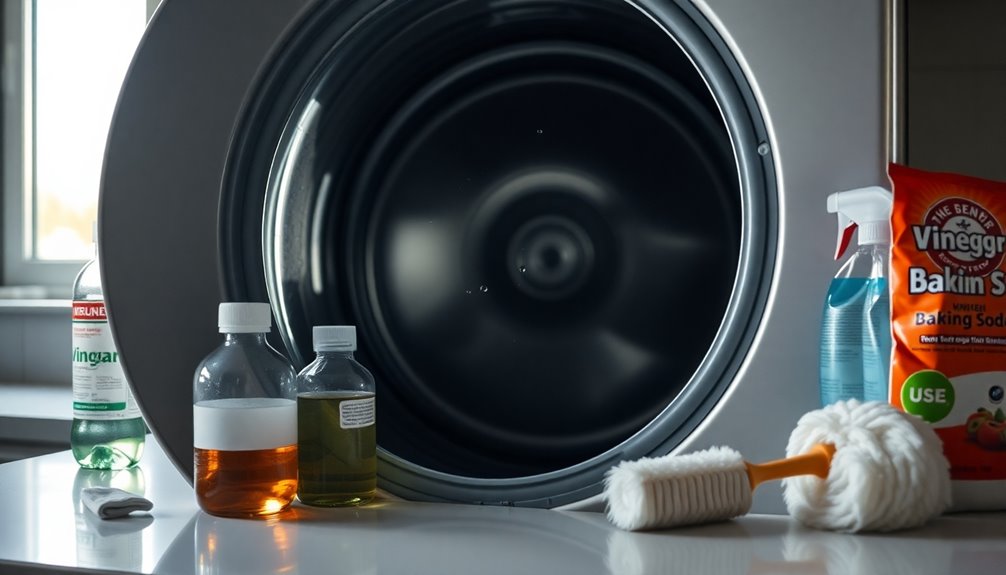
When you notice a musty smell coming from your washer, it’s often due to a buildup of mold and mildew. This unpleasant odor usually stems from high moisture levels in your machine, creating an ideal environment for mold growth.
If you leave wet clothes inside your washer too long or don’t allow it to dry properly, you’re inviting these unwanted guests. Additionally, using too much detergent can lead to residue buildup, trapping moisture and exacerbating the problem.
Regularly checking the door seal and detergent drawer can help you identify areas where moisture lingers. By understanding these factors, you can start tackling the odor and keep your washer fresh and clean. To prevent this issue, consider regularly cleaning your washer to maintain its hygiene and functionality.
Identifying Signs of Mold and Mildew in Your Washer
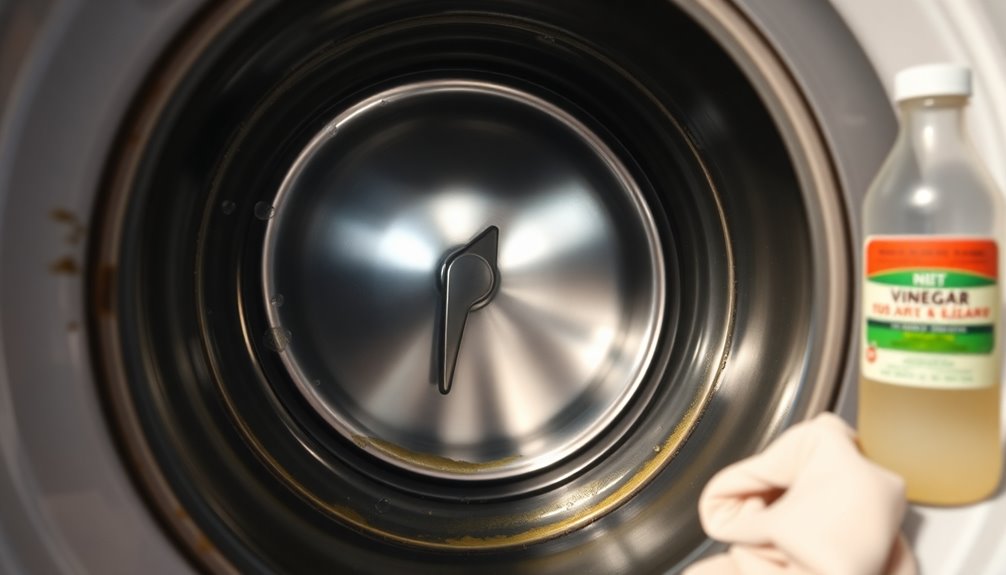
If you’ve noticed a persistent odor or discoloration in your washer, it’s likely a sign of mold or mildew.
Start with mold identification by checking the rubber gasket around the door. If you see black or green spots, that’s a clear indication.
Next, look inside the drum; any slimy residue or discoloration can signal mildew detection.
You should also inspect the detergent drawer and drain filter, as these areas can trap moisture and foster growth.
Don’t forget about the hoses—check for leaks or dampness, which can contribute to the problem. Regular maintenance, like cleaning the sealing ring, can help prevent such issues from arising.
The Best Routine Maintenance for Odor Prevention

To keep musty smells at bay, you need a solid routine for your washer.
Regularly cleaning the drum, using the right amount of detergent, and leaving the door ajar can make a big difference. Additionally, regular maintenance of your appliances—such as running a hot water cycle with vinegar—can help eliminate odors and keep your washer fresh.
Let’s explore these simple steps to guarantee your washer stays fresh and odor-free.
Regularly Clean The Drum
Regularly cleaning the drum of your washer is essential for keeping musty smells at bay. Over time, detergent residue, lint, and fabric softener can build up, creating the perfect environment for odors.
To maintain your drum effectively, make it a habit to run a hot water cycle with a cup of white vinegar or baking soda once a month. This not only helps eliminate odors but also guarantees your washer runs efficiently.
Wipe down the rubber gasket and door after each use to prevent moisture buildup, a key factor in odor formation.
Use Proper Detergent Amounts
Maintaining a clean washer drum is just one part of the equation when it comes to preventing musty smells.
Using the right detergent types and sticking to dosage guidelines can make a huge difference. Many people overuse detergent, thinking it’ll clean better, but too much can lead to residue buildup. This residue traps moisture and creates the perfect environment for odors.
Check your detergent packaging for specific dosage guidelines based on your load size and soil level.
If you’re using a high-efficiency washer, opt for a low-sudsing detergent, as it’s designed to work efficiently with less water.
Leave Door Ajar
Keeping your washer fresh can be as simple as leaving the door ajar after each load. This small habit plays a big role in washer ventilation, allowing air to circulate and prevent moisture buildup.
When you close the door right after washing, humidity can get trapped inside, leading to musty smells and mold growth. By leaving the door open, you promote effective humidity control, ensuring your washer dries out properly.
It’s a quick and easy step you can take to maintain a clean-smelling appliance. Plus, this simple routine helps extend the life of your washer by reducing wear and tear.
How to Clean Your Washer With Vinegar and Baking Soda
A simple and effective way to tackle musty smells in your washer is by using vinegar and baking soda.
Start by pouring two cups of white vinegar into the drum. Vinegar benefits include breaking down buildup and neutralizing odors. Run a hot water cycle to let the vinegar work its magic.
Next, sprinkle a cup of baking soda into the drum and run another hot cycle. This combo not only freshens your washer but also helps with mildew and grime. Using eco-friendly methods can enhance your cleaning routine while being gentle on the environment.
For ideal washer maintenance tips, repeat this cleaning routine every month. Regular use of vinegar and baking soda can keep your washer clean and odor-free.
Say goodbye to musty smells and hello to a fresh laundry experience!
When to Use Commercial Washer Cleaners?
You might notice signs like persistent odors or visible buildup that signal it’s time to reach for a commercial washer cleaner. Using these products regularly can help maintain your machine’s freshness, but knowing how often to use them is key. Plus, picking the right cleaner guarantees you tackle the specific issues your washer faces. Regular cleaning with vinegar can also enhance your washer’s performance and reduce odors.
Signs You Need Cleaners
Noticing a persistent musty smell in your washer? It’s a sign that you might need to use commercial washer cleaners.
Regular cleaning frequency is essential to tackle odor sources like mold, mildew, and detergent buildup.
If you experience any of the following, it’s time for a deeper clean:
- Clothes come out smelling worse than when they went in.
- You see visible mold or mildew in the drum or door seal.
- You notice a strange smell even when the washer’s empty.
- You haven’t cleaned your washer in over six months.
Using a commercial cleaner can help eliminate these odors and keep your washer fresh.
Don’t wait for the smell to get worse—act now!
Frequency of Use
Regularly using commercial washer cleaners can make a significant difference in maintaining a fresh-smelling machine.
If your laundry habits involve frequent washing, you should consider using these cleaners more often. For example, if you do several loads a week, using a cleaner once a month can help prevent musty smells from developing.
On the other hand, if you wash less frequently, you might opt for a cleaner every couple of months. Pay attention to your washing frequency and adjust your cleaning schedule accordingly.
Consistent use of commercial cleaners not only keeps odors at bay but also prolongs the life of your washer, ensuring it runs efficiently for years to come.
Choosing the Right Product
Selecting the right product for cleaning your washer can make all the difference in eliminating musty odors. When considering commercial washer cleaners, it’s crucial to choose wisely.
Opt for eco-friendly options that effectively tackle odors without harsh chemicals. You can also enhance the freshness of your laundry routine with scent boosters, which provide an extra layer of fragrance.
- Look for products specifically designed for washing machines.
- Check for certifications that indicate eco-friendliness.
- Consider scent boosters to keep your laundry smelling fresh.
- Use cleaners that target mold and mildew for the best results.
Tips for Cleaning the Rubber Gasket and Door Seal
While you mightn’t think about it often, the rubber gasket and door seal of your washer can trap moisture and grime, leading to musty odors.
To tackle this, start with a thorough seal inspection. Check for any visible mold or mildew, as these can contribute to unpleasant smells.
For gasket maintenance, use a mixture of warm water and vinegar or a gentle detergent to wipe down the rubber surfaces. Don’t forget to pay attention to the folds and crevices where dirt can accumulate. Regular disinfection helps eliminate harmful bacteria that can cause odors.
After cleaning, leave the door open to allow the gasket and seal to air dry completely.
Regular checks and cleanings will keep your washer fresh and odor-free, ensuring it functions at its best.
The Importance of Cleaning the Filter and Drain
After ensuring the rubber gasket and door seal are clean, don’t overlook the importance of the washer’s filter and drain.
Regular filter maintenance and drain cleaning are essential to keep your washer running smoothly and odor-free. Neglecting these parts can lead to clogs and musty smells, making laundry day less enjoyable.
Here are some key points to remember:
- Check the filter regularly for lint and debris.
- Clean the drain to prevent water buildup and odors.
- Inspect hoses for blockages that could affect performance.
- Run a cleaning cycle occasionally to keep everything fresh, as self-cleaning cycles can help eliminate buildup and odors.
How to Properly Ventilate Your Washer Area
To effectively combat musty smells, proper ventilation in your washer area is essential. Start by ensuring your laundry room has adequate airflow. Open windows when possible, or install exhaust fans to promote ventilation.
You can also use ventilation techniques like placing a dehumidifier nearby to help with humidity control. Keeping the door to your washer slightly ajar after each use allows moisture to escape, preventing a damp environment. Additionally, consider using a vented washing machine if you’re in a particularly humid area. Regularly check for any blockages in vents and ducts to maintain airflow.
Incorporating regular cleaning practices will further help in eliminating musty odors. With these steps, you’ll create a fresher, drier space that helps eliminate musty odors effectively.
What to Avoid When Cleaning Your Washer?
When cleaning your washer, it’s essential to steer clear of harsh chemical cleaners that can cause damage. You also want to avoid using excessive water, as it can lead to lingering moisture and musty odors. Keeping these tips in mind will help maintain your washer’s freshness. Additionally, opting for non-toxic cleaners can effectively eliminate odors without risking damage to your appliance.
Harsh Chemical Cleaners
While it might be tempting to grab harsh chemical cleaners for a deep clean, you should think twice before using them in your washer.
These products can damage components and leave lingering residues that contribute to musty smells. Instead, consider using natural alternatives that are safe and effective.
- Vinegar: A natural deodorizer that helps with odor absorption.
- Baking soda: An eco-friendly solution that neutralizes odors.
- Essential oils: Add a few drops to freshen your washer naturally.
- Lemon juice: Its acidity can help break down grime while leaving a fresh scent.
Excessive Water Usage
Instead, focus on proper drain maintenance to guarantee water flows out efficiently. If you live in a hard water area, consider using water softeners to reduce mineral buildup that can trap moisture and smells.
Regularly check your washer’s drain filter and hoses for clogs, as these can restrict water flow and cause lingering odors. By balancing your water usage and maintaining your washer, you’ll keep it fresh and efficient, avoiding those unpleasant musty smells.
How Often Should You Deep Clean Your Washer?
- Run a hot water cycle with vinegar.
- Wipe down rubber seals and detergent dispensers.
- Leave the door open after each use to dry.
- Use a washing machine cleaner monthly.
- Regular cleaning of the vacuum improves indoor air quality and helps prevent musty smells from developing.
Signs Your Washer Needs Professional Help
Regular maintenance can help prevent many issues, but there are times when your washer shows signs that it needs professional assistance.
If you notice unusual noises, like grinding or banging, it’s a clear signal for a professional inspection. Additionally, if your clothes come out smelling musty or damp, something’s wrong.
Leaks around the washer also indicate that you might need washer repair—don’t ignore them! Slow drainage or persistent error messages can point to mechanical or electrical failures needing expert attention.
Ultimately, if your washer vibrates excessively during cycles, it’s time to call in a pro. Addressing these signs early can save you from more expensive repairs down the line.
Preventing Musty Smells: Best Practices for Laundry Care
To keep musty smells at bay, it’s essential to adopt some simple laundry care practices. By improving your laundry habits, you can maintain fresh-smelling fabrics and extend the life of your washer.
Here are some effective tips:
- Leave the door open: After washing, keep the washer door ajar to allow airflow and prevent moisture buildup.
- Use the right detergent: Choose a high-efficiency detergent suitable for your machine to avoid residue.
- Wash with hot water: Occasionally wash items in hot water to kill mold and mildew spores.
- Clean the washer regularly: Run a cleaning cycle or use a washing machine cleaner to eliminate odors.
Implementing these strategies will help you enjoy fresher laundry and protect your fabrics.
Conclusion
To keep your washer fresh and odor-free, embrace routine cleaning, tackle mildew head-on, and maintain proper airflow. By washing regularly, drying promptly, and leaving the door ajar, you’ll banish musty smells for good. Picture a clean, inviting machine that welcomes your laundry with open arms, rather than one that holds onto unpleasant odors. Stay proactive, stay vigilant, and enjoy the fresh scent of clean clothes every time you do laundry.