To turn cleaning into a simple family routine, you should focus on teamwork. Create a cleaning schedule with age-appropriate tasks for everyone, making it less overwhelming. Incorporate fun elements like games or challenges to keep things engaging. Celebrate your successes together to boost morale and create positive memories. By fostering communication and responsibility among family members, cleaning can become a bonding experience rather than a battle. Discover more tips to enhance your family’s cleaning routine!
Why Teamwork Makes Cleaning Easier

When you tackle cleaning as a team, not only does the work get done faster, but it also turns into a fun bonding experience.
Embracing the teamwork benefits, you’ll find that each family member can take on specific tasks, making the process more efficient. This collaborative spirit encourages everyone to contribute, turning chores into shared responsibilities rather than burdens.
As you work together, you’ll naturally foster communication and strengthen relationships, which can make the cleaning feel less like a chore and more like a group challenge.
Celebrate your achievements, and you’ll notice that tackling the mess becomes a rewarding experience. Involving kids in cleaning teaches essential life skills, making it a valuable opportunity for growth.
In the end, teamwork makes cleaning not just easier but also more enjoyable for everyone involved.
Setting Up a Family Cleaning Schedule

To make cleaning a breeze, you’ll want to set up a family cleaning schedule that works for everyone.
Start by assigning age-appropriate tasks that your kids can handle and enjoy.
Then, establish clear cleaning days so everyone knows when it’s time to pitch in. Incorporating efficient cleaning habits can help streamline the process and make it more enjoyable for the whole family.
Assign Age-Appropriate Tasks
Assigning age-appropriate tasks is key to creating an effective family cleaning schedule. When you match tasks to your kids’ abilities, cleaning becomes more enjoyable and less of a struggle.
For toddlers, simple tasks like picking up toys or wiping surfaces with a damp cloth are great starting points. As they grow, you can introduce age guidelines: preschoolers can sort laundry or dust low furniture, while school-aged kids can tackle vacuuming or sweeping.
Teens can take on more responsibility, like cleaning bathrooms or organizing their own spaces. By providing clear task examples based on their age, you help your kids develop skills and a sense of accomplishment, making cleaning a family effort instead of a battle.
Set Clear Cleaning Days
Establishing clear cleaning days is essential for maintaining a consistent family routine. By creating a cleaning calendar, you can outline specific days for each task, making it easier for everyone to know their responsibilities.
Assign family roles based on each person’s strengths and availability, ensuring that no one feels overwhelmed. For instance, you might designate Mondays for vacuuming, Wednesdays for dusting, and Saturdays for deep cleaning.
By sticking to this schedule, you’ll foster a sense of teamwork and accountability, reducing conflicts over chores. Plus, it becomes a predictable part of your week, making it easier to integrate into family life.
With clear cleaning days, everyone can contribute and enjoy a tidy home without the usual battles.
Assigning Age-Appropriate Tasks for Everyone
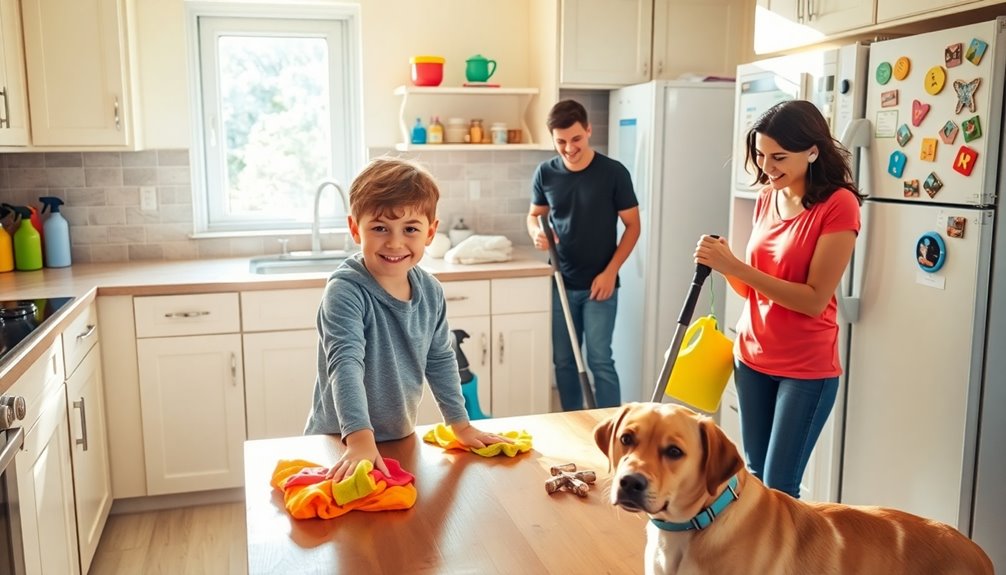
When you consider the various ages and abilities within your family, it becomes clear that assigning age-appropriate tasks can make cleaning feel less like a chore and more like a shared responsibility.
Start by delegating simple tasks to younger kids, like picking up toys or dusting low furniture. This promotes skill development while keeping them engaged.
As they grow, increase their responsibilities—teens can handle vacuuming or laundry. By matching tasks to abilities, you foster a sense of accomplishment and teamwork.
Encourage everyone to contribute, and watch how task delegation transforms your cleaning routine into a united family effort. Emphasize that everyone’s participation helps create a cleaner home, reinforcing the idea that cleaning is a shared goal, not just your responsibility. Additionally, implementing a structured daily cleaning schedule can further streamline the process, making it easier for everyone to stay on track and contribute effectively.
Making Cleaning Fun: Games and Challenges
Here are some fun ideas to turn chores into games:
- Cleaning Scavenger Hunt: Create a list of items to find and clean. Whoever finds the most items wins a small prize!
- Chore Competition: Set a timer and see who can finish their tasks the fastest. Keep it friendly and encourage everyone to cheer each other on.
- Music and Dance: Play upbeat music while you clean and have a mini dance party every time you complete a task.
- Reward System: Implement a points system for completed chores. Accumulate points for fun family activities!
These activities can transform cleaning from a tedious task into a fun family bonding experience, as involving children in chores not only fosters responsibility but also prepares them for adulthood with essential life skills!
Teaching Kids the Importance of Responsibility
While it may seem intimidating, teaching kids the importance of responsibility can lead to lasting benefits for them and the entire family. Start by assigning age-appropriate chores that foster a sense of ownership.
Use engaging teaching methods, like setting up a chore chart or a reward system, to make it enjoyable. Explain how these responsibilities contribute to the household, emphasizing the responsibility benefits, such as building confidence and teamwork. Incorporate a nightly tidy-up routine to help them understand how regular contributions can maintain a clean environment.
Encourage them to take pride in their work, and celebrate their achievements, no matter how small. By instilling a sense of accountability, you’re not just lightening your load; you’re equipping your kids with essential life skills that will serve them well beyond their childhood years.
How to Stay Motivated and Consistent?
To keep your family motivated and consistent with cleaning, start by setting clear expectations for everyone involved. You can also create fun incentives that make the tasks more enjoyable. Finally, establishing a consistent schedule will help everyone know when it’s time to pitch in. Additionally, consider incorporating short breaks during cleaning sessions to recharge and maintain energy levels.
Set Clear Expectations
Setting clear expectations is essential for keeping your family motivated and consistent when it comes to cleaning. When everyone knows their cleaning roles, it prevents confusion and guarantees tasks get done.
Here are four ways to set clear expectations:
- Assign Specific Tasks: Decide who does what—vacuuming, dusting, or dishwashing.
- Set Deadlines: Establish when tasks need to be completed, like after dinner or before bed.
- Encourage Family Communication: Regularly check in to discuss any issues or adjustments needed in roles.
- Create a Cleaning Schedule: Use a visual calendar that everyone can see, promoting accountability.
Create Fun Incentives
Once everyone knows their cleaning roles, it’s time to keep the momentum going.
To make cleaning more enjoyable, create fun incentives like cleaning rewards. Consider setting up chore charts where family members can track their tasks and earn points for completing them.
You could offer small rewards, such as a special treat or extra screen time, for reaching certain milestones. This not only makes cleaning feel less like a chore but also fosters a sense of teamwork and accomplishment.
Celebrate each success together, reinforcing positive behavior. By making cleaning a game, you’ll find everyone stays motivated and consistent, turning what used to be a battle into a fun family routine.
Establish Consistent Schedule
Creating a consistent cleaning schedule can greatly boost your family’s motivation and make chores feel more manageable.
Here are some tips to help you stay on track:
- Set a Weekly Cleaning Day: Choose a specific day each week for deep cleaning tasks.
- Use Visual Schedules: Create a chart or calendar that outlines daily chores, so everyone knows their responsibilities.
- Incorporate Cleaning Rewards: Offer fun incentives, like a family movie night, for completing tasks on time.
- Rotate Responsibilities: Change up who does what each week to keep things fresh and engaging.
Celebrating Success: Turning Cleaning Into a Family Bonding Activity
While cleaning might seem like a chore, it can actually become a fun family bonding experience when you celebrate your successes together.
After finishing a task, take time to recognize your family achievements. Whether it’s a well-organized room or a sparkly kitchen, small cleaning celebrations can make a big difference.
Create a fun tradition, like a dance party or a special treat, to acknowledge your hard work. This not only boosts morale but also reinforces teamwork. Daily cleaning routines can help maintain this positive atmosphere, making it easier to celebrate your accomplishments.
By celebrating these moments, you’ll foster a positive atmosphere that transforms cleaning from a dreaded task into an enjoyable activity.
Embrace these opportunities to connect, laugh, and create lasting memories as a family, making cleaning a part of your shared experience.
Conclusion
By turning cleaning into a family routine, you’re not just tidying up your home; you’re weaving stronger bonds in the fabric of your family life. With teamwork, age-appropriate tasks, and a sprinkle of fun, everyone can take part without it feeling like a chore. Remember, consistency is key, and celebrating your successes will keep motivation high. So, roll up your sleeves together, and watch as cleaning transforms from a battle into a joyful family adventure!