To protect your floors from scratches, mud, and pet accidents, start by investing in quality mats at entryways and using area rugs in high-traffic zones. Implement a regular cleaning routine with appropriate products, and trim your pet’s nails to prevent scratches. Train your pets to use designated bathroom areas and consider slip-resistant treatments for added safety. Finally, use floor covers during gatherings to shield against spills and dirt. Keep learning for more effective strategies!
Invest in Quality Mats for Entryways
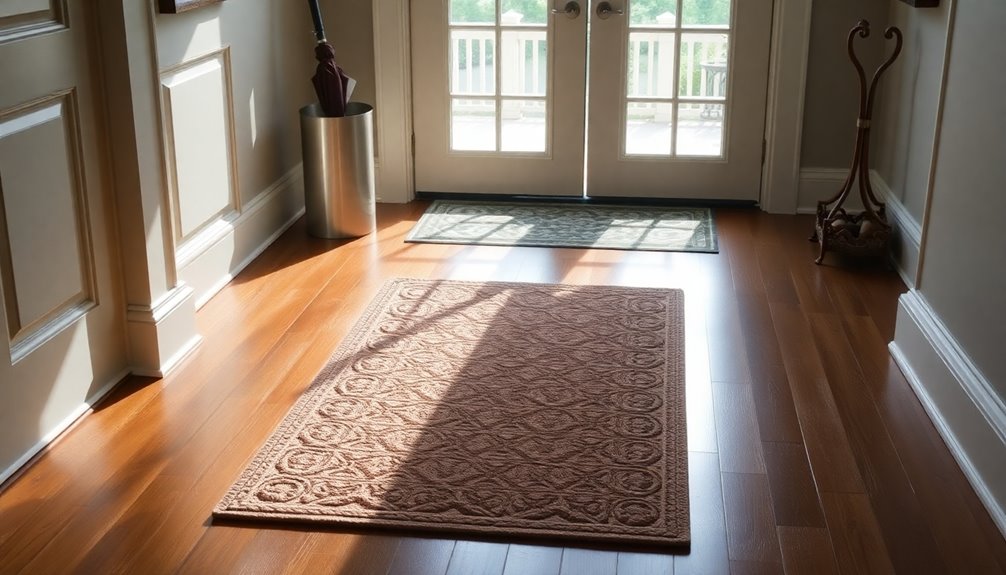
When you invest in quality mats for your entryways, you’re not just enhancing your home’s aesthetic; you’re also protecting your floors from dirt and damage.
Investing in quality entryway mats elevates your home’s look while safeguarding your floors from dirt and wear.
Choosing the right mat material options can make a significant difference. For instance, rubber mats are durable and easy to clean, while coir mats add a natural touch.
Consider the size and shape of your entryway when selecting mats—ensure they fit well and allow for easy movement. Additionally, think about color and texture to complement your entryway design.
You want your mats to welcome guests while effectively trapping dirt and moisture. By prioritizing quality mats, you’ll keep your floors looking pristine and maintain a stylish entrance. Moreover, investing in organized bathroom essentials can enhance your overall home environment by promoting cleanliness and efficiency throughout your living spaces.
Use Area Rugs to Protect High-Traffic Zones
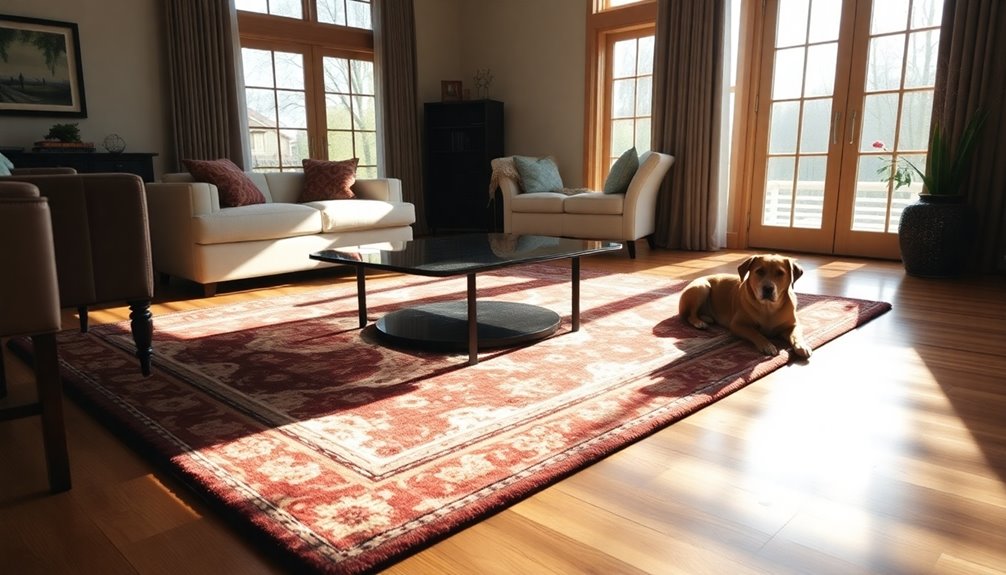
To keep your floors safe in busy areas, using area rugs is a smart choice. You’ll want to choose durable materials that can withstand wear and tear, select the right sizes to fit your space, and regularly clean them to maintain their appearance. Additionally, consider using multi-functional furniture that can help minimize clutter and protect your floors from scratches. These simple steps can make a big difference in protecting your floors.
Choose Durable Materials
Choosing durable materials for your floors is essential, especially in high-traffic areas where wear and tear can quickly become noticeable.
Opt for options like tile, hardwood, or luxury vinyl, which offer both style and resilience. By selecting these durable materials, you’ll not only enhance your home’s aesthetic but also guarantee floor longevity.
These materials can withstand the daily hustle, whether it’s kids running around or pets playing. Plus, they’re easier to clean, making maintenance a breeze.
Incorporating area rugs in these high-traffic zones can further protect your floors, adding an extra layer of defense against scratches and stains.
Select Appropriate Sizes
Selecting the right size for area rugs can considerably impact both the appearance and protection of your floors in high-traffic zones. When choosing a rug, consider floor size considerations to guarantee it fits well within the space.
A rug that’s too small may not offer adequate protection, while one that’s too large can overwhelm the room’s design. Aim for rugs that extend beyond furniture legs, providing a visual anchor and safety net for your floors.
Also, think about pet size compatibility. If you have large pets, opt for a robust, spacious rug that can withstand their activity and messes.
Regularly Clean Rugs
Regularly cleaning your area rugs is essential for maintaining their protective qualities, especially in high-traffic zones.
Different rug types require different care, so familiarize yourself with the cleaning methods that suit your rugs best. For instance, synthetic rugs are often easier to clean and can withstand more frequent washing compared to delicate woolen options.
When placing rugs, consider entryways and living areas where foot traffic is heaviest.
Vacuuming your rugs at least once a week can help remove dirt and debris, preventing scratches on your floors. Additionally, spot clean any spills or pet accidents immediately to avoid stains.
Implement a Regular Cleaning Routine
A consistent cleaning routine is essential for maintaining the beauty and longevity of your floors.
By establishing a regular schedule, you can effectively protect various surface types from damage.
Here’s how to create a successful cleaning frequency:
- Daily: Sweep or vacuum high-traffic areas to remove dirt and debris.
- Weekly: Mop hard floors with a suitable cleaner to maintain shine and cleanliness.
- Monthly: Deep clean carpets and rugs to eliminate embedded dirt and odors.
- Seasonally: Assess and treat any scratches or scuffs on your floors to prevent further damage.
Sticking to this routine won’t only keep your floors looking their best but also extend their lifespan, making your home a more inviting space. Additionally, implementing a structured cleaning schedule can enhance your overall cleaning efficiency and effectiveness, allowing you to maintain a consistent cleaning routine.
Choose the Right Cleaning Products for Your Floors
How can you guarantee your floors stay pristine? The right cleaning products make all the difference.
Opt for eco-friendly cleaners that are tough on dirt but gentle on your floors. These products not only protect your flooring but also help keep your home safe for pets and kids.
Look for floor-safe products specifically designed for your type of flooring, whether it’s hardwood, tile, or laminate. Avoid harsh chemicals that can cause damage over time.
Always read labels to confirm you’re using the best options for your space. By choosing the right cleaning solutions, you can maintain your floors’ beauty and longevity, keeping them scratch-free and looking their best for years to come. Additionally, consider using eco-friendly choices that enhance cleaning routines while reducing waste.
Trim Pet Nails to Prevent Scratches
Keeping your floors pristine also means paying attention to your furry friends. Regularly trimming your pet’s nails is essential to prevent scratches on your floors.
Here are some effective nail trimming techniques to incorporate into your pet grooming essentials:
- Get the Right Tools: Use sharp nail clippers or grinders designed for pets.
- Choose a Comfortable Spot: Find a quiet, well-lit area where your pet feels at ease.
- Reward Your Pet: Offer treats and praise during and after nail trimming to create a positive experience.
- Trim Regularly: Aim for every 4-6 weeks to keep nails manageable and prevent damage. Additionally, maintaining a clean kitchen sponge is crucial as it can harbor millions of germs that may affect your overall hygiene at home.
Create a Designated Pet Area for Accidents
Creating a designated pet area for accidents can save your floors from unsightly stains and damage. By setting up a specific space, you can designate boundaries that help your pet understand where it’s acceptable to relieve itself.
Choose an area that’s easy to clean and away from high-traffic zones. Use training pads or a designated outdoor spot to encourage your pet to use that space.
Consistently train reminders for your pet to go to this area when needed. Positive reinforcement, like treats or praise, can help reinforce this behavior. Additionally, using a pet hair attachment can make cleaning up after your pet much more efficient.
Over time, your pet will associate this designated area with bathroom breaks, reducing the risk of accidents on your floors and keeping your home clean.
Use Furniture Pads to Avoid Dents and Scratches
One simple yet effective way to protect your floors is by using furniture pads to prevent dents and scratches.
These pads come in various furniture pad materials, such as felt, rubber, and plastic, guaranteeing you find the right fit for your needs.
Here’s how to make the most of your furniture pad installation:
- Choose the Right Material: Select a furniture pad based on your floor type and furniture weight.
- Cut to Size: If needed, trim the pads to perfectly fit your furniture legs.
- Clean the Surface: Confirm the furniture legs are clean before applying the pads for better adhesion.
- Regularly Check: Periodically inspect the pads and replace them if they wear down.
Incorporating a consistent cleaning schedule can further enhance your home’s overall maintenance, ensuring every aspect of your living space remains in top condition.
With these tips, you’ll keep your floors looking pristine!
Encourage Shoe-Free Zones in Your Home
While it might seem inconvenient, encouraging shoe-free zones in your home can greatly reduce dirt and scratches on your floors.
Implementing this simple shoe etiquette not only keeps your spaces cleaner but also enhances floor protection. Start by designating specific areas, like entryways and living rooms, as shoe-free zones.
Place a stylish rug or a shoe rack at the entrance to make it easy for guests and family to comply. You might even consider providing slippers or indoor shoes to make the shift comfortable.
Remind everyone that this practice helps maintain your floors’ beauty and longevity. By prioritizing shoe-free zones, you’ll protect your investment and create a more inviting atmosphere in your home. Additionally, using effective disinfectants for bathroom surfaces can help in maintaining a clean and hygienic environment, further contributing to your home’s overall cleanliness.
Seal and Finish Your Floors for Extra Protection
To keep your floors looking great, sealing and finishing them is essential. You’ll want to choose the right sealants for your specific flooring type and set up a regular maintenance schedule. Plus, addressing any damages promptly can save you time and money in the long run. Regular cleaning routines help in managing dust and allergens that can scratch or wear down your floors.
Choose Appropriate Sealants
Choosing the right sealant can make a world of difference in protecting your floors.
Different sealant types suit various floor materials and environments, so consider these factors:
- Type of Floor: Determine if your floor is hardwood, tile, or laminate to choose the right sealant.
- Sealant Types: Water-based, oil-based, or penetrating sealants each offer unique benefits.
- Application Techniques: Confirm you follow the manufacturer’s instructions for a smooth application.
- Drying Time: Be aware of how long each sealant takes to dry before heavy use.
Regular Maintenance Schedule
Establishing a regular maintenance schedule is essential for keeping your floors in top condition. Regular floor maintenance not only enhances their appearance but also extends their lifespan.
Start by creating a cleaning schedule, incorporating tasks like sweeping, mopping, and polishing. Depending on your floor type, you might want to seal and finish your floors every six months to a year. This extra layer of protection helps guard against scratches, stains, and wear.
Don’t forget to inspect your floors regularly for signs of damage or wear. By staying proactive, you can prevent minor issues from escalating, ensuring your floors remain beautiful and functional.
Stick to your schedule, and you’ll enjoy pristine floors for years to come.
Repair Damages Promptly
Promptly repairing any damages to your floors is essential for maintaining their beauty and integrity.
Ignoring issues can lead to bigger problems down the line. Here’s how to tackle floor repair effectively:
- Conduct a Damage Assessment: Regularly check your floors for scratches, dents, or stains.
- Choose the Right Repair Method: Different materials require different approaches—research what suits your floor type best.
- Use Quality Products: Invest in high-quality sealants and finishes for durability.
- Seal and Finish: After repairs, seal your floors to protect against future wear and tear.
Be Mindful of Your Floor Type and Its Needs
When it comes to protecting your floors, understanding your specific floor type is essential. Different materials require different floor maintenance techniques to keep them in top shape.
For example, hardwood floors can scratch easily, so using area rugs and furniture pads can help minimize damage. On the other hand, tile floors may need regular sealing to prevent stains and moisture damage.
If you have carpet, regular vacuuming and spot cleaning are vital for maintaining its appearance.
Familiarize yourself with the unique needs of your floor types, and invest in the right cleaning supplies and protective measures. By being mindful of what your floors require, you can extend their lifespan and keep your home looking its best. Additionally, consider implementing a regular cleaning routine to effectively manage dirt and prevent scratches.
Train Pets to Use Designated Bathroom Areas
To protect your floors from potential damage caused by pet accidents, training your pets to use designated bathroom areas is essential.
Here are four tips to help with bathroom training using positive reinforcement:
- Choose a specific spot – Pick an outdoor area where you want your pet to go consistently.
- Establish a routine – Take your pet out at regular intervals, especially after meals or naps.
- Use positive reinforcement – Reward your pet with treats or praise immediately after they use the designated area.
- Be patient – Accidents will happen; stay calm and redirect your pet gently to the designated spot.
Use Slip-Resistant Floor Treatments
When it comes to keeping your floors safe, using slip-resistant treatments can make a big difference.
You’ll find various types of treatments available, each with unique application techniques that suit different surfaces.
Understanding these options helps you protect your floors while reducing the risk of slips and falls.
Types Of Slip Treatments
Slip-resistant floor treatments come in various types, each designed to enhance safety in your home or workplace.
When considering slip resistance, it’s essential to explore the following treatment options:
- Anti-Slip Coatings: These add a textured layer to your floor, improving grip without altering its appearance.
- Grip Strips: Ideal for stairs or high-traffic areas, these adhesive strips provide an extra layer of safety.
- Textured Mats: Placing these mats at entry points helps trap moisture and dirt while offering slip resistance.
- Professional Treatments: Specialized solutions can be applied to a variety of surfaces, increasing slip resistance dramatically.
Application Techniques Explained
Applying slip-resistant floor treatments effectively requires understanding the right techniques for different surfaces and environments.
First, choose the appropriate application methods based on your flooring type—whether it’s tile, wood, or laminate. For hard surfaces, clean them thoroughly to guarantee ideal adhesion of protective coatings.
Next, mix the treatment according to the manufacturer’s instructions, and apply it using a roller or sprayer for even coverage. Be mindful of the drying time and avoid foot traffic until fully cured.
For textured surfaces, a brush might be necessary to reach all areas. Regularly check and reapply as needed to maintain the slip resistance.
These techniques will help protect your floors from slips and enhance their longevity.
Benefits For Floor Protection
Investing in slip-resistant floor treatments offers significant benefits that enhance safety and durability in your space.
By choosing these treatments, you’ll enjoy:
- Increased Safety: Reduces the risk of slips and falls, especially in high-traffic areas.
- Floor Longevity: Protects your flooring from wear and tear, extending its lifespan.
- Aesthetic Appeal: Available in various styles and finishes, enhancing your home’s overall look.
- Easy Maintenance: Many slip-resistant treatments are simple to clean and maintain, saving you time.
Consider Floor Covers During Parties or Gatherings
When you’re hosting a party or gathering, it’s easy to overlook the potential mess that can come with it. Effective party planning includes thinking ahead about floor protection.
Using floor covers like rugs, mats, or disposable coverings can save your floors from scratches, spills, and dirt. These protective layers not only shield your flooring but also add to your decor.
Choose stylish options that complement your theme while ensuring they’re durable enough for heavy foot traffic. It’s a simple step that can make a big difference.
Don’t forget to remind your guests to wipe their shoes or provide a designated area for outdoor footwear. By taking these precautions, you’ll keep your floors looking great long after the party’s over.
Regularly Inspect for Damage and Address It Promptly
To keep your floors looking great, you need to regularly inspect them for any damage.
Identifying problem areas early can save you from costly repairs down the line.
Schedule routine checks to guarantee your floors stay in top shape.
Identify Problem Areas
Regular inspections are essential for keeping your floors in top condition, as they help you identify problem areas before they escalate into costly repairs.
To effectively manage your floors, consider these steps:
- Identify Traffic Patterns: Observe where foot traffic is heaviest and take preventive measures in those areas.
- Assess Pet Behavior: Monitor your pets to anticipate potential accidents or scratching.
- Check for Damage: Regularly inspect for scratches, dents, or signs of wear that require attention.
- Clean Immediately: Address spills or accidents promptly to prevent permanent damage.
Schedule Regular Inspections
Inspecting your floors frequently helps you catch and address damage before it worsens. Schedule regular floor condition assessments to guarantee you’re aware of any issues, whether it’s scratches, stains, or wear.
By doing this, you can implement preventive maintenance tips that will keep your floors looking their best. Check for loose boards, cracks, or signs of moisture, as these can lead to more significant problems if neglected.
If you notice any damage, tackle it promptly to prevent further deterioration. Remember, maintaining your floors isn’t just about aesthetics; it’s about prolonging their lifespan.
Make inspections a part of your routine, and your floors will thank you for it!
Conclusion
By taking these simple steps, you can keep your floors looking great for years to come. Think of your floors as a canvas; every scratch or stain is like a smudge on a masterpiece. Just as an artist protects their work with a frame, you can safeguard your floors with mats, rugs, and regular maintenance. Don’t let the daily hustle overshadow the beauty beneath your feet—protect your investment and enjoy the masterpiece in your home!