Using vinegar in laundry is a great eco-friendly option that brightens colors, softens fabrics, and neutralizes odors. However, it won’t completely replace fabric softeners and may not tackle stubborn stains like grease or blood. Certain fabrics might not respond well, and some colors could fade. For the best results, stick to white vinegar and avoid flavored varieties. Curious about other effective methods and alternatives for tackling laundry challenges? There’s more to discover!
The Benefits of Using Vinegar in Laundry
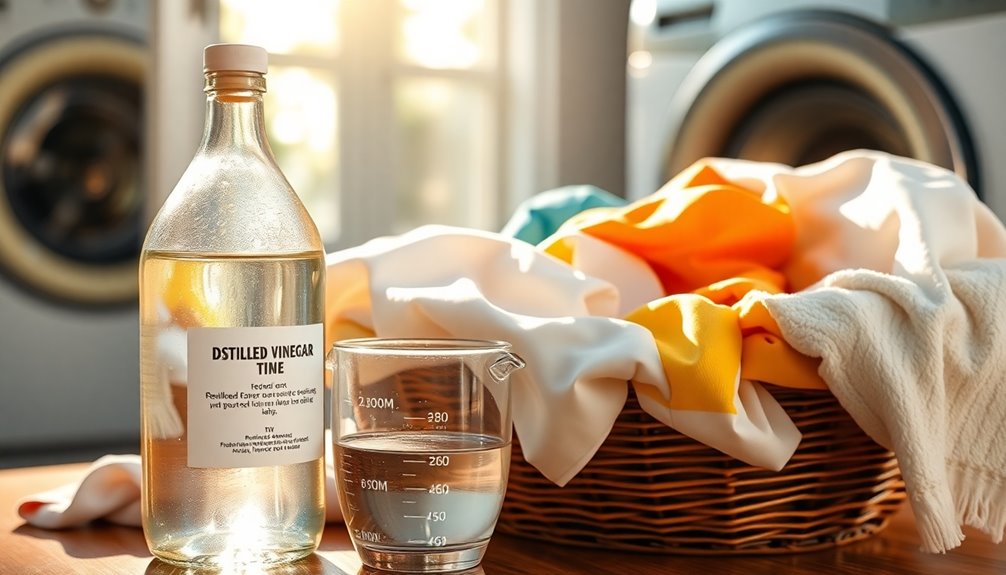
Using vinegar in your laundry can transform your washing routine, as it offers a range of benefits that enhance your clothes’ freshness and longevity.
As an eco-friendly cleaner, vinegar effectively breaks down dirt and odors without harsh chemicals. It softens fabrics, reducing the need for fabric softeners, making it a fantastic laundry enhancer.
Plus, it helps to brighten whites and colors, keeping your clothes looking vibrant longer. Vinegar also neutralizes detergent residues, preventing buildup in your machine. Additionally, it serves as a natural fabric softener, further enhancing the softness of your laundry.
By incorporating vinegar into your laundry regimen, you’re not only protecting your clothes but also making a sustainable choice for the environment.
Common Myths About Vinegar in Laundry
When it comes to using vinegar in your laundry, several myths might steer you wrong.
You might think vinegar can completely replace fabric softener, or that white vinegar is the only option.
Let’s clear up these misconceptions and look at how effective vinegar really is for stains. Additionally, using eco-friendly methods can enhance your laundry routine while being gentle on both your clothes and the environment.
Vinegar Replaces Fabric Softener
Many people believe vinegar can effectively replace fabric softener, but this idea is often surrounded by myths.
While vinegar alternatives do exist, they don’t always provide the same benefits as traditional fabric softeners. In a softener comparison, vinegar can help reduce static and soften fabrics, but it mightn’t leave your clothes feeling as soft or fragrant as you expect.
Additionally, using vinegar too frequently can wear down some fabrics over time. It’s important to remember that while vinegar has its perks, it isn’t a complete substitute for fabric softener in every situation.
Before making the switch, consider your laundry needs and weigh the pros and cons of using vinegar versus more conventional options.
White Vinegar Is Best
While vinegar can serve as a fabric softener alternative, not all types of vinegar are created equal. When it comes to laundry, white vinegar stands out as the best option. It’s effective, affordable, and won’t stain your clothes like some darker vinegar types can.
Plus, its acidity helps break down detergent residues and soften fabrics without harsh chemicals.
If you’re using vinegar in your wash, it’s important to take into account vinegar dilution. Using it straight from the bottle mightn’t be necessary; a cup of diluted white vinegar in the rinse cycle usually does the trick.
Vinegar Removes Stains Effectively
Despite some common myths, vinegar can be a powerful ally in your battle against stains. Its effectiveness varies by stain types, making it essential to know when to use it.
For instance, vinegar excels at breaking down food and sweat stains, thanks to its acetic acid content. When you mix it with baking soda, you can tackle tougher stains, amplifying its cleaning power.
However, it’s not a miracle solution for every type; oil-based stains may require a different approach. Always test it on a small fabric area first to avoid any mishaps.
How to Use Vinegar for Stains and Odors
When you’re dealing with tough stains and persistent odors, vinegar can be your secret weapon in the laundry room.
For various stain types like grease, wine, or coffee, start by mixing one part vinegar with two parts water. Apply this solution directly to the stain and let it sit for about 30 minutes before washing.
For odor sources like sweat or mildew, add one cup of vinegar to your washing machine during the rinse cycle. This helps neutralize the odors effectively. Regular use of vinegar in laundry not only combats persistent odors but also contributes to a healthier environment.
Always remember to check fabric care labels first, as vinegar can be too harsh for some materials.
With these simple steps, you’re well on your way to fresher, cleaner laundry using vinegar!
When Might Vinegar Not Be Effective?
While vinegar works wonders for many stains and odors, it isn’t a one-size-fits-all solution.
Some stains, like certain inks or grease, may resist vinegar’s cleaning power. Additionally, specific fabrics mightn’t react well to vinegar, so it’s essential to know your materials before using it. Regular cleaning cycles with vinegar can help maintain machine efficiency, but not all stains respond to this method.
Stains Resistant to Vinegar
Although vinegar is a popular choice for tackling many laundry stains, there are specific types that it often struggles to remove effectively.
For example, stubborn stains like grease, ink, and blood can be particularly resistant to vinegar’s cleaning power. These stains often require stronger, more specialized treatments due to vinegar limitations.
If you’re dealing with protein-based stains, like those from dairy or eggs, vinegar may not be your best bet either, as it can sometimes set these stains further.
Instead of relying solely on vinegar, consider using a dedicated stain remover or a laundry detergent designed for tough stains.
Understanding when to look beyond vinegar will help you achieve cleaner laundry and save time in the long run.
Fabric Care Limitations
Vinegar can be a great laundry aid, but it’s not always the best choice for every fabric. Certain fabric types can react poorly to vinegar, leading to issues during your laundry cycles.
Here are three situations where vinegar mightn’t be effective:
- Silk and Wool: Vinegar can weaken these delicate fibers, causing them to lose their structure or become misshapen.
- Bright Colors: While vinegar helps with odors, it can sometimes fade vibrant hues, leaving you with dull fabrics.
- Stubborn Stains: For tough stains like grease or ink, vinegar often falls short and may require specialized cleaners.
Tips for Choosing the Right Vinegar for Laundry
When it comes to choosing the right vinegar for laundry, understanding your options can make all the difference in achieving fresh, clean clothes.
White vinegar is a popular choice due to its strong cleaning properties and effectiveness in removing odors. It’s also great for brightening whites. Additionally, using vinegar in the laundry can help prevent mold and mildew growth, ensuring your clothes stay fresh and clean.
If you prefer something with a pleasant scent, apple cider vinegar can be a good alternative. Its cleaning properties are still effective, but keep in mind it may leave a slight fragrance on your clothes.
Avoid using flavored or seasoned vinegars, as they can leave unwanted residues. Always opt for distilled varieties for the best results, and remember to test on a small area if you’re unsure how your fabrics will react.
Alternatives to Vinegar for Laundry Cleaning
If you’re looking for alternatives to vinegar for laundry cleaning, there are plenty of effective options available. Consider these three:
- Baking Soda: This powerhouse neutralizes odors and boosts detergent performance. Just add half a cup to your wash.
- Lemon Juice: Its natural acidity helps brighten whites and tackle stains. Use about a cup in your laundry for a fresh scent.
- Hydrogen Peroxide: A great disinfectant, it can be used as a bleach alternative. Mix a cup with water for a safe stain remover.
You can also try adding a few drops of dish soap or essential oils for a pleasant fragrance. A salt solution can help with stubborn stains.
These alternatives can keep your laundry fresh and clean! Additionally, using eco-friendly alternatives not only enhances cleaning but also contributes to a healthier planet.
Conclusion
So, there you have it! If you think tossing a bottle of vinegar into your laundry will magically transform your clothes into a fresh-smelling, stain-free utopia, you might be in for a surprise. It’s not a potion from a witch’s cauldron! While vinegar has its merits, it’s not the superhero of laundry cleaning. If only laundry day could be as easy as waving a wand, right? Stick to the tips, and you might just avoid the laundry monster!