To clean your top-loading washing machine, start by gathering white vinegar, baking soda, and microfiber cloths. Run a hot water cycle with four cups of vinegar to eliminate odors, then add a cup of baking soda and let it sit before finishing the cycle. Remove and rinse the detergent dispenser, and wipe down the seals and exterior surfaces. Regular maintenance helps prevent mold and keeps your machine running smoothly. You’ll discover more detailed steps and tips to keep it fresh!
Why Regular Cleaning Is Essential for Your Washing Machine
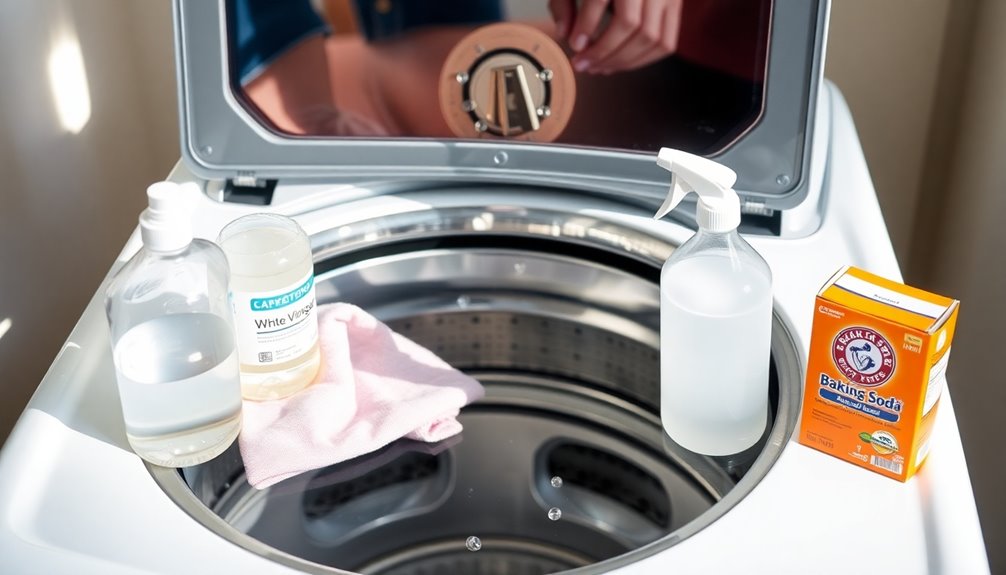
Keeping your washing machine clean is crucial, especially since it regularly handles dirty laundry. Neglecting this task can lead to unpleasant odors, mold growth, and even mechanical issues.
Regular cleaning is a form of preventative maintenance that extends your machine’s lifespan and guarantees peak performance. Ideally, you should clean your washing machine every month to prevent buildup from detergent, fabric softener, and dirt. Additionally, consistent maintenance helps prolong appliance lifespan, reducing the likelihood of costly repairs.
If you wash heavily soiled items, consider increasing your cleaning frequency. Remember, a clean machine not only keeps your clothes fresher but also reduces the risk of costly repairs.
Gather Your Cleaning Supplies
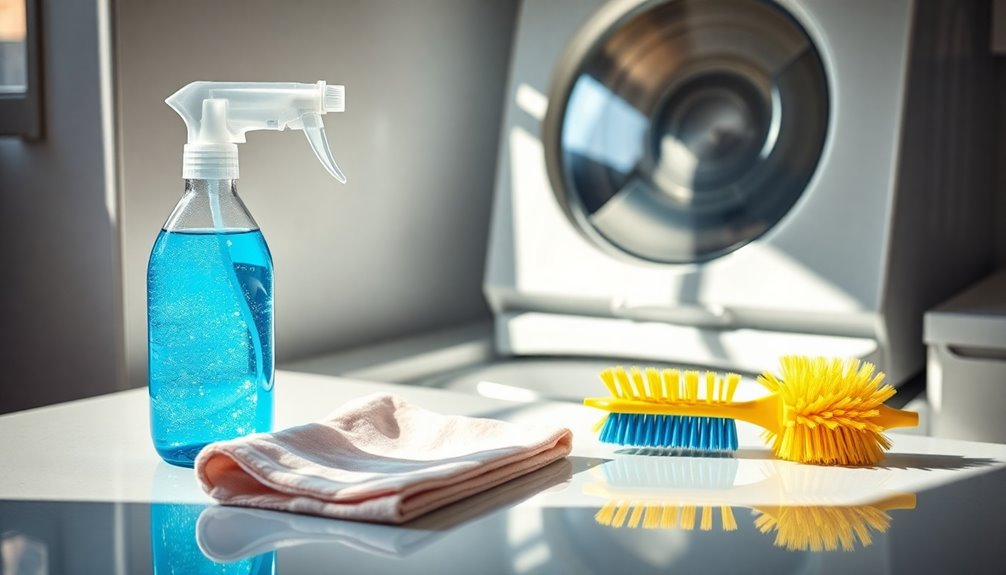
Before diving into the cleaning process, you’ll need a few essential supplies. Gathering the right tools will make your cleaning techniques more effective and guarantee you follow essential maintenance tips for your top open washing machine.
Here’s what you’ll need:
- White Vinegar: A natural cleaner that helps eliminate odors and buildup.
- Baking Soda: Great for scrubbing and removing tough stains.
- Microfiber Cloths: Perfect for wiping down surfaces without leaving lint behind.
Having these supplies on hand will streamline the cleaning process, making it efficient and straightforward. Additionally, using natural cleaning products can further enhance the effectiveness of your efforts while promoting a healthier home environment.
With the right tools, you’ll not only keep your machine clean but also enhance its longevity.
Now, let’s get started on making your washing machine sparkle!
How to Clean the Drum of Your Washing Machine
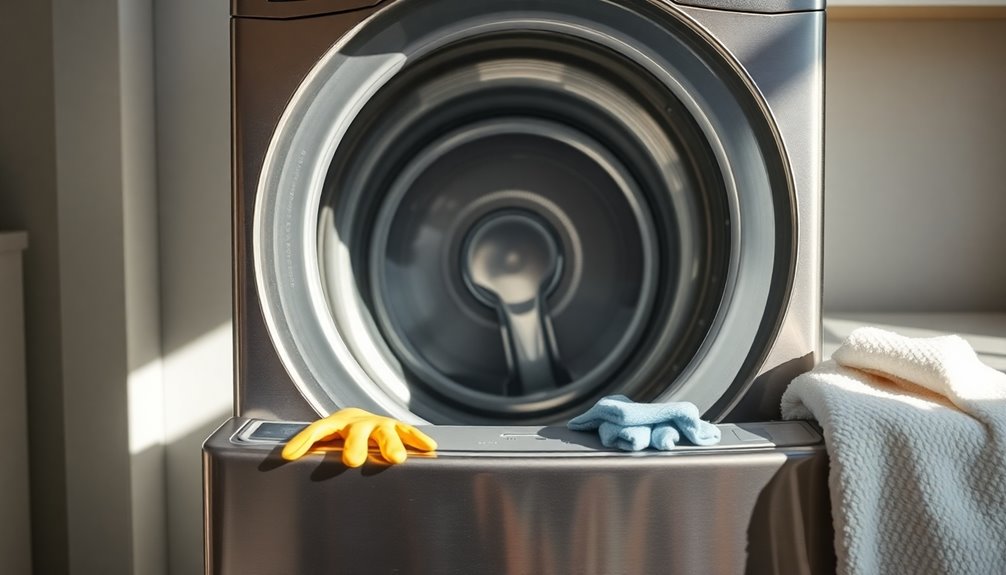
Cleaning the drum of your washing machine is essential for maintaining its performance and freshness. Regular cleaning prevents the buildup of detergent and grime, ensuring your laundry remains clean and odor-free. You’ll need a few basic supplies to get started, and I’ll guide you through a simple step-by-step process.
Let’s jump right into how to keep your machine drum spotless!
Essential Cleaning Supplies Needed
To effectively clean the drum of your top open washing machine, you’ll need a few essential supplies that make the process straightforward.
Gathering these items helps you tackle detergent residue and promote your machine’s longevity.
- White Vinegar: This natural cleaner helps break down detergent residue and disinfects the drum.
- Baking Soda: A gentle abrasive that deodorizes and removes stubborn stains.
- Microfiber Cloth: Perfect for wiping down any surfaces and ensuring no residue is left behind.
With these supplies on hand, you can efficiently clean your washing machine’s drum, keeping it in top shape and extending its lifespan.
Regular maintenance will help prevent build-up and keep your laundry fresh.
Step-By-Step Cleaning Process
Start the cleaning process by gathering your supplies and preparing your washing machine. You’ll need white vinegar, baking soda, and a soft cloth.
First, fill the drum with hot water and add four cups of white vinegar. Run a full wash cycle to help with drum maintenance and eliminate odors.
After that, pause the cycle and add a cup of baking soda, letting it sit for about 15 minutes. Resume the cycle to tackle any remaining grime.
Once done, wipe the drum’s interior with a soft cloth to prevent mold and mildew buildup.
Finally, leave the lid open to allow the drum to dry completely, ensuring your washing machine stays fresh and clean for the next use.
Cleaning the Detergent Dispenser: A Step-by-Step Guide
Cleaning the detergent dispenser is key to keeping your washing machine running smoothly.
First, gather your cleaning supplies to make the process easier. Regular cleaning is essential to prevent buildup and ensure optimal performance.
Then, you’ll carefully remove the dispenser and give it a thorough clean and rinse.
Gather Necessary Cleaning Supplies
Gathering the right cleaning supplies is essential for effectively tackling the detergent dispenser in your top open washing machine. Regular washing machine maintenance improves its performance and extends its lifespan, so aim to clean the dispenser every few months.
Here’s what you’ll need:
- Warm water – To help dissolve residue and grime.
- Mild detergent – A gentle cleaner will prevent damage while effectively removing buildup.
- Soft brush or cloth – This will help scrub away stubborn residue without scratching the surfaces.
With these supplies ready, you’ll be well-equipped to keep your detergent dispenser in top shape.
Consistent cleaning frequency will guarantee a fresher wash and maintain your machine’s efficiency.
Remove Detergent Dispenser Carefully
Carefully pull out the detergent dispenser from your top open washing machine, guaranteeing you don’t force it out or damage any components.
Check for any detergent buildup inside the compartment. If it feels stuck, gently wiggle it side to side to loosen it.
Once it’s free, inspect the dispenser for any residue that might affect its performance. Proper dispenser maintenance is key to keeping your washing machine running efficiently.
If you notice any cracks or wear, consider replacing the dispenser to avoid future issues.
Remember, a clean dispenser guarantees that detergent flows properly during cycles, helping your laundry come out fresh and clean.
Handle it with care, and you’ll prolong its life.
Clean and Rinse Thoroughly
Start by rinsing the detergent dispenser under warm water to remove any built-up residue. This step is essential for maintaining your washing machine’s drum performance and ensuring maximum washing efficiency.
After rinsing, follow these steps for a thorough cleaning:
- Scrub: Use a soft brush or cloth to scrub the dispenser, targeting any stubborn areas.
- Soak: If needed, soak it in a mixture of water and vinegar to dissolve tough stains.
- Rinse Again: Rinse thoroughly to eliminate any leftover cleaning solution, ensuring no residue affects your clothes.
Wiping Down the Exterior: Tips for a Sparkling Finish
A clean exterior can make your top open washing machine look brand new, and tackling this task doesn’t take much time.
Start by identifying the exterior materials—whether it’s plastic, stainless steel, or enamel. Each requires different care. For plastic surfaces, a gentle all-purpose cleaner works wonders, while stainless steel may need a specialized cleaner to avoid streaks. Regular cleaning prevents buildup of fingerprints and maintains aesthetic appeal.
Aim to wipe down the exterior at least once a month to prevent dirt buildup. Use a microfiber cloth to avoid scratching the surfaces.
Don’t forget to pay attention to the control panel and knobs, as they can accumulate grime quickly. Regular maintenance not only keeps your machine looking great but also prolongs its life.
Happy cleaning!
How to Clean and Maintain the Lid and Seals
To keep your washing machine running smoothly, you need to regularly inspect the lid and clean the seals. This helps prevent mold and mildew from taking hold and guarantees a tight seal for peak performance. Regular maintenance extends the lifespan of your appliance, ensuring it operates efficiently over time. Let’s go over the best practices for maintaining these essential parts.
Inspecting The Lid Regularly
- Check for Cracks: Look for any visible cracks or damage on the lid that could lead to leaks.
- Inspect the Seals: Confirm the rubber seals are intact and free from wear, which can compromise their effectiveness.
- Clean the Surface: Wipe down the lid to remove any detergent residue or lint that can accumulate over time.
Cleaning The Seals Thoroughly
After inspecting the lid for cracks and ensuring the seals are intact, it’s time to focus on cleaning them thoroughly.
Start by using a mixture of warm water and mild detergent. Dampen a cloth or sponge with the solution and gently wipe down the seals, paying extra attention to any grooves where dirt and grime can accumulate.
Rinse the cloth frequently to avoid spreading residue. For stubborn stains, consider using a soft brush to scrub those areas gently.
Once you’ve cleaned the seals, dry them completely to prevent moisture buildup.
Regular seal maintenance not only keeps your washing machine looking fresh but also aids in mold prevention, ensuring your machine runs efficiently and lasts longer.
Preventing Mold And Mildew
- Wipe Down Regularly: After each wash, wipe the lid and seals with a damp cloth to remove moisture and detergent residue.
- Leave the Lid Open: After use, keep the lid open for a few hours to allow air circulation and drying.
- Use Vinegar Solution: Monthly, spray a mixture of equal parts vinegar and water on the seals and wipe clean to combat mold growth.
Removing Odors: Natural Remedies That Work
While it’s easy to overlook the odors that can develop in a top open washing machine, tackling them with natural remedies can be both effective and simple.
Start by adding a cup of baking soda directly into the drum. This helps neutralize unwanted smells.
Next, you can enhance the cleaning process by adding a few drops of your favorite essential oils, like lavender or tea tree oil, to the mix.
Run a hot water cycle without any laundry to allow the baking soda and oils to work their magic.
Afterward, wipe down the drum and door seals with a cloth to remove any residue.
These natural solutions not only eliminate odors but also leave your washer smelling fresh! Additionally, using vinegar as a natural cleaner can further help in maintaining a fresh-smelling environment in your washing machine.
Cleaning the Filter: A Key Maintenance Step
Cleaning the filter is essential to keep your top open washing machine running smoothly.
Regular filter maintenance helps prevent common issues like clogs and odors. Here’s how to do it effectively:
- Locate the Filter: Check your manual to find the filter’s location, often near the agitator or on the side of the drum.
- Remove and Clean: Gently pull out the filter and rinse it under warm water. Use a soft brush to remove any stubborn debris.
- Reinstall: After it’s clean and dry, securely place the filter back in its original position. Regularly inspecting and cleaning the filter can help ensure optimal performance for your washing machine.
Best Practices for Keeping Your Washing Machine Fresh
To keep your top open washing machine fresh, it’s important to adopt a few simple habits that prevent odors and buildup.
Start by leaving the lid open after each wash. This allows air circulation, reducing moisture that can lead to mold.
Regularly wipe down the drum and the door seal with a damp cloth to remove any residue.
Run a hot water cycle with vinegar or a washing machine cleaner once a month for preventative maintenance. Additionally, check the sealing ring to avoid clogs and maintain optimal performance.
Finally, make certain you’re using the right amount of detergent to prevent suds buildup.
These practices not only keep your machine fresh but also enhance its longevity, ensuring it serves you well for years.
Troubleshooting Common Washing Machine Odors?
Here are three common sources of unpleasant smells and preventive measures you can take:
1. Mold and Mildew: These thrive in damp environments.
Leave the lid open after a wash to allow airflow, and wipe down the drum regularly.
2. Detergent Buildup: Excess detergent can create residue.
Use the right amount and consider running a cleaning cycle monthly with vinegar or a specialized cleaner.
3. Dirty Filters: Clogged filters can trap grime.
Check and clean them regularly to prevent odors. Regularly running a cleaning cycle helps maintain the interior and prevents persistent odors.
When to Call a Professional for Deep Cleaning?
When should you consider calling a professional for deep cleaning your top open washing machine? If you’ve tried standard cleaning methods and still notice persistent odors, mold, or grime buildup, it’s time to seek help.
Professional services have the expertise and tools to tackle deep cleaning effectively. Also, if your machine shows signs of malfunction, such as unusual noises or leaks, a professional can diagnose and clean it properly, preventing further damage.
Don’t wait until small issues escalate into costly repairs; getting a professional’s help can save you time and trouble.
Conclusion
By keeping your top open washing machine clean, you’re not just maintaining an appliance—you’re nurturing your home. A little effort goes a long way in preventing odors and ensuring your clothes come out clean. Think of it as a small act of love for your laundry routine. So, roll up your sleeves and embrace the cleaning process; your machine (and your wardrobe) will thank you for it, making every wash feel like a refreshing change.