To clean your washer drum, seal, and dispenser, start by running a hot cycle with two cups of white vinegar to tackle odors. Wipe the drum’s interior afterward and sprinkle baking soda for extra freshness. Check the rubber seal for mold, cleaning with a vinegar solution. Don’t forget to remove the dispenser and scrub it with a soft brush. Regular maintenance keeps your washer smelling fresh and efficient. Discover more tips to keep your laundry routine hassle-free.
Why Cleaning Your Washer Matters
Cleaning your washer matters more than you might think, especially since a dirty machine can lead to unpleasant odors and even mold growth.
Maintaining proper washer hygiene is essential for keeping your laundry fresh and clean. When you neglect this task, detergent residue, lint, and moisture can build up, creating a breeding ground for mold and bacteria.
Proper washer hygiene is crucial for fresh laundry; neglect can lead to mold and bacteria from detergent residue and moisture buildup.
By regularly cleaning your washer, you not only enhance its efficiency but also extend its lifespan. Plus, it guarantees that your clothes come out smelling great, free from any musty scents. Consistent maintenance helps prevent slow drainage and stains on clothes.
Taking a few moments to care for your washer can make a significant difference in your laundry experience and help with mold prevention, keeping your home environment healthier overall.
Gather Your Cleaning Supplies
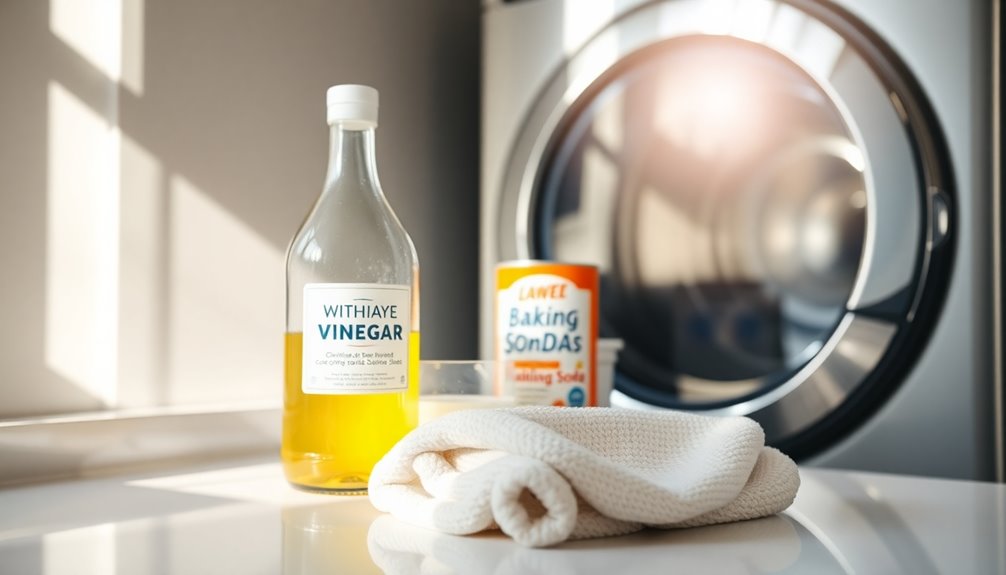
Before you plunge into cleaning your washer, it’s important to gather the right supplies. Start with a microfiber cloth, which’s great for wiping down surfaces. You’ll also need a gentle detergent or a dedicated washer cleaner to tackle any buildup.
Vinegar and baking soda can work wonders for tough stains and odors. Don’t forget a soft-bristle brush for those hard-to-reach areas. Additionally, using natural disinfectants like vinegar can help maintain a healthier environment in your home.
Consider your cleaning frequency; having these supplies on hand can make regular maintenance easier. Store them in a designated area for easy access, so you’re always prepared when it’s time to refresh your washer.
This simple prep step guarantees you’ll have everything you need to keep your machine in top shape. Happy cleaning!
How to Clean the Washer Drum

To keep your washer performing at its best, regularly cleaning the drum is essential.
Start by running a hot water cycle with no laundry inside. Add two cups of white vinegar to the drum for effective drum maintenance. This helps eliminate odors and residue.
Run a hot water cycle empty, adding two cups of white vinegar for effective drum maintenance and odor elimination.
Once the cycle completes, wipe down the interior with a clean cloth to remove any lingering grime. For added washer hygiene, you can also sprinkle baking soda into the drum before running another hot cycle. This combination helps tackle stubborn stains and keeps your washer smelling fresh. Additionally, using vinegar as a natural cleaner is effective against bacteria and odors, making it an ideal choice for your laundry routine.
Effective Techniques for Removing Mold
Mold can quickly become a problem in your washer, especially in damp areas like the door seal and detergent drawer.
To effectively remove mold and prevent its return, follow these techniques:
- Use Vinegar: Run a hot cycle with two cups of white vinegar to kill mold spores.
- Baking Soda Boost: Add half a cup of baking soda during the cycle to enhance cleaning power.
- Regular Wipe-downs: After each use, wipe the door seal and detergent drawer to remove moisture.
- Set a Cleaning Frequency: Clean your washer monthly to maintain mold prevention and keep it fresh.
Additionally, utilizing eco-friendly methods can help ensure your cleaning routine is safe for both your health and the environment.
Cleaning the Rubber Seal: Step-by-Step
Cleaning the rubber seal of your washer is essential for maintaining freshness and preventing mold buildup.
First, you’ll need to gather the necessary supplies to get started.
Once you have everything ready, inspect the seal for any signs of mold before moving on to the cleaning process. Regular cleaning of the washer prevents mold and mildew, ensuring a fresher laundry experience.
Gather Necessary Supplies
Before tackling the rubber seal in your washer, you’ll want to gather a few essential supplies. Having the right supply types on hand can make your cleaning experience smoother and more effective.
Aim to clean the rubber seal every few months to prevent buildup and maintain your washer’s efficiency. Here’s what you’ll need:
- White vinegar – effective for breaking down grime.
- Microfiber cloth – gentle yet effective for scrubbing.
- Baking soda – great for deodorizing and tackling stubborn stains.
- Old toothbrush – perfect for getting into crevices.
With these supplies ready, you’ll be set to clean the rubber seal thoroughly and keep your washer in top shape.
Inspect for Mold
As you immerse yourself in inspecting the rubber seal, keep an eye out for any signs of mold or mildew.
Use your fingers to feel for slimy or sticky spots, which could indicate mold growth.
Employ effective inspection techniques by checking both the inner and outer edges of the seal, as moisture often collects there.
Look for discoloration or black spots, which are common signs of mold.
If you spot any, note that mold prevention is key; regular inspections can help keep your washer fresh.
Make this a routine part of your washer maintenance to guarantee you catch potential issues early.
Proper care not only prolongs your machine’s life but also enhances your laundry’s cleanliness.
Clean and Wipe Down
If you’ve found any signs of mold during your inspection, it’s time to take action.
Cleaning the rubber seal is essential for maintaining your washer’s hygiene. Here’s how to tackle it:
- Gather Supplies: Grab a soft cloth, a toothbrush, and a vinegar-water solution.
- Wipe Down the Seal: Dampen the cloth with the solution and wipe the rubber seal thoroughly, removing any water spots or detergent buildup.
- Scrub Crevices: Use the toothbrush to scrub any stubborn spots, ensuring you get into all the nooks and crannies.
- Rinse and Dry: Wipe with a clean, damp cloth to remove residue, then dry the area completely to prevent mold from returning.
Regular maintenance keeps your washer fresh and functional!
Dispenser Cleaning: A Quick Guide
Cleaning your washer’s dispenser is key to maintaining its performance. You’ll need a few essential supplies and a straightforward process to get it done quickly. Regular cleaning of the washer drum helps prevent buildup that can affect the dispenser’s efficiency. Let’s go through the steps to keep your dispenser in top shape.
Essential Supplies Needed
To tackle dispenser cleaning effectively, you’ll need just a few essential supplies. Regular cleaning helps prevent detergent residue buildup, so having the right tools on hand makes the process easier.
Here’s what you should gather:
- Hot water – This helps dissolve stubborn detergent residue.
- White vinegar – A natural cleaner that breaks down buildup.
- Soft brush – Ideal for scrubbing hard-to-reach areas without damaging the dispenser.
- Microfiber cloth – Perfect for wiping down surfaces and ensuring everything is dry.
With these supplies, you can maintain a proper cleaning frequency, keeping your washer’s dispenser in top shape and free from grime.
Get ready to enjoy cleaner laundry days!
Step-by-Step Cleaning Process
Dispenser cleaning doesn’t have to be an intimidating task; with just a few simple steps, you can guarantee your washer’s dispenser stays in prime condition.
Start by removing the dispenser drawer and rinsing it under warm water. Use a soft brush to scrub away any buildup, focusing on corners and crevices. While you’re at it, check the compartment for any residue that could affect drum maintenance.
Next, wipe the inside of the dispenser slot with a damp cloth to assure seal protection against mold and mildew.
Finally, reassemble the drawer and run a quick wash cycle with vinegar to freshen everything up.
Regular cleaning will help your washer perform better and extend its lifespan.
Natural Cleaners vs. Commercial Products
While you might be tempted to grab a commercial cleaner for your washer, natural alternatives can often do the job just as effectively.
Eco-friendly alternatives not only reduce chemical exposure but also maintain product effectiveness. Here are four natural options to contemplate:
- White Vinegar: Breaks down mineral deposits and deodorizes.
- Baking Soda: Acts as a gentle abrasive, removing grime and odors.
- Lemon Juice: Natural bleach and stain remover with a fresh scent.
- Essential Oils: Add a pleasant fragrance while providing antibacterial properties.
These options can save you money and keep your washer clean without harsh chemicals. Additionally, using natural ingredients helps support a healthier home environment by reducing chemical exposure.
Switching to these eco-friendly alternatives could make your washing routine more sustainable and healthier for your home.
How Often Should You Clean Your Washer?
Cleaning your washer regularly is essential to keep it running efficiently and prevent odors. For ideal washer maintenance, aim to clean your machine every one to three months, depending on usage. If you do several loads a week, you might want to lean toward the shorter end of that range. Regular cleaning helps remove detergent buildup, mildew, and grime, ensuring your washer operates smoothly. Pay attention to the detergent dispenser, door seal, and drum—these areas often collect residue. By adhering to this cleaning frequency, you’ll extend your washer’s lifespan and maintain fresh-smelling laundry. Don’t wait until you notice unpleasant smells; proactive care is key to a well-functioning appliance.
Additionally, using cleaning tablets can simplify the maintenance process and enhance freshness.
Signs Your Washer Needs Immediate Attention
These signs indicate that your machine needs immediate attention to prevent further issues. Regular inspection of your washer can help catch these problems early. Don’t ignore them; addressing these problems can save you from costly repairs down the line.
Unpleasant Odors Emanating From Washer
Unpleasant odors coming from your washer can signal a problem that needs immediate attention. Ignoring these smells can lead to more significant issues down the line.
Here are some washing tips to help you with odor prevention:
- Leave the Door Open: After each wash, keep the door ajar to allow air circulation.
- Regularly Clean the Drum: Run a hot cycle with vinegar or a washer cleaner monthly.
- Check the Dispenser: Remove and clean the detergent dispenser regularly to prevent buildup.
- Use the Right Detergent: Make sure you’re using high-efficiency detergent to avoid residue that can cause odors.
Visible Mold Or Mildew
Don’t forget about mold prevention! After cleaning, leave the door ajar to allow airflow, preventing future moisture buildup.
Regularly wipe down the door seal and dispenser to keep them dry.
By addressing visible mold or mildew promptly, you’ll not only maintain your washer’s performance but also guarantee your laundry smells fresh every time.
Stay proactive, and your washer will thank you!
Tips for Maintaining a Fresh-Smelling Washer
To keep your washer smelling fresh, it’s essential to adopt a few simple habits. Regular maintenance can greatly improve odor prevention and promote fresh scents in your laundry.
Maintaining a fresh-smelling washer is easy with simple habits and regular upkeep for optimal odor prevention.
Here are some tips to help you maintain that fresh smell:
- Leave the door open after each wash to allow air circulation.
- Wipe down the seal and drum regularly to remove moisture buildup.
- Use high-efficiency detergent to prevent residue that can lead to odors.
- Run a cleaning cycle with vinegar or a washer cleaner monthly to eliminate any lingering smells, as regular cleaning with vinegar is crucial for machine upkeep.
Troubleshooting Common Washer Odors
When you notice an unexpected odor coming from your washer, it can signal a buildup of moisture, detergent residue, or even mold.
Start by identifying the odor sources. Check the rubber seal around the door for trapped debris and clean it with a solution of vinegar and water. Also, inspect the detergent dispenser for residue; a thorough cleaning can make a difference.
For ongoing freshness, incorporate maintenance tips like leaving the door open after cycles to promote airflow and prevent moisture buildup.
Running a hot water cycle with vinegar or specialized washing machine cleaners every month can help eliminate persistent odors.
With these steps, you can keep your washer smelling fresh and clean.
Conclusion
Now that you know how to clean your washer drum, seal, and dispenser, don’t wait too long to put these tips into action. Imagine opening that door to a fresh, clean washer every time. But what if you ignore it? Mold and odors could creep in, turning laundry day into a nightmare. Stay proactive, keep your washer in top shape, and enjoy the peace of mind that comes with a clean, fresh-smelling appliance. Your clothes will thank you!