Creating a weekly cleaning schedule makes maintaining your home effortless. Break tasks into manageable daily and weekly chores, like wiping down surfaces and vacuuming, so you won’t feel overwhelmed. Use essential supplies, like microfiber cloths and all-purpose cleaners, to enhance your efficiency. Tailor your schedule based on your specific needs and involve your family for shared responsibility. This approach not only keeps your home tidy but establishes lasting habits, and there’s plenty more to explore to streamline your routine.
Understanding the Benefits of a Weekly Cleaning Schedule
When you create a weekly cleaning schedule, you’re not just organizing your chores; you’re making life easier. By breaking tasks into manageable portions, you reduce stress and guarantee your home stays tidy. The cleaning advantages are clear—regular upkeep prevents dirt buildup and keeps allergens at bay.
Plus, when everything has its place, you save time searching for items.
Schedule benefits extend beyond cleanliness; they instill a sense of routine, making it easier to stay motivated. You’ll find that tackling a few tasks each day feels less overwhelming than a massive cleanup. Incorporating a structured cleaning schedule can also foster accountability and develop lasting cleaning habits over time.
With a plan in place, you can prioritize tasks, enjoy a clean environment, and reclaim your free time for activities you love.
Essential Supplies for Your Cleaning Routine

A well-organized cleaning schedule can only be effective if you have the right tools at your disposal. Start by gathering essential tools like a vacuum, microfiber cloths, mops, and all-purpose cleaners.
Don’t forget specialized items, such as glass cleaner and disinfectant wipes, for targeted tasks. Create cleaning checklists to keep you on track and guarantee you tackle every area systematically. Having your supplies organized in a designated cleaning caddy can make the process smoother. Consider adding gloves and a scrub brush for tough spots. Additionally, investing in quality eco-friendly options ensures a safer living environment while promoting sustainability.
Daily Tasks to Keep Your Home Tidy
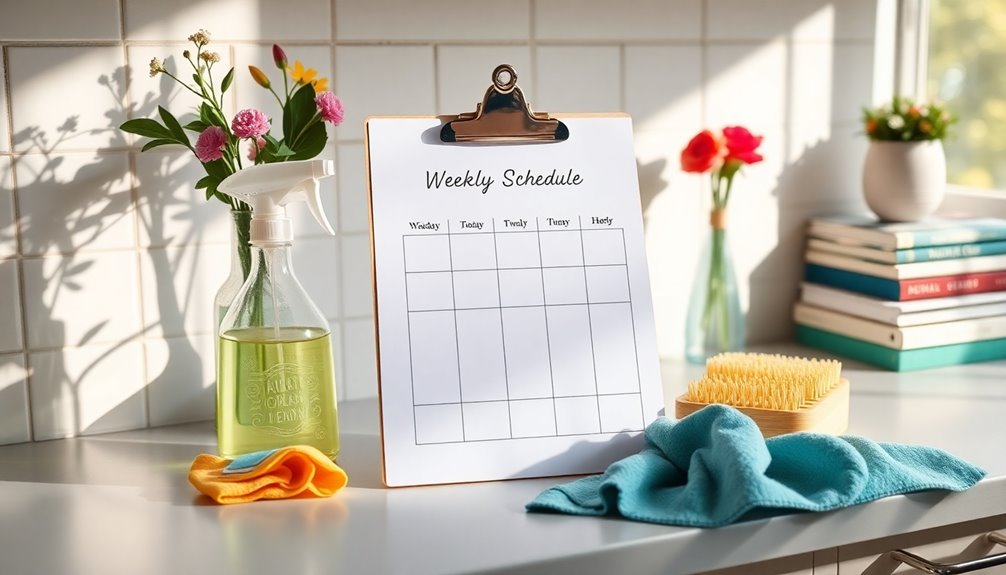
Here is your revised content:
Establishing a few daily tasks can make a significant difference in keeping your home tidy.
By adopting these tidy habits, you’ll create an environment that feels organized and inviting.
Here are some quick cleaning hacks to incorporate into your routine:
- Make your bed each morning to instantly elevate your space.
- Wipe down kitchen counters after meals to prevent mess buildup.
- Do a quick 5-minute declutter of common areas before bedtime.
- Load and start the dishwasher nightly to keep dishes in check.
- Incorporating time-saving strategies into your routine can further enhance your cleaning efficiency.
Weekly Deep Cleaning Tasks You Can’t Skip
Daily tasks lay the foundation for a tidy home, but to truly maintain a clean living space, you can’t overlook weekly deep cleaning.
Incorporate deep cleaning essentials into your routine to tackle hidden dirt and grime. Start with vacuuming and mopping all floors, ensuring you reach corners and under furniture.
Don’t forget to wipe down surfaces in your kitchen and bathrooms, paying special attention to faucets and countertops.
Dust ceiling fans and light fixtures to keep allergens at bay. Additionally, consider scheduling cleaning tasks during downtime to maximize your cleaning efficiency.
Use your weekly checklist to keep track of what needs attention each week.
How to Customize Your Schedule for Your Lifestyle
To customize your cleaning schedule, start by evaluating your specific cleaning needs. Consider how much time you can realistically dedicate to cleaning each week, and don’t forget to prioritize high-traffic areas that need more attention. Incorporating a cleaning checklist can also help you stay organized and motivated, ensuring your routine fits seamlessly into your lifestyle.
Assess Your Cleaning Needs
Cleaning your home can feel overwhelming, but evaluating your specific cleaning needs is the key to creating an effective schedule.
Start by identifying your cleaning priorities and reviewing clutter in each room. Consider these points:
- Frequency: How often do you need to clean specific areas?
- High-Traffic Zones: Which spaces get the most use and dirt?
- Personal Preferences: Do you prefer deep cleaning less frequently or quick daily tidying?
- Family Involvement: Who else can help, and what tasks can they take on?
Factor In Time Availability
Once you’ve assessed your cleaning needs, it’s time to factor in how much time you can realistically dedicate to cleaning each week.
Evaluate your schedule and identify blocks of time for cleaning tasks. Good time management is essential; consider whether you can spare a few minutes daily or a larger chunk weekly.
If you’re short on time, think about task delegation. Assign specific chores to family members or roommates to lighten your load. You might even consider hiring help for deep cleaning sessions.
Customize your schedule based on your availability, ensuring it fits your lifestyle while keeping your space clean and organized. This approach makes it easier to stay on track and maintain a tidy home.
Prioritize High-Traffic Areas
While you may have a long list of cleaning tasks, focusing on high-traffic areas can make a significant difference in maintaining your home’s cleanliness.
By prioritizing these spaces, you can effectively manage dirt and clutter that accumulate due to daily use. Start by identifying your home’s traffic patterns and tailoring your cleaning schedule accordingly.
- Clean entryways regularly to boost entryways cleanliness.
- Tackle living rooms where family gathers.
- Keep kitchens spotless, as they’re often the heart of your home.
- Don’t forget bathrooms, which see frequent use.
Tips for Staying Motivated to Clean
Staying motivated to clean can feel like a challenging task, especially when distractions abound. One effective way to boost your motivation is to create a cleaning rewards system. Promise yourself a treat—like your favorite snack or a relaxing break—once you finish a task. This gives you something to look forward to and makes cleaning feel less like a chore.
Additionally, use music motivation to energize your cleaning sessions. Create a playlist of upbeat songs that get you moving, and let the rhythm inspire you.
Setting a timer can help, too; challenge yourself to finish a room before the timer goes off. These strategies will keep you focused and make cleaning a more enjoyable experience. Regular cleaning acts as a mindful activity, reducing stress levels and enhancing your overall well-being.
Involving the Family in Cleaning Chores
Getting the whole family involved in cleaning chores can transform the task into a fun and collaborative effort. By embracing family teamwork and chore rotation, you’ll not only lighten your load but also teach valuable skills.
Here are some tips to get everyone engaged:
- Assign age-appropriate tasks to each family member.
- Create a chore chart to track responsibilities and progress.
- Turn on some music to make cleaning enjoyable.
- Reward completed chores with family activities or treats.
When everyone pitches in, cleaning becomes less of a burden and more of a shared experience. Plus, it sets a great example for kids about working together. So, gather your family, and make cleaning a team effort! Additionally, involving children in chores fosters responsibility and ownership.
Common Mistakes to Avoid in Your Cleaning Routine
Cleaning can feel overwhelming if you fall into common traps that hinder your efforts. One mistake is relying too much on cleaning shortcuts without understanding their effectiveness. These shortcuts might save time initially, but they often lead to deeper problems later on.
Another pitfall is poor time management. If you don’t allocate specific times for each task, you may end up multitasking or skipping essential chores. Stick to a schedule that breaks down your cleaning into manageable chunks; this keeps you focused and prevents burnout.
Ultimately, avoid using the wrong tools or products, as they can waste time and energy. By steering clear of these mistakes, your cleaning routine will become smoother and more efficient. Additionally, utilizing multi-purpose cleaners can simplify your cleaning process and reduce the number of products needed.
How to Adjust Your Schedule for Seasonal Changes?
Mistakes in your cleaning routine can make it hard to keep up with seasonal changes. To adapt your schedule effectively, consider these tips:
Mistakes in your cleaning routine can hinder your ability to adapt to seasonal changes effectively.
- Create seasonal checklists to guide your tasks.
- Factor in weather considerations when planning outdoor cleaning.
- Rotate your cleaning supplies based on seasonal needs.
- Adjust the frequency of deep cleaning tasks during different times of the year.
- Incorporate seasonal maintenance tasks to ensure your home remains in top condition throughout the year.
Conclusion
By sticking to a weekly cleaning schedule, you’ll find that “a clean home is a happy home.” Embracing this routine not only keeps your space tidy but also creates a calming environment for you and your family. Remember, consistency is key—make adjustments as needed and involve everyone in the process. With a little effort, you’ll transform cleaning from a chore into a manageable part of your life, leaving you more time to enjoy your home.