To clean your walls and trim, use diluted dish soap for flat finishes, or all-purpose sprays for satin and gloss. For stains, warm water with dish soap or vinegar works well; apply gently in circular motions. Microfiber cloths and non-abrasive sponges are ideal tools. Eco-friendly DIY solutions, like vinegar mixed with water or a baking soda paste, can also be effective. Want to discover more tips and specific techniques for different surfaces?
The Best Cleaners for Painted Walls
When it comes to cleaning painted walls, choosing the right cleaner is crucial for maintaining their appearance. Depending on your paint finishes—whether matte, satin, or gloss—you’ll need a cleaner that suits each type.
Choosing the right cleaner for your painted walls is essential to preserve their finish and appearance.
For flat or matte finishes, stick to a gentle solution, like diluted dish soap, to avoid damaging the surface. Satin and gloss finishes can handle more robust cleaners, such as all-purpose sprays or vinegar solutions.
Don’t forget about wall textures, too! Smooth walls require less effort, while textured surfaces might need a soft brush to reach into crevices. Additionally, weekly cleaning sessions help maintain cleanliness and prevent tougher stains from forming.
Always test any cleaner on a small area first to guarantee it won’t harm your paint. Keeping your walls clean extends their life and enhances your home’s overall look.
How to Tackle Stains on Wall Surfaces
Even the cleanest walls can fall victim to stains, whether from food splatters, fingerprints, or crayon marks. To tackle these pesky marks, start with gentle wall stain removal methods.
Mix warm water with a few drops of dish soap or white vinegar. Dampen a soft cloth with the solution and gently wipe the stained area in circular motions.
For tougher stains, consider using a magic eraser, but test it on an inconspicuous spot first. Regular cleaning frequency is essential; aim to wipe down high-traffic areas monthly to prevent build-up. Incorporating vinegar cleaning solutions can effectively tackle various stains while being eco-friendly.
If you notice stubborn stains persisting, don’t hesitate to repaint that section for a fresh look. Keeping your walls clean enhances your home’s overall appearance and comfort.
Essential Tools for Cleaning Trim
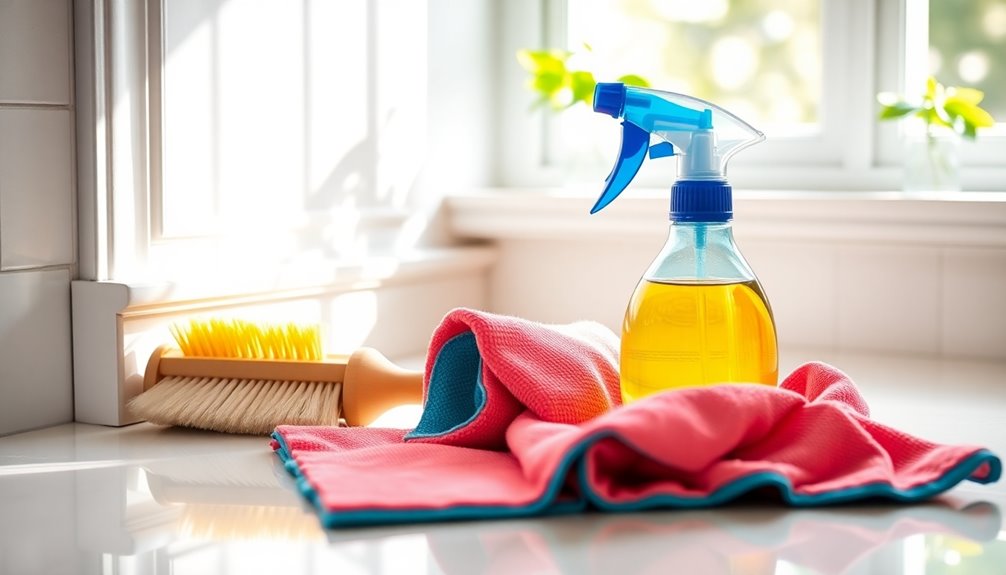
When it comes to cleaning trim, having the right tools makes all the difference. You’ll want to gather microfiber cloths and sponges, effective cleaning solutions, and handy buckets or spray bottles. Additionally, using eco-friendly cleaners can minimize exposure to harmful chemicals while keeping your home safe. With these essentials, you’ll be ready to tackle dirt and grime efficiently.
Microfiber Cloths and Sponges
To achieve a spotless finish on your trim, using microfiber cloths and sponges is essential.
Microfiber benefits include their ability to trap dust and dirt effectively, leaving surfaces clean without scratching. When choosing sponge types, opt for non-abrasive varieties that won’t damage your trim.
A soft microfiber cloth is perfect for wiping down painted surfaces, while a damp sponge can help tackle tougher grime.
Cleaning Solutions and Detergents
Microfiber cloths and sponges are just the beginning of your cleaning arsenal. To tackle your walls and trim effectively, you’ll need the right cleaning solutions and detergents.
For everyday grime, consider eco-friendly options like vinegar and baking soda, which are gentle yet effective. They’re perfect for maintaining a clean environment without harsh chemicals.
If you prefer convenience, commercial cleaners can save you time and effort. Look for products specifically designed for walls and trim; they’ll often include instructions for ideal use.
Always test a small area first to verify compatibility with your surfaces. By choosing the right cleaning solutions, you’ll make your cleaning tasks easier and more efficient.
Buckets and Spray Bottles
While you might overlook them, buckets and spray bottles are essential tools for efficiently cleaning your walls and trim.
Choosing the right tool selection can make a significant difference in your cleaning techniques. A sturdy bucket is perfect for holding larger amounts of cleaning solution, allowing you to easily dip your cloth or sponge.
Meanwhile, a spray bottle is great for applying cleaner directly to surfaces, ensuring even coverage. You can mix solutions in the bucket, then transfer the mixture to the spray bottle for quick touch-ups.
Both tools help minimize mess and save time, enabling you to tackle dirt and grime effectively.
DIY Cleaning Solutions You Can Make at Home
When it comes to cleaning your walls and trim, you don’t need to buy expensive products. You can whip up effective solutions right at home using simple ingredients like vinegar and water or a baking soda paste. For a powerful clean, consider using an all-purpose cleaner made with vinegar. Let’s explore how these DIY cleaners can tackle grime and stains effortlessly.
Vinegar And Water Solution
A simple vinegar and water solution can be your go-to for cleaning walls and trim effectively. This DIY cleaner harnesses the vinegar benefits, like eliminating grime and odors without harsh chemicals.
To make your solution, mix one part vinegar with four parts water for an ideal cleaning ratio. Just grab a spray bottle, combine the ingredients, and you’re ready to tackle those dirty surfaces.
Spray the solution directly onto the wall or trim, then wipe it down with a microfiber cloth for best results. This method’s not only easy but also eco-friendly.
Plus, you’ll love how fresh and clean your space feels afterward. Give it a try, and you’ll see how effective this simple solution really is!
Baking Soda Paste
Transform your cleaning routine with a baking soda paste, an effective and versatile solution for tackling stubborn stains on walls and trim.
This DIY cleaner harnesses the baking soda benefits, making it a smart choice for any homeowner.
Here’s how to make your baking soda mixture:
- Combine 1/2 cup of baking soda with 1/4 cup of water.
- Stir until you achieve a thick paste.
- Apply the paste to the stained area using a soft cloth or sponge.
- Wipe clean with a damp cloth, and marvel at the results!
This baking soda paste not only lifts dirt but also deodorizes surfaces, making it a must-have in your cleaning arsenal.
Say goodbye to tough stains!
Tips for Cleaning Different Types of Wall Materials
Although different wall materials require unique cleaning approaches, knowing the right method can save you time and effort.
For smooth walls, a damp cloth with mild soap works well. Textured surfaces, however, may need a soft brush to reach into crevices.
When it comes to painted walls, always test any cleaner on a hidden spot first, as some paints can be sensitive. For wallpaper, stick to gentle cleaners to avoid damage.
Consider wall texture considerations; for instance, gloss finishes may resist stains better than matte.
Cleaning frequency recommendations suggest tackling high-traffic areas every month, while less-used spaces can be cleaned quarterly.
Adjust your approach based on the material and its condition for the best results. Additionally, using a dusting brush attachment can help effectively remove dust from textured surfaces without damaging them.
Preventive Measures to Keep Walls and Trim Clean
Here are four key strategies for regular maintenance:
- Dust Regularly: Use a microfiber cloth to wipe down surfaces at least once a week.
- Avoid Direct Contact: Use coasters and placemats to prevent scuff marks and stains.
- Use Washable Paint: Opt for washable finishes that can withstand occasional cleaning without damage.
- Keep Humidity in Check: Use a dehumidifier to prevent moisture buildup, which can lead to mildew and stains. Additionally, implementing regular cleaning routines can help maintain surfaces and prevent stubborn buildup over time.
When to Call in a Professional Cleaner?
When should you consider calling in a professional cleaner for your walls and trim? If you’re facing stubborn stains or accumulated grime that won’t budge, it might be time for some deep cleaning.
Professional services can tackle those tough spots effectively, saving you time and effort.
Additionally, if your walls have intricate textures or finishes, you may risk damage without the right tools and expertise.
Calling in a professional guarantees that your surfaces are cleaned safely and thoroughly.
If you’ve got a large area to cover or a tight schedule, enlisting help can make the task much easier.
Ultimately, knowing when to seek assistance can keep your home looking fresh and well-maintained.
Conclusion
To sum up, keeping your walls and trim clean not only enhances your home’s appearance but can also improve indoor air quality—studies show that clean surfaces can reduce allergens by up to 50%. By using the right cleaners and tools, you can tackle dirt and stains effectively. Remember, regular maintenance is key to preventing tough grime. So, grab your supplies and start freshening up your space today! Your home will thank you for it.