To wash your walls and trim effectively, gather the right tools: a bucket, sponge, and gentle detergent. Start by clearing the area and dusting surfaces. Choose a suitable cleaning solution based on your wall type—vinegar and water for tiles or mild soap for drywall. Work in sections and wipe gently to avoid damage. Don’t forget to maintain cleanliness regularly to keep your home looking fresh. There’s a lot more to reflect on for a thorough clean!
Why Washing Walls and Trim Is Important
Washing your walls and trim might seem like a chore, but it’s essential for maintaining a clean and healthy home. Regular cleaning offers significant wall hygiene benefits, reducing allergens and dust that can affect your indoor air quality.
By removing grime and stains, you not only enhance the hygiene of your living space but also prolong the life of your paint and surfaces. Additionally, you’ll notice an aesthetic improvement; clean walls and trim can make a room feel fresh and inviting. This simple task can transform your space, making it more enjoyable for you and your guests. Furthermore, regular cleaning helps prevent the buildup of soap scum and other harmful substances, ensuring a healthier environment.
Tools You’ll Need for the Job
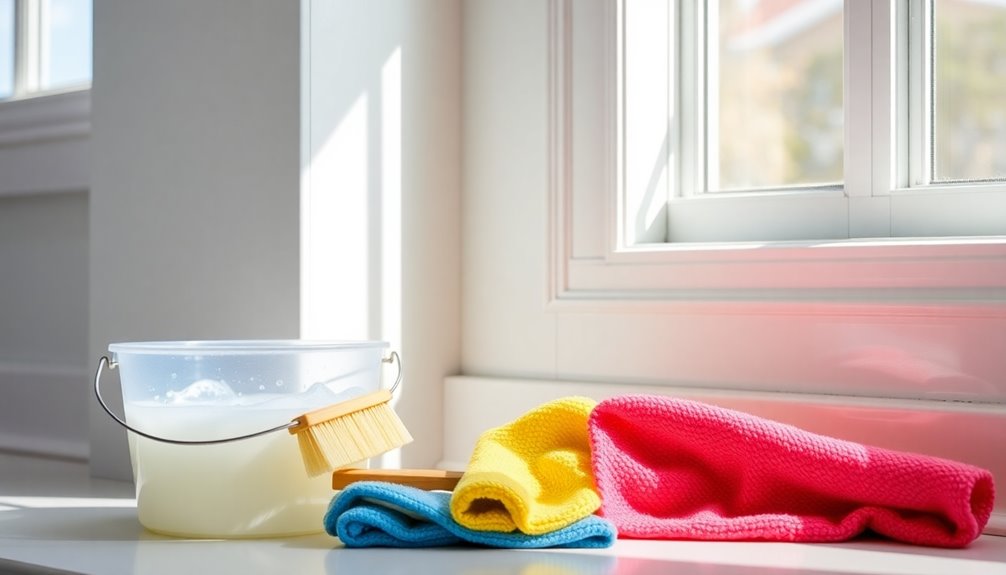
To effectively wash your walls and trim, you’ll need a few essential tools to make the job easier and more efficient.
Start with a bucket to hold your cleaning solution and a sponge or microfiber cloth for scrubbing. A long-handled brush can help you reach high spots without a ladder.
Don’t forget a step stool for those tricky areas. For cleaning supplies, a gentle detergent mixed with warm water works wonders, and you might also want a vinegar solution for tough stains. Additionally, regular cleaning can help prevent mold or mildew from forming on surfaces.
Finally, keep a dry cloth handy for wiping down surfaces after cleaning to prevent streaks.
With these tools in hand, you’re all set for successful wall maintenance!
How to Prepare Your Walls and Trim for Cleaning
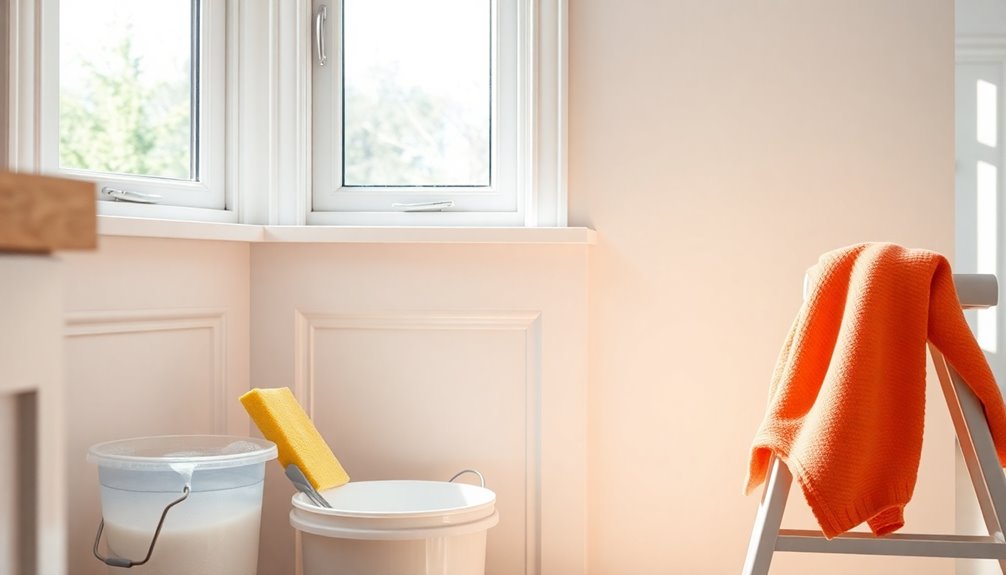
Before you plunge into cleaning, make sure to clear the area around your walls and trim. Move furniture, decorations, and any items that could get in the way. This not only protects your belongings but also gives you easy access to all wall types and surface textures.
Next, dust the walls and trim using a microfiber cloth or a duster. Pay attention to corners and baseboards where dirt tends to accumulate. If you notice any stains or marks, take note of them; they may require special attention when you choose your cleaning solution later.
Finally, check for any peeling paint or damage that could affect your cleaning process. With everything ready, you’ll be set for an effective cleaning session. Additionally, using non-toxic cleaners can help ensure a safe and effective cleaning environment.
Choosing the Right Cleaning Solution
When it comes to washing your walls and trim, choosing the right cleaning solution is key. You’ve got options, from natural cleaning solutions to commercial products and even DIY recipes. A popular choice for a natural approach is white vinegar, which is effective against bacteria and odors. Let’s explore what works best for your needs and preferences.
Natural Cleaning Solutions
Choosing the right natural cleaning solution can make all the difference in effectively washing your walls and trim without harsh chemicals.
Opt for eco-friendly options that utilize natural ingredients, such as vinegar, baking soda, or castile soap. These ingredients not only clean well but also minimize your impact on the environment.
For light cleaning, mix equal parts of vinegar and water in a spray bottle. If you’re tackling tougher grime, a paste of baking soda and water works wonders.
Always test your solution on a small, inconspicuous area first. By using these natural alternatives, you’ll guarantee your home stays fresh and safe for your family while being kind to the planet.
Commercial Products Overview
Natural cleaning solutions are great, but sometimes you need the power of commercial products to tackle stubborn stains and grime. When choosing the right cleaning solution, consider product effectiveness alongside your environmental values.
Many brands offer eco-friendly options that deliver strong results without harsh chemicals. Look for labels that highlight biodegradable ingredients and non-toxic formulations.
You’ll find concentrated cleaners that can be diluted for various tasks, guaranteeing you get maximum value. Always read reviews and test a small area first to verify compatibility with your surfaces.
DIY Cleaning Recipes
For stubborn stains, consider mixing baking soda with water to create a paste.
Apply it to the stain, let it sit, then scrub gently.
Always test your solution on a small, inconspicuous area first to guarantee it won’t damage your paint.
With these simple recipes, you can keep your walls and trim looking fresh and clean!
Step-by-Step Guide to Washing Walls
Washing your walls can transform the look of a room, and it’s easier than you might think. Start by choosing a suitable cleaning solution based on your wall textures—flat, satin, or glossy.
Next, gather your supplies: a bucket, sponge, and a microfiber cloth.
Create a cleaning schedule to keep your walls looking fresh; aim for every few months or as needed. Consider scheduling wall cleaning every 6-8 weeks to prevent dirt buildup, especially in high-traffic areas.
Begin at the top corner of the wall, working your way down in sections. Dip your sponge into the solution, wring it out, and gently scrub the wall in circular motions. Rinse with clean water, using a fresh cloth to remove any residue.
Finally, allow the walls to dry completely before replacing any decor.
Tips for Washing Different Wall Materials
Different wall materials require specific care to maintain their appearance and integrity.
For painted drywall, a gentle soap solution works well—use a soft sponge to avoid damage.
If you have wood paneling, opt for a cleaner designed for that material; a microfiber cloth is your best friend here.
For tile walls, a mixture of vinegar and water or a commercial cleaner can tackle grime without scratching.
Meanwhile, vinyl wallpaper can be wiped with a damp cloth and mild detergent, ensuring you don’t soak the seams.
To ensure effective cleaning, always consult the owner’s manual for recommended solutions based on your specific wall type.
Each wall material type has unique cleaning techniques, so make sure you choose the right one to preserve your walls and keep them looking fresh.
How to Effectively Clean Trim and Baseboards
While you might overlook trim and baseboards during your cleaning routine, they can accumulate dust and grime just like walls. To effectively clean these areas, start by dusting with a microfiber cloth or a duster.
Don’t forget to clean trim and baseboards; they collect dust just like walls. Start by dusting with a microfiber cloth or duster.
For deeper cleaning, use a mixture of warm water and a few drops of dish soap. Apply this solution with a soft cloth, focusing on corners and crevices.
When using trim cleaning techniques, make sure you don’t soak the wood, as excess moisture can damage the finish. Rinse your cloth frequently to avoid redistributing dirt. Additionally, using a crevice tool attachment can help you reach tight spaces where dust tends to accumulate.
For ongoing care, consider baseboard maintenance tips like vacuuming regularly to prevent buildup. This simple routine keeps your home looking fresh and polished, making a noticeable difference.
Dealing With Stains and Scuff Marks
Stains and scuff marks can be eyesores on your walls and trim, but tackling them is easier than you might think. Start with a gentle cleaner like dish soap mixed with water. Use a soft cloth or sponge to blot the stain, avoiding harsh scrubbing that could damage the paint.
For tougher stains, consider a mixture of baking soda and water for effective stain removal. Regular maintenance through gentle polishing can help preserve the appearance of your walls and trim over time.
To prevent future scuff marks, place felt pads on the bottom of furniture legs and teach family members to be mindful when moving items around. Regularly inspecting your walls can help you catch and clean minor stains before they become major issues.
With these simple steps, your walls and trim will stay looking fresh and clean!
Best Practices for Washing High Ceilings
When you’re tackling high ceilings, safety should always come first.
You’ll need the right tools and effective cleaning techniques to make the job easier and more efficient.
Let’s explore how to prepare and execute this task safely and effectively.
Safety Precautions First
Washing high ceilings requires careful planning to guarantee your safety.
First, assess your space and make sure you’ve got a sturdy ladder or scaffolding that can support your weight while allowing access to those hard-to-reach areas.
Always wear safety gear, including non-slip shoes, gloves, and goggles, to protect yourself from drips and splashes.
When using wall cleaning techniques, consider a gentle cleanser to avoid damaging the paint or finish.
If you’re using a ladder, keep it on a flat surface and never overreach; it’s better to climb down and reposition than to risk a fall.
Finally, consider having someone nearby to assist, especially if you’re working on particularly high or unstable surfaces.
Your safety is paramount!
Essential Tools Needed
To effectively wash high ceilings, you’ll need a few essential tools that make the job easier and safer.
Start with a sturdy extension pole for your mop or cleaning pad; this helps you reach those lofty areas without straining. A step ladder is also vital for areas that require extra attention.
Choose a gentle cleanser suitable for your wall materials, whether they’re painted, wallpapered, or textured. Don’t forget microfiber cloths for detailed work on trim and corners.
Finally, consider a spray bottle for easy application of your cleaning solution during your cleaning schedules.
With these tools in hand, you’ll be well-prepared to tackle those high ceilings efficiently and effectively.
Effective Cleaning Techniques
Start by clearing the area beneath your high ceilings to prevent any debris from falling onto furniture or the floor.
Next, use a sturdy step ladder to safely reach those heights.
For effective cleaning techniques, mix warm water with a mild detergent in a bucket.
Dip a long-handled sponge or microfiber cloth into the solution, wring it out, and start washing from the top down. This prevents streaks and guarantees thorough wall maintenance.
Rinse the sponge often to avoid spreading dirt. If your walls are particularly dirty, consider using a gentle scrub brush.
Finally, let the walls air dry, and don’t forget to check for any missed spots.
Regular upkeep keeps your walls looking fresh and clean!
When to Use a Pressure Washer?
Sometimes, you might find that a pressure washer is the perfect tool for tackling tough grime on your walls and trim. If you’re dealing with mold, mildew, or stubborn dirt, a pressure washer can save you time and effort. Additionally, using eco-friendly methods can help protect your surfaces while effectively removing unwanted build-up. Different pressure washer types, like electric and gas-powered, cater to various cleaning needs. For softer surfaces, such as wood trim, opt for a lower PSI setting to avoid damage.
Maintaining Clean Walls and Trim After Washing
After using a pressure washer to clean your walls and trim, maintaining that fresh look is key. To keep your surfaces looking pristine, regularly dust with a microfiber cloth. This helps in preventing dust from settling and sticking to the surfaces.
Consider using an anti-static spray that can repel dust and keep surfaces cleaner for longer.
For maintaining shine, touch up any dull spots with a suitable cleaner designed for your walls and trim. You can also schedule a quick wash every few months to remove any buildup. Additionally, regular maintenance can prevent buildup of dirt and potential stains, ensuring your walls and trim remain vibrant.
Finally, avoid overcrowding your walls with decor, as this can trap dust and diminish that freshly cleaned appearance.
Follow these steps, and you’ll enjoy your sparkling walls and trim for longer!
Common Mistakes to Avoid While Cleaning
While cleaning walls and trim might seem straightforward, there are common mistakes that can lead to lackluster results. One major cleaning blunder is using the wrong cleaning solution; harsh chemicals can damage surfaces. Make certain you choose a gentle cleaner suited for your walls and trim.
Cleaning walls and trim requires care; using harsh chemicals can damage surfaces, so always opt for a gentle cleaner.
Another mistake is neglecting to do a patch test first. Always test a small area to verify the solution won’t discolor or harm your paint.
Additionally, don’t forget to use the right tools. Using rough sponges can scratch surfaces, so opt for microfiber cloths instead.
To save time, work in sections and avoid over-saturating the cloth. By steering clear of these pitfalls, you’ll achieve a cleaner, more polished finish.
Eco-Friendly Cleaning Alternatives
Have you ever considered how easy it can be to clean your walls and trim with eco-friendly alternatives? Using eco-friendly products not only helps you maintain a clean home but also supports sustainable practices.
For instance, a simple mixture of vinegar and water can effectively cut through grime without harsh chemicals. Baking soda works wonders as a gentle abrasive, perfect for stubborn spots. You can even create your own natural cleaners by combining essential oils with water for a fresh scent.
By opting for these green solutions, you’re protecting your family’s health and the environment. Plus, many eco-friendly products are biodegradable, making cleanup easier and safer.
How Often Should You Wash Your Walls and Trim?
How often you wash your walls and trim really depends on how much you use those spaces.
If you have kids or pets, you might need to clean more frequently.
Seasonal cleaning can also help keep your home fresh and inviting, so consider making it a part of your routine.
Frequency Based On Usage
Regularly washing your walls and trim can keep your home looking fresh and inviting.
The frequency for cleaning depends on how much you use each space. In high-traffic areas like hallways and kitchens, aim to wash your walls every 3 to 6 months.
For living rooms and bedrooms, a wall frequency of once a year is usually sufficient. Your trim schedule should align with wall cleaning—give those areas a good wipe down during each wash.
If you have kids or pets, consider increasing your cleaning frequency to maintain a tidy appearance.
Seasonal Cleaning Recommendations
While you mightn’t think about it often, seasonal cleaning is a great opportunity to give your walls and trim a thorough wash.
Setting a schedule will help keep your home looking fresh and inviting. Here are some recommendations:
- Spring Cleaning: As you freshen up your space, give your walls and trim a good wash to remove dust and grime accumulated over winter.
- Mid-Summer Refresh: A light wash can help combat humidity and keep your home feeling crisp during the hotter months.
- Holiday Preparation: Before decorating for the holidays, make sure your walls and trim are clean, creating a welcoming environment for guests.
Conclusion
Keeping your walls and trim clean isn’t just about looks; it can improve your home’s air quality too! Did you know that dust and allergens can accumulate, leading to respiratory issues? By washing your walls and trim regularly, you’re not just sprucing up your space; you’re promoting a healthier environment for you and your loved ones. So grab your cleaning supplies and make this task a part of your routine—you’ll breathe easier and enjoy a fresher home!