To clean woodwork without damaging it, start by identifying the finish type—oil or lacquer. Use a soft microfiber cloth with a gentle, pH-balanced cleaner for best results. For stains, try baking soda for water stains and mineral spirits for oily ones. Always test cleaners on hidden areas first. Maintain your wood by dusting regularly and using eco-friendly products. Keep an eye out for wear and tear; there’s much more to learn about effective care techniques.
Understanding the Different Types of Wood Finishes
When you start cleaning woodwork, it’s essential to understand the different types of wood finishes, since each requires unique care.
Oil finishes, for instance, penetrate the wood and provide a warm, natural look. You’ll want to use a gentle cleaner, avoiding harsh chemicals that can strip the finish. Instead, a soft cloth dampened with a mild soap solution works best.
Oil finishes enhance wood’s natural beauty; use a mild soap solution and soft cloth for gentle cleaning.
On the other hand, lacquer finishes create a hard, glossy surface. These are more durable but can be sensitive to solvents. When cleaning lacquered woodwork, opt for a pH-balanced cleaner and a soft microfiber cloth to prevent scratches. Knowing these differences will help you maintain your woodwork’s beauty without causing damage. Additionally, regular maintenance of your wood finishes will enhance their longevity and appearance.
Essential Tools for Cleaning Woodwork Safely

When it comes to cleaning woodwork safely, having the right tools makes all the difference.
You’ll need a few recommended cleaning supplies and protective gear to guarantee both your wood and yourself stay in great condition. Additionally, it’s important to understand the potential for environmental factors that can affect wood finishes over time.
Let’s explore what you’ll need to tackle this task effectively.
Recommended Cleaning Supplies
To clean woodwork safely and effectively, you’ll need a few essential tools. Start with microfiber cloths; they’re perfect for trapping dust and dirt without scratching your wood surfaces.
Choose eco-friendly options for your cleaning solution—look for plant-based cleaners that are gentle yet effective. A soft-bristle brush can help get into crevices and corners, while a spray bottle allows you to control the amount of cleaner you use.
If you’re dealing with tough stains, a gentle scrub pad can be handy, but always test it on a hidden area first. Finally, don’t forget a bucket for rinsing your cloths or brushes.
With these supplies, you’ll maintain your woodwork’s beauty without causing damage.
Protective Gear Essentials
Cleaning woodwork not only requires the right supplies but also essential protective gear to keep you safe.
Using the right gear can make your cleaning experience not just effective but also worry-free. Here’s what you need:
- Protective gloves: Shield your hands from moisture and chemicals.
- Safety goggles: Protect your eyes from dust and splashes.
- Dust masks: Prevent inhaling harmful particles, guaranteeing you breathe easy.
- Non-toxic cleaners: Keep your environment safe for you and your family.
Equipping yourself with these essentials guarantees you can tackle your woodwork cleaning project confidently, knowing you’re prioritizing your health while achieving a sparkling finish.
How to Identify and Treat Stains on Wood Surfaces
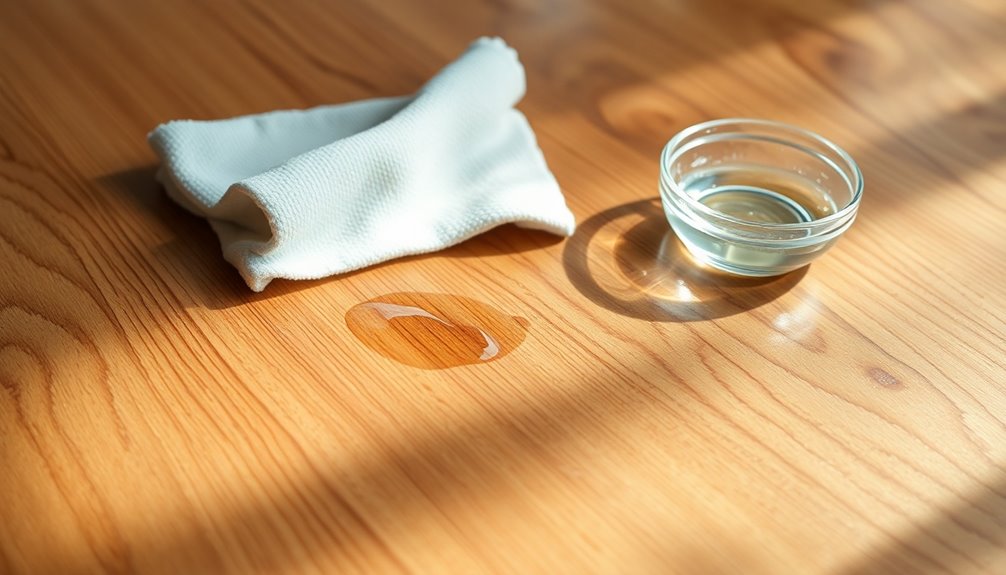
Stains on wood surfaces can be frustrating, but identifying them is the first step to restoring your furniture’s beauty.
Start with stain identification: water stains often appear as white rings, while oil stains may look dark or greasy. For ink stains, you might see blue or black marks.
Once you’ve identified the stain, choose appropriate treatment methods. For water stains, gently rub the area with a mixture of baking soda and water.
Oil stains can be treated with mineral spirits; just apply it with a soft cloth. For ink, try using a bit of rubbing alcohol on a cotton swab. Always test any method on a small, inconspicuous area first to guarantee it won’t damage the wood.
Using a gentle cleaner like Murphy’s Oil Soap can help maintain the wood’s finish while treating stains effectively.
Step-by-Step Guide to Dusting Woodwork Effectively
Dusting woodwork effectively can transform the look of your space in just a few minutes. Use these simple dusting techniques to make your wood surfaces shine:
- Grab a microfiber cloth; it traps dust better than regular cloths.
- Start from the top and work your way down to avoid re-dusting.
- Use a gentle, circular motion to lift dust without scratching.
- Don’t forget corners and crevices; they often collect dust unnoticed.
- Consider using reusable cleaning cloths to reduce waste while maintaining the beauty of your woodwork.
The Best Homemade Solutions for Cleaning Wood
When it comes to cleaning wood, you can whip up some effective homemade solutions using ingredients you probably have at home.
For a natural shine, mix vinegar and olive oil, or create a baking soda paste for tougher grime.
These options aren’t only easy to make but also gentle on your wood surfaces. Additionally, using eco-friendly products can help maintain your wood while minimizing environmental impact.
Vinegar And Olive Oil
Revitalize your woodwork with a simple mixture of vinegar and olive oil. This homemade solution not only cleans but also nourishes your wood, enhancing its natural beauty. The vinegar benefits include cutting through grime while the olive oil moisturizes, leaving your surfaces gleaming and protected.
Here’s how to use it effectively:
- Mix equal parts of vinegar and olive oil in a spray bottle.
- Shake well before applying to guarantee a smooth blend.
- Wipe with a soft cloth, following the grain of the wood.
- Enjoy the fresh, inviting scent as you restore your furniture.
With this easy solution, you’ll feel proud of your woodwork, knowing it’s clean and well-maintained!
Baking Soda Paste
After you’ve used vinegar and olive oil to refresh your woodwork, consider trying a baking soda paste for tougher stains and grime. Baking soda is a gentle abrasive that can lift dirt without scratching wood surfaces.
To make the paste, mix three parts baking soda with one part water until it forms a thick consistency. Apply the paste directly to the stained area using a soft cloth, rubbing gently in circular motions.
Let it sit for about 10 minutes to break down the grime, then wipe it away with a damp cloth. Finally, dry the area thoroughly to prevent moisture damage.
This simple solution can restore the beauty of your wood surfaces while keeping them safe from harsh chemicals.
Commercial Products: What to Look For and Avoid
While shopping for commercial cleaning products, it’s essential to know what to seek out and what to steer clear of. Choosing wisely can protect your woodwork and keep it looking beautiful.
Choosing the right cleaning products is crucial for maintaining the beauty and integrity of your woodwork.
Look for products that offer:
- Eco-friendly options that minimize environmental impact
- Ingredient safety, ensuring no harsh chemicals that could harm your wood
- Non-greasy formulas that won’t leave a residue
- Multi-surface compatibility for versatile use on various wood types
Avoid products containing:
- Abrasives that can scratch surfaces
- Strong solvents that may strip finishes
- Artificial fragrances that can irritate
- Non-biodegradable ingredients that harm the planet
Additionally, consider using natural agents like vinegar or baking soda, which can provide a gentle and effective clean without damaging wood surfaces.
Techniques for Cleaning Delicate Moldings and Trim
When it comes to cleaning delicate moldings and trim, using safe cleaning solutions is key. You’ll want to employ gentle wiping techniques to avoid damage while keeping your woodwork pristine. Regular maintenance tips can also help preserve the beauty of your trim for years to come. Additionally, incorporating natural wood polish into your cleaning routine can enhance the shine and protect the wood.
Safe Cleaning Solutions
Cleaning delicate moldings and trim requires a gentle touch and the right solutions to avoid damage.
When choosing your cleaning products, consider eco-friendly alternatives that use natural ingredients. Here are some safe options to keep your woodwork looking pristine:
- Vinegar and Water Mixture: A simple blend that cuts through grime without harsh chemicals.
- Olive Oil: It nourishes the wood while providing a subtle shine.
- Baking Soda Paste: Great for stubborn spots; just mix with water for a gentle scrub.
- Castile Soap: This plant-based soap cleans effectively while being kind to your surfaces.
Gentle Wiping Techniques
Using safe cleaning solutions sets the stage for protecting your woodwork while ensuring a thorough clean.
To tackle delicate moldings and trim, grab some gentle cloths and soft brushes. Start by dampening a gentle cloth with your chosen solution, then lightly wipe the surfaces, avoiding excess moisture.
For intricate details, use a soft brush to gently dislodge dust and grime without scratching. Always work in small sections, applying minimal pressure to prevent damage.
After cleaning, follow up with a dry cloth to remove any moisture, ensuring your woodwork stays pristine.
Regular Maintenance Tips
Maintaining delicate moldings and trim requires a bit of attention to detail, but it’s well worth the effort.
To keep your woodwork looking stunning, follow these regular maintenance tips:
- Establish a seasonal cleaning schedule to prevent dust buildup.
- Use gentle wood polish techniques to enhance shine without damage.
- Opt for microfiber cloths to avoid scratching the surface.
- Inspect for any signs of wear or damage and address them promptly.
Tips for Maintaining and Protecting Your Wood Surfaces
Wood surfaces can enhance the beauty of your home, but they require regular care to keep them looking their best.
Start by using wood preservation techniques like applying a high-quality wood conditioner or sealant to protect against moisture and damage. Regularly dust your surfaces with a soft cloth to prevent dirt buildup, which can lead to scratches.
To keep your wood surfaces pristine, use a quality conditioner and dust regularly with a soft cloth.
For added protection, consider using surface protection methods such as coasters and placemats to shield against heat and spills. If you notice any scratches, buff them out gently with fine steel wool and reapply the finish. Additionally, be mindful of regular inspection as it can help you catch any potential issues early.
Finally, avoid placing your wood surfaces in direct sunlight to prevent fading. With these tips, you’ll maintain the beauty and longevity of your woodwork.
How Often Should You Clean Your Woodwork?
How frequently should you clean your woodwork to keep it in top shape? Establishing a cleaning schedule is essential for maintaining your wood surfaces.
Generally, a quick dusting weekly and a deeper clean every month is ideal. However, factors like location and usage can affect your woodwork frequency.
- Dust builds up and dulls the shine.
- Grease and grime can warp finishes.
- Regular cleaning prevents long-term damage.
- A clean space feels more inviting.
- Incorporating regular maintenance into your routine can significantly extend the life of your woodwork.
Common Mistakes to Avoid When Cleaning Wood
While you might think cleaning wood is straightforward, there are common mistakes that can lead to damage. One major error is using the wrong cleaning frequency; over-cleaning can strip finishes, while under-cleaning can allow dirt to build up.
Always assess your woodwork and clean it based on its exposure to dirt and grime.
Another mistake is neglecting proper techniques. Rubbing too hard can leave scratches, and using abrasive cleaners can harm the surface. Instead, opt for a soft cloth and mild soap. Remember to test any cleaner on a small, inconspicuous area first. Using microfiber cleaning cloths is highly recommended for effective cleaning without causing damage.
When to Seek Professional Help for Wood Restoration?
If you notice significant damage to your woodwork, such as deep scratches, water stains, or warping, it’s time to contemplate professional help. Tackling these issues on your own can lead to more harm than good.
Professional services offer restoration options that guarantee your woodwork is treated with care and expertise.
Professional restoration services ensure your woodwork receives the careful attention and expertise it deserves.
- Don’t risk further damage to your cherished pieces.
- Preserve the value and beauty of your home.
- Enjoy peace of mind knowing experts are handling the restoration.
- Restore your woodwork to its former glory without stress.
When you face extensive damage, trusting professionals can save you time and heartache, making your woodwork look stunning once again.
Conclusion
In the dance of care and maintenance, keeping your woodwork clean is essential to preserving its beauty. By understanding finishes, using the right tools, and avoiding common pitfalls, you can guarantee your wood surfaces shine like a polished gem. Remember, a little love goes a long way, so don’t hesitate to seek professional help if needed. With regular care, your woodwork will age gracefully, telling stories of warmth and charm for years to come.