If you’re looking for a bleach alternative for kitchen cleaning, natural options are safe and effective. Vinegar acts as a powerful disinfectant, while baking soda tackles tough stains. Lemon juice not only deodorizes but also disinfects surfaces. Essential oils can add pleasant scents and enhance cleaning power. These alternatives minimize chemical exposure, support a healthier environment, and save you money. You’ll soon discover even more ways to maintain a clean kitchen without harmful cleaners.
Understanding the Dangers of Bleach in the Kitchen
When you think about kitchen cleanliness, bleach might come to mind as a go-to disinfectant; however, it poses significant dangers.
Bleach toxicity can lead to respiratory issues, skin irritation, and even chemical burns. When mixed with other cleaners, it can produce harmful gases, putting your health at risk.
Bleach toxicity can cause respiratory problems, skin irritation, and hazardous chemical reactions when mixed with other cleaners.
In a space where you prepare food, maintaining kitchen safety should be your top priority. Using bleach not only jeopardizes your well-being but also contaminates surfaces you use for cooking.
You might find that alternative cleaning methods are just as effective without the hazardous side effects. Always consider safer options to guarantee your kitchen remains both clean and safe for you and your family. Eco-friendly products, which use non-toxic ingredients, can provide effective cleaning solutions without the health risks associated with bleach.
Why Choose Natural Cleaning Alternatives?
Choosing natural cleaning alternatives can greatly enhance your kitchen’s safety and hygiene. These options offer significant health benefits, reducing your exposure to harmful chemicals.
By opting for natural cleaning, you also lessen your environmental impact, promoting sustainability practices that safeguard our planet. DIY solutions are often more cost-effective than commercial cleaners, allowing you to save money while keeping your kitchen fresh.
Additionally, natural cleaners excel at odor elimination, ensuring your space smells pleasant without harsh fragrances. Implementing these safety measures not only protects your family but also contributes to a healthier home environment.
Embracing natural cleaning alternatives is a smart choice for your kitchen, combining effectiveness with a commitment to your well-being and the Earth. Using ingredients like vinegar in the rinse cycle can enhance cleaning efficiency while minimizing chemical exposure.
Top Ingredients for Homemade Kitchen Cleaners
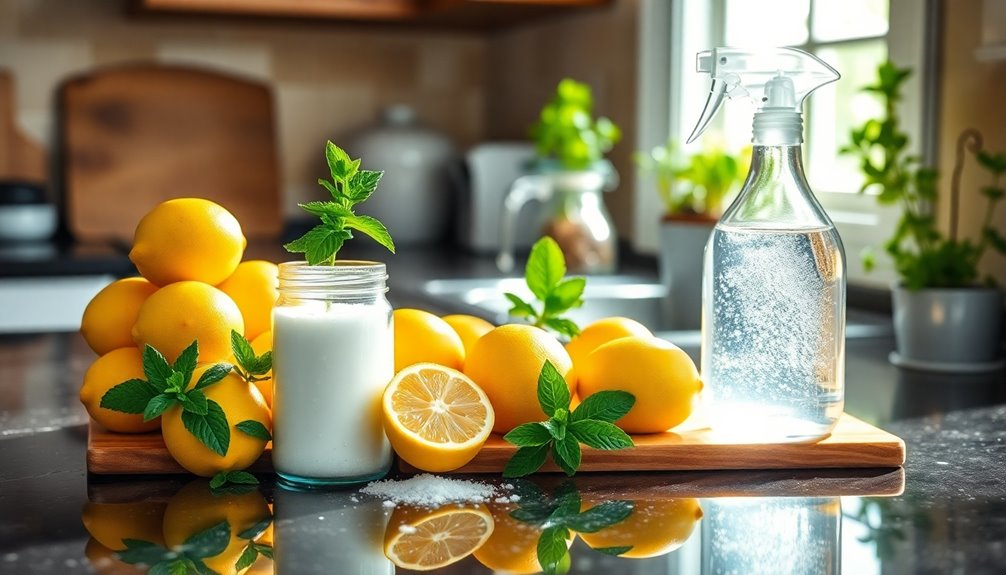
When it comes to homemade kitchen cleaners, a few key ingredients stand out.
Vinegar serves as a powerful natural disinfectant, while baking soda acts as a gentle abrasive.
Together, these ingredients can tackle tough stains and odors without harsh chemicals. Additionally, white vinegar contains acetic acid, which enhances its antimicrobial properties for more effective cleaning.
Vinegar: Natural Disinfectant Power
Vinegar stands out as a powerful natural disinfectant, making it an ideal ingredient for homemade kitchen cleaners. Its acidity effectively kills bacteria and viruses, ensuring your kitchen stays safe and sanitary.
You’ll find vinegar uses extend beyond just cleaning; it also neutralizes odors and cuts through grease, making your tasks easier. The vinegar benefits are numerous: it’s non-toxic, affordable, and environmentally friendly.
Simply mix equal parts vinegar and water in a spray bottle for a quick, effective cleaner. You can also add essential oils for a pleasant scent.
Baking Soda: Gentle Abrasive Agent
Baking soda is a versatile powerhouse in your kitchen cleaning arsenal. Its gentle abrasive properties make it perfect for scrubbing surfaces without scratching them. You’ll love the baking soda benefits, like its ability to deodorize and remove tough stains.
For effective baking soda applications, sprinkle it on countertops or sinks, then scrub with a damp cloth. You can also create a paste with water for stubborn grime.
Need to freshen your refrigerator? Place an open box of baking soda inside to neutralize odors.
When combined with vinegar, baking soda produces a foaming reaction that tackles grease and grime. Embrace this eco-friendly alternative for a cleaner kitchen without harsh chemicals!
How to Make a Baking Soda Cleaning Paste
Creating a baking soda cleaning paste is a simple and effective way to tackle stubborn grime in your kitchen. This versatile paste combines the abrasive properties of baking soda with water to help you scrub away dirt easily.
Creating a baking soda cleaning paste is an easy and effective solution for tackling tough kitchen grime.
Here’s how to make it:
- Mix Ingredients: Combine 1/2 cup of baking soda with a few tablespoons of water in a bowl until you achieve a thick paste.
- Adjust Consistency: If it’s too thick, add more water; if it’s too runny, sprinkle in more baking soda.
- Apply and Scrub: Use a sponge or cloth to apply the cleaning paste to the dirty surface. Let it sit for a few minutes before scrubbing and rinsing.
With this simple baking soda cleaning paste, you’ll have a powerful ally against kitchen messes, especially considering that regular cleaning prevents grime buildup and simplifies future cleaning efforts!
Using Vinegar as a Powerful Disinfectant
Vinegar isn’t just a kitchen staple; it’s also a powerful disinfectant thanks to its antimicrobial properties. You can safely use it on various surfaces, making it a versatile option for your cleaning routine. Additionally, vinegar contains 4-6% acetic acid, which is effective against bacteria and odors, ensuring your kitchen remains spotless and germ-free.
Vinegar’s Antimicrobial Properties
While many cleaning agents promise to eliminate germs, vinegar stands out as a natural powerhouse with impressive antimicrobial properties. Its vinegar benefits extend beyond just a pleasant smell; it actively combats bacteria and viruses.
Here’s why you should consider using vinegar in your kitchen:
- Bacterial Reduction: Vinegar can reduce harmful bacteria like E. coli and Salmonella, making your surfaces safer.
- Versatility: You can use it on various surfaces, from countertops to cutting boards, without worrying about harsh chemicals.
- Cost-Effective: It’s an affordable alternative to commercial cleaners, providing strong antimicrobial effectiveness without breaking the bank.
Safe Surface Application Techniques
When you’re ready to tackle kitchen cleaning with vinegar, using the right application techniques guarantees maximum effectiveness.
First, consider the surface types you’re cleaning; not all materials are compatible with vinegar. For instance, it’s safe for countertops but can damage natural stone.
Apply vinegar using a spray bottle or a cloth, confirming even coverage without oversaturating, which helps avoid residue concerns.
Follow a cleaning order, starting from the highest surfaces down to the lowest to prevent dirt from falling onto cleaned areas.
Use gentle cleaning techniques, like wiping in circular motions, to lift grime effectively.
Always test a small area first to verify safe application and maintain the integrity of your surfaces.
Lemon Juice: Nature’s Deodorizer and Stain Remover
Lemon juice offers a powerful, natural solution for tackling odors and stains in your kitchen. With its citrus freshness, it provides numerous lemon benefits that make cleaning a breeze.
Here are three ways you can utilize lemon juice effectively:
- Deodorizing: Squeeze lemon juice into a bowl of water and let it sit to neutralize unpleasant smells from your fridge or garbage disposal.
- Stain Removal: Apply lemon juice directly to stubborn stains on countertops or cutting boards. Let it sit for a few minutes before wiping clean for a fresh finish.
- Disinfecting: Combine lemon juice with vinegar for a natural cleaner that kills bacteria while leaving a pleasant scent. Additionally, using lemon juice promotes healthier indoor air quality, making it a great choice for your home.
Using lemon juice not only keeps your kitchen fresh but also embraces eco-friendly cleaning.
Essential Oils: Adding Freshness and Antimicrobial Properties
Essential oils not only add delightful scents to your kitchen but also offer powerful antimicrobial properties that enhance your cleaning routine. You can easily incorporate essential oil blends into your homemade cleaners for an effective and fragrant solution.
Oils like tea tree, lavender, and eucalyptus are particularly known for their antimicrobial properties, helping to kill germs and bacteria on surfaces. Just a few drops mixed with water or vinegar can transform your cleaning routine, leaving your kitchen not only fresh-smelling but also hygienic. Additionally, using plant-based ingredients in your cleaning solutions promotes a healthier indoor environment.
Experiment with different essential oil blends to find the scents you love while boosting the effectiveness of your cleaning efforts. You’ll enjoy a clean kitchen that’s safe for you and your family.
Castile Soap: A Versatile Cleaning Solution
Castile soap is a fantastic eco-friendly option for your kitchen cleaning needs. Its multi-surface cleaning power makes it perfect for tackling everything from countertops to dishes. Plus, you can easily dilute it to suit your specific cleaning tasks. Additionally, Castile soap is biodegradable and effective for various surfaces, making it a great choice for a sustainable cleaning routine.
Eco-Friendly Ingredients Benefits
When it comes to eco-friendly cleaning solutions, few ingredients shine as brightly as Castile soap. This versatile option not only offers effective cleaning but also provides numerous organic cleaning benefits.
By choosing Castile soap, you’re embracing sustainable ingredient sourcing that positively impacts the environment. Here are three key benefits:
- Biodegradable: Castile soap breaks down naturally, reducing pollution.
- Non-Toxic: It’s safe for your family and pets, making it ideal for kitchen use.
- Multi-Purpose: You can use it for various surfaces, simplifying your cleaning routine.
Switching to Castile soap means you’re making a conscious choice for a cleaner home and a healthier planet.
You’ll feel good knowing you’re using a product that’s as gentle on the Earth as it’s effective.
Multi-Surface Cleaning Power
You’ll be amazed at how Castile soap transforms your cleaning routine with its multi-surface capabilities.
This eco-friendly cleaner boasts impressive multi-surface effectiveness, making it perfect for everything from countertops to floors. You can tackle grease, grime, and even stubborn stains without the harsh chemicals found in traditional cleaners.
Its cleaning versatility allows you to customize solutions for specific tasks, whether you need a gentle wash for delicate surfaces or a stronger mix for tougher jobs.
With just a few drops, you can create a powerful solution that saves you time and money.
Easy Dilution Techniques
Mixing Castile soap for cleaning is a breeze, and you can easily adjust the concentration to suit your needs.
Using the right dilution ratios helps guarantee effectiveness without overwhelming your surfaces. Here are three simple mixing methods:
- General Cleaning: Mix 1 part Castile soap with 10 parts water for everyday surfaces.
- Heavy-Duty Cleaning: For tougher grime, adjust to 1 part soap and 5 parts water to boost cleaning power.
- Dish Soap: For washing dishes, combine 1 tablespoon of Castile soap with 1 gallon of water.
These dilution ratios allow you to tailor your cleaning solution based on the task at hand, making Castile soap a versatile and eco-friendly choice for your kitchen.
Hydrogen Peroxide: A Safe Bleach Alternative
Hydrogen peroxide serves as an effective and safe alternative to bleach for kitchen cleaning, especially when you’re concerned about harsh chemicals. It’s a powerful disinfectant that kills bacteria and viruses without leaving harmful residues. One of the key hydrogen peroxide benefits is its ability to break down into water and oxygen, making it environmentally friendly. When using it, remember to store it in a dark container to maintain its potency, as light can degrade its effectiveness. You’ll also appreciate that it doesn’t produce strong fumes, making your cleaning experience more pleasant. Additionally, using natural cleaning methods can further enhance your kitchen’s cleanliness while promoting sustainability.
How to Clean Your Kitchen Surfaces Safely
When you’re cleaning your kitchen surfaces, it’s important to choose natural cleaning solutions that won’t harm your family or pets. You also need to take into account the materials of your surfaces to guarantee they’re safe for the cleaning products you use. Let’s explore some effective and safe options for keeping your kitchen spotless, including eco-friendly choices that enhance your cleaning routine while reducing waste.
Natural Cleaning Solutions
While many people reach for harsh chemicals to tackle kitchen grime, you can achieve a sparkling clean using natural solutions that are safe for your family and the environment.
Embracing green cleaning promotes toxin-free living and supports sustainable practices. Here are three effective DIY solutions for aromatic cleaning:
- Vinegar and Baking Soda: Mix equal parts to create a natural disinfectant, perfect for cutting boards and countertops.
- Lemon Juice: Use this powerful home remedy to remove stains and leave a fresh scent.
- Essential Oils: Add a few drops to your cleaning solutions for an aromatic touch and extra antibacterial properties.
Safe Surface Materials
Choosing the right materials for your kitchen surfaces is essential for safe and effective cleaning. For instance, stainless steel and granite countertops are durable and resistant to stains, making them easy to maintain.
Wooden surfaces require gentle, natural cleaners to prevent warping. Ceramic tiles and laminate finishes offer versatility, while glass surfaces add a modern touch but need careful handling to avoid scratches.
Marble tops are beautiful but need special care to keep them pristine. When it comes to food prep, opt for plastic cutting boards or quartz surfaces, which are less porous and easier to sanitize.
Tackling Tough Stains With Natural Solutions
Although tough stains can seem intimidating, natural solutions often provide effective results without the harsh chemicals found in bleach cleaners.
Tough stains may seem daunting, but natural solutions can yield impressive results without the harshness of bleach.
When you’re looking for natural stain removal options, consider these eco-friendly alternatives:
- Baking Soda Paste: Mix baking soda with water to form a paste. Apply it to the stain, let it sit for a few minutes, then scrub gently with a cloth.
- White Vinegar: Spray white vinegar directly on the stain, allowing it to penetrate for about 10 minutes. Wipe with a damp cloth for a fresh surface.
- Lemon Juice: The acidity of lemon juice helps break down tough stains. Apply it directly, let it sit, and then rinse with water.
These natural methods are safe and effective for maintaining a clean kitchen.
Eco-Friendly Cleaning Tools for a Sustainable Kitchen
As you endeavor for a sustainable kitchen, incorporating eco-friendly cleaning tools can make a significant difference.
Start by using biodegradable sponges that break down naturally after use. Switch to reusable cleaning cloths to reduce waste while effectively tackling messes. Sustainable scrubbers are perfect for tough spots without harming the environment.
Pair these tools with natural dish soap and plant-based detergents for a powerful, non-toxic clean. Consider eco-friendly mops for your floors, ensuring they’re clean and safe for your family.
For quick clean-ups, opt for compostable wipes that won’t linger in landfills. Finally, use non-toxic floor cleaners to maintain a healthy kitchen environment.
Together, these choices create a cleaner home and a happier planet.
Tips for Maintaining a Clean Kitchen Without Chemicals
Maintaining a clean kitchen without chemicals can be simple and effective when you embrace natural solutions.
Start by focusing on kitchen organization and ensuring everything has a designated spot. This reduces clutter and makes cleaning easier.
Here are three tips to keep your kitchen invigorating using pantry essentials:
- Baking Soda: Use it to scrub surfaces and eliminate odors. Just sprinkle, scrub, and rinse!
- Vinegar: This versatile liquid can clean windows, countertops, and even your microwave. Mix equal parts with water for a great cleaner.
- Lemon Juice: It’s a natural disinfectant. Squeeze some onto cutting boards or countertops for a revitalizing clean smell.
With these tips, you’ll enjoy a spotless kitchen without harmful chemicals.
Creating a Cleaning Schedule for Your Kitchen Routine
A well-structured cleaning schedule can transform your kitchen routine, making it more manageable and efficient. Start by determining your cleaning frequency—daily, weekly, and monthly tasks.
Daily, wipe down countertops and sweep the floor to keep things tidy. Weekly, focus on deeper cleaning, like scrubbing appliances and mopping. Monthly, tackle tasks like decluttering pantries or deep-cleaning the fridge.
Next, use task prioritization to identify what needs your immediate attention. For instance, prioritize cleaning areas that get the most use, like the stove and sink.
Conclusion
By choosing natural cleaning alternatives, you’re not just protecting your health but also creating a safe kitchen environment. With simple ingredients like baking soda and vinegar, you can tackle tough stains and keep your space sparkling clean. Remember, it’s a piece of cake to maintain a fresh kitchen without harsh chemicals. So, roll up your sleeves and embrace these eco-friendly solutions for a healthier home. Your kitchen will thank you!