To keep your clothes washer running smoothly, regularly check components like hoses and filters for clogs or wear. Listen for unusual sounds and look out for leaks, which signal maintenance needs. Clean the drum monthly using hot water and natural solutions like vinegar and baking soda to manage odors. Don’t forget to inspect the door seal for mold or damage. By following these tips, you’ll guarantee your washer stays efficient and fresh, and you’ll discover more essential advice ahead.
Understanding Your Washer’s Components
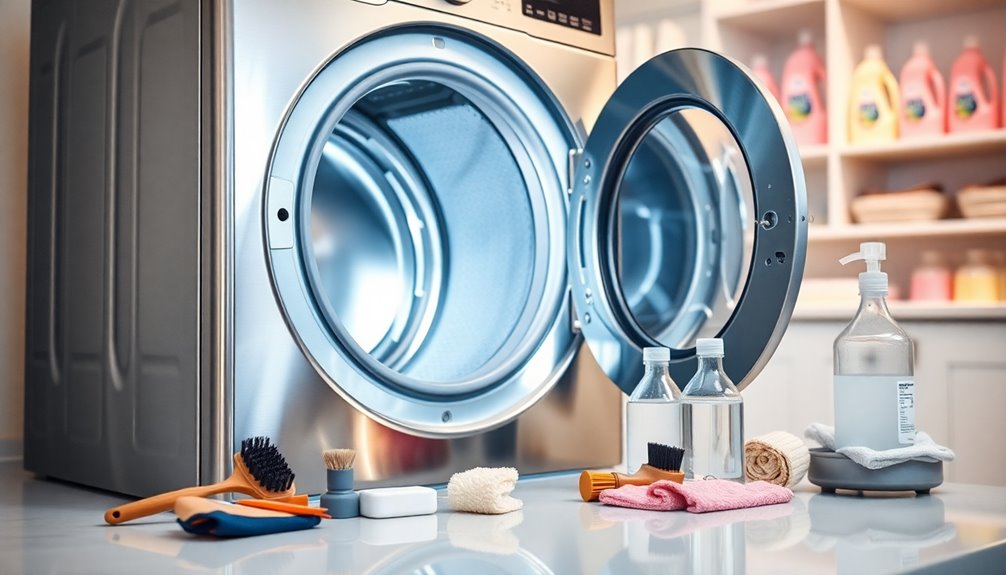
How well do you know your washer’s components? Understanding your washer’s parts is essential for effective maintenance and ideal performance.
Different washer types—like top-loaders and front-loaders—have unique components. For instance, the agitator in a top-loader helps mix your clothes, while the drum in a front-loader spins efficiently to remove water.
The pump is another critical component, responsible for draining water after each cycle. It’s important to know how these component functions contribute to your washer’s efficiency.
The pump is vital for draining water post-cycle, significantly enhancing your washer’s efficiency.
Regular checks on hoses and filters can prevent clogs and leaks, ensuring your machine runs smoothly. By familiarizing yourself with these parts, you’ll be better equipped to handle issues and keep your washer in prime shape for clean clothes.
Signs Your Washer Needs Maintenance
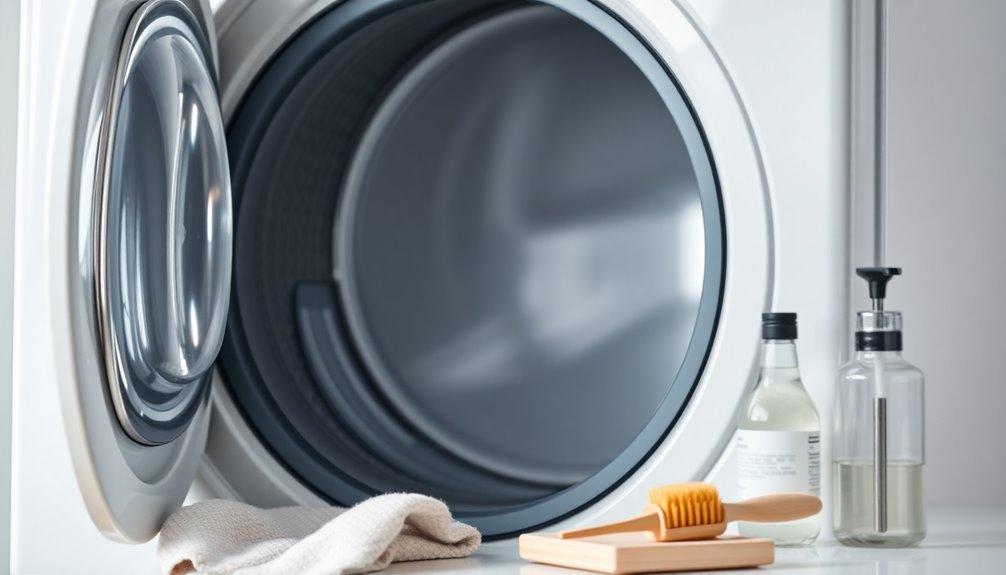
While your washer may seem to be functioning well, certain signs can indicate it needs maintenance. Pay attention to unusual sounds or excessive noise during cycles; these can signal underlying issues.
If you notice water leaks or drainage problems, it’s vital to investigate further. Vibration issues often arise from a load imbalance, which can affect spin speed and cycle performance.
Keep an eye on the control panel for error codes or interruptions in cycles, as these indicate potential malfunctions. Check the door latch to confirm it’s secure and functioning properly.
Additionally, review your maintenance history and inspect the detergent drawer and temperature settings; neglecting these areas can exacerbate problems. Addressing these signs early can save you time and money. Regular maintenance extends vacuum lifespan by preventing wear and tear, highlighting the importance of keeping appliances in good shape.
How to Clean the Drum for Freshness
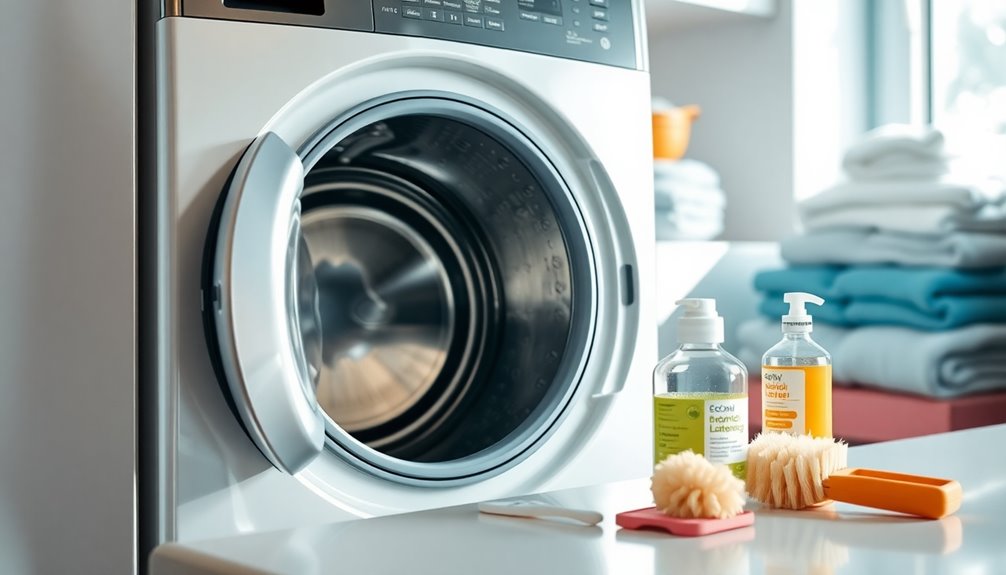
To keep your washer drum fresh, you need a regular cleaning schedule. Using natural cleaning solutions can help prevent odor buildup and keep your clothes smelling great. Additionally, incorporating monthly cleaning cycles into your routine ensures that any detergent residue and mildew are effectively removed. Let’s explore some effective methods to maintain that freshness.
Regular Cleaning Schedule
A regular cleaning schedule is essential for keeping your washer drum fresh and odor-free. Set weekly reminders to tackle this task, ensuring it becomes part of your routine.
Start by running a hot water cycle with no laundry inside; this helps eliminate any lingering odors. Afterward, wipe down the drum with a soft cloth to remove any residue.
Add this task to your maintenance checklist, and don’t forget to check the door seal for trapped debris, as it can harbor unpleasant smells.
Natural Cleaning Solutions
Using natural cleaning solutions can effectively keep your washer drum fresh and free from odors.
Start with a vinegar solution by mixing equal parts vinegar and water. Run a hot cycle with this mixture to eliminate grime.
For a deep clean, sprinkle baking soda directly into the drum and let it sit for a while before running another hot cycle.
You can also create a salt scrub with natural enzymes for tough spots, or use hydrogen peroxide for disinfecting.
Adding a few drops of essential oils or citrus peels during the wash can leave a pleasant scent.
If you prefer a borax alternative, try lemon juice for its natural whitening properties.
These eco-friendly solutions guarantee your washer stays clean without harsh chemicals.
Preventing Odor Buildup
Even with regular natural cleaning solutions, your washer drum can still develop unpleasant odors if not properly maintained. To combat this, start by checking for odor sources like leftover detergent residue or damp fabric.
After each load, leave the door ajar for moisture control; this helps air flow and reduces humidity inside the drum.
Monthly, run a hot water cycle with vinegar or baking soda to eliminate lingering smells. Don’t forget to clean the rubber gasket as it can trap moisture and mold.
Finally, periodically inspect and clean the drain filter to guarantee no buildup contributes to odors. By staying proactive, you’ll keep your washer fresh and ready for your next load!
The Importance of Cleaning the Filter
Cleaning your washer’s filter is essential for keeping it running smoothly. It helps prevent clogs and buildup, which can enhance efficiency and extend your appliance’s lifespan. Regular cleaning of the filter can also help avoid excess buildup that leads to odors and decreased performance.
Preventing Clogs And Buildup
While it might seem like an afterthought, regularly cleaning your washer’s filter is essential for preventing clogs and buildup. Over time, lint, dirt, and detergent residue accumulate, leading to potential blockages that can disrupt your washer’s performance.
By prioritizing this simple task, you guarantee effective clog prevention and promote buildup reduction.
Start by checking the filter monthly, removing any debris, and rinsing it under warm water. This quick maintenance step not only extends the life of your machine but also helps maintain its efficiency.
Enhancing Washer Efficiency
Many people overlook the importance of a clean filter, but it plays an essential role in enhancing your washer’s efficiency. A clogged filter can disrupt load balancing, making your machine work harder than necessary.
When your washer struggles to maintain balance, it consumes more energy, leading to higher utility bills. Regularly cleaning the filter guarantees that water flows freely, optimizing performance and promoting energy savings.
You’ll notice that your clothes come out cleaner and the washer operates more smoothly. Plus, a well-maintained filter reduces strain on the appliance, which is vital for its overall function.
Extending Appliance Lifespan
Neglecting to clean your washer’s filter can greatly shorten its lifespan.
Regular maintenance is a key preventative measure that guarantees appliance longevity.
Here’s how you can easily keep your filter in check:
- Check Monthly: Make it a habit to inspect your filter at least once a month.
- Rinse It Out: Remove any lint or debris by rinsing the filter under warm water.
- Inspect for Damage: Look for cracks or wear; replace it if needed.
- Use a Soft Brush: Gently brush off stubborn particles to prevent buildup.
Regularly Inspecting Hoses and Connections
To keep your washing machine running smoothly, regularly inspecting hoses and connections is essential.
Start by checking the hoses for any signs of wear, such as cracks or bulges. These issues can lead to leaks, which may cause water damage to your home.
Inspect hoses for cracks or bulges, as these can lead to leaks and potential water damage in your home.
Tighten any loose connections to prevent connection leaks that can waste water and affect performance.
It’s a good idea to replace hoses every five years, even if they appear fine, as they can weaken over time.
Don’t forget to check the connections at both the machine and the water supply. Regular inspection is vital; studies show 75% of sponges contain coliform bacteria that can affect overall hygiene in your home.
Checking and Maintaining the Door Seal
Your washer’s door seal plays an essential role in preventing leaks, so it’s important to check it regularly for any signs of damage.
Make it a habit to clean the seal, removing any lint or debris that can accumulate over time. Regularly inspecting the seal can help prevent mold and mildew growth, which can lead to unpleasant odors.
This simple maintenance can help extend the life of your appliance and keep your laundry area dry.
Inspect for Damage
Inspecting the door seal of your washer is essential for maintaining its efficiency. A damaged seal can lead to leaks and hinder performance. Regular checks can save you from costly repairs later.
Here’s how to inspect for damage effectively:
- Look for Cracks: Examine the seal for any visible cracks or tears.
- Check for Mold: Inspect for mold or mildew buildup, which can compromise the seal’s integrity.
- Ensure Proper Fit: Make sure the seal sits snugly against the door during a drum inspection.
- Hose Assessment: Examine the hoses connected to the washer; any wear could impact the seal’s functionality.
Clean Regularly
While cleaning your washer, don’t overlook the door seal—it plays an essential role in preventing leaks and maintaining efficiency.
Regularly check for dirt and mold buildup around the seal, as this can impact washer performance. Wipe it down with a damp cloth and a mild detergent to keep it fresh.
Some maintenance myths suggest that you don’t need to clean the seal, but neglecting it can lead to unpleasant odors and issues down the line.
Make it a habit to inspect the seal every month. A little attention goes a long way in ensuring your washer operates smoothly.
Why Should You Leave the Door Open After Use?
Leaving the door open after using your clothes washer isn’t just a good habit; it’s essential for maintaining its health. This simple action provides door ventilation, promoting moisture reduction and preventing mold growth.
Here’s why you should make it a routine:
- Prevents Odors: Stale smells develop in damp environments.
- Reduces Mold Risk: Excess moisture encourages mold and mildew, which can damage your washer.
- Extends Washer Life: Proper airflow helps maintain internal components, enhancing durability.
- Improves Efficiency: A clean, dry washer operates better, saving you time and energy. Additionally, regularly cleaning the washer drum can help prevent lingering odors, ensuring a fresher laundry experience.
Managing Detergent Residue and Buildup
You can prevent issues by measuring your detergent properly, cleaning your machine regularly, and opting for high-efficiency products. Additionally, utilizing the Self Clean feature can help eliminate mold and mildew without the need for detergent.
Let’s explore how these simple steps can make a big difference.
Proper Detergent Measurement
Using the right amount of detergent is essential for keeping your clothes washer running efficiently. Too much detergent can lead to residue buildup, while too little mightn’t clean your clothes effectively.
Here are some tips to help you measure detergent correctly:
- Know Your Detergent Types: Different detergents have varying concentrations. Liquid, powder, and pods require different amounts.
- Use Measuring Tools: Always use the cap or scoop that comes with your detergent for accurate measurements.
- Follow Manufacturer Guidelines: Check the bottle for recommended amounts based on load size.
- Adjust for Hard Water: If you have hard water, you may need to use a bit more detergent for effective cleaning.
Regular Machine Cleaning
To keep your clothes washer running smoothly, regular machine cleaning is essential, especially to prevent detergent residue and buildup.
Different detergent types can leave varying amounts of residue, so it’s important to choose the right one for your machine.
To tackle buildup, run a hot cycle using an empty washer, setting the water temperature to the highest setting. This helps dissolve any lingering detergent. You can also add a cup of white vinegar or baking soda to enhance the cleaning process.
After the cycle, wipe down the drum, door, and seals to remove any remaining residue.
Regularly checking and cleaning the detergent dispenser will further help maintain your washer’s performance and efficiency.
Stay proactive, and your washer will thank you!
Use High-Efficiency Products
Choosing high-efficiency (HE) products can drastically reduce detergent residue and buildup in your washer. By opting for energy-efficient detergents, you not only save water and energy but also keep your machine running smoothly.
Here are some tips to contemplate:
- Select HE Detergents: Always use detergents labeled as HE to prevent excess suds.
- Opt for Biodegradable Options: These are gentler on your machine and the environment.
- Measure Correctly: Use the recommended amount of detergent for each load size to avoid buildup.
- Avoid Fabric Softeners: They can create residue that clogs your washer.
Scheduling Routine Maintenance Checks
While you might be tempted to overlook routine maintenance, scheduling regular checks for your clothes washer is essential for keeping it in top shape.
Start by determining a maintenance frequency that works for you—aim for at least once every three months. Create a simple checklist to remind yourself of key tasks, like inspecting hoses, cleaning the filter, and checking for leaks. Additionally, consider implementing a Master Cleaning Schedule to keep track of your washer’s maintenance and ensure all tasks are completed on time.
You can set calendar reminders on your phone or use a physical planner to stay on track. These small efforts can prevent larger issues down the road and extend your washer’s lifespan.
Seasonal Tips for Washer Care
As seasons change, it’s important to adjust your washer care routine to keep it running smoothly.
Weather considerations can impact your machine, so make these seasonal adjustments:
- Spring: Check hoses for wear and replace if needed. Clear out any debris from the drain pump.
- Summer: Use the quick wash cycle for lighter loads to save energy and reduce humidity in the laundry room.
- Fall: Clean the lint filter and dryer vent if you have a combo unit, as dust can accumulate.
- Winter: Insulate your washer if it’s in a cold area to prevent freezing, and run a hot cycle occasionally to keep things fresh. Regularly clean the rubber door gasket to prevent moisture buildup and ensure proper sealing.
Following these tips will help guarantee your washer stays in top shape year-round!
What to Do When Your Washer Smells?
If you notice an unpleasant smell coming from your washer, it’s usually a sign that mold or mildew has taken hold. These washer odors often result from damp environments where bacterial growth thrives.
To tackle this issue, start by running an empty hot cycle with white vinegar or baking soda to help eliminate the smell.
Afterward, wipe down the drum and door seals with a mixture of water and vinegar to remove any residue. Make sure to leave the door open after each wash to allow airflow and prevent moisture buildup.
Regularly check and clean the detergent drawer, as it can also harbor bacteria. Following these steps will help keep your washer fresh and odor-free.
Troubleshooting Common Washer Issues
Addressing unpleasant odors in your washer is just one aspect of maintaining its performance. You might encounter other common issues, like strange noises and cycle duration problems. Here’s how to troubleshoot:
- Washer Noise Troubleshooting: If your washer’s making loud noises, check for loose items in the drum or verify it’s leveled properly.
- Unbalanced Loads: Uneven loads can cause excessive shaking. Redistribute clothes for a smoother cycle.
- Cycle Duration Issues: If cycles take too long, inspect the drain hose for clogs and confirm the water supply is steady.
- Check Filters: Dirty filters can lead to inefficient washing and longer cycles. Clean them regularly for peak performance.
Upgrading Your Washer: When Is It Time?
Knowing when to upgrade your washer can save you time and money in the long run. If your washer’s over 10 years old, it mightn’t be as efficient as newer models.
Look for signs like excessive noise, leaks, or inconsistent washing performance—these can indicate it’s time for a change. Additionally, if your energy bills are climbing, consider washer upgrades that enhance energy efficiency.
New machines often use less water and electricity, leading to significant savings over time. If you find yourself constantly repairing your old washer, it’s probably more cost-effective to invest in a reliable, energy-efficient model.
Upgrading now can simplify your laundry routine and provide peace of mind for years to come.
Eco-Friendly Practices for Washer Maintenance
Upgrading your washer can set the stage for a more sustainable laundry routine. By adopting eco-friendly practices, you can enhance energy efficiency and reduce your environmental impact.
Upgrading your washer paves the way for a greener laundry routine, boosting energy efficiency and minimizing environmental impact.
Here are some simple tips to get you started:
- Use Sustainable Detergents: Opt for biodegradable and non-toxic detergents that break down naturally.
- Wash in Cold Water: Most stains come out just as well in cold water, saving energy.
- Full Loads Only: Running full loads maximizes water and energy use, minimizing waste.
- Regular Maintenance: Clean your washer and check hoses for leaks to maintain efficiency.
Incorporating these practices not only benefits the environment but also extends your washer’s lifespan.
Enjoy cleaner clothes and a greener planet!
Conclusion
By following these simple maintenance tips, you can keep your washer in top shape and your clothes smelling fresh. Imagine stepping into your laundry room and being greeted by a clean, odor-free washer—doesn’t that sound great? Regular upkeep not only extends your machine’s life but also enhances its efficiency. So, take a moment to inspect, clean, and care for your washer; it’ll pay off in the long run with every load you do.