A cleaning schedule can transform your home into a more organized and stress-free space. By breaking tasks into daily, weekly, and monthly chores, you’ll stay motivated and manage your time better. Involving family members makes it more enjoyable and efficient. Plus, regular evaluations and adjustments keep your routine effective. With just a few essential tools and strategies, you’re on your way to a cleaner home. Discover tips for creating a personalized schedule that fits your lifestyle!
Understanding the Benefits of a Cleaning Schedule
When you create a cleaning schedule, you’re not just organizing tasks; you’re setting yourself up for a more manageable and stress-free environment. This structure boosts your cleaning motivation, making it easier to maintain consistency.
By prioritizing tasks, you enhance your time management skills, ensuring essential chores aren’t overlooked. Regular habits form through this routine, leading to effective home maintenance and long-term cleanliness. You’ll notice a significant reduction in stress, as a tidy space fosters a clearer mind. Plus, involving family members can make cleaning more enjoyable and collaborative. Additionally, focusing on high-traffic areas first ensures that your cleaning efforts yield the most noticeable results.
How to Tailor a Cleaning Schedule to Your Lifestyle
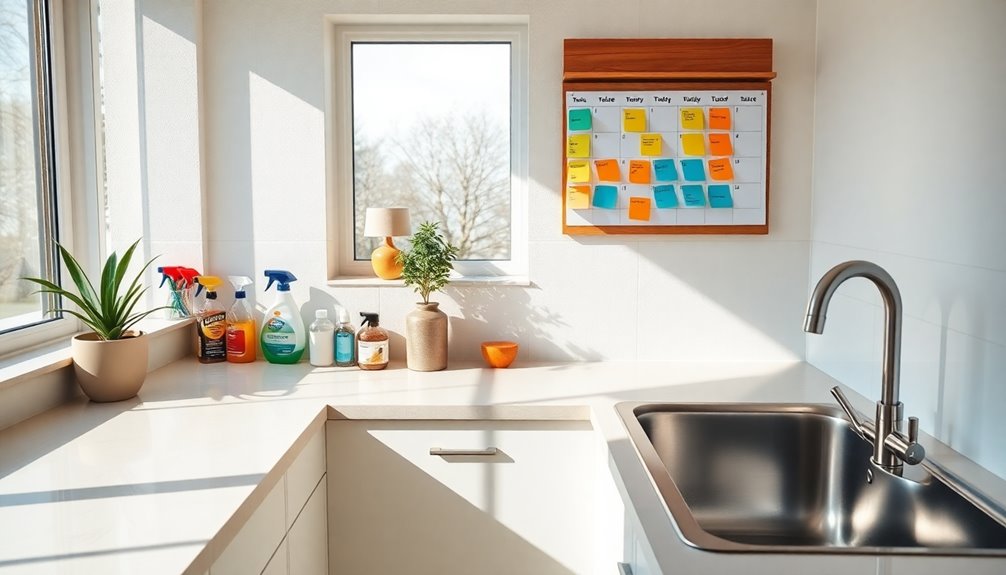
To create a cleaning schedule that truly fits your lifestyle, start by evaluating your daily routine and identifying your peak productivity times.
Consider your family dynamics and personal preferences when planning your customized cleaning tasks.
Determine the cleaning frequency that aligns with your energy levels and available time, ensuring it’s manageable.
Use task prioritization to focus on high-impact areas first, making the most of your time management.
Incorporate motivation strategies, like rewarding yourself after completing tasks, to keep you engaged.
Set realistic expectations—don’t aim for perfection.
Remember, a cleaning schedule should enhance your lifestyle compatibility, making your home a comfortable haven rather than a chore.
Adjust as needed to maintain balance and satisfaction in your daily life. Additionally, regular reviews of your schedule can help ensure tasks remain relevant and manageable, reinforcing cleaning habits.
Daily Cleaning Tasks: What Needs to Be Done?

Here are some essential daily tasks to prioritize:
- Daily decluttering: Spend 10 minutes tidying up shared spaces.
- Wipe down surfaces: A quick clean can prevent buildup, saving you time later.
- Involve the family: Assign small tasks to everyone for shared responsibility and teamwork.
- Utilize cleaning shortcuts: Invest in tools that enhance efficiency, making your routine flexible. Implementing a systematic approach can help ensure that no area is overlooked.
Weekly Cleaning Tasks: Creating a Manageable Routine
Daily cleaning tasks lay the groundwork for a tidy home, but a weekly routine takes it a step further. To boost cleaning frequency, set specific days for tasks like vacuuming, mopping, or dusting.
Delegate responsibilities to family members to foster involvement and keep everyone engaged. This not only enhances time management but also builds routine consistency.
Use organization tips to create a simple checklist, making it easy to track progress and stay motivated. Consider incorporating cleaning rewards for completing tasks, which can transform cleaning into a more enjoyable experience.
Ultimately, this structured approach promotes habit formation, leading to stress reduction and a more organized living space. With a manageable routine, you’ll find cleaning becomes less intimidating. Additionally, involving the whole family in the cleaning process encourages teamwork and accountability, making it easier to maintain a clean home.
Monthly Cleaning Tasks: Keeping Your Home Fresh
While daily and weekly tasks keep your home tidy, monthly cleaning is essential for maintaining a fresh environment. By tackling these deeper cleaning tasks, you’ll boost your cleaning motivation and create a more organized space.
Here are four key monthly tasks to contemplate:
- Deep clean carpets and upholstery – Use eco-friendly products to refresh your fabrics.
- Seasonal decluttering – Sort through items you no longer need and donate them.
- Chore rotation with family – Get everyone involved for a quicker, more enjoyable process.
- Implement maintenance tips – Use cleaning hacks to streamline your efforts and improve time management.
These strategies not only keep your home fresh but also foster a sense of teamwork and accomplishment.
Seasonal Cleaning: When and What to Focus On?
When should you tackle seasonal cleaning to keep your home in top shape? Start with spring cleaning. This is your chance to deep clean every nook and cranny after winter. Focus on windows, carpets, and outdoor spaces.
Start your seasonal cleaning with spring—a perfect time to deep clean windows, carpets, and outdoor spaces after winter.
As summer rolls in, it’s time for a summer refresh; think about reorganizing your patio and tackling dusty areas that might’ve been overlooked.
Come fall, prioritize fall declutter—sort through clothes and items you no longer need before the holiday rush. Incorporate a quick daily cleaning routine to maintain high-traffic areas during this busy season.
Finally, embrace winter organization by setting up systems for things like holiday decorations and seasonal clothing.
Each season offers a unique opportunity to maintain your home’s cleanliness and functionality, making it a more enjoyable space year-round.
The Importance of Decluttering: A Step-by-Step Approach
As you wrap up your seasonal cleaning, consider the benefits of decluttering. Adopting a declutter mindset can transform your space and life.
Here’s a step-by-step approach to get you started:
- Identify emotional attachments: Recognize items holding you back and assess their true value.
- Use sorting techniques: Categorize belongings into keep, donate, and discard piles to simplify decision-making.
- Explore donation options: Share usable items with others, contributing to a sense of community.
- Implement organizing strategies: Apply minimalism principles for effective space optimization and a clearer environment.
Additionally, incorporating seasonal cleaning tasks into your routine can further enhance your decluttering efforts and maintain a fresh living space.
Incorporating Family Members Into the Cleaning Schedule
Involving family members in the cleaning schedule is essential for creating a shared responsibility and fostering teamwork at home.
Start by identifying family roles and assigning cleaning responsibilities that match each person’s age appropriateness. Implement chore rotation to keep things fresh and engaging.
Hold regular family meetings to discuss task agreements and guarantee everyone understands their duties. Use motivation strategies like reward systems to encourage participation and make cleaning more enjoyable.
Pair up accountability partners to support each other in completing tasks. Finally, utilize communication tips to keep discussions open and positive, ensuring everyone feels valued and heard. This collaborative approach not only lightens your load but also strengthens family bonds, while fostering teamwork among family members encourages a more manageable cleaning routine.
Tools and Supplies You Need for Effective Cleaning
To keep your cleaning routine efficient, you need the right tools and supplies.
Gathering essential cleaning tools and must-have supplies will make your tasks quicker and more effective. Investing in quality, especially eco-friendly options, guarantees a safer living environment and contributes to a sustainable and healthy household.
Let’s explore what you should have on hand to tackle any mess!
Essential Cleaning Tools
Having the right cleaning tools can make all the difference in your cleaning routine. With the right supplies, you’ll not only save time but also enjoy a more effective clean.
Here are four essential tools you shouldn’t overlook:
- Multi-Purpose Solutions: These eco-friendly products tackle various surfaces, simplifying your routine.
- Surface-Specific Cleaners: For those stubborn spots, these time-saving tools guarantee effectiveness without harm.
- Ergonomic Designs: Look for cleaning gadgets that reduce strain, making your tasks easier.
- Storage Containers: Keep your organization essentials in check and your cleaning hacks handy.
Investing in these tools will transform your cleaning experience, making it efficient and enjoyable!
Must-Have Cleaning Supplies
When it comes to effective cleaning, having the right supplies on hand is essential. Start with versatile cleaning tools like microfiber cloths and sponges.
Opt for eco-friendly supplies that are safe for your family and the planet. Multi-purpose cleaners can save you time and money, so stock up on those.
Don’t forget your organizing essentials, like caddies and baskets, to keep everything tidy. For budget-friendly options, consider DIY cleaning solutions using common household items.
Seasonal supplies, like window cleaners and outdoor tools, should also be on your list. Finally, invest in safety equipment, such as gloves and masks, to protect yourself while cleaning.
With these must-have supplies, you’ll tackle any mess with ease.
Tips for Staying Motivated With Your Cleaning Schedule
Staying motivated with your cleaning schedule can feel challenging, especially when distractions abound. To keep your spirits high, try these tips:
- Set clear goals: Break your tasks into manageable sections with specific deadlines.
- Create a cleaning playlist: Upbeat music can make the work feel lighter and more enjoyable.
- Establish a reward system: Treat yourself after completing tasks, reinforcing positive behavior with rewards.
- Find an accountability partner: Share your goals with a friend to boost motivation and commitment.
Incorporate motivational quotes and visual reminders to stay inspired. Use progress tracking to celebrate achievements and embrace cleaning challenges. Additionally, consider integrating daily cleaning tasks into your routine to foster consistency and maintain a tidy environment.
With effective time management and goal setting, you’ll find cleaning isn’t as intimidating as it seems!
How to Handle Unexpected Messes and Last-Minute Cleaning
Unexpected messes can throw off your entire cleaning routine, but you can tackle them with a few quick strategies. Keep essential supplies handy and focus on high-traffic areas first to make the biggest impact. Additionally, incorporating non-toxic cleaners into your quick cleaning arsenal ensures a safe and effective approach to maintaining hygiene. Let’s explore some efficient clean-up tips that’ll help you manage those last-minute situations.
Quick Clean-Up Tips
Even if you’ve prepared for every scenario, messes can still catch you off guard. When that happens, don’t panic!
Here are some quick clean-up hacks to help you get back on track with efficient tidying techniques:
- Grab a laundry basket: Quickly collect items scattered around the room.
- Use multipurpose wipes: Wipe down surfaces in seconds, leaving everything fresh.
- Set a timer for 10 minutes: Challenge yourself to tidy up as much as possible before it goes off.
- Declutter as you go: Toss unwanted items in a designated box, making future clean-ups easier.
With these tips, you’ll tackle those unexpected messes like a pro and keep your space looking its best, no matter the situation!
Essential Supplies Checklist
When you’re caught off guard by a mess, having the right supplies on hand makes all the difference. Start with a basic checklist: all-purpose cleaner, microfiber cloths, a broom, dustpan, and trash bags. These essentials help you tackle unexpected spills and clutter quickly.
For those last-minute touch-ups, consider adding a vacuum or a lint roller for quick fixes.
To stay organized, use a designated cleaning caddy to keep supplies together, making them easily accessible. Implementing cleaning motivation strategies, like setting a timer for quick clean-ups, can boost your efficiency.
With these essential organizing tips and supplies, you’ll feel prepared for any mess that comes your way, keeping your space tidy and stress-free.
Prioritize High-Traffic Areas
Keeping high-traffic areas clean is key to managing messes effectively. By focusing on these zones, you can make last-minute cleaning a breeze.
Here are four strategic cleaning priorities for your daily hotspots:
- Entryways: First impressions matter; keep this area tidy.
- Kitchens: With constant activity, prioritize quick clean-ups here.
- Living Rooms: A clean space enhances relaxation and comfort.
- Bathrooms: Frequent use means maintaining cleanliness is essential.
Adapting Your Schedule for Special Occasions
As you prepare for special occasions, adjusting your cleaning schedule becomes essential to guarantee your space is welcoming and pristine.
Start by identifying your cleaning priorities; focus on high-traffic areas and surfaces that need deep cleaning. For holiday cleaning or event preparation, create a timeline that spreads out tasks to avoid last-minute chaos.
Allocate specific days for festive organization, making sure you tackle one area at a time. Incorporate time management techniques to balance your schedule effectively, leaving room for any last minute tasks that might pop up.
If guests are coming, confirm your home reflects guest readiness, so you can enjoy the occasion without stress.
Troubleshooting Common Cleaning Schedule Issues
While juggling a cleaning schedule, you might encounter common issues that can throw you off track. Addressing these can help combat cleaning procrastination and improve your time management.
- Overwhelming Tasks: Break down large chores into smaller, manageable tasks to avoid feeling swamped.
- Unexpected Interruptions: Set specific cleaning times and communicate them to others, so they respect your schedule.
- Lack of Motivation: Create a rewarding system for yourself—small treats can boost your spirit!
- Unrealistic Expectations: Assess your time realistically; it’s better to aim for consistent progress than perfection.
How to Evaluate and Adjust Your Cleaning Schedule
To keep your cleaning schedule effective, you’ll want to analyze your current routine.
Look for areas that need improvement and adjust the frequency of tasks as necessary.
This way, you can guarantee your cleaning efforts match your lifestyle and needs.
Analyze Your Current Routine
Evaluating your current cleaning routine is essential if you want to create a more efficient schedule. Start by conducting a time analysis of your current habits. Identify what’s working and what isn’t.
Consider your motivation factors—are you excited to clean, or does it feel like a chore? Recognize routine challenges that might be holding you back, and reflect on your cleaning goals. Focus on your priority areas to guarantee you’re not overlooking important tasks.
Here are four steps to guide you:
- List your current habits and how long they take.
- Identify moments you dread cleaning.
- Note areas that often get neglected.
- Set specific cleaning goals for a more organized home.
Adjusting these can transform your routine!
Identify Areas Needing Improvement
Sometimes, it’s easy to overlook areas in your cleaning routine that need a little extra attention. Start with a routine evaluation to identify cleaning hotspots—those spots that gather mess quickly.
Consider your cleaning frequency for each area and prioritize based on need. Use space evaluation techniques to pinpoint where dirt accumulates most, ensuring you’re addressing the mess effectively.
Think about improvement strategies like adjusting your cleaning techniques or implementing task delegation with family members. This can enhance time management, making your routine more efficient.
Adjust Frequency As Needed
While your initial cleaning schedule might seem effective, it’s essential to regularly assess how well it fits your needs. Life changes, and so should your cleaning routine.
Here’s how to evaluate and adjust your cleaning frequency:
- Assess lifestyle changes: Have you picked up a new hobby or job?
- Prioritize tasks: Focus on areas that need more attention based on household dynamics.
- Consider seasonal adjustments: Some tasks may need more frequent attention during certain times of the year.
- Reflect on personal preferences: What feels overwhelming? Adjusting frequency can create cleaning flexibility.
Celebrating Your Clean Home: Maintaining the Momentum
After you’ve put in the hard work to clean your home, it’s essential to celebrate that achievement to maintain your motivation. Start by rewarding your efforts—treat yourself to a favorite snack or a relaxing evening in your freshly tidied space.
Sharing your achievements with friends or family not only boosts your spirits but also inspires others to embrace simplicity in their lives. Create rituals that reflect your routines, like a weekly “clean home” check-in, where you acknowledge your progress.
Conclusion
So, you’ve crafted the perfect cleaning schedule, and now your home sparkles like a magazine cover—congratulations! Just remember, it’s not about achieving an Instagram-ready sheen; it’s about living in a space that feels good. Embrace the chaos of life, and don’t despair when dust bunnies throw a party in the corner. After all, if your schedule’s too rigid, you might just end up cleaning more than enjoying your home. Balance is key—go ahead, dance with your dust!