To clean hard water stains off stainless steel, mix equal parts vinegar and water in a spray bottle. Spray the solution on the stained area and let it sit for 10 minutes. Gently scrub with a soft cloth. For stubborn stains, sprinkle baking soda before spraying with vinegar. Rinse thoroughly and dry with a microfiber cloth. Regular maintenance and prevention techniques keep your stainless steel looking great. Discover more tips for effective cleaning and stain prevention.
Understanding Hard Water Stains on Stainless Steel
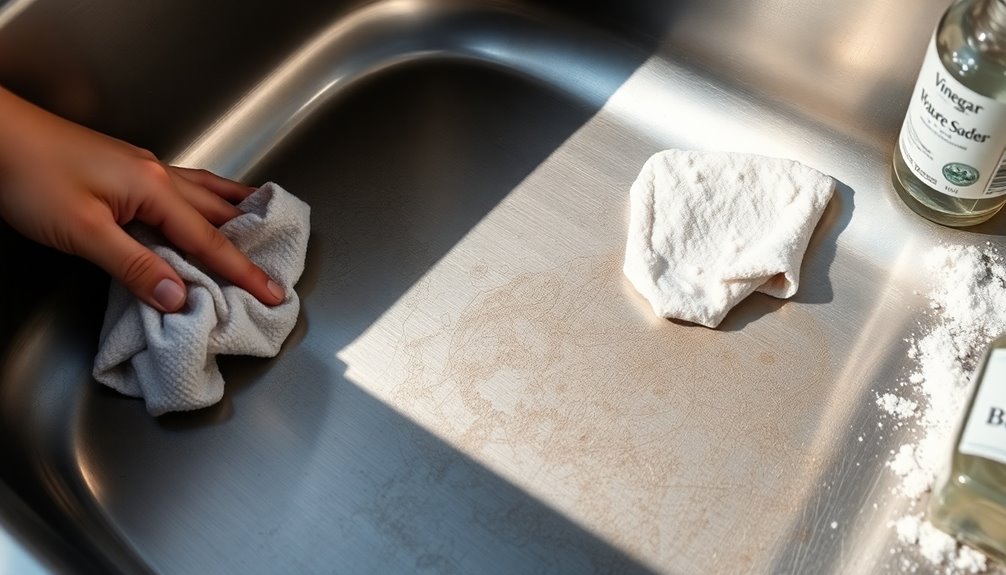
When you notice those unsightly hard water stains on your stainless steel surfaces, it’s essential to understand what’s causing them. Hard water contains high levels of minerals like calcium and magnesium.
When water evaporates, it leaves behind these minerals, which form stubborn stains. Over time, these stains can’t only mar the appearance of your appliances but also impact their performance. If left untreated, the buildup can lead to corrosion or damage, affecting both functionality and longevity. Regular cleaning can help mitigate these issues, ensuring your appliances look good and work efficiently. Additionally, establishing a consistent cleaning routine can significantly reduce the presence of hard water stains over time.
Essential Tools and Supplies for Cleaning
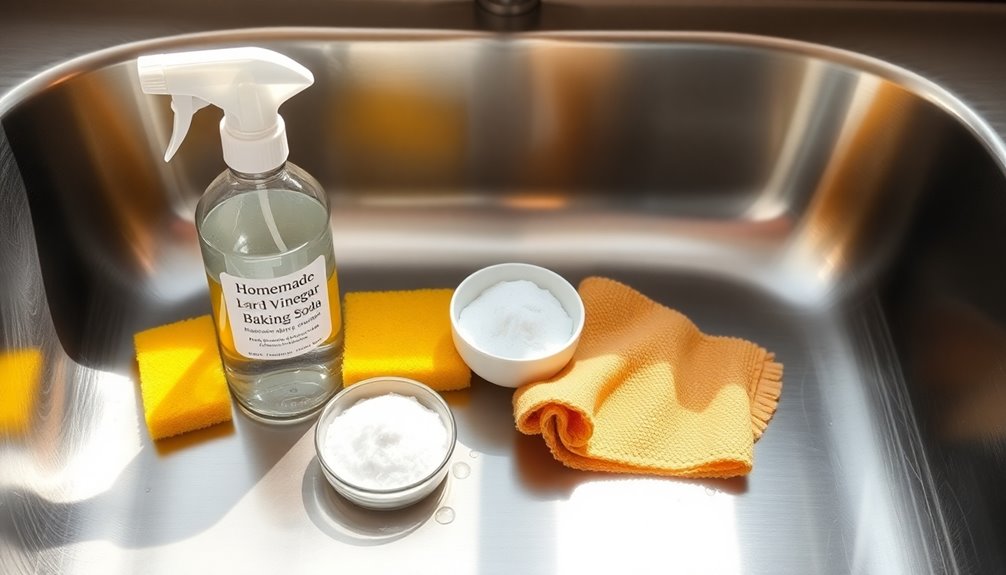
To tackle hard water stains effectively, you’ll need the right tools and cleaning agents.
Start by gathering some recommended cleaning supplies that can break down those stubborn deposits. Regular maintenance using natural cleaners can help manage and prevent stains.
With the right approach, you’ll make quick work of restoring your surfaces.
Cleaning Agents to Use
Although hard water stains can be stubborn, the right cleaning agents make all the difference in tackling these unsightly marks. Start with a vinegar solution, which effectively breaks down mineral deposits.
You can also mix baking soda and lemon juice for an abrasive yet gentle cleaner. For tougher stains, consider a paste made with cream of tartar and water. If you prefer commercial cleaners, choose one specifically designed for stainless steel.
Don’t forget to add a few drops of essential oils to leave a pleasant scent. Use microfiber cloths to apply your cleaning agents, as they won’t scratch the surface.
For stubborn spots, scrubbing pads can help, but be gentle to avoid damaging your stainless steel.
Recommended Cleaning Tools
Cleaning hard water stains requires the right tools to make the job easier and more effective.
Start with high-quality cleaning cloths and microfiber towels, which won’t scratch your stainless steel surfaces. For tougher stains, grab soft sponges or scrub brushes to apply your cleaning solutions.
A mix of vinegar solutions and lemon juice works wonders, while baking soda can help lift stubborn marks. Don’t forget to use water softeners in your cleaning routine to prevent future stains.
These tools and supplies will guarantee you tackle hard water stains efficiently, leaving your stainless steel gleaming and spotless.
With the right arsenal, you’ll find cleaning your appliances a breeze!
Step-by-Step Guide to Removing Hard Water Stains
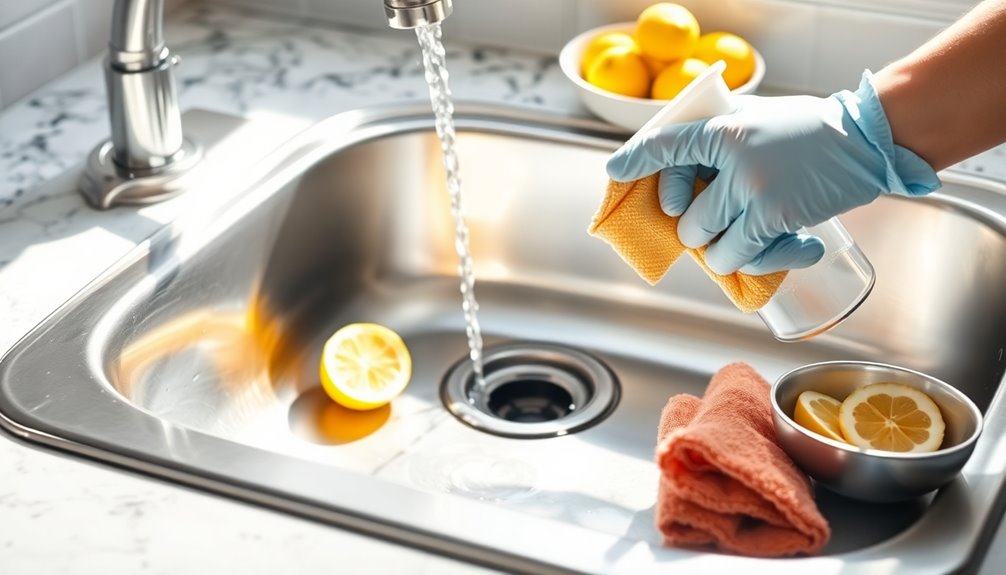
Now that you’ve gathered your cleaning supplies, it’s time to tackle those hard water stains head-on. You’ll learn effective techniques that make the process quick and easy. Regular cleaning and maintenance can minimize mineral buildup, so let’s get started on restoring your surfaces to their original shine!
Essential Cleaning Supplies
To effectively tackle hard water stains, you’ll need a few essential cleaning supplies that pack a punch.
Start with white vinegar; its acidity breaks down mineral deposits. Baking soda is another must-have; it acts as a gentle abrasive for stubborn stains.
Don’t forget microfiber cloths—they’re perfect for buffing without scratching your stainless steel surfaces. A spray bottle will help you apply your cleaning solutions evenly.
Finally, consider a rubber spatula or an old toothbrush for those tricky spots.
Effective Cleaning Techniques
Tackle those hard water stains with a systematic approach that guarantees effective results. Start by mixing equal parts vinegar and water in a spray bottle. Spray the solution onto the stained area and let it sit for about 10 minutes.
Next, grab a soft cloth and gently scrub the stains away. If you prefer eco-friendly solutions, consider using baking soda instead; sprinkle it on the stains, then spray with vinegar for a fizzing reaction that helps lift grime.
For stubborn stains, you can try alternative methods like using lemon juice or a commercial stainless steel cleaner. Rinse the area thoroughly with water, and dry it with a microfiber cloth to prevent new stains from forming.
Enjoy your shiny, clean surfaces!
Natural Remedies vs. Commercial Cleaners: What Works Best?
When it comes to removing hard water stains, do you wonder whether natural remedies or commercial cleaners are more effective?
Natural solutions like vinegar or baking soda can be great for tackling stains without harsh chemicals. They’re often safer for your stainless steel and the environment. However, their cleaning effectiveness might vary depending on the severity of the stains.
On the other hand, commercial cleaners are specifically formulated to break down tough hard water stains quickly. While they can deliver powerful results, they may contain strong chemicals that could harm your stainless steel if used improperly. For optimal results, it’s crucial to apply cleaners in the direction of the grain to avoid scratches.
Ultimately, it depends on your preference for safety versus speed. Try both options and see which works best for your specific needs.
Preventing Future Hard Water Stains on Stainless Steel
Hard water stains can be a persistent issue, but preventing them is often easier than removing them. Start by installing water softeners to reduce mineral buildup in your water supply.
Regular maintenance is key; make it a habit to wipe down your stainless steel surfaces after each use. Consider applying protective coatings that repel water and prevent stains from setting in.
Regular polishing with a microfiber cloth not only enhances shine but also minimizes the chances of stains forming. Additionally, using natural cleaning agents can help maintain a streak-free finish and prolong the life of your appliances.
Finally, always practice proper drying techniques—using a soft towel to dry surfaces immediately after exposure to water can greatly reduce hard water stains.
Tips for Maintaining the Shine of Stainless Steel
To keep your stainless steel surfaces gleaming, regular care is essential. Start with a gentle cleanser specifically designed for stainless steel maintenance. Use a soft cloth or microfiber towel to avoid scratching the surface.
After cleaning, apply a suitable stainless steel polish to enhance shine and protect against fingerprints. When using polishing techniques, always follow the grain of the steel for the best results.
For tougher spots, a mixture of vinegar and water can help, but make sure to rinse thoroughly afterward. Don’t forget to dry the surfaces immediately to prevent water spots. Regular cleaning with a damp microfiber cloth is crucial for maintaining the aesthetic appeal of your appliances.
Troubleshooting: What to Do if Stains Persist?
Even with regular maintenance, stubborn stains on stainless steel can sometimes linger despite your best efforts. If you’ve tried common stain removal techniques and they haven’t worked, consider a few alternatives.
First, mix vinegar and baking soda into a paste; apply it to the stains and let it sit for a few minutes before scrubbing gently. For tougher spots, a commercial stainless steel cleaner might do the trick—just follow the instructions carefully. Additionally, using a vinegar and water mixture as a preventive spray can significantly reduce the chances of new stains forming.
Furthermore, think about long-term solutions to prevent future stains. Installing a water softener can greatly reduce hard water issues, while regular cleaning with a microfiber cloth can help maintain that shine.
Don’t be discouraged—persistent stains can often be conquered with a bit of patience and the right approach.
When to Seek Professional Help for Stubborn Stains?
How can you tell when it’s time to call in the professionals for those stubborn stains? If your hard water stains resist all your cleaning efforts, it might be time for professional services.
Consider a stain assessment if you notice discoloration that doesn’t budge, especially after trying various home remedies. When the stains worsen or spread, don’t hesitate to seek expert help.
Professionals have specialized tools and cleaning solutions designed to tackle tough stains without damaging your stainless steel. Additionally, if you’re unsure about the best cleaning method, a stain assessment by a professional can save you time and frustration. Investing in expert services can ultimately restore your surfaces to their original shine. Remember, using effective disinfectants can help prevent future stains and maintain the appearance of your stainless steel.
Conclusion
Cleaning hard water stains off stainless steel doesn’t have to be an intimidating task. With the right tools and techniques, you can restore that shiny, mirror-like finish in no time. Remember, prevention is key, so keep your surfaces dry and use the right cleaners. If stains persist, don’t hesitate to seek professional help—it’s better than letting your appliances look like they’ve been through a war zone. With a little effort, your stainless steel will shine brighter than a thousand suns!