To clean walls without damaging paint, start by identifying common stains like fingerprints and food marks. Use microfiber cloths or soft sponges with mild cleaners to gently wipe surfaces. Always test any cleaner on a hidden spot first. For stubborn scuff marks, a damp cloth or mild dish soap solution works best. Regular maintenance prevents dirt buildup and keeps your walls looking fresh. Discover more tips and techniques to keep your walls pristine and inviting.
Understanding the Importance of Clean Walls
While you mightn’t think about it often, clean walls greatly impact your home’s overall appearance and atmosphere. Maintaining wall hygiene isn’t just about cleanliness; it enhances your space’s aesthetic appeal.
When your walls are free from dust, fingerprints, and smudges, they reflect light better and create a more inviting environment. You’ll notice how a simple cleaning can transform a room, making it feel more spacious and fresh.
Regularly attending to your walls prevents dirt buildup, which can lead to paint damage over time. By prioritizing clean walls, you not only elevate your home’s look but also contribute to a healthier living environment. Additionally, maintaining cleanliness helps prevent buildup of harmful bacteria, ensuring a safer living space for everyone.
Common Wall Stains and How They Happen
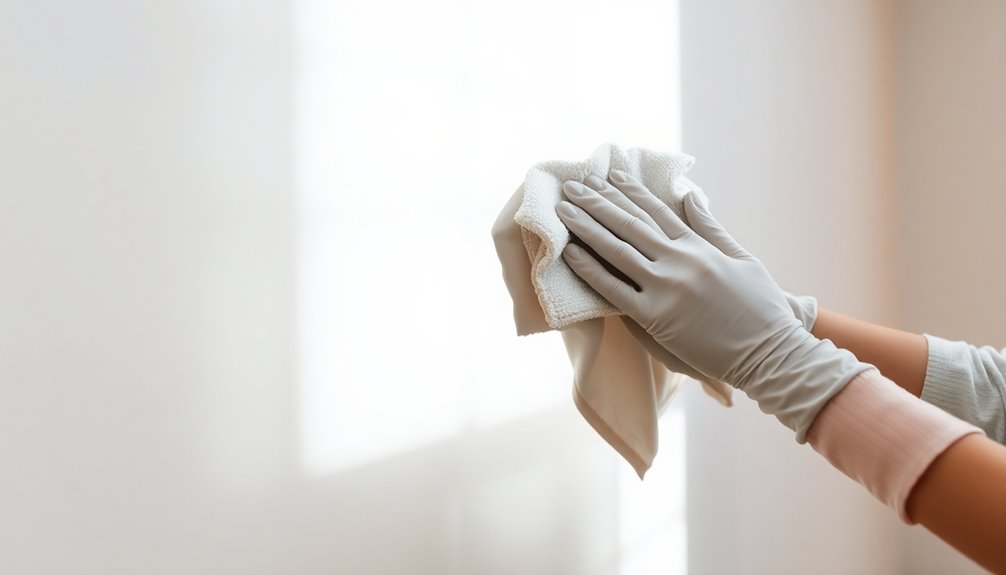
Walls often bear the marks of daily life, and you might be surprised at how easily stains can accumulate. Food stains from meals, grease spots from cooking, and fingerprints from little hands create noticeable blemishes.
Moisture damage often leads to water rings or mildew growth, especially in humid areas. If you have pets, you may find pet marks or dirt buildup around their favorite spots. Kids can add crayon residue, turning your walls into their canvas.
Smoke stains from cooking or tobacco can also darken your walls over time. Each of these stains tells a story, but they can detract from your home’s appearance. Regular cleaning can help keep these common stains at bay and maintain your walls’ beauty. Using the right cleaning tools, such as a soft bristle brush, can enhance the effectiveness of your cleaning routine.
Choosing the Right Cleaning Tools and Supplies
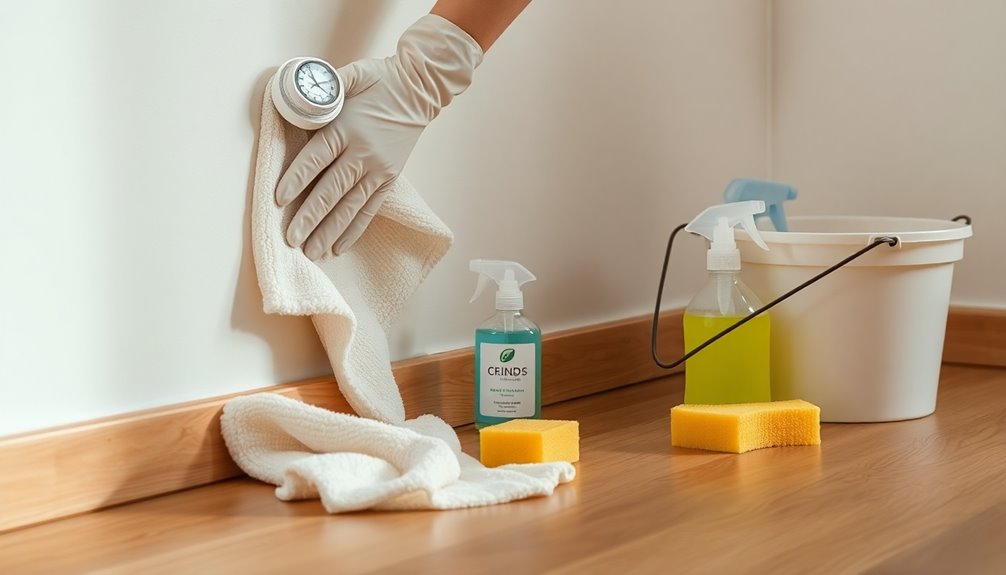
Selecting the right cleaning tools and supplies is essential for effectively maintaining your walls without damaging the paint. Here’s what to take into account:
- Microfiber Cloths: These are gentle on painted surfaces and great for absorbing dirt without scratching.
- Eco-Friendly Cleaners: Look for products that are biodegradable and free from harsh chemicals. They’re safer for both your walls and the environment.
- Soft Sponges: Use sponges designed specifically for delicate surfaces. They offer a balance between scrubbing power and gentleness.
When doing a tools comparison, prioritize materials that won’t cause wear over time. Additionally, consider using reusable cleaning cloths to reduce waste and promote sustainability in your cleaning routine.
How to Test for Paint Durability?
Before you start cleaning, you need to make sure your paint can handle it.
You can do this by visually inspecting the surface, performing a scratch test, and checking its water resistance. Regularly using pH-neutral cleaners can also help maintain the paint’s integrity over time. These simple methods will help you gauge your paint’s durability and avoid any damage.
Visual Inspection Techniques
How can you determine if your paint can withstand a thorough cleaning? Start with a visual inspection. Use these techniques to assess your walls:
- Check for Visual Cues: Look for color variations and surface textures that might indicate wear or damage.
- Light Reflection: Shine a light on the wall to reveal any imperfections. Dull spots may suggest paint degradation.
- Inspection Checklist: With a magnifying glass, closely examine for cracks or peeling. Note any areas needing repair.
Performing a damage assessment through these methods helps gauge your wall condition before cleaning.
This way, you can avoid potential harm and prolong your paint’s life. Always remember, a careful look can save you from costly mistakes!
Scratch Test Method
One effective way to test your paint’s durability is by using the scratch test method. Start by selecting a discreet area on the wall and gently scratch the surface with your fingernail or a coin.
Pay attention to how easily the paint scratches off. If it shows minimal wear, your paint likely has good scratch resistance. However, if the paint flakes or chips away, it may indicate poor paint adhesion.
This quick test helps you gauge whether your paint can withstand everyday wear and tear. Always choose a low-visibility spot to avoid noticeable damage.
Water Resistance Check
After evaluating your paint’s scratch resistance, it’s time to check its water resistance. This step is essential, especially if you’ve used water resistant paints.
Here’s how to perform moisture testing effectively:
- Select a Small Area: Choose an inconspicuous spot on the wall to avoid visible damage.
- Apply Water: Use a few drops of water and let them sit for about 10-15 minutes.
- Inspect: Wipe the area with a soft cloth. If the paint remains intact and the color doesn’t fade, your paint is likely water resistant.
Step-by-Step Guide to Cleaning Flat Paint Walls
Cleaning flat paint walls requires a careful approach to avoid damage.
Start by gathering the right cleaning supplies and always test your method in an inconspicuous spot first. Using gentle techniques will help keep your walls looking fresh without risking any harm. Additionally, it’s important to choose washable paint finishes for high-traffic areas to enhance durability.
Gather Cleaning Supplies Needed
Start by gathering your cleaning supplies to make the process smooth and efficient. You’ll want to guarantee you have everything on hand, especially if you’re opting for eco-friendly options or budget-friendly solutions.
Here’s a quick list to get you started:
- Gentle Cleaning Solution: Look for a mild, non-toxic cleaner or make your own with vinegar and water.
- Soft Cloths or Sponges: Choose non-abrasive materials to avoid damaging the paint.
- Bucket and Water: Keep a clean water source handy for rinsing your cloths or sponges.
Having these supplies ready will help you tackle your flat paint walls without any unnecessary hassle.
You’ll be on your way to refreshed walls in no time!
Test Cleaning Method First
Before diving into cleaning your flat paint walls, it’s vital to test your cleaning method first.
Start by selecting a discreet area, like a corner or behind a piece of furniture, as your test surface. Apply your chosen cleaner with a soft cloth or sponge, gently rubbing in a small spot. Wait a few minutes, then check for any discoloration or damage.
This step is important, especially since flat paint can be more sensitive to harsh chemicals. If all looks good, you can proceed with confidence.
Keep in mind your cleaning frequency; regular maintenance can help minimize the need for deep cleaning, ensuring your walls stay looking fresh without risking damage.
Use Gentle Cleaning Techniques
Gentle techniques are key when tackling flat paint walls to avoid damage while effectively removing dirt and stains. You can maintain your walls’ appearance by following these simple steps:
- Use soft cloths: Start with a clean, dry microfiber cloth to gently wipe away loose dust and debris.
- Apply a gentle cleaner: Mix mild soap with water, dampening another soft cloth. Avoid soaking it to prevent drips.
- Gentle scrubbing: Lightly scrub any stains in a circular motion, taking care not to press too hard.
After cleaning, wipe the wall with a damp cloth to remove any soap residue. Then dry it with a towel. This method keeps your flat paint looking fresh and intact.
Techniques for Cleaning Semi-Gloss and Glossy Walls
Cleaning semi-gloss and glossy walls can be a breeze if you follow the right techniques.
Start by selecting the appropriate cleaning products; look for mild detergents that won’t strip the paint finishes. For most wall textures, a soft sponge or microfiber cloth works best. Dampen the cloth with your cleaning solution, then gently wipe the surface in circular motions.
Select mild detergents and use a soft sponge or microfiber cloth to gently clean your walls in circular motions.
Avoid excessive scrubbing, as that can damage the sheen. Rinse the cloth frequently to prevent dirt from smudging. For stubborn stains, let the cleaner sit for a few minutes before wiping. Remember that regular maintenance can help in keeping your walls looking fresh.
Remember these maintenance tips to keep your walls looking fresh: regular dusting and quick spot cleaning can prevent grime buildup, ensuring your walls stay vibrant and appealing.
Natural Cleaning Solutions for Sensitive Paint Finishes
When dealing with sensitive paint finishes, natural cleaning solutions can be a great alternative to harsh chemical cleaners.
These eco-friendly alternatives are gentle yet effective. Here are three homemade solutions you can try:
- Vinegar and Water: Mix equal parts of white vinegar and water. This solution cuts through grime without damaging your walls.
- Baking Soda Paste: Combine baking soda with a little water to form a paste. It’s perfect for spot cleaning tough stains.
- Olive Oil and Lemon Juice: Mix two parts olive oil with one part lemon juice. This not only cleans but also adds a nice shine. Additionally, using these non-toxic cleaners can help maintain a safe environment for your family.
How to Tackle Stubborn Scuff Marks?
Scuff marks can be a nuisance, but tackling them doesn’t have to be a chore. For effective scuff mark removal, start by using a soft cloth or sponge dampened with warm water. Gently rub the mark, applying light pressure.
If that doesn’t work, try a mild dish soap solution. Mix a few drops with water and use it to scrub the scuff.
Another option is to use a magic eraser; just be cautious, as it can be abrasive. Always test any wall cleaning techniques in a small, inconspicuous area first.
If the mark persists, consider a specialized wall cleaner, ensuring it’s safe for your paint type. Additionally, maintaining proper ventilation in the room can help prevent future marks. With patience, your walls will look as good as new!
Tips for Preventing Future Wall Stains
To keep your walls looking fresh, it’s important to be proactive about preventing stains. Here are three effective tips for your wall care routine:
- Regular Cleaning: Dust your walls monthly with a microfiber cloth to prevent dirt buildup.
- Protective Coatings: Consider applying a washable paint or a protective sealant to resist stains and make future cleaning easier.
- Furniture Placement: Rearrange furniture to avoid scuff marks and guarantee kids have space to play without bumping into walls.
Incorporating these preventive maintenance strategies will help you maintain pristine walls, reducing the need for intensive cleaning later. Additionally, utilizing eco-friendly tools can further enhance your wall care routine.
With consistent care, your walls will stay beautiful and stain-free for years to come.
When to Consider Professional Wall Cleaning Services?
If you’re facing heavy stains or marks that just won’t budge, it might be time to call in the pros. High ceilings and tricky areas can make DIY cleaning a hassle, too. Plus, specialized surfaces often require expert care to avoid damage. Additionally, professional cleaning services can efficiently address tough stains and allergens that may not respond to standard cleaning methods.
Heavy Stains and Marks
- Persistent Stains: If stains have become embedded and resist your cleaning attempts, professionals have the tools and expertise to tackle them effectively.
- Frequent Marks: High-traffic areas may require more frequent cleaning than you can manage alone, making professional services a viable option.
- Stain Prevention Needs: If you want to enhance stain prevention, experts can provide advice on finishes or treatments that protect your walls.
Don’t let heavy stains ruin your space; know when to seek help!
High Ceilings and Areas
Wondering how to tackle those hard-to-reach high ceilings and walls? When it comes to high ceiling maintenance, you might face significant wall cleaning challenges. Dust and cobwebs accumulate in these areas, making DIY cleaning tricky and potentially risky.
If you don’t have the right equipment or skills, you could damage your walls or injure yourself. Consider hiring professional wall cleaning services if you’re uncertain. They’ve got the tools and expertise to clean those high spots safely and effectively.
Plus, they can handle specialized techniques that guarantee your paint stays intact. Don’t hesitate to call in the pros for those intimidating heights; it could save you time and ensure a thorough clean without the hassle!
Specialized Surface Requirements
When your walls have specialized surfaces—like textured finishes, wallpaper, or delicate paint—cleaning them can be tricky.
You might want to contemplate professional wall cleaning services if:
- Texture or Patterns: Specialized cleaning is essential for textured walls to avoid damage.
- Wallpaper Types: Certain wallpapers need specific methods; using the wrong approach can ruin their appearance.
- Paint Compatibility: Not all cleaners suit every paint type. Professionals know what’s safe for your walls.
Ignoring these factors could lead to costly repairs.
The Best Practices for Maintaining Clean Walls
To keep your walls looking fresh and clean, it’s essential to adopt a few best practices.
First, establish a regular cleaning frequency—monthly dusting and biannual deep cleaning can work wonders for wall aesthetics. Use a soft cloth or microfiber duster to gently remove dust and dirt.
For stains, a mild soap solution is usually sufficient, but always test it on a small hidden area first. Avoid abrasive cleaners or scrubbing too hard, as they can damage the paint.
Additionally, consider using washable paint for areas prone to fingerprints or spills.
Keeping your walls clean not only enhances your home’s appearance but also prolongs the life of your paint and improves overall air quality.
Final Thoughts on Keeping Your Walls Pristine
While maintaining pristine walls may seem challenging, it can be easily achieved with a few consistent habits.
By focusing on proper wall maintenance, you can enhance paint longevity and keep your home looking fresh. Here are three key practices to adopt:
- Regular Dusting: Use a microfiber cloth to remove dust and dirt weekly, preventing buildup that can damage paint.
- Spot Cleaning: Address stains immediately with a gentle cleaner to avoid long-term discoloration.
- Periodic Touch-Ups: Keep matching paint handy for quick repairs, ensuring your walls remain flawless.
Conclusion
Keeping your walls clean not only enhances your home’s appearance but can also improve air quality; studies show that clean surfaces can reduce dust and allergens by up to 80%. By regularly maintaining your walls and using the right cleaning techniques, you can protect your paint and create a healthier living environment. Remember, a little effort goes a long way in preserving your walls and ensuring they look their best for years to come.