If you’re looking to clean up your laundry routine, ditching conventional fabric softeners is a smart move. They often contain harsh chemicals that can irritate your skin and harm the environment. Instead, try natural alternatives like vinegar or wool dryer balls, which offer effective softening without the downsides. You can even use citrus peels for a fresh scent. Making the switch not only benefits your health but also supports a more sustainable lifestyle. Discover more about these options!
Why Ditch Conventional Fabric Softeners?
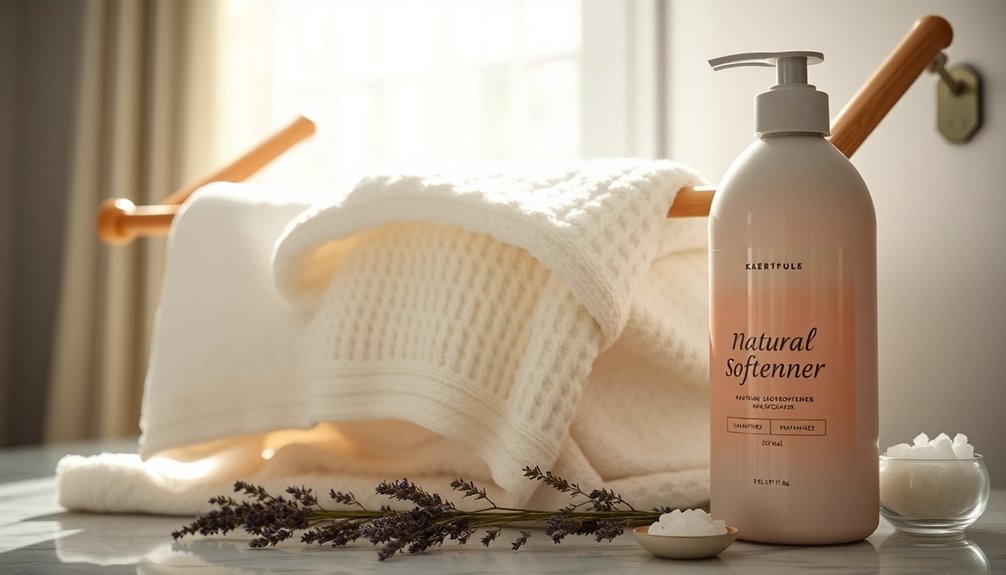
If you’re looking to make your laundry routine healthier, ditching conventional fabric softeners is a great start. Many of these products contain harsh chemicals that can cause skin irritation and exacerbate chemical sensitivity.
Even if you don’t notice immediate effects, long-term exposure could lead to discomfort. Plus, the fragrance overload from synthetic scents can overwhelm your senses and trigger allergies.
You might think these softeners improve product effectiveness, but natural alternatives can be just as effective without the downsides. By switching to options like vinegar or baking soda, you not only reduce your chemical exposure but also support a healthier home environment. Additionally, using natural dryer sheets can enhance softness without harmful additives.
Making this change can greatly enhance your laundry experience and your overall well-being.
The Health Risks of Chemical Softening Agents

Conventional fabric softeners might make your clothes feel soft, but they come with hidden health risks. The chemical exposure from these products can lead to skin irritation, especially for those with sensitive skin.
You may not realize that the fragrances and preservatives used can act as allergy triggers, impacting your household safety. Additionally, these chemicals can contribute to respiratory issues, affecting indoor air quality and potentially harming children’s health. The long-term effects of using these softeners mightn’t be immediately visible, but they can greatly impact your overall wellness. One effective alternative is wool dryer balls, which can help reduce drying time and minimize static cling without harmful chemicals.
Environmental Impact of Traditional Fabric Softeners
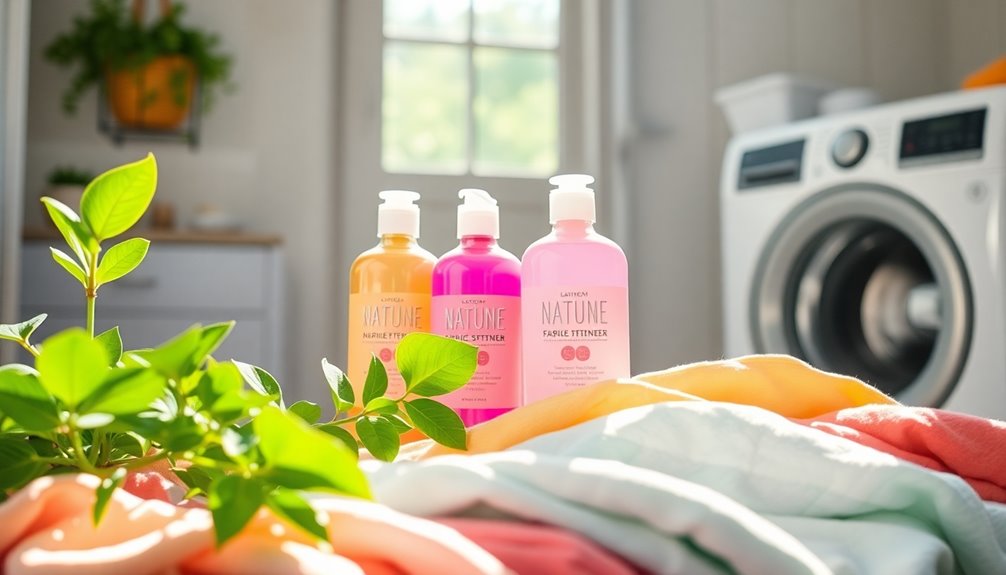
When you use traditional fabric softeners, you’re contributing to harmful chemical emissions that can affect air quality. These products can also pollute waterways, posing risks to aquatic life and ecosystems. Plus, the plastic waste from their packaging adds to the growing environmental crisis. Additionally, opting for eco-friendly cleaning products can significantly reduce your environmental footprint while maintaining effective cleaning standards.
Harmful Chemical Emissions
While you may enjoy the softness and fragrance that traditional fabric softeners provide, their environmental impact is often overlooked. Many of these products release harmful chemical emissions into the air, contributing to indoor pollution.
These chemicals can affect your health and the environment, leading to long-term consequences. By switching to natural fabric softener alternatives, you can greatly reduce these emissions and promote a cleaner atmosphere.
Chemical alternatives, such as vinegar or baking soda, not only soften your laundry but also minimize harmful outputs. Emission reduction isn’t just beneficial for the planet; it creates a healthier home for you and your loved ones.
Making this small change can have a positive ripple effect on both your environment and overall well-being.
Water Pollution Concerns
Using traditional fabric softeners can lead to significant water pollution issues, as many of their synthetic chemicals wash down the drain and end up in our waterways.
These pollutants can harm aquatic life and disrupt ecosystems, making it essential to reflect on your choices. By opting for eco-friendly practices, you can help protect the environment and promote water conservation.
Natural alternatives, like vinegar or baking soda, soften your laundry without the harmful side effects. Not only do these options reduce water pollution, but they also align with sustainable living principles.
Switching to greener solutions means you’re not just benefiting your clothes; you’re contributing to a cleaner, healthier planet for everyone.
Make the change today and enjoy a fresher conscience.
Plastic Waste Contribution
The environmental impact of traditional fabric softeners extends beyond water pollution; plastic waste also plays a significant role.
Many fabric softeners come in plastic bottles that contribute to plastic pollution. When you choose these products, you’re adding to the mountains of plastic waste that often end up in landfills or oceans, harming wildlife and ecosystems.
What Are Natural Alternatives to Fabric Softeners?
If you’re looking to soften your laundry without the chemicals found in commercial fabric softeners, several natural alternatives can do the trick.
One effective option is using wool dryer balls. They help separate your natural fabrics in the dryer, allowing hot air to circulate better, which reduces drying time and softens clothes.
Another technique involves adding baking soda to your wash, which can enhance softness while neutralizing odors.
You might also try a homemade fabric softener made from water and essential oils, providing a pleasant scent without harsh chemicals. Additionally, opting for hypoallergenic formulations can further minimize the risk of skin irritations.
Experimenting with these softening techniques not only benefits your laundry but also promotes a healthier home environment.
Vinegar: The Versatile Fabric Softener Substitute
While many people overlook it, vinegar proves to be a powerful and versatile fabric softener substitute. You can easily add half a cup of white vinegar to your rinse cycle, and it’ll help soften your clothes, reduce static cling, and eliminate odors. One of the biggest vinegar myths is that it leaves a strong smell; in reality, the scent dissipates during drying, leaving your laundry fresh. Additionally, vinegar contains 4-6% acetic acid, which helps break down detergent residues and prevents buildup. Plus, vinegar benefits your washing machine by breaking down detergent residues and preventing buildup. Unlike commercial fabric softeners, vinegar is eco-friendly and safe for sensitive skin.
Baking Soda: Softening and Freshening Power
Baking soda isn’t just for baking; it’s a powerful ally in your laundry routine. It softens fabrics naturally while neutralizing odors, leaving your clothes fresh and clean. Plus, applying it’s super easy, making it a convenient choice for everyone. Additionally, its non-toxic nature ensures safety for homes with pets and children, allowing you to clean without worry.
Natural Softening Properties
When you’re looking for a natural way to soften your laundry, baking soda stands out as an effective option. It works wonders on organic fibers, helping them feel softer against your skin.
By adding baking soda to your wash, you enhance the fabric’s structure, making it more pliable and comfortable. Plus, it boosts the effectiveness of your detergent, ensuring a thorough clean without harsh chemicals.
You can also combine baking soda with botanical extracts for an extra touch of softness and a hint of freshness. These natural ingredients not only improve the texture of your clothes but also maintain their integrity over time.
Odor Neutralization Benefits
As you tackle your laundry, you might be surprised to learn that baking soda not only softens fabrics but also neutralizes odors effectively.
This versatile ingredient employs powerful odor absorption techniques, capturing and eliminating unpleasant smells instead of just masking them. When you add baking soda to your wash, it works alongside your detergent, enhancing its cleaning power and leaving your clothes fresher.
Additionally, you can combine baking soda with essential oils to create natural scent boosters, giving your laundry a pleasant aroma without harmful chemicals.
By incorporating baking soda into your laundry routine, you’ll enjoy softer, fresher-smelling clothes, making your laundry day a more satisfying experience.
Embrace this natural alternative for a cleaner, healthier home!
Easy Application Methods
To make the most of baking soda‘s softening and freshening power, you can easily incorporate it into your laundry routine. Start by using easy mixing techniques—just add a half cup of baking soda to your washing machine during the rinse cycle. This simple step boosts your detergent’s effectiveness while softening fabrics.
For innovative softening hacks, try creating a baking soda solution. Dissolve a quarter cup of baking soda in warm water, then add it to the fabric softener dispenser.
You’ll notice your clothes feel softer and smell fresher without any harsh chemicals. Plus, it’s eco-friendly!
With these methods, you’ll enjoy cleaner laundry that’s gentle on your skin and the environment.
Essential Oils: Adding Fragrance Naturally
If you’re looking for a natural way to add fragrance to your laundry, essential oils can be a game-changer. You can create your own essential oil blends to suit your personal preferences, whether you enjoy floral, citrus, or earthy scents.
Simply add a few drops of your chosen oils to a cotton ball and toss it in the dryer, or mix them into a homemade laundry detergent. This allows for fragrance customization, giving your clothes a fresh scent without harsh chemicals.
Plus, essential oils often have added benefits, like antibacterial properties. Experiment with different combinations to find the perfect aroma that makes doing laundry a more enjoyable experience. You’ll love the results!
How to Use Epsom Salts in Your Laundry?
While adding delightful scents with essential oils enhances your laundry experience, incorporating Epsom salts can elevate it even further.
These natural ingredients provide laundry benefits beyond mere fragrance. To use Epsom salts, simply add about half a cup to your washing machine during the rinse cycle. This method promotes fabric softening, leaving your clothes feeling soft and fresh without harsh chemicals.
If you’re looking for laundry tips, try mixing Epsom salts with your favorite essential oils before adding them to the wash for a customized scent. Not only will your laundry feel softer, but you’ll also enjoy the peace of mind that comes with using natural ingredients. Additionally, using baking soda in your laundry routine can help neutralize stubborn odors.
Embrace Epsom salts for a fresher, more eco-friendly laundry routine!
The Benefits of Wool Dryer Balls
Wool dryer balls are a fantastic eco-friendly alternative to traditional fabric softeners.
Not only do they help reduce drying time, but they also soften your clothes naturally without harmful chemicals.
You’ll love how they keep your laundry fresh while being kind to the environment. Additionally, they are hypoallergenic and safe for sensitive skin, making them ideal for families.
Eco-Friendly Fabric Care
As you seek eco-friendly fabric care solutions, consider the benefits of wool dryer balls. These natural alternatives aren’t only sustainable but also enhance your laundry routines.
Unlike traditional fabric softeners, wool dryer balls are made from 100% natural wool, helping to reduce your environmental footprint. They naturally soften your clothes without harmful chemicals, making them ideal for those using sustainable fabrics.
Plus, they help prevent static cling, keeping your laundry fresh and fluffy. By incorporating wool dryer balls into your washing routine, you’re supporting eco-friendly practices while ensuring your clothes stay soft and comfortable.
Embrace this simple switch and enjoy a greener approach to caring for your wardrobe. Your clothes and the planet will thank you!
Reduce Drying Time
Switching to wool dryer balls not only supports eco-friendly practices but also helps reduce drying time considerably.
These natural alternatives improve your drying techniques by separating your clothes in the dryer, allowing hot air to circulate more efficiently. As a result, you’ll notice your laundry dries faster, saving you time and energy.
Wool dryer balls also help reduce static cling and soften fabrics, enhancing your overall fabric care routine.
They’re a great option if you’re looking to minimize chemical exposure while still achieving fresh, fluffy laundry.
Citrus Peels: A Natural Freshener for Laundry
While many people rely on commercial fabric softeners to freshen laundry, citrus peels offer a natural and eco-friendly alternative. You can easily incorporate citrus peels into your laundry routine for a delightful scent.
Try using citrus infusion techniques by placing dried peels in a muslin bag and tossing it in the dryer. This method not only enhances the fragrance but also helps reduce static. You’ll notice a revitalizing aroma that rivals any store-bought product.
Additionally, citrus peels contain natural oils that can help to soften fabrics gently. With this simple switch, you can enjoy laundry scent enhancement while embracing a more sustainable lifestyle. Regular use of eco-friendly solutions can contribute to a healthier home environment.
It’s a win-win for both you and the environment!
Tips for Transitioning to Natural Softening Methods
If you’re ready to embrace natural softening methods, starting the change can be straightforward and rewarding.
Begin by experimenting with natural drying techniques, like hanging your laundry outdoors. Fresh air and sunlight naturally soften fabrics and eliminate odors.
Next, try adding vinegar to your wash cycle; it acts as a natural fabric softener, helping to break down detergent residues.
You might also consider using wool dryer balls; they reduce drying time and soften clothes without chemicals.
As you adapt, keep track of what works best for your fabrics and preferences.
This way, you’ll create a laundry routine that’s both eco-friendly and effective, leaving your clothes feeling fresh and soft without synthetic additives.
Frequently Asked Questions About Natural Fabric Softeners?
Curious about how natural fabric softeners really work? You’ll find that they use natural ingredients like vinegar, baking soda, or essential oils to soften your clothes without the harsh chemicals found in conventional products.
These alternatives can reduce static cling and leave your laundry smelling fresh.
You might wonder if DIY recipes are effective. Absolutely! Simple mixtures, like combining vinegar with water, can soften fabrics while maintaining their absorbency.
Another popular DIY option is using wool dryer balls, which help separate clothes, allowing hot air to circulate better.
If you’re concerned about allergies or sensitivities, natural fabric softeners are often gentler on the skin.
Conclusion
Switching to natural fabric softeners is like opening a window on a fresh spring day—invigorating and full of promise. By choosing alternatives like vinegar, wool dryer balls, and citrus peels, you’re not just softening your clothes; you’re also nurturing your health and the planet. Embrace these eco-friendly options, and your laundry will feel as light as a feather, leaving a trail of freshness that’s both safe and sustainable. Your clothes—and the Earth—will thank you!