Cleaning your mattress is essential for hygiene and sleep quality. Start by vacuuming it every few months and spot clean stains immediately. Use safe ingredients like baking soda or vinegar for deodorizing and stain removal. Allow your mattress to air dry completely after cleaning. Prevent future stains by using protective covers and maintaining good hygiene practices. With these simple steps, you can maintain a fresh, comfortable sleep environment. Discover more effective cleaning techniques and tips below!
Why Cleaning Your Mattress Matters
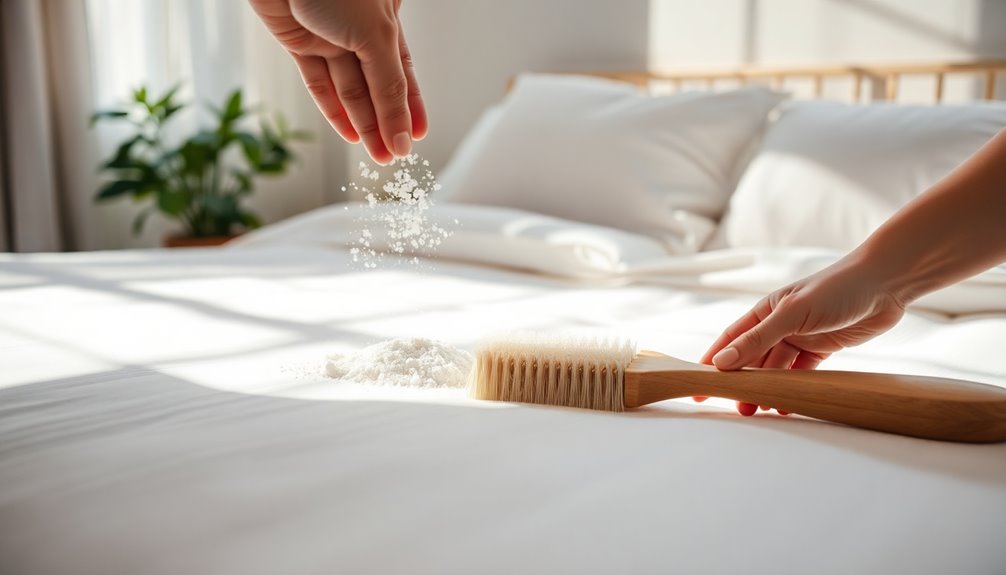
Cleaning your mattress matters more than you might think. It’s not just about keeping things looking nice; it directly affects your mattress hygiene and overall sleep quality.
Dust mites, allergens, and bacteria can accumulate, leading to health issues and restless nights. When you invest time in cleaning, you’re creating a healthier sleep environment. Regular maintenance helps eliminate odors and stains, ensuring your mattress stays fresh and inviting. Plus, a clean mattress can enhance your comfort, allowing you to wake up feeling refreshed instead of groggy. Additionally, regular maintenance can prevent the buildup of allergens and bacteria that compromise your sleep quality.
How Often Should You Clean Your Mattress?
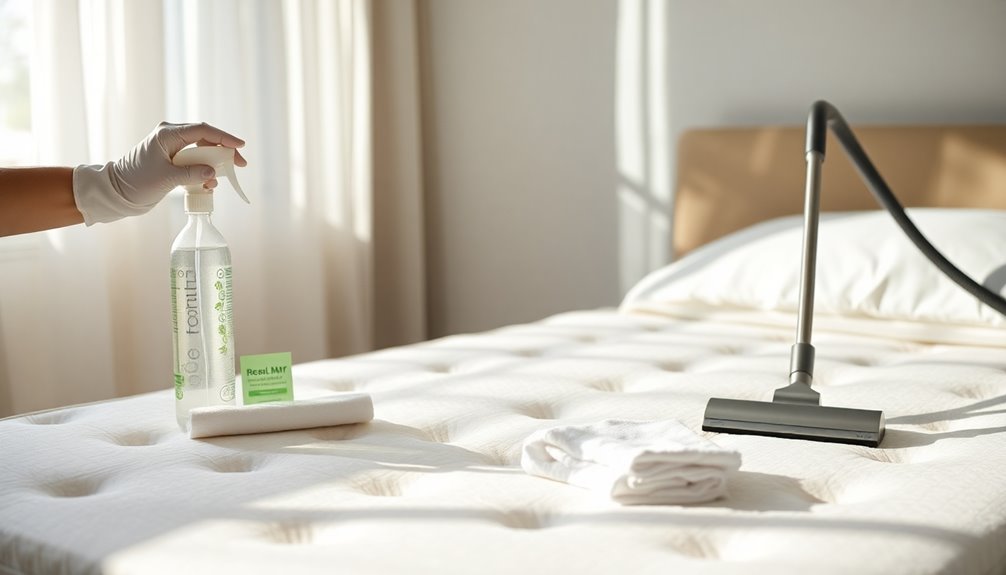
To maintain a healthy sleep environment, you should clean your mattress regularly. Ideally, aim to clean it every three to six months. This cleaning frequency helps eliminate dust mites, allergens, and stains, keeping your mattress hygienic. Additionally, cleaning your mattress contributes to better rest and improved mood.
Incorporate these mattress maintenance tips into your routine: vacuum your mattress thoroughly, spot clean any stains immediately, and consider using a mattress protector to shield against spills and dirt.
If you have pets or allergies, you might want to increase your cleaning frequency to every two to three months. Keeping your mattress fresh not only improves your sleep quality but can also extend its lifespan, ensuring you get the most out of your investment.
What Supplies Do You Need for Cleaning?
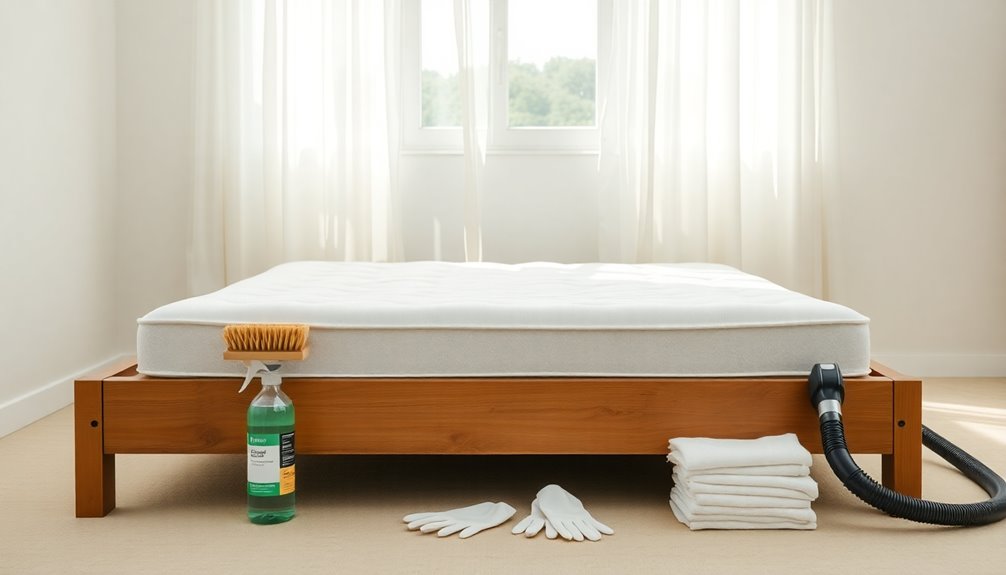
Gathering the right supplies makes cleaning your mattress much easier and more effective. Start with basic mattress cleaning tools like a vacuum cleaner with an upholstery attachment, a soft brush, and a clean cloth.
If you prefer eco-friendly options, consider natural cleaners like vinegar or baking soda; they’re safe and effective. A spray bottle can help you mix and apply these solutions easily.
Don’t forget a bucket for any liquid cleaning methods and a pair of latex gloves to protect your hands. Regular maintenance of your mattress can enhance indoor air quality by reducing allergens and bacteria.
Finally, have a mattress protector on hand for post-cleaning to keep it fresh. With these supplies, you’ll be well-prepared to tackle any mess and maintain a clean sleeping surface.
Step-by-Step Guide: Basic Mattress Cleaning
Now that you’ve gathered your supplies, it’s time to tackle your mattress.
Start by spot cleaning any stains you find, then freshen it up with some baking soda. Using eco-friendly methods will not only keep your mattress clean but also contribute to a healthier home environment.
This simple process will keep your mattress clean and inviting for a good night’s sleep.
Gather Necessary Supplies
Before you plunge into cleaning your mattress, it’s essential to collect the right supplies to make the process efficient.
Start with a vacuum cleaner equipped with an upholstery attachment to remove dust and allergens. Depending on your mattress materials, grab a gentle detergent or a specialized cleaner.
You’ll also need soft brushes or cloths for application. Consider having baking soda on hand; it’s great for deodorizing.
If you’ve got a stain, keep a stain remover ready, but don’t forget to check its compatibility with your mattress materials.
Make sure you’re stocked up on these supplies based on your cleaning frequency—aim for every six months or so to keep your mattress fresh and in good condition!
Spot Clean Stains
As you tackle stains on your mattress, it’s crucial to act quickly to prevent them from setting in.
First, use stain identification techniques to determine the type of stain—whether it’s liquid, food, or bodily fluids. This will help you select the right approach.
For liquid stains, blot gently with a clean cloth to absorb excess moisture without rubbing.
Next, choose effective spot treatments like a mild detergent mixed with water or a vinegar solution. Apply your chosen treatment to the stain, then dab with a cloth until it lifts.
Rinse the area with a damp cloth to remove any residue. Allow your mattress to air dry completely before putting on bedding, ensuring your efforts pay off.
Freshen With Baking Soda
To keep your mattress smelling fresh and feeling clean, using baking soda is a simple yet effective method. Here’s how to enhance your mattress freshness:
- Strip the bed: Remove all bedding and wash it separately.
- Sprinkle baking soda: Evenly distribute a generous amount of baking soda across the mattress surface.
- Let it sit: Allow the baking soda to absorb odors for at least 15 minutes, or longer for stubborn smells.
- Vacuum thoroughly: Use a vacuum cleaner to remove the baking soda, ensuring you get into all the nooks and crannies.
This quick process not only freshens your mattress but also helps eliminate allergens, making your sleeping environment more inviting.
Enjoy a revitalized mattress!
Tackling Stains: How to Remove Specific Types
When it comes to stains, knowing how to tackle specific types can make all the difference. From blood to urine, each stain requires a tailored approach for effective removal. Additionally, adopting some general prevention tips can help keep your mattress looking fresh longer, such as regular cleaning to minimize bacteria buildup.
Blood Stains Removal Tips
Blood stains can be tricky to tackle, but with the right approach, you can effectively remove them from your mattress. Start by acting quickly—fresh stains are easier to treat.
Here’s how you can manage those pesky blood stains:
- Cold Water: Use cold water to blot the stain; hot water can set it.
- Mild Soap: Mix a little dish soap with water and gently scrub the area.
- Hydrogen Peroxide: Apply a small amount to the stain, then blot with a clean cloth.
- Enzyme Cleaner: If necessary, use an enzyme-based cleaner specifically for mattress care.
Always test any solution on a hidden area first to avoid damage.
With patience and the right techniques, your mattress can stay fresh and clean!
Urine Stains Treatment Guide
Urine stains can be particularly stubborn, but with a few straightforward steps, you can effectively tackle them.
Start by blotting the stain with a clean cloth to absorb as much liquid as possible.
Next, mix equal parts white vinegar and water in a spray bottle. Spray the solution onto the stained area, allowing it to sit for about 10 minutes. This will help neutralize the urine odor.
Blot the area again, then sprinkle baking soda over it to aid in stain removal and absorb any lingering smells. Let it sit for several hours before vacuuming.
Finally, verify the mattress dries completely to prevent mold.
With these steps, your mattress can be fresh and clean again.
General Stain Prevention Tips
To keep your mattress looking fresh and stain-free, it’s essential to take a proactive approach. Proper mattress care can save you time and effort in the long run.
Here are some general stain prevention tips to take into account:
- Use a mattress protector: It acts as a barrier against various stain types.
- Practice good hygiene: Regularly wash bedding to minimize dirt and sweat accumulation.
- Avoid eating in bed: Crumbs can attract pests and lead to stains.
- Keep pets off the bed: Their fur and accidents can create troublesome stains.
Deodorizing Your Mattress: Best Methods
Keeping your mattress fresh can greatly enhance your sleep quality. One effective method is to use essential oils.
Simply mix a few drops of your favorite oil, like lavender or eucalyptus, with water in a spray bottle. Lightly mist your mattress, allowing it to air dry. This not only deodorizes but also adds a calming scent.
Another great option is fabric fresheners. Choose a product designed for upholstery and spray it evenly across your mattress. Let it sit for a few minutes before making your bed.
For a quick fix, sprinkle baking soda over the surface, let it sit for at least 15 minutes, then vacuum it up. This absorbs odors and leaves your mattress smelling fresh. Additionally, consider using a DIY fabric freshener spray to customize scents and ensure a non-toxic solution.
Protecting Against Allergens: Tips for a Healthier Sleep
A fresh-smelling mattress is just one part of ensuring a good night’s sleep. To protect against allergens, consider these effective allergen proofing strategies:
- Use hypoallergenic mattress covers to block dust mites and other irritants.
- Wash your bedding weekly in hot water to eliminate allergens.
- Choose pillows and comforters made from hypoallergenic materials for added protection.
- Vacuum your mattress regularly with a HEPA filter attachment to remove dust and allergens.
- Incorporate regular cleaning practices to maintain a healthy sleeping environment.
Choosing the Right Cleaning Products: Safe vs. Harmful
When cleaning your mattress, it’s essential to choose the right products.
You’ll want to use safe ingredients that won’t harm your health or the environment. At the same time, steer clear of harmful chemicals that can leave lingering toxins in your sleep space. Additionally, opting for non-toxic detergents can help ensure a cleaner, safer sleep environment.
Safe Ingredients to Use
Choosing the right cleaning products for your mattress can greatly impact your health and its longevity. Opting for safe ingredients guarantees you’re not exposing yourself to harmful chemicals.
Here are some great options:
- Baking soda: Naturally deodorizes and absorbs moisture.
- White vinegar: Acts as a disinfectant and helps eliminate odors.
- Castile soap: A gentle, biodegradable soap that effectively cleans.
- Essential oils: Add a revitalizing scent; lavender or tea tree oil offer antimicrobial benefits.
Look for eco-friendly options that won’t harm your mattress or your health.
Harmful Chemicals to Avoid
While it’s tempting to grab any cleaning product off the shelf, you should steer clear of certain harmful chemicals that can damage your mattress and jeopardize your health.
Avoid cleaners containing bleach, ammonia, or formaldehyde, as these can break down materials and emit toxic fumes. Instead, look for eco-friendly cleaners that use natural ingredients, which are safer for both you and the environment.
You can also explore chemical alternatives like vinegar and baking soda, which effectively eliminate odors and stains without causing harm.
By choosing these safer options, you can keep your mattress clean without risking its integrity or your well-being.
Prioritizing safe products guarantees a healthier sleeping environment for you and your family.
How to Dry Your Mattress Without Damage
To guarantee your mattress dries properly without damage, it’s essential to follow the right steps.
Using effective mattress drying techniques can help maintain its integrity while ensuring it dries thoroughly. Here are some air drying methods you can use:
- Remove Bedding: Strip the mattress of all sheets and covers for better airflow.
- Use Fans: Position fans around the mattress to promote circulation and speed up drying.
- Elevate the Mattress: Place it on a well-ventilated surface to avoid moisture buildup.
- Sunlight Exposure: If possible, let the mattress sit in indirect sunlight for a natural drying boost. Additionally, proper ventilation is crucial to prevent odors and moisture retention, similar to maintaining a washing machine.
Maintaining Your Mattress: Prevention Tips
Maintaining your mattress is essential for prolonging its lifespan and ensuring a comfortable sleep environment.
Start by practicing mattress rotation every three to six months. This simple step helps distribute wear evenly, preventing sagging and promoting even support.
Invest in high-quality protective covers to shield your mattress from spills, dust mites, and allergens. These covers are easy to clean and can greatly extend your mattress’s life.
Regularly check for any signs of damage or wear, and address them promptly to avoid bigger issues later.
Finally, keep your mattress clean by vacuuming it occasionally to remove dust and debris. Additionally, implementing a consistent cleaning routine can help maintain a fresh sleep environment and prevent allergens from accumulating.
When to Consider Professional Cleaning Services?
Even with regular upkeep, there are times when your mattress might need more than just a quick clean.
Even with routine care, your mattress may occasionally require more than a simple cleaning.
If you notice any of the following, it’s time to evaluate professional cleaning services:
- Stains that won’t budge: If spots persist despite your efforts, pros have the tools to tackle tough stains.
- Allergies acting up: Increased allergy symptoms could indicate dust mites or mold, needing a deep clean.
- Odors: Lingering smells are a sign your mattress requires a thorough cleaning to extend its lifespan.
- Cleaning frequency: If you haven’t had your mattress deep cleaned in over a year, it’s time to call in the experts.
Regular professional cleaning can greatly enhance your mattress’s longevity and comfort.
Conclusion
In the grand tapestry of restful nights, a clean mattress is your unsung hero. By following these simple steps, you’ll guarantee your bed remains a sanctuary, free from allergens and odors. Just like a well-tended garden, the care you give your mattress will yield sweet dreams for years to come. So, embrace this ritual of maintenance, and let your sleep be as revitalizing as a morning dew, nurturing both body and soul.