To keep your pillows fresh, wash them every three to six months, depending on the type. For down and feather pillows, use a gentle cycle and low heat in the dryer. Synthetic pillows can be washed in a front-loader; just check care labels. Spot-clean memory foam with mild detergent and sprinkle baking soda for odors. Air them out regularly and consider using breathable storage. Want to know more about specific cleaning methods and tips?
Why Cleaning Your Pillows Is Essential for Health
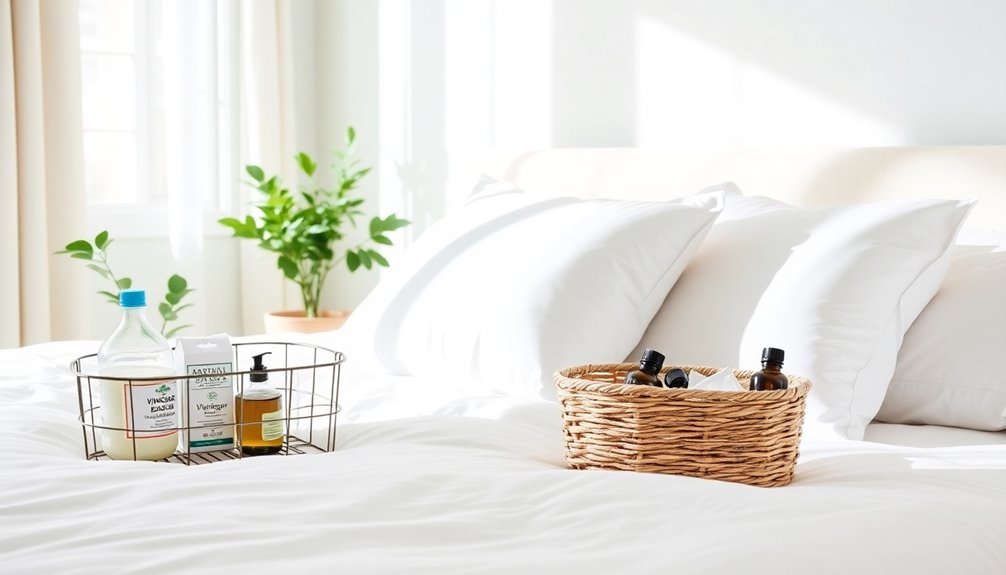
When you consider how much time you spend sleeping, it’s clear that cleaning your pillows is crucial for your health.
Regular cleaning maximizes the pillow hygiene benefits, ensuring you rest on a fresh surface. Dust mites, mold, and other allergens accumulate over time, leading to respiratory issues and skin irritations.
By maintaining clean pillows, you greatly enhance allergens reduction, creating a healthier sleep environment. This simple task helps you breathe easier and sleep more soundly.
Plus, it prolongs the life of your pillows, saving you money in the long run. Additionally, washing pillows every three to six months is recommended to effectively reduce the buildup of dust mites and dead skin cells.
How Often Should You Clean Different Types of Pillows?

When it comes to cleaning your pillows, frequency matters based on the type. Down pillows should be cleaned every few months, while synthetic pillows can go longer between washes. Knowing the right schedule helps keep your sleeping environment fresh and healthy. Regular cleaning helps prevent dirt buildup and prolongs the lifespan of your pillows.
Down Pillows Frequency
Regularly cleaning down pillows is essential for maintaining their softness and hygiene. Aim to wash your down pillows every 6 months to keep them in top condition. This frequency supports effective down pillow care, ensuring you remove dust mites, allergens, and odors.
When cleaning, use a gentle cycle with mild detergent and consider adding dryer balls to help fluff the down during drying.
Be sure to thoroughly dry your pillows afterward, as dampness can lead to mildew.
If you notice any stains or odors between washes, spot clean immediately to prevent those issues from setting in.
Consistent down pillow maintenance will extend their lifespan, keeping your sleep environment fresh and comfortable.
Synthetic Pillows Schedule
Synthetic pillows should be cleaned every 3 to 6 months, depending on usage and personal preference. For ideal pillow maintenance, follow these simple tips: first, check the care label for specific instructions.
Most synthetic pillows can be machine washed on a gentle cycle. Use mild detergent and make sure they’re thoroughly rinsed to avoid residue.
After washing, dry them on low heat with dryer balls to maintain fluffiness. Regular cleaning not only helps eliminate allergens but also extends your synthetic pillow lifespan.
If you notice any stains or odors, don’t hesitate to clean them sooner. Being proactive with your cleaning schedule will keep your pillows fresh and cozy for a good night’s sleep.
What Materials Are Commonly Used in Pillows?
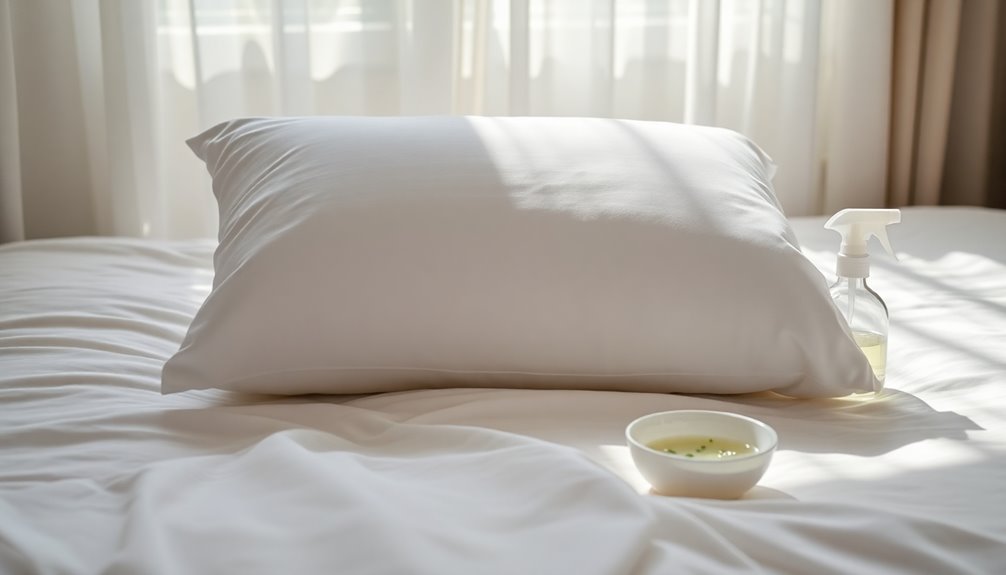
When choosing a pillow, it’s crucial to know what materials are inside and out.
Common fillings like memory foam, down, and synthetic fibers each offer unique benefits for your sleep comfort. Additionally, the cover materials can impact breathability and softness, so let’s break down your options. For instance, many pillows incorporate durable materials that enhance longevity and support, ensuring a better night’s sleep.
Common Pillow Fillings
Pillows come in a variety of fillings, each offering unique comfort and support.
Memory foam pillows contour to your head and neck, providing excellent support that can help alleviate pain. They’re popular for their durability but require specific pillow maintenance to keep them fresh.
Down and feather pillows are fluffy and soft, offering a luxurious feel, but they may need frequent fluffing.
Polyester fill pillows are budget-friendly and hypoallergenic, making them a great choice for allergy sufferers.
Finally, latex pillows are resilient and breathable, ideal for those who prefer a firmer option.
Whichever filling you choose, understanding your needs can help you select the perfect pillow for restful sleep.
Cover Materials Explained
While comfort often comes from the filling, the cover material plays an essential role in your overall sleep experience. Different pillow fabric types can enhance breathability, softness, and durability.
Choosing the right fabric not only affects comfort but also impacts how easily you can maintain your pillows.
- Cotton: Soft, breathable, and easy to clean.
- Polyester: Durable and often more affordable, though less breathable.
- Bamboo: Eco-friendly, hypoallergenic, and moisture-wicking.
Understanding these pillow fabric types helps you select what suits your needs.
For effective cleaning techniques, consider the care instructions specific to the material. This way, you can keep your pillows fresh and extend their lifespan, ensuring a better night’s sleep.
Preparing Your Pillows for Cleaning: What You Need to Know
Before diving into the cleaning process, it’s essential to gather the right materials and assess your pillows.
Check the care label for specific instructions; different materials require different cleaning methods. For pillow care, you’ll typically need a mild detergent, a washing machine, and dryer balls.
If your pillows are heavily soiled or have odors, consider a pre-soak in a solution of water and detergent. Make sure to remove any pillow protectors or cases before cleaning to guarantee a thorough wash.
It’s also a good idea to inspect for any damage or wear, as this might affect how you clean them. Additionally, understanding fabric cleaning codes can help you choose the appropriate cleaning method. Proper preparation sets the stage for effective cleaning, keeping your pillows fresh and comfortable.
Washing Down and Feather Pillows: Step-by-Step Guide
When you’re ready to wash your down and feather pillows, start by prepping them properly to avoid damage. You’ll need to know the right drying and fluffing techniques to keep them in top shape. It’s also important to remember that regular washing maintains a healthy sleep environment. Let’s get into the steps to guarantee your pillows come out fresh and cozy.
Preparing Pillows for Washing
To prepare your down and feather pillows for washing, start by checking the care label for specific instructions. Different pillow types may have unique requirements, so it’s vital to follow these guidelines.
Next, gather the necessary supplies and set up your washing area.
- Remove pillow protectors and cases.
- Check for any stains and pre-treat them as needed.
- Confirm your washing machine can accommodate the pillows comfortably.
Choose appropriate washing methods, typically using a gentle cycle with mild detergent.
Drying and Fluffing Techniques
After washing your down and feather pillows, drying them properly is vital to maintain their loft and comfort.
Use low heat for drying, and consider incorporating drying techniques like adding clean tennis balls or dryer balls to the dryer. These will help break up clumps and enhance fluffiness.
Check your pillows every 30 minutes to confirm they’re drying evenly. Once they’re almost dry, remove them and give them a good shake to redistribute the filling.
For additional fluffing methods, you can gently hand-fluff them after drying, which helps restore their shape and loft.
Avoid air-drying, as it can lead to mildew and odors. By following these steps, you’ll keep your pillows fresh and comfy!
Cleaning Synthetic Pillows: Tips for Best Results
Cleaning synthetic pillows can be a straightforward process if you follow a few simple steps. Start by checking the care label for specific instructions on pillow material care. Most synthetic pillows are machine washable, but make sure you use a gentle cycle with mild detergent.
Cleaning synthetic pillows is easy—just check the care label and wash on a gentle cycle with mild detergent.
For best results, consider these tips:
- Use a front-loading washer to avoid damaging the pillow.
- Add tennis balls to the dryer to help maintain fluffiness.
- Air dry your pillows whenever possible to prevent heat damage.
Regular synthetic pillow maintenance not only keeps them clean but also extends their lifespan. Remember to wash them every few months to keep allergens at bay and enjoy a fresh sleeping environment! Additionally, using a soft mop can help maintain cleanliness in your bedroom area, reducing allergens further.
How to Care for Memory Foam Pillows
While synthetic pillows are easy to maintain, memory foam pillows require a different approach to keep them in top shape.
To guarantee effective memory foam maintenance, start by using a pillow protector. This helps shield against dust mites and spills.
When it’s time to clean, spot-clean with a mild detergent and water—never submerge the pillow. For odors, sprinkle baking soda, let it sit for a few hours, and then vacuum. Ensuring regular maintenance of the dirty water tank will also help keep your cleaning tools effective and prolong their lifespan.
Always allow your pillow to air dry completely, avoiding direct sunlight to prevent degradation.
Rotate your pillow regularly to promote even wear.
How Do You Remove Stains and Odors From Your Pillows?
Stains and odors on your pillows can be a real nuisance, but tackling them is easier than you might think.
Stains and odors on pillows can be bothersome, but removing them is simpler than you might expect.
For effective stain removal and odor elimination, try these simple methods:
- Baking Soda: Sprinkle it on the pillow, let it sit for at least 30 minutes, then vacuum.
- Vinegar Solution: Mix equal parts water and white vinegar, spray on the stained area, and blot with a clean cloth.
- Gentle Laundry Detergent: For machine-washable pillows, use a gentle detergent and run a delicate cycle.
Remember to check care labels before cleaning. Additionally, you can enhance your cleaning routine by incorporating homemade cleaners that utilize eco-friendly ingredients.
With these tips, you’ll keep your pillows fresh and clean, ensuring a comfortable night’s sleep!
How Do You Dry Your Pillows: Best Practices for Longevity?
To guarantee your pillows last longer, drying them properly is essential. Start by using a low-heat setting on your dryer, as high temperatures can damage the materials.
Toss in a couple of clean tennis balls or dryer balls to help fluff the pillows and facilitate even drying. Check your pillows periodically to prevent overheating. If they’re still damp, continue drying them in short intervals until they feel completely dry to the touch.
For extra longevity tips, consider air-drying your pillows outside on a sunny day, as sunlight can help eliminate moisture and odors naturally. Additionally, regular cleaning routines with non-toxic cleaners can further enhance the freshness of your pillows.
Maintaining Freshness: Tips for Pillow Care Between Washes
After ensuring your pillows are thoroughly dried, keeping them fresh between washes is important. You can do this easily with a few simple tips:
- Use scent boosters: Sprinkle a light layer of baking soda or your favorite pillow-safe scent booster on your pillows to absorb odors.
- Choose proper pillow storage: Store your pillows in breathable cases or cotton bags to keep dust and moisture at bay.
- Air them out regularly: Hang your pillows outside on a sunny day to naturally refresh and eliminate bacteria. Regularly incorporating white vinegar and baking soda can help neutralize odors and maintain freshness.
When Should You Replace Your Pillows for Optimal Sleep Quality?
How do you know when it’s time to replace your pillows for ideal sleep quality? Generally, pillows have a lifespan of about 1 to 2 years, depending on the material.
If you notice lumps, loss of shape, or if your pillow feels flat, it’s time for a change. Also, pay attention to allergies; if you wake up with sneezing or congestion, your pillow might be harboring dust mites or allergens.
Maintaining good sleep hygiene means regularly checking your bedding. Fresh pillows support better alignment and comfort, improving your overall sleep quality.
Don’t wait too long—replacing worn-out pillows can make a significant difference in how well you rest each night. Prioritize your sleep by keeping your pillows in top shape!
Conclusion
Cleaning your pillows might seem like a hassle, but it’s essential for your health and sleep quality. Regular washing not only removes allergens but also keeps your pillows smelling fresh. Don’t worry if you think it’ll take too much time; most steps are simple and quick. By maintaining your pillows, you’ll enhance your comfort and prolong their lifespan. So, take a few minutes to care for them—you deserve a clean and restful sleep every night!