To clean your washing machine the right way, start by disconnecting it and emptying the drum. For a top-loader, fill it with hot water, add vinegar and baking soda, let it agitate, pause for an hour, then complete the cycle. For a front-loader, soak the detergent drawer, clean the drain filter, and run a hot cycle with vinegar or a cleaner. Leave the door ajar after washes to prevent odors. Discover more tips to keep your machine in top shape!
Why Cleaning Your Washing Machine Matters
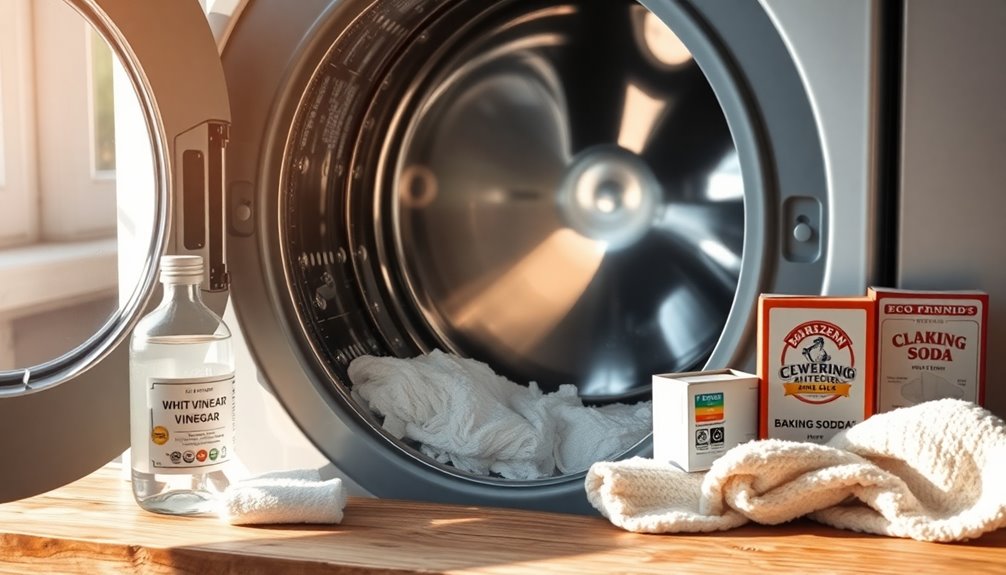
Cleaning your washing machine matters more than you might think. Regular machine maintenance can greatly enhance your appliance’s longevity.
Over time, detergent residue, dirt, and mildew can build up inside, affecting performance and leaving your clothes less than fresh. If you neglect this task, you might find yourself facing costly repairs or even a premature appliance replacement.
By taking a little time to clean your washing machine, you guarantee it runs efficiently, saving energy and water in the long run. Plus, a clean machine means cleaner clothes, which is ultimately what you want. Regular cleaning also helps prevent bacteria growth and mildew smell, ensuring a fresher laundry experience.
How to Prepare Your Washing Machine for Cleaning

Before you start cleaning your washing machine, you need to gather your supplies, like vinegar and a microfiber cloth. Make sure to disconnect the power source to keep things safe while you work. This simple prep step sets you up for an effective clean. Additionally, ensure the drum is completely empty to allow the cleaning solution to circulate freely.
Gather Necessary Supplies
To effectively clean your washing machine, you’ll need a few key supplies on hand. Start with a supply checklist that includes white vinegar, baking soda, and a microfiber cloth.
These cleaning products are essential for tackling odors and grime. You might also want a sponge or soft brush for scrubbing any stubborn areas. If your machine has a filter, check if you need a small brush to clean it out.
Don’t forget to grab some gloves to protect your hands. Having these items ready will streamline the cleaning process and guarantee you don’t waste time searching for supplies.
With everything gathered, you’re one step closer to a fresh, clean washing machine!
Disconnect Power Source
Once you’ve gathered your supplies, it’s time to prepare your washing machine for cleaning by disconnecting the power source.
Start by unplugging the machine from the wall outlet. This simple step is vital for safety precautions, guaranteeing you won’t accidentally turn it on while you’re cleaning.
If your washing machine is hardwired, turn off the circuit breaker that powers it. Always double-check that the machine is completely off before proceeding.
This power disconnect not only protects you from electrical hazards but also allows you to clean every part without worry.
After you’ve verified the power is off, you can confidently move on to the next steps in your washing machine cleaning routine.
Effective Methods for Cleaning a Top-Loader
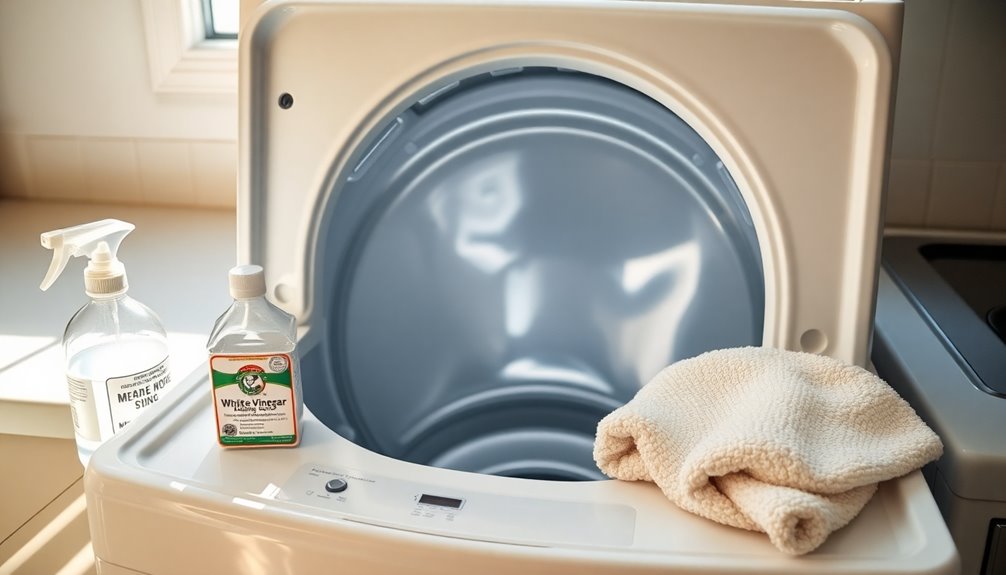
Cleaning a top-loader washing machine can be done effectively in just three simple steps.
First, fill the drum with hot water and add a mixture of vinegar and baking soda. This solution helps break down any detergent residue and grime. Let it agitate for a few minutes, then pause the cycle to let it sit for about an hour.
Next, restart the cycle to complete the wash.
Finally, wipe down the interior, including the lid and agitator, with a damp cloth after the cycle finishes. For extra freshness, leave the lid open to air dry. Regular top loader cleaning not only keeps your machine fresh but also guarantees your laundry stays cleaner. Additionally, cleaning the washer every three months can help prevent odors and buildup.
Step-by-Step Guide to Cleaning a Front-Loader
Cleaning your front-loader doesn’t have to be a hassle. Start by gathering the necessary supplies, like vinegar and a microfiber cloth. Regular maintenance prevents performance issues and ensures your machine runs efficiently for years to come. Once you’ve got everything ready, you can focus on cleaning the key components for a fresh and efficient machine.
Gather Necessary Supplies
To get your front-loader sparkling clean, you’ll need a few essential supplies. Start with some eco-friendly options like white vinegar and baking soda, which effectively tackle odors and residue without harsh chemicals.
You’ll also want a microfiber cloth for wiping down surfaces and a soft-bristle brush to reach those tricky spots. Don’t forget a spray bottle for easy application of your cleaning solutions.
If your machine has a detergent drawer, a toothbrush can help scrub it clean. Finally, having a vacuum handy is useful for removing any lint or debris around the door seal.
Gather these cleaning supplies, and you’ll be ready to tackle the task ahead with confidence!
Clean Key Components
A front-loader needs special attention to keep it running smoothly and smelling fresh.
Start by unplugging your machine for safety. Next, remove the detergent drawer and soak it in warm, soapy water to dissolve any buildup. Scrub it with a soft brush before rinsing and drying.
Now, check the drain pump filter. Open the access panel, place a towel underneath to catch any water, and unscrew the filter. Clean any lint or debris before reinserting it.
Finally, run a hot water cycle with a washing machine cleaner or vinegar to eliminate odors and residues.
This routine maintenance will guarantee your front-loader stays efficient and fresh for all your laundry needs.
Tips to Prevent Odors and Build-Up in Your Washer
Keeping your washing machine fresh and odor-free is easier than you might think. To kickstart odor prevention, make it a habit to leave the door ajar after each wash. This lets air circulate and keeps moisture at bay.
Use a cup of white vinegar or baking soda in a monthly cycle to tackle any build-up. For additional build-up solutions, regularly clean the detergent drawer and rubber seals, as these areas can trap dirt and mildew. Also, avoid overloading your washer; it can lead to poor drainage and lingering smells. Finally, choose high-efficiency detergents that produce less residue. Additionally, consider using baking soda and vinegar as a natural method to help break down any remaining residues in your machine.
When to Call a Professional for Washing Machine Maintenance?
Regular maintenance can help keep your washing machine running smoothly, but there are times when a professional should step in. If you notice common issues like unusual noises, leaks, or persistent error codes, it’s time to call for help.
These problems can indicate deeper issues that routine maintenance can’t fix. Additionally, if your washer isn’t spinning properly or your clothes are coming out soaked, don’t hesitate to reach out to an expert. Regular self-cleaning of your machine can prevent unpleasant odors that may signal larger problems.
Ignoring these signs can lead to more significant damage and costly repairs down the line. A professional can diagnose the problem accurately, ensuring your machine is back to its best.
Conclusion
In the grand tapestry of household chores, keeping your washing machine clean is like polishing a diamond—it shines brighter and lasts longer. By taking the time to maintain your washer, you’re not just preventing odors; you’re ensuring your laundry remains fresh and vibrant, echoing the care you give to your home. So, embrace this routine. After all, a well-cared-for machine is a silent partner in your daily life, working hard to keep your clothes as good as new.