To clean your laundry machine, start by running a hot water cycle with either a specialized cleaner or white vinegar. Wipe down the lid, rim, and control panel with a microfiber cloth. Clean the rubber gasket regularly to prevent mold. Leave the door open after each wash to allow airflow. Inspect for any odors or issues like pooling water. These steps keep your machine running smoothly and your clothes fresh. There’s more to guarantee your washer stays in top shape.
Why Cleaning Your Laundry Machine Is Important
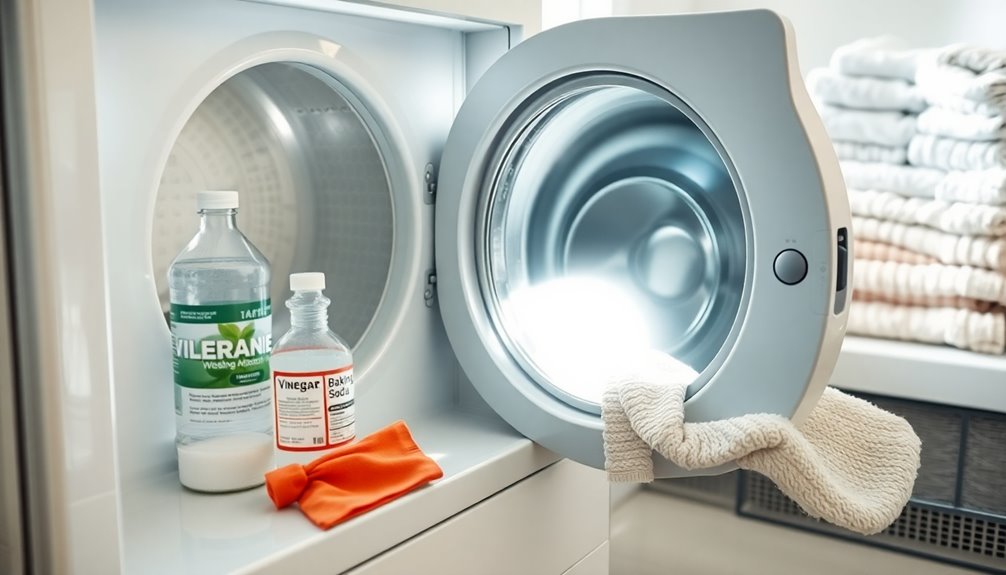
Cleaning your laundry machine is essential, especially since it can harbor bacteria and mold if neglected.
Regular maintenance is vital for ensuring laundry hygiene; after all, you don’t want to wash your clothes in a dirty machine. Bacteria and mildew can transfer to your laundry, leaving it smelling musty or worse.
By keeping your appliance clean, you also enhance its longevity. A well-maintained machine is less likely to break down, saving you money on repairs and replacements down the line. Plus, a clean washer operates more efficiently, resulting in fresher clothes and less energy usage. Additionally, regular cleaning prevents buildup of detergent and grime, which can impact performance.
What You Need to Gather for Cleaning
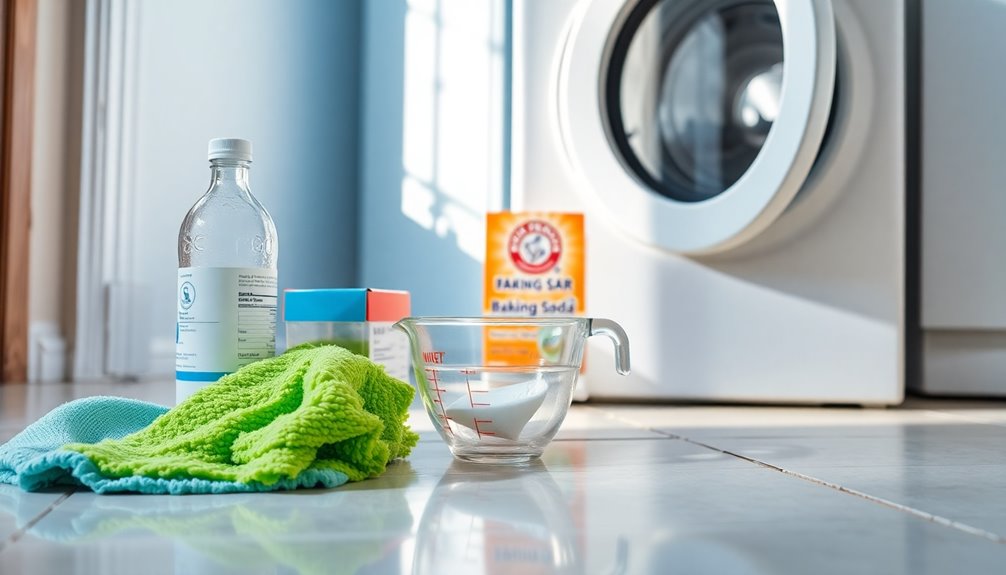
Before you start cleaning your laundry machine, you need to gather a few essential supplies.
Make sure you have your cleaning products ready, along with any safety gear you might need. Additionally, having cleaning solutions on hand will ensure you effectively tackle any build-up in the drum.
This preparation will help you tackle the task efficiently and safely.
Cleaning Supplies Overview
To effectively clean your laundry machine, you’ll need to gather a few essential supplies that make the process smoother.
Start with different detergent types, such as vinegar or baking soda, which are great for tackling grime and odors. You’ll also want a soft cloth or sponge for wiping down surfaces and a toothbrush for getting into those hard-to-reach areas.
Don’t forget to grab some washer accessories like filters or lint traps, as they may need cleaning or replacement. A measuring cup can help you use the right amount of cleaning agents.
Finally, have a bucket handy to catch any excess water or debris. With these supplies, you’re well on your way to a sparkling clean machine!
Safety Gear Essentials
While you’re preparing to clean your laundry machine, it’s important to gather the right safety gear to protect yourself.
Cleaning solutions can sometimes be harsh, so taking precautions is key. Here’s what you need:
- Safety gloves – These will protect your hands from chemicals and grime.
- Protective eyewear – Shield your eyes from splashes or debris.
- Face mask – Prevent inhalation of dust or fumes, especially if you’re using strong cleaners.
- Old clothes – Wear something you don’t mind getting dirty, as cleaning can be messy.
Step-by-Step Guide to Cleaning a Top-Loading Washer
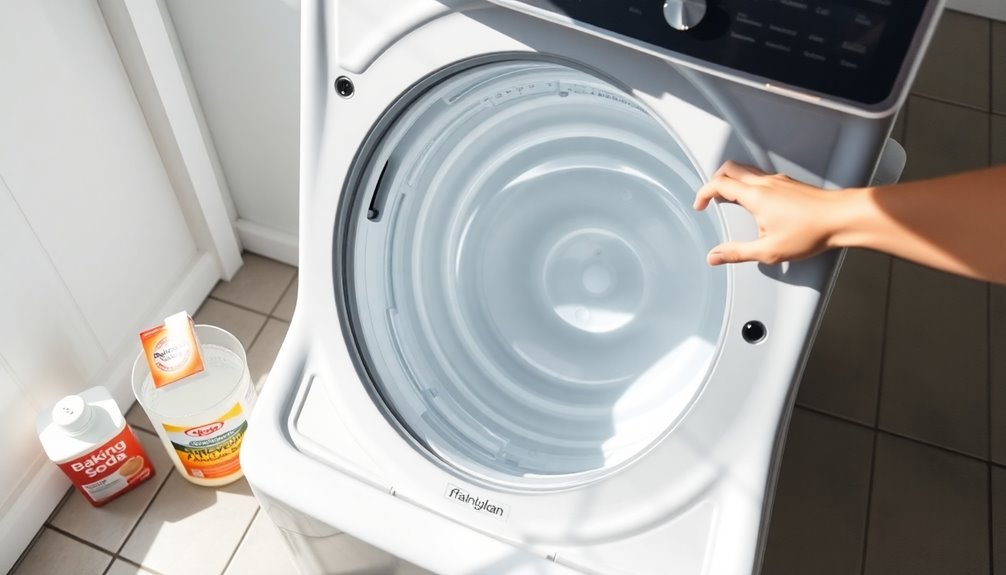
Cleaning your top-loading washer is straightforward. First, you’ll need to gather the necessary supplies. Then, you can run a cleaning cycle and wipe down all surfaces for a fresh and clean machine. Regular cleaning preserves washing machine functionality and ensures fresh laundry.
Gather Necessary Supplies
Before diving into the cleaning process, you’ll need to gather a few essential supplies. Having the right tools on hand will make tackling those pesky washing machine odors easier.
Here’s what you’ll need:
- White vinegar: A natural deodorizer that helps eliminate odors.
- Baking soda: Great for scrubbing and freshening the drum.
- Microfiber cloth: Perfect for wiping down surfaces and hard-to-reach areas.
- Laundry detergents: Use a specialized washing machine cleaner to break down buildup.
With these supplies, you’ll be well-equipped to refresh your top-loading washer and tackle any lingering smells.
Now that you’re prepared, you can move on to the next steps in the cleaning process!
Run Cleaning Cycle
Start the cleaning process by running a dedicated cycle on your top-loading washer. Most machines have a specific cleaning cycle designed to eliminate detergent buildup and mildew.
Fill the washer with hot water and add a washing machine cleaner or white vinegar for best results. This helps break down grime and odors, enhancing your machine’s efficiency.
Run the cycle to let the cleaner do its job. You should aim to do this every one to three months, depending on usage, to maintain your washer’s performance.
The cleaning cycle benefits your laundry by ensuring fresh, clean clothes and prolonging the lifespan of your machine. After this step, you’ll be ready to tackle the next part of your cleaning routine!
Wipe Down Surfaces
Give your top-loading washer a thorough wipe down to remove any lingering dirt and grime. Regularly cleaning the surfaces helps maintain your machine’s efficiency and hygiene.
Follow these steps for a quick and effective clean:
- Gather Supplies: Use a microfiber cloth and a gentle cleaner suitable for your washer’s surface materials.
- Open Lid: Wipe down the inside rim and lid, ensuring you reach the corners where dirt tends to accumulate.
- Clean Control Panel: Gently clean the buttons and dials, avoiding excessive moisture.
- Exterior Shine: Wipe the outside surfaces to remove smudges and fingerprints, enhancing your washer’s appearance.
Aim for this cleaning frequency every month to keep your washer in top shape!
Step-by-Step Guide to Cleaning a Front-Loading Washer
Cleaning a front-loading washer is essential for keeping your laundry fresh and odor-free. Start by wiping the door seal with a damp cloth to remove any debris.
Next, run an empty cycle with hot water and a cup of white vinegar to tackle any buildup. This helps you enjoy the front load benefits, like energy efficiency and space-saving design, without the common issues of odors or residue. Regular cleaning with vinegar is crucial for machine upkeep and efficiency.
After the cycle, wipe down the drum and door again. Don’t forget to clean the detergent dispenser; remove it and rinse thoroughly.
Finally, leave the door open for a few hours to air out any moisture. Regular maintenance guarantees your washer stays in top shape and your clothes come out clean.
How to Remove and Prevent Mold and Mildew
Mold and mildew can quickly become a problem in your laundry machine if left unchecked. To effectively tackle these issues, follow these steps for mold prevention and mildew treatment:
- Regularly clean the gasket: Wipe down the rubber seal around the door after each use to remove moisture.
- Leave the door open: After doing laundry, keep the door ajar to allow airflow and prevent moisture buildup.
- Use a vinegar solution: Run an empty cycle with hot water and two cups of white vinegar every month to reduce mold and maintain overall washer hygiene.
- Check detergent usage: Avoid overloading your washer with detergent, as excess can promote mildew growth.
Tips for Maintaining a Fresh Laundry Machine
Maintaining a fresh laundry machine is essential for guaranteeing your clothes come out smelling clean and feeling fresh.
To prevent machine odors, establish a regular maintenance schedule. Wipe down the door seal and detergent drawer after each use to eliminate residue.
Run a hot water cycle with vinegar or specialized cleaner once a month to tackle any buildup. Always leave the door open for a while after washing to let moisture escape, which helps prevent mildew. Additionally, check and clean the filter regularly to assure proper drainage. Regular use of the Self Clean feature is recommended to maintain washer freshness and prevent mold issues.
Signs Your Washer Needs Professional Cleaning?
Ever wondered when it’s time to call in a professional for your washer? If you notice any of these signs, it’s wise to get expert help:
- Persistent Odor Issues: If your washer smells musty even after cleaning, bacteria might be lurking inside.
- Efficiency Decline: If your laundry isn’t coming out clean or takes longer to wash, it might signal a deeper problem.
- Unusual Noises: Grinding or banging sounds during cycles could indicate mechanical issues that require professional attention.
- Water Leaks: If you find water pooling around your washer, it’s essential to address it immediately to prevent further damage.
Additionally, regular disinfection is crucial to maintain a clean washing environment and prevent odors. Don’t ignore these signs—getting a professional in can save you time and money in the long run!
Conclusion
Keeping your laundry machine clean is like giving it a revitalizing spa day—it extends its life and keeps your clothes fresh. By following these steps, you’ll banish odors and grime, turning laundry day from a chore into a breeze. Remember, a well-maintained washer not only cleans your clothes but also cares for your home. So, don’t wait for the signs; make cleaning a regular ritual, and watch your laundry machine thrive like a blooming garden.