To clean your washing machine, unplug it first for safety. Wipe down the door seal with a damp cloth and fill the detergent dispenser with a vinegar and water mixture. Run a hot water cycle to eliminate odors. Afterward, remove and wash the dispenser under warm water. You should also check the drain pump filter for debris and clean it regularly. There’s plenty more to learn about keeping your washer fresh and efficient.
Why You Should Clean Your Washing Machine
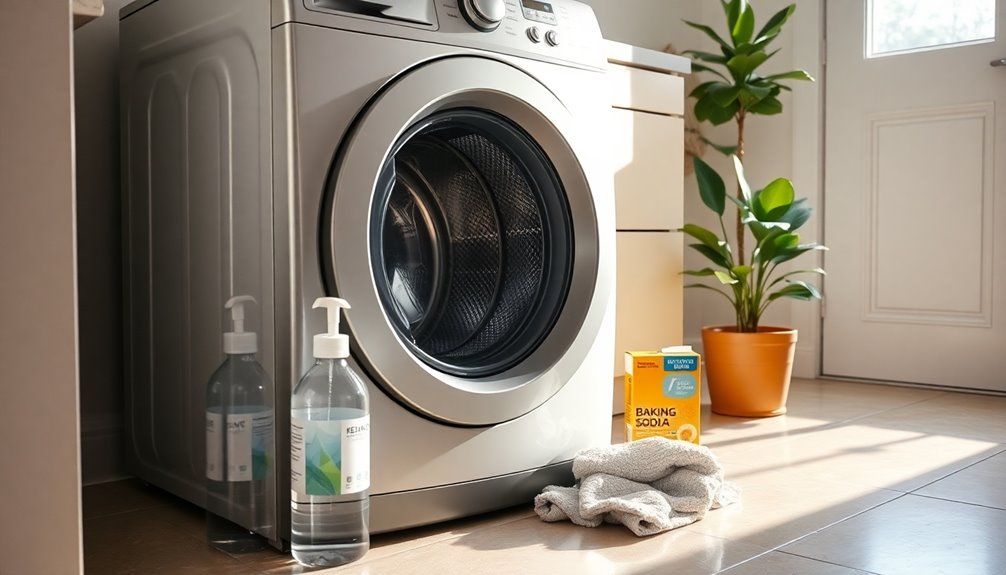
Cleaning your washing machine mightn’t seem like a priority, but neglecting it can lead to unpleasant odors and less effective washing.
Maintaining good machine hygiene is essential for ensuring your laundry comes out fresh and clean. Over time, residue builds up, causing bacteria and mold to flourish, which can affect your clothes.
Maintaining machine hygiene is crucial; buildup can lead to bacteria and mold, impacting the freshness of your laundry.
By regularly cleaning your machine, you’ll experience significant cleaning benefits, such as improved performance and extended lifespan. A clean washer not only enhances your laundry results but also prevents costly repairs down the line. Plus, you’ll enjoy a more pleasant laundry experience, free from foul smells. Regular cleaning every three months will help maintain optimal performance. So, take a moment to prioritize this task—your clothes (and nose) will thank you!
What You Need to Get Started
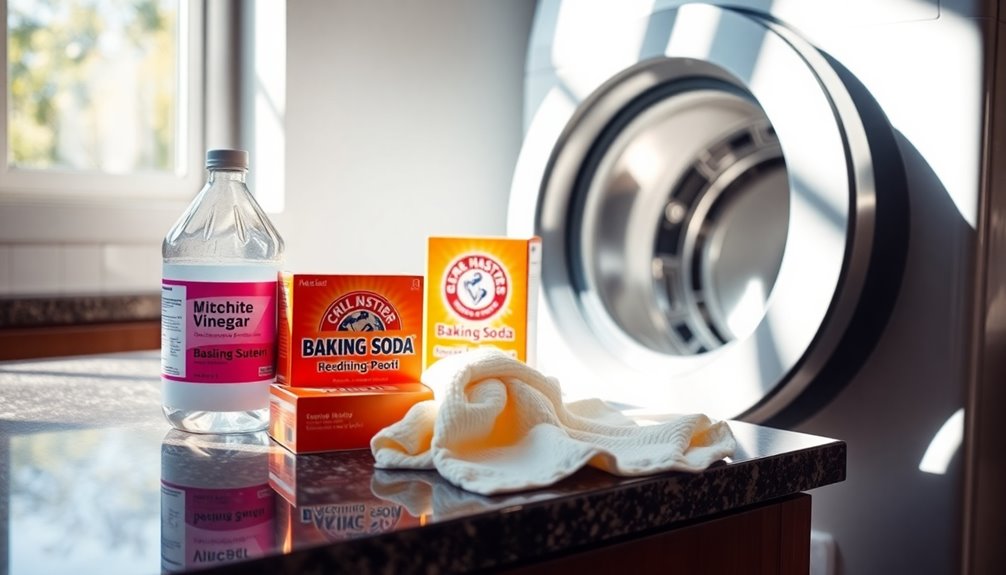
To get started on rejuvenating your washing machine, gather a few basic supplies. You’ll need white vinegar, baking soda, a soft cloth, and a toothbrush. These items will help tackle grime and mildew effectively.
It’s also wise to have a vacuum handy to clean out any debris in the drum or around the seals.
Before diving into the cleaning process, keep in mind some important maintenance tips. Regularly checking and cleaning the detergent drawer and door seals can enhance your machine’s performance and extend its lifespan. Additionally, consistent cleaning will help minimize germ accumulation and improve overall hygiene in your laundry area.
Establishing a cleaning frequency—like once a month—will help prevent buildup and keep your washing machine running smoothly.
With the right supplies and a plan, you’re well on your way to a fresh, clean appliance!
How Often Should You Clean Your Washing Machine?
To keep your washing machine in top shape, it’s important to establish a monthly maintenance schedule. You should also watch for signs of build-up, which can indicate when it’s time for a thorough clean. Regular cleaning prevents buildup of detergent and ensures your laundry stays fresh and free from bacteria.
Monthly Maintenance Schedule
While it might be easy to overlook, a monthly maintenance schedule is key to keeping your washing machine running efficiently.
Setting monthly reminders can help you stay on track. Here’s a quick cleaning checklist to follow:
- Wipe down the door and gasket to prevent mold.
- Run a hot water cycle with vinegar to eliminate odors.
- Clean the detergent drawer to remove residue buildup.
- Check hoses and filters for clogs and leaks.
Signs of Build-Up
If you notice a musty smell or visible residue in your washing machine, it’s time to assess how often you should clean it.
Build-up causes, like detergent residue, fabric softener, and hard water minerals, can lead to unpleasant odors and affect your laundry’s cleanliness. Regularly checking for these signs helps you stay on top of maintenance.
If you see mold or grime, it’s a clear indicator that build-up prevention measures aren’t working. Ideally, you should clean your machine every month to prevent these issues from developing.
Keeping an eye on your washer’s condition will guarantee it runs efficiently and lasts longer.
Take action now to avoid bigger problems down the line!
Step-by-Step Guide to Cleaning a Front-Load Washer
Cleaning your front-load washer is essential for keeping it in top shape.
First, gather all the necessary supplies you’ll need for the job. Additionally, consider using hot water during the cleaning process to effectively break down buildup and sanitize the drum.
Then, follow this simple step-by-step process to get your washer sparkling clean.
Gather Necessary Cleaning Supplies
To effectively clean your front-load washer, you’ll need a few essential supplies. Gathering the right cleaning tools will make the process smoother and more effective. Here’s what you’ll need:
- Vinegar: An eco-friendly option that helps eliminate odors and buildup.
- Baking soda: Great for scrubbing and deodorizing.
- Microfiber cloth: Perfect for wiping down surfaces without scratching.
- Toothbrush: Handy for getting into tight spaces and crevices.
With these items in hand, you’re set to tackle the grime in your machine.
Using eco-friendly options not only helps your washer but also benefits the environment.
Step-By-Step Cleaning Process
1. Start by unplugging your front-load washer for safety.
Next, wipe down the door seal with a damp cloth to remove any debris or mildew.
Then, fill the detergent dispenser with a mixture of equal parts vinegar and water.
Run a hot water cycle without any laundry; this helps eliminate odors and buildup.
After that, inspect the filter and clean it if necessary to guarantee your washer’s energy efficiency.
Finally, leave the door open for a few hours to dry out any moisture, which helps prevent mold growth.
Regular cleaning not only enhances your washing experience but also extends your machine’s lifespan.
Following these simple steps keeps your washer running smoothly and efficiently!
Step-by-Step Guide to Cleaning a Top-Load Washer
A clean top-load washer not only improves the efficiency of your laundry but also extends the life of the appliance. By following these simple steps, you can effectively remove detergent residue and enhance washing machine longevity.
- Gather your supplies: Use white vinegar, baking soda, and a microfiber cloth.
- Prepare the washer: Set it to the hottest setting and fill it with water.
- Add cleaning agents: Pour in two cups of vinegar and one cup of baking soda.
- Run a wash cycle: Allow it to agitate, then pause for 30 minutes before finishing.
After the cycle, wipe down the drum, lid, and exterior. Regular cleaning will keep your washer running smoothly and efficiently, contributing to the longevity of your appliance.
How to Clean the Detergent Dispenser
After cleaning your top-load washer, it’s important to give attention to the detergent dispenser as well.
Start by removing the dispenser from the machine. Rinse it under warm water to wash away any detergent residue. Use a soft brush or an old toothbrush to scrub away stubborn buildup and any dispenser molds that may have formed.
For tougher spots, consider soaking the dispenser in a mixture of warm water and vinegar for about 30 minutes. After scrubbing, rinse thoroughly and let it dry completely before reattaching it to the washer. Regularly checking for food residue in your washing machine can help maintain its performance.
Keeping your detergent dispenser clean helps guarantee that your laundry comes out fresh and prevents any buildup that could affect your washing machine’s performance.
Tackling Mold and Mildew in Your Washer
While you may not notice it right away, mold and mildew can easily build up in your washing machine, especially in damp areas like the rubber door seal.
To keep your washer fresh, consider these preventive measures and effective solutions:
- Regularly wipe the door seal with a cloth to remove moisture.
- Leave the door ajar after each wash to allow air circulation.
- Run a monthly cleaning cycle using hot water and vinegar or a commercial cleaner.
- Check and clean the detergent dispenser to prevent residue buildup.
Incorporating routine habits such as these can significantly enhance your washing machine’s cleanliness and performance.
The Importance of Cleaning the Door Seal
Cleaning the door seal is essential for maintaining your washing machine’s efficiency and hygiene. This often-overlooked area can trap moisture, leading to unpleasant odors and mold growth.
Regular door seal maintenance not only keeps your washer smelling fresh but also guarantees that your laundry comes out clean and hygienic. To prevent mold, wipe the door seal with a damp cloth and mild detergent after each use. Pay attention to crevices where dirt can accumulate. Additionally, consider the importance of inspecting your sponge regularly to minimize contamination risks in your laundry routine.
You should also leave the door ajar between washes to allow airflow, reducing moisture buildup.
How to Flush the Drain Pump Filter
Maintaining your washing machine includes more than just keeping the door seal clean; flushing the drain pump filter is another key task. This guarantees proper drainage and enhances your machine’s efficiency.
Here’s how to tackle filter cleaning for effective drain maintenance:
- Unplug the washing machine to guarantee safety.
- Locate the drain pump filter, usually at the front or back.
- Remove the filter and clean it under warm water, guaranteeing no debris remains.
- Reassemble the filter and plug the machine back in. Regularly flushing the drain pump filter not only prevents clogs but also extends your machine’s lifespan, contributing to the longevity of the appliance through regular self-cleaning practices.
What to Use for a Deep Clean: DIY vs. Store-Bought Solutions
To achieve a deep clean for your washing machine, you’ll need to decide between DIY solutions and store-bought products.
DIY cleaners, like vinegar and baking soda, are eco-friendly options that effectively tackle buildup and odors. Plus, they’re often cheaper, making them a budget-friendly choice. Regular use of baking soda and vinegar can also prevent future buildup in your washing machine, maintaining its efficiency.
However, store-bought solutions may offer a more straightforward approach and often come with specific instructions for use, ensuring you’re addressing all the necessary areas.
When considering a cost comparison, think about how often you’ll clean and the potential long-term savings of DIY methods.
Regarding effectiveness assessment, both options can work well, but it ultimately depends on your preferences and how much effort you’re willing to put in.
Signs Your Washer Needs More Than Just a Cleaning
If your washer still smells bad after cleaning, it might signal a bigger issue.
You should also check for visible mold growth, as this can indicate underlying problems.
Addressing these signs early can save you from more extensive repairs down the line.
Unpleasant Odors Persist
Even after a thorough cleaning, your washing machine might still emit unpleasant odors, signaling that it needs more than just a surface scrub.
These persistent smells often point to deeper issues, such as lingering odor sources or bacteria growth hidden within the machine.
Consider these signs that indicate it’s time for extra attention:
- Moldy or musty smells: This could indicate trapped moisture.
- Sour odors: Often a result of stagnant water or residue buildup.
- Chemical smells: May suggest a problem with your detergent or fabric softener.
- Funky smells during cycles: A sign of bacteria growth that needs addressing.
If you notice any of these, it’s time to dive deeper into your washer’s maintenance routine.
Visible Mold Growth
Mold thrives in damp environments, so you should prioritize mold prevention measures to keep your washer fresh. First, check your cleaning frequency; if you haven’t cleaned your machine in months, it’s likely contributing to the problem.
Run a hot cycle with vinegar or a specialized cleaner to tackle the mold. Afterward, leave the door open to allow air circulation.
Regularly wipe down the door seal and detergent dispenser to minimize moisture. By staying proactive, you can keep your washing machine mold-free and in top shape.
Tips for Maintaining a Fresh-Smelling Washing Machine
To keep your washing machine smelling fresh, regular maintenance is essential. Here are some tips to guarantee those fresh scents linger:
- Leave the door open after each wash to allow moisture to escape.
- Use natural solutions like vinegar or baking soda for monthly cleanings to combat odors.
- Wipe down the rubber gasket and drum regularly to prevent mold buildup.
- Check and clean the detergent drawer to avoid residue that can lead to smells.
Frequently Asked Questions About Washing Machine Care
What do you really need to know about washing machine care?
First, regular maintenance is key to extending your washer’s lifespan. Clean the drum and dispensers monthly to prevent buildup.
You might wonder if using too much detergent affects performance—absolutely! Excess detergent can lead to residue and odor.
Another common question is how often to run a cleaning cycle; aim for once a month.
Don’t forget to check and clean the filter regularly, as a clogged filter can cause drainage issues.
Finally, always leave the door ajar after washing to keep it dry and prevent mold.
With these maintenance tips, you’ll keep your washing machine running smoothly for years to come.
Conclusion
Now that you’ve armed yourself with the tools and know-how, think of your washing machine as a trusty steed. A little care goes a long way in keeping it galloping smoothly through loads of laundry. By regularly cleaning and maintaining it, you’ll not only extend its life but also enjoy fresh, fragrant clothes. So saddle up, stay on top of your washer’s needs, and let it carry you to laundry bliss!