To clean and disinfect kids’ toys safely and quickly, start by using eco-friendly cleaning products, avoiding harsh chemicals. For plastic toys, rinse, scrub, and soak as needed. Wipe wooden toys with a damp cloth, using mild soap or vinegar. For stuffed toys, check the care label and wash per instructions. Establish a regular cleaning schedule and air dry toys thoroughly. Want to learn effective storage tips and avoid common mistakes? There’s more helpful advice ahead!
Why Cleaning Kids’ Toys Matters for Health
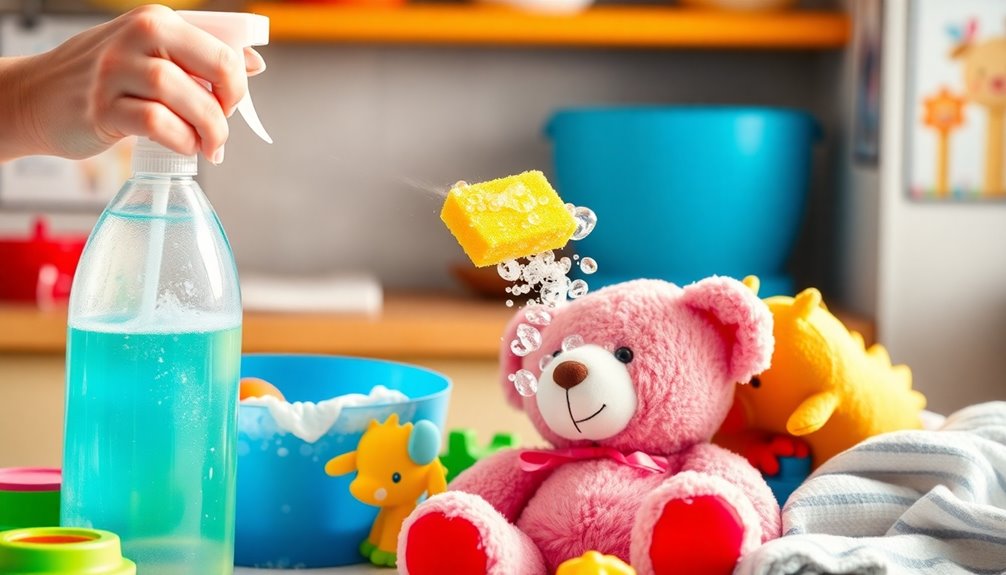
When you think about it, cleaning kids’ toys is essential for their health. Toys are often germ hotspots, harboring bacteria and viruses that can easily spread to your little ones.
By regularly cleaning these items, you not only reduce the risk of illness but also promote better overall health benefits. Children frequently put toys in their mouths, and a simple wipe-down can eliminate harmful germs that could lead to infections or allergies.
Maintaining a clean play environment encourages your child’s immune system to function efficiently while reducing the likelihood of respiratory issues and other health problems. Additionally, keeping indoor air quality in check helps minimize common indoor allergens that can affect your child’s health.
When to Clean and Disinfect Toys?
Knowing when to clean and disinfect toys is essential for your child’s health.
You should clean toys immediately after an illness occurs to prevent the spread of germs. Additionally, establish a regular cleaning schedule to keep everything safe and fresh. Regular maintenance prevents stains and bacteria buildup, ensuring a healthier play environment for your child.
After Illness Occurrence
After your child has been ill, it’s essential to clean and disinfect their toys to prevent the spread of germs. This is a vital step in practicing post illness precautions and ensuring germ transmission awareness.
Start by gathering all toys your child used during their illness. Focus on high-touch items, like plush toys, action figures, or any items that came into contact with their mouth or hands.
Use an appropriate disinfectant, following the manufacturer’s instructions for effective germ-killing. Don’t forget to wash any fabric toys in hot water and dry them thoroughly.
Regular Cleaning Schedule
Keeping toys clean isn’t just important after your child has been sick; it’s also essential to establish a regular cleaning schedule. Aim to clean toys at least once a week, but adjust this cleaning frequency based on your child’s usage and the type of toys.
For example, frequently used toys or those that are played with outdoors may need more attention. Incorporating toy rotation can help manage this process; by swapping out toys periodically, you can keep your child engaged while ensuring that you’re cleaning them regularly.
You’ll find that maintaining a consistent schedule makes the task less intimidating and keeps your child’s toys safe and hygienic for playtime.
Choosing the Right Cleaning Products
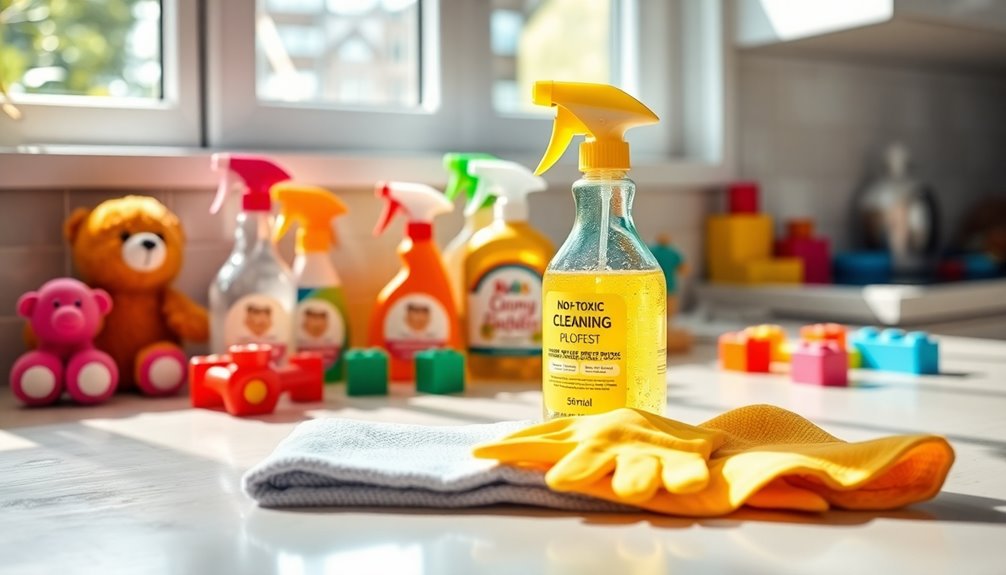
When it comes to cleaning kids’ toys, choosing the right cleaning products is essential for ensuring both safety and effectiveness.
Look for eco-friendly options that are free from harsh chemicals, as these are safer for your children and the environment. Products labeled as non-toxic are often a good choice, but always check the ingredients to confirm their safety.
You’ll want to avoid products containing bleach or other strong chemicals that could pose risks to your child’s health. Additionally, consider using natural ingredients like vinegar or baking soda, which can effectively disinfect without harmful side effects. Many brands, such as Puracy, offer plant-based cleaning solutions that ensure safe and effective cleaning for your home.
Safe Homemade Cleaning Solutions
Creating safe homemade cleaning solutions for kids’ toys can be both simple and effective. You can easily whip up a mixture using common natural ingredients.
Homemade cleaning solutions for kids’ toys are easy to make using natural ingredients that are safe and effective.
For a basic cleaner, combine equal parts water and white vinegar in a spray bottle. This eco-friendly option not only disinfects but also eliminates odors. If you prefer a sweeter scent, add a few drops of essential oils like lavender or lemon. Additionally, using natural disinfectants like vinegar ensures a safe cleaning experience for children.
For tougher stains, create a paste using baking soda and water, applying it directly to the affected area before rinsing. Always test a small area first to verify it’s safe for the toy’s material.
With these solutions, you’ll keep your kids’ toys clean without harmful chemicals.
How to Clean Different Types of Toys
Cleaning different types of toys requires specific approaches to confirm they stay safe and hygienic for your child.
Start by considering the toy material; plastic toys can often be disinfected with a mixture of water and vinegar, while wooden toys should be wiped with a damp cloth to avoid damage.
For stuffed toys, check labels for washing instructions, as some can be machine washed while others may need surface cleaning.
In terms of toy cleaning frequency, frequently used toys should be cleaned weekly, while less-frequent ones can be cleaned monthly.
Always inspect toys for wear and tear during cleaning to confirm they’re safe for your child. Additionally, consider using eco-friendly methods to ensure that the cleaning process is safe for both your child and the environment.
Step-by-Step Guide for Soft Toys
To effectively clean soft toys, start by checking the care label for specific washing instructions.
Depending on the soft toy materials, you may need to adjust your cleaning machine settings.
Follow these steps for a thorough clean:
- Remove any detachable parts, like clothing or accessories.
- Place the soft toy in a mesh laundry bag to protect it during the wash.
- Use a gentle cycle with cold water to avoid damage.
- Add a mild detergent suitable for delicate fabrics.
- Air dry the soft toy or tumble dry on low if the care label allows it. Regular cleaning reduces allergens like dust mites, ensuring a healthier play environment for your child.
Step-by-Step Guide for Plastic Toys
When it comes to cleaning plastic toys, you’ll want to start by gathering all the necessary supplies. Understanding the cleaning process will make the task easier, and knowing how to dry and store the toys will keep them in good shape. Additionally, using non-toxic cleaners ensures that the toys are safe for your children while effectively removing germs. Let’s break down these steps to guarantee your kids’ toys are safe and sparkling clean.
Gather Necessary Supplies
Gathering the right supplies makes cleaning plastic toys a breeze. To guarantee you have everything you need for effective cleaning, gather the following toy cleaning supplies:
- Mild dish soap or baby shampoo
- Soft sponge or cloth
- Baking soda (for tough stains)
- White vinegar (for disinfecting)
- Warm water
With these items on hand, you can implement safe cleaning techniques that won’t damage the toys.
Cleaning Process Overview
Although it might seem intimidating, cleaning plastic toys can be a simple and effective process. Start by gathering your supplies: warm water, mild soap, and a disinfectant.
First, rinse the toys under warm water to remove any loose dirt. Next, use a sponge or cloth with soap to scrub each toy, paying attention to crevices where grime tends to hide. For tougher spots, consider toy cleaning techniques like soaking the toy in soapy water for a few minutes.
After scrubbing, rinse thoroughly to remove soap residue. Finally, apply effective disinfecting methods by using a diluted bleach solution or a kid-safe disinfectant, ensuring you follow the instructions carefully.
Let the toys air dry before putting them back into play.
Drying and Storage Tips
To guarantee your kids’ plastic toys stay in top condition, follow these simple drying and storage tips.
After cleaning, it’s essential to use effective drying methods to prevent mold and mildew. Here’s how to do it:
- Air dry: Lay toys on a clean towel in a well-ventilated area.
- Use a fan: Increase airflow by placing a fan nearby for quicker drying.
- Pat dry: Gently pat toys with a dry cloth to remove excess moisture.
- Avoid direct sunlight: Keep toys out of harsh sunlight to prevent warping.
- Store properly: Use bins or shelves, keeping toys off the floor to minimize dirt.
Cleaning Wooden Toys: Best Practices
When it comes to cleaning wooden toys, you want to guarantee they remain safe and durable for your little ones.
Start by using a damp cloth to wipe down the surface, avoiding excess moisture that can damage the wood. For deeper cleaning, a mild soap solution works wonders; just make sure to rinse and dry thoroughly to maintain moisture control.
Wipe wooden toys with a damp cloth and use a mild soap solution for deeper cleaning, ensuring thorough rinsing and drying.
If your toys have natural finishes, skip harsh chemicals, as they can strip the protective layer. Instead, consider using a mixture of vinegar and water for a gentle disinfectant. Additionally, using natural cleaning alternatives like hydrogen peroxide can enhance disinfecting without harmful residues.
Finally, let the toys air dry completely before storage to prevent mold or mildew.
With these best practices, you’ll keep those wooden treasures in top shape!
Disinfecting Toys in Shared Spaces
Since kids often share toys in communal areas like daycare centers, playdates, or family gatherings, it’s essential to keep those toys disinfected to minimize the spread of germs.
Here are some shared space considerations for effective communal toy hygiene:
- Choose safe disinfectants that are kid-friendly and non-toxic.
- Establish a cleaning schedule to regularly disinfect toys after each use.
- Encourage handwashing before and after playtime to reduce germ transfer.
- Designate specific toys for sharing, and keep them in a separate bin for easier cleaning.
- Educate caregivers on best practices for maintaining toy cleanliness.
- Incorporate plant-based ingredients into your cleaning routine to promote a healthier indoor environment.
Tips for Storing Clean Toys
When it comes to storing clean toys, organizing them by age group makes it easier for your kids to find and put away their favorites. Using clear bins not only keeps things tidy but also lets everyone see what’s inside at a glance. Incorporating effective decluttering methods will further enhance your organization efforts and create a more functional play area.
Organize By Age Group
Many parents find that organizing kids’ toys by age group makes playtime more enjoyable and manageable.
It not only simplifies clean-up but also guarantees that toys align with toy age recommendations and developmental toy cleaning.
Here are some tips to help you get started:
- Store toys in separate bins for each age group.
- Label bins clearly to avoid mix-ups.
- Rotate toys regularly to keep the play environment fresh.
- Teach your child to return toys to their designated spot after play.
- Regularly assess toys for safety and cleanliness.
Use Clear Bins
Organizing toys by age group helps create a more structured play environment, and using clear bins can enhance that organization.
Clear bins allow you to see the contents at a glance, making it easy for both you and your kids to find what they need. This visibility encourages your children to help with toy organization, as they can quickly identify where toys belong.
Label each bin with age-appropriate categories to streamline toy storage further. You’ll also be able to spot any missing items easily.
Plus, clear bins stack neatly, maximizing your space. With a little effort, you can achieve an efficient and tidy play area that promotes creativity and keeps toy chaos at bay!
Avoiding Common Toy Cleaning Mistakes
While it might seem straightforward, cleaning kids’ toys can easily lead to mistakes that compromise both their safety and longevity.
To guarantee you’re using effective toy cleaning techniques, avoid these common cleaning errors:
- Using Harsh Chemicals: Stick to gentle, kid-safe cleaners to prevent harmful residue.
- Ignoring Labels: Always check manufacturer instructions for specific cleaning guidelines.
- Over-soaking Toys: Excess moisture can lead to mold or damage electronic components.
- Neglecting Hidden Spots: Don’t forget to clean crevices where germs can hide.
- Skipping Drying: Allow toys to air dry completely to avoid bacterial growth.
Maintaining a Regular Toy Cleaning Schedule
To keep your kids’ toys safe and clean, establishing a regular cleaning schedule is vital. Decide on a toy cleaning frequency that works for your family—weekly or bi-weekly cleaning sessions can make a big difference.
Start by gathering all the toys and sorting them by type; this makes the process more manageable. Use gentle cleansers and follow safety guidelines for different materials.
Incorporate toy maintenance tips like checking for damages and replacing batteries in electronic toys during your clean-up. Don’t forget to involve your kids; it teaches them responsibility and the importance of hygiene.
Conclusion
Cleaning and disinfecting your kids’ toys isn’t just a chore; it’s an essential step in keeping them healthy. Did you know that studies show children can put their toys in their mouths up to 80 times a day? By regularly cleaning these items, you reduce the risk of spreading germs and infections. So, make it a habit to inspect, clean, and store those toys properly. Your kids will be safer, and you’ll have peace of mind knowing you’re protecting their health.