To clean your sofa and cushions without overwetting, start by removing loose items and vacuuming with an upholstery attachment. Use a soft-bristle brush for dirt and a damp microfiber cloth with a mild, fabric-safe cleaner for spot cleaning—remember, less is more when it comes to moisture. For deep cleaning, consider using a steam cleaner that minimizes water use. With these tips, you’ll keep your furniture fresh and protected; there’s more to learn about maintaining it effectively.
Understanding the Risks of Overwetting Your Sofa
When you clean your sofa, it’s essential to understand the risks of overwetting it, as too much moisture can lead to serious issues.
Overwetting can cause moisture damage, weakening the fabric and potentially leading to mold growth. This can ruin your sofa and create health hazards in your home.
It’s vital to focus on fabric care by using minimal water and choosing appropriate cleaning solutions. Instead of soaking the fabric, opt for a damp cloth or a spray to control the moisture level. Regular conditioning can also help extend leather life, making it more resilient to cleaning processes.
Essential Tools for Safe Sofa Cleaning
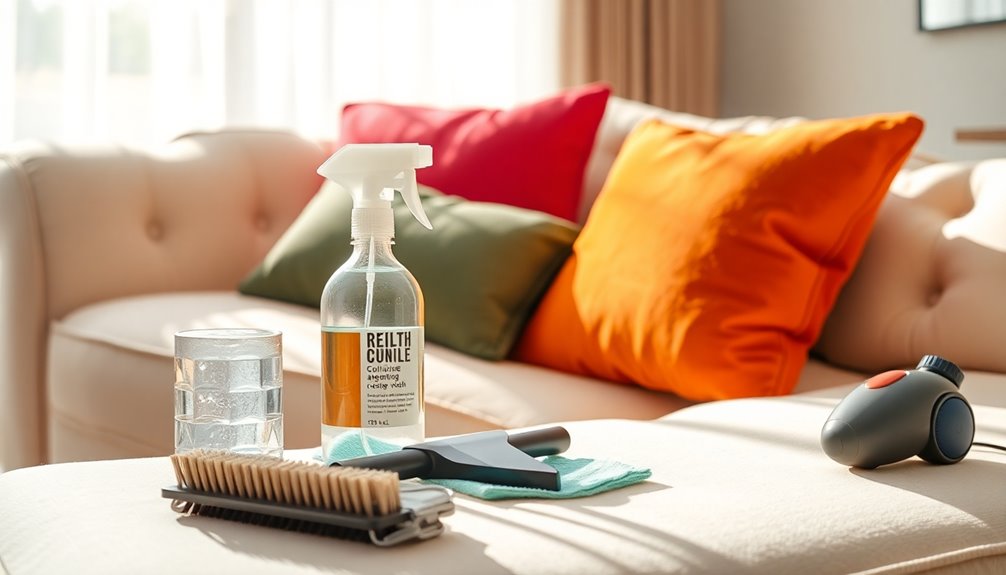
To guarantee a safe and effective cleaning process for your sofa, having the right tools at your disposal is essential.
Start with a vacuum cleaner fitted with an upholstery attachment to remove dust and debris. A soft-bristle brush is also handy for loosening dirt without damaging the fabric.
You’ll want a microfiber cloth for spot cleaning, as it’s gentle yet effective. When choosing cleaning solutions, avoid common cleaning myths; not all fabrics can handle harsh chemicals.
Instead, opt for mild, fabric-safe cleaners that align with your sofa’s specific care instructions. A spray bottle can help you control moisture levels, ensuring you don’t oversaturate the fabric. Regular cleaning can lead to rediscovering the joy of a clean and comfortable living space.
With these tools, you’ll maintain your sofa’s appearance while prioritizing fabric care.
How to Prepare Your Sofa for Cleaning
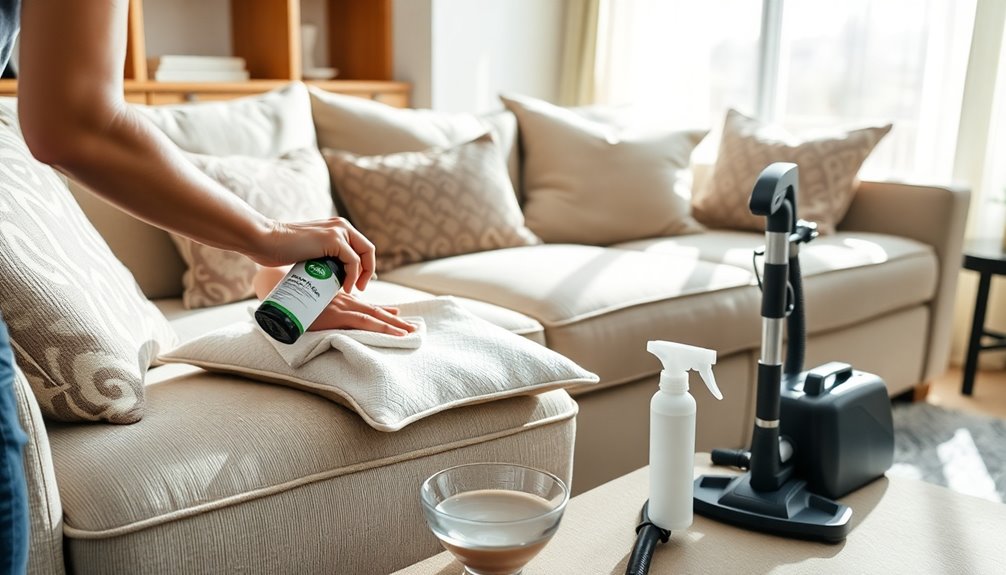
Preparing your sofa for cleaning involves a few straightforward steps to guarantee the best results.
Start by removing any loose items, like cushions and throws, to make the process easier.
Next, check the care label on your sofa fabric for specific cleaning instructions and recommendations. This will help you avoid damaging the material while verifying effective cleaning.
Check the care label on your sofa for cleaning instructions to ensure effective and safe maintenance of the fabric.
Regular cleaning frequency is essential; aim to clean your sofa every few months to maintain its appearance and hygiene.
Use a vacuum with an upholstery attachment to eliminate dust and debris from the surface and crevices.
Finally, test any cleaning solution on a hidden area first to confirm it won’t harm the fabric. Additionally, consider using non-toxic cleaners to ensure a safe and effective cleaning process.
This preparation sets you up for successful cleaning!
Spot Cleaning: Tackling Stains Without Excess Water
Once your sofa is prepped, it’s time to tackle those pesky stains with spot cleaning. This method focuses on stain removal without soaking your cushions.
Here’s how to effectively use the right cleaning techniques:
- Identify the Stain: Knowing what caused the stain helps you choose the right cleaning solution.
- Apply Cleaning Solution: Use a mild detergent mixed with water or a fabric-safe cleaner. Dampen a cloth, but don’t oversaturate it.
- Blot, Don’t Rub: Gently blot the stain with the cloth, working from the outside in to avoid spreading. Regular cleaning can help reduce allergens that affect indoor air quality.
Vacuuming Techniques for Sofa Maintenance
Regular vacuuming is essential for keeping your sofa looking fresh and extending its lifespan. Start by using a vacuum with an upholstery attachment to effectively remove dust, dirt, and pet hair from the fabric.
Regular vacuuming with an upholstery attachment keeps your sofa fresh and extends its lifespan by removing dust, dirt, and pet hair.
Make sure to reach into crevices and seams, as debris often hides there. For delicate fabrics, use a low-suction setting to avoid damage.
Remember to vacuum cushions separately, flipping them over to guarantee even cleaning. Regular upholstery care not only enhances appearance but also aids in fabric protection, preventing wear and tear. Incorporating crevice tool attachments can help you clean those hard-to-reach areas effectively.
Aim to vacuum your sofa weekly or bi-weekly, depending on usage. By incorporating these techniques, you’ll maintain your sofa’s beauty and comfort for years to come.
Choosing the Right Cleaning Solutions for Your Fabric
When choosing a cleaning solution for your sofa, first consider the fabric type, as different materials require different care. You’ll also want to explore eco-friendly options that can effectively clean without harsh chemicals. Making the right choice not only protects your furniture but also keeps your home safe and healthy. Additionally, checking the fabric cleaning codes can help ensure you select an appropriate cleaner that won’t damage your sofa.
Fabric Type Considerations
Understanding your sofa’s fabric type is essential because it determines the best cleaning solutions you should use.
Different fabrics have unique characteristics that can affect your choice of cleaning methods. Here are three key fabric types to evaluate:
- Cotton: This durable fabric can handle water-based cleaners but avoid saturating it.
- Microfiber: Use a solvent-based cleaner to avoid water stains, as it absorbs moisture easily.
- Leather: Opt for specialized leather cleaners and conditioners that maintain its suppleness without excessive moisture.
Eco-Friendly Cleaning Options
Choosing eco-friendly cleaning options for your sofa not only protects the environment but also assures the safety of your home.
When selecting cleaning solutions, look for products made with eco-friendly ingredients like vinegar, baking soda, and essential oils. These natural alternatives effectively tackle stains and odors without harsh chemicals.
For a simple homemade cleaner, mix equal parts of water and vinegar in a spray bottle, adding a few drops of your favorite essential oil for a pleasant scent.
Always test any solution on a hidden area first to confirm it won’t damage your fabric.
Steam Cleaning: A Safe Method for Deep Cleaning
Steam cleaning is an effective way to give your sofa a thorough clean without harsh chemicals. You’ll appreciate the benefits it offers, from sanitizing to lifting stubborn stains. Additionally, regular use of natural remedies can help maintain a fresher and cleaner upholstery. Let’s explore the equipment you’ll need and the step-by-step process to get your cushions looking like new.
Benefits Of Steam Cleaning
While many cleaning methods can leave your sofa looking fresh, steam cleaning stands out as a safe and effective option for deep cleaning.
It not only revitalizes your furniture but also offers several steam cleaning benefits that enhance your cleaning routine.
Here are three key deep cleaning advantages:
- Eliminates Allergens: Steam cleaning kills dust mites, bacteria, and allergens, promoting a healthier living environment.
- Eco-Friendly: It typically uses just water, reducing the need for harsh chemicals that can harm your family and pets.
- Quick Drying Time: Since steam cleaning uses less water than traditional methods, your sofa dries faster, minimizing the risk of mildew.
Recommended Equipment And Tools
When tackling the task of steam cleaning your sofa and cushions, having the right equipment is essential for achieving the best results.
Start with a high-quality steam cleaner designed for upholstery. Look for models with adjustable pressure settings and a variety of attachments to reach all areas.
You’ll also need a vacuum cleaner to remove loose dirt and debris beforehand. Don’t forget microfiber cloths for any spots that need extra attention and a fabric protector to apply after cleaning, which helps maintain cleanliness between your regular cleaning schedules.
Step-By-Step Cleaning Process
Start by vacuuming your sofa and cushions thoroughly to eliminate loose dirt and debris. This step is essential for effective fabric care and upholstery maintenance.
Next, follow these steps for steam cleaning:
- Prepare the Steam Cleaner: Fill it with water and add a suitable cleaning solution.
- Test a Small Area: Apply steam to an inconspicuous spot to guarantee the fabric can handle it.
- Steam Clean the Sofa: Gently move the nozzle over the fabric, avoiding over-saturation, and allow it to dry completely.
Dry Cleaning vs. Wet Cleaning: What You Need to Know
Choosing between dry cleaning and wet cleaning for your sofa and cushions can greatly impact their appearance and longevity.
Dry cleaning advantages include a quick-drying process and reduced risk of water damage, making it ideal for delicate fabrics. It often leaves no residue, ensuring a fresh finish.
On the other hand, wet cleaning, while effective for deep stains, has its disadvantages. It can lead to over-saturation, which may cause mold or fabric shrinkage. Additionally, drying time can be lengthy, risking odors if not done properly. To minimize risks during wet cleaning, always check upholstery care codes to ensure you’re using the appropriate method for your fabric.
Consider your sofa’s fabric type and the level of cleaning required when making your choice, as this decision will influence both the immediate results and the long-term care of your furniture.
Tips for Drying Your Sofa and Cushions Effectively
Drying your sofa and cushions effectively is essential to prevent mold and maintain their shape. Here are some tips to enhance your drying techniques:
- Increase Air Circulation: Use fans or open windows to promote airflow around your sofa. This helps moisture evaporate faster.
- Use Towels: Absorb excess moisture by pressing clean, dry towels against the fabric. This will speed up the drying process without soaking the cushions.
- Avoid Direct Sunlight: While some sunlight can help, too much can fade colors or warp materials. Find a well-ventilated shade instead.
- Regularly Check for Spills: Monitoring your sofa for spills can help you address moisture issues promptly, just as in a clean laundry room.
Maintaining Your Sofa’s Freshness Between Cleanings
To keep your sofa smelling fresh and looking its best between cleanings, you’ll want to establish a simple maintenance routine.
Start by vacuuming your sofa weekly to remove dust and crumbs. Use a soft brush attachment to avoid damaging the fabric.
Every month, check for stains and treat them promptly with appropriate cleaning solutions.
Freshness tips include using fabric sprays or baking soda to neutralize odors; just sprinkle, let it sit, and vacuum it up.
Additionally, consider a maintenance schedule for rotating your cushions to guarantee even wear.
Finally, keep your sofa away from direct sunlight to prevent fading. Also, applying fabric protectors can help safeguard against stains and spills, enhancing the longevity of your upholstery.
Conclusion
Cleaning your sofa without overwetting it might sound like a tall order, but you’ve got the tools and techniques to make it happen! Ironically, the less water you use, the cleaner and crisper your sofa will feel. So, embrace the art of spot cleaning and vacuuming, and remember that sometimes, less really is more. With these tips, you’ll keep your sofa looking great—without turning it into a soggy mess. Who knew staying dry could be so rejuvenating?