To wash your couch safely at home, start by identifying the fabric type and checking the care tag for specific cleaning instructions. Gather essential tools like a vacuum, microfiber cloths, and suitable cleaning solutions. Remove loose debris and spot clean stains with gentle solutions or DIY mixtures, like vinegar and water. For thoroughness, consider deep cleaning annually. Want to know more about maintaining your couch and preventing future stains? There’s plenty more to explore!
Understanding Your Couch Material
Before you immerse yourself in washing your couch, it’s essential to understand the material it’s made from. Different couch fabrics require specific cleaning techniques to avoid damage.
For instance, if your couch is upholstered in cotton or linen, you can typically use water-based cleaners. However, synthetic fabrics like polyester may be more forgiving with various cleaning solutions.
On the other hand, leather needs special care, as water can cause stains; a gentle leather cleaner is your best bet. If your couch has a fabric blend, check for manufacturer tags, which often provide valuable cleaning instructions.
Knowing your couch’s material not only helps you choose the right cleaning technique but also guarantees it stays looking fresh and vibrant. Additionally, always refer to the cleaning codes on manufacturer tags to ensure you’re using the correct method for your couch’s specific fabric.
Essential Tools for Cleaning Your Couch
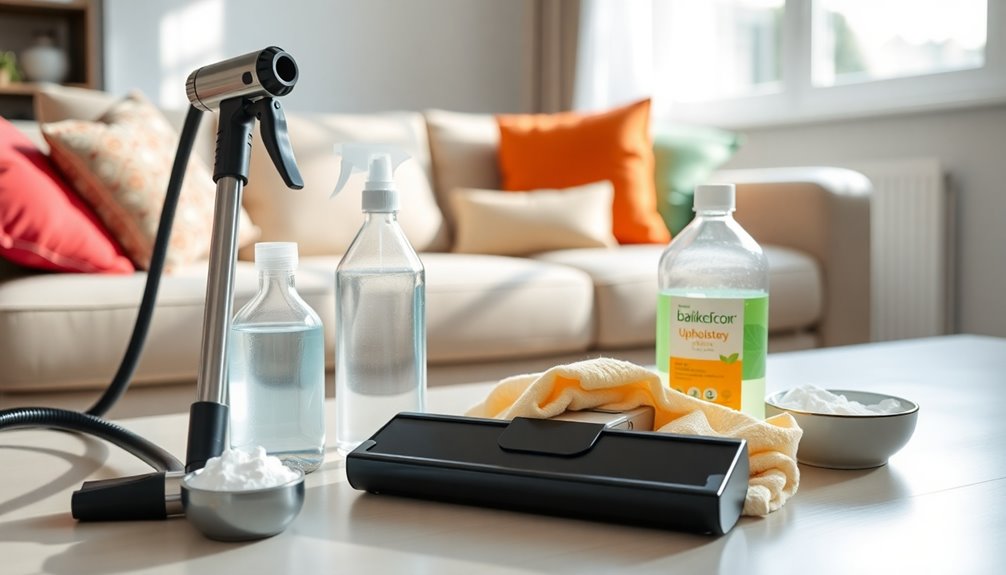
To keep your couch looking fresh, you’ll need the right tools at hand.
Start with a good vacuum cleaner, choose effective cleaning solutions, and stock up on microfiber cloths. Regularly vacuuming your couch helps prevent dirt buildup, making your cleaning process smoother and more efficient.
Vacuum Cleaner Types
When it comes to cleaning your couch, choosing the right vacuum cleaner can make a significant difference.
Upright vacuums are powerful and great for larger areas, while handheld vacuums offer portability for quick clean-ups. If you prefer a more automated approach, robot vacuums can efficiently navigate your space, picking up debris without much effort on your part.
Canister vacuums combine power with maneuverability, making them versatile for various couch shapes. Don’t forget to use vacuum attachments, like brushes and crevice tools, to reach into those tight spots.
Regular vacuum maintenance, such as emptying the bag or cleaning filters, guarantees peak performance. Selecting the right type will help keep your couch looking its best!
Cleaning Solutions Overview
Cleaning your couch effectively requires just a few essential tools and solutions. Start with a gentle upholstery cleaner specifically designed for your couch’s fabric.
If you prefer eco-friendly options, look for natural cleaners that use plant-based ingredients; they’re safe and effective. For stubborn stains, a mixture of vinegar and water works wonders for stain removal without harsh chemicals.
You might also consider baking soda for deodorizing and lifting light stains; just sprinkle it on, let it sit, and vacuum it up. Always test any solution on a hidden area first to avoid damage.
Having a soft-bristle brush and microfiber cloths on hand will help you apply and buff out cleaners, ensuring your couch looks fresh and inviting.
Microfiber Cloth Options
Microfiber cloths are essential tools for keeping your couch spotless and inviting. Their unique fibers trap dirt and dust effectively, making them a top choice for cleaning.
When selecting the right microfiber cloth, consider these options:
- All-Purpose Cloths: Great for everyday cleaning, they’re versatile and durable.
- Glass Cloths: These are specially designed for streak-free shine, perfect for any glass surfaces on your couch.
- Heavy-Duty Cloths: With extra microfiber cloth durability, they tackle tough stains and grime.
Pre-Cleaning Steps: Preparing Your Couch
Before you start washing your couch, take a moment to assess its fabric type. Different materials require different cleaning techniques, so knowing what you’re working with is key. Next, make sure to remove any loose debris, like crumbs or dust, to set the stage for a thorough clean. Additionally, check the fabric cleaning code to determine the appropriate cleaning methods for your couch, as this will guide you in choosing the right products for effective cleaning techniques.
Assess Fabric Type
Understanding your couch’s fabric type is essential for effective cleaning. Different materials require unique care methods to avoid damage.
Here’s how to assess your couch’s fabric:
- Check the Tag: Most couches have a care label that indicates the fabric type and cleaning instructions.
- Identify the Material: Common types include microfiber, cotton, leather, and synthetic blends. Each has specific fabric care needs.
- Use a Material Guide: Familiarize yourself with a material guide that outlines the best cleaning practices for your couch’s fabric.
Remove Loose Debris
Start by giving your couch a thorough inspection to remove any loose debris. Look for crumbs, dust, and pet hair that can accumulate in crevices.
Use effective debris removal techniques like a handheld vacuum or a lint roller. For stubborn pet hair, consider using a damp rubber glove; just rub your hand over the fabric, and watch the hair clump together for easy removal.
If you have an upholstery brush, it can also help lift debris from the fabric. Don’t forget to check under cushions and in hidden spots where dirt might hide.
This initial step prepares your couch for a deeper clean, ensuring you tackle the grime effectively and have a fresh start for the washing process.
How to Remove Loose Debris and Pet Hair
How can you tackle the pesky pet hair and crumbs that accumulate on your couch? Start with these effective methods to guarantee your upholstery care is on point:
- Vacuum: Use a vacuum with a pet hair attachment to easily lift loose debris and hair.
- Lint Roller: Keep a lint roller handy for quick clean-ups. Just roll it over the surfaces to grab hair and crumbs.
- Pet Grooming Tools: Utilize a rubber glove or a specialized pet grooming tool. Rubbing the glove over the fabric creates static, attracting hair. Regular vacuuming of the entire surface helps maintain your couch’s appearance and extends its lifespan.
Spot Cleaning: Tackling Stains Effectively
After tackling loose debris and pet hair, you’ll want to address any stains that might’ve made their way onto your couch.
Start by identifying the type of stain—different stains require different stain removal techniques. For liquid spills, use effective blotting: gently press a clean cloth onto the stain to absorb as much liquid as possible. Avoid rubbing, as this can spread the stain or damage the fabric.
Identifying the stain type is crucial; use gentle blotting to absorb liquid spills and avoid damaging the fabric.
For tougher stains, mix a solution of mild detergent and water, applying it with a soft cloth. Always test on an inconspicuous area first. Additionally, consider using gentle, water-based cleaners for natural fibers to avoid damage.
Rinse the area with a damp cloth afterward, then blot dry. With patience and the right approach, you can keep your couch looking fresh and clean.
Deep Cleaning: Best Methods for Different Fabrics
Here are three methods tailored for various materials:
- Microfiber: Use a mix of water and a few drops of dish soap. Lightly scrub with a soft cloth, then blot to remove moisture.
- Leather: Wipe down with a damp cloth, then apply a leather conditioner to enhance fabric protection and prevent cracking.
- Cotton: Machine wash removable covers in cold water. For non-removable sections, use a fabric-safe cleaner to tackle stains and promote stain prevention. Additionally, always check the cleaning codes to ensure safe cleaning methods for your specific fabric type.
Using Upholstery Cleaners Safely
Always test a small, inconspicuous area first to see how the fabric reacts. When applying the cleaner, use a soft cloth or sponge and work in gentle circular motions to lift dirt without causing wear. Avoid soaking the fabric, as excess moisture can lead to mold or mildew. For cleaner safety, verify the room is well-ventilated and avoid mixing different products, which can create harmful fumes. Additionally, remember that professional upholstery cleaning ensures a deep clean without risk of damage.
DIY Cleaning Solutions You Can Make at Home
You might be surprised at how easy it’s to create effective DIY cleaning solutions for your couch using everyday ingredients.
These eco-friendly alternatives not only save you money but also offer budget-friendly options for maintaining your furniture.
Here are three simple solutions:
- Vinegar and Water: Mix equal parts of white vinegar and water in a spray bottle. This tackles stains and odors effectively.
- Baking Soda Paste: Combine baking soda with a little water to form a paste. Apply it to stains, let it sit, then wipe away.
- Dish Soap Solution: Mix a few drops of mild dish soap with warm water. This is great for general cleaning.
These DIY solutions, particularly the vinegar cleaning spray, can help you keep your couch looking fresh and clean!
How to Deodorize Your Couch Naturally
To keep your couch smelling fresh, you can use simple natural methods. Try sprinkling baking soda, whipping up a vinegar spray, or creating a blend with essential oils. These easy solutions not only neutralize odors but also leave your furniture feeling revitalized. Additionally, using natural disinfectants can enhance the cleanliness of your couch while ensuring a healthier living space.
Baking Soda Method
While many commercial products promise to eliminate odors, the baking soda method stands out as a natural and effective way to deodorize your couch. Not only is baking soda an affordable option, but it also has numerous benefits, such as neutralizing odors and absorbing moisture.
Here’s how to apply it:
- Sprinkle generously: Evenly spread baking soda over the entire couch surface.
- Let it sit: Allow it to sit for at least 15-30 minutes to maximize its deodorizing effects.
- Vacuum thoroughly: Use a vacuum cleaner to remove the baking soda, leaving your couch smelling fresh.
This simple baking soda application can transform your living space, making it feel cleaner and more inviting.
Vinegar Spray Solution
A vinegar spray solution offers a simple yet effective way to naturally deodorize your couch. To create the solution, mix equal parts white vinegar and water in a spray bottle.
One of the vinegar benefits is its ability to neutralize odors, making it perfect for tackling those stubborn smells. Spray the mixture lightly over the fabric, being careful not to saturate it. Let it sit for about 15 minutes to maximize cleaning effectiveness.
Afterward, wipe down with a clean cloth or allow it to air dry. Not only will your couch smell fresher, but you’ll also avoid harsh chemicals, making this method safe for your home and family.
Embrace this natural solution for a cleaner, fresher living space!
Essential Oils Blend
If you’re looking for another natural way to freshen up your couch, consider using an essential oils blend.
These oils not only smell great but also offer numerous essential oils benefits, like reducing odors and uplifting your mood.
Here are three popular oils you can use:
- Lavender: Known for its calming properties, it helps create a relaxing atmosphere.
- Lemon: This oil’s fresh scent can invigorate your space and mask unwanted odors.
- Tea Tree: It has natural antibacterial properties, making it a great choice for cleaning and deodorizing.
To use, mix a few drops of your chosen oils in a spray bottle with water, shake well, and lightly mist your couch.
Enjoy a naturally refreshed living area!
Drying Your Couch: Tips for Quick and Safe Drying
To guarantee your couch dries quickly and safely, it’s essential to follow a few key steps.
First, use effective drying techniques like placing fans around the couch to circulate air. This boosts evaporation and helps prevent mildew. If you can, open windows to enhance airflow and aid moisture control.
Next, avoid using a hairdryer or heater directly on the fabric, as this can cause damage. Instead, consider using absorbent towels to blot excess moisture before starting the drying process. Additionally, regularly vacuuming your couch helps maintain cleanliness and can aid in the drying process by removing dirt that retains moisture.
Finally, if your couch has removable cushions, take them outside for natural sunlight exposure, which can help speed up drying.
Preventing Future Stains and Damage
While you can’t completely eliminate the risk of stains and damage to your couch, there are effective strategies to minimize them. Implementing these tips can help with stain prevention and fabric protection:
- Use a Fabric Protector: Apply a quality fabric protector to create a barrier against spills and stains. Reapply every few months for best results.
- Establish a No-Food Zone: Designate specific areas for eating and drinking. Keeping food and drinks away from the couch reduces the likelihood of accidents.
- Rotate Cushions Regularly: Flip and rotate your cushions to guarantee even wear and tear. This simple practice helps maintain their shape and extends their life.
Maintenance Tips for Keeping Your Couch Clean
Keeping your couch clean doesn’t have to be a challenging task, especially when you incorporate a few simple maintenance tips into your routine.
First, establish a regular cleaning schedule—vacuum your couch weekly to remove dust and debris. Use a soft brush attachment to avoid damaging the fabric.
Establish a weekly vacuuming routine with a soft brush attachment to keep your couch dust-free and protected.
Spot-clean any stains immediately with a gentle solution, ensuring not to soak the fabric. Rotate your cushions periodically to promote even wear.
If your couch has removable covers, wash them according to the manufacturer’s instructions.
Additionally, consider using a fabric protector to repel spills and stains.
When to Call in a Professional Cleaner?
When should you reflect on calling in a professional cleaner for your couch? If you’re facing specific issues, it might be time to get expert help. Here are three scenarios to reflect on:
- Severe Stains: If your couch has stubborn stains that won’t budge with regular cleaning, a professional can tackle those tough spots without risking further couch damage.
- Odors: Persistent odors, even after cleaning, can indicate deeper issues. Professionals have specialized tools and products to eliminate unpleasant smells effectively.
- Cleaning Frequency: If you haven’t cleaned your couch in over a year, it might be time for a thorough deep clean by a pro to maintain its appearance and longevity.
Don’t hesitate to reach out when you need that extra care!
Conclusion
So, there you have it! With a little effort and the right tools, you can transform your couch from a pet-hair-covered fortress to a clean, inviting haven. Just remember, if you accidentally turn your fabric into a modern art piece during the process, it’s always a good excuse to buy that trendy new couch you’ve been eyeing. After all, who needs a pristine living space when you’re one DIY disaster away from a chic conversation starter?