To clean your sofa cushions without damaging the fabric, start by identifying the fabric type and checking the care codes on the tag. Use a vacuum with an upholstery attachment to remove dirt and dust. For stains, mix a gentle detergent with warm water and apply it with a cloth, blotting instead of rubbing. Air dry cushions in a well-ventilated area, and consider using fabric protectors afterward. There’s more to mastering the cleaning process, so keep exploring!
Understanding Your Sofa Cushion Fabric Types
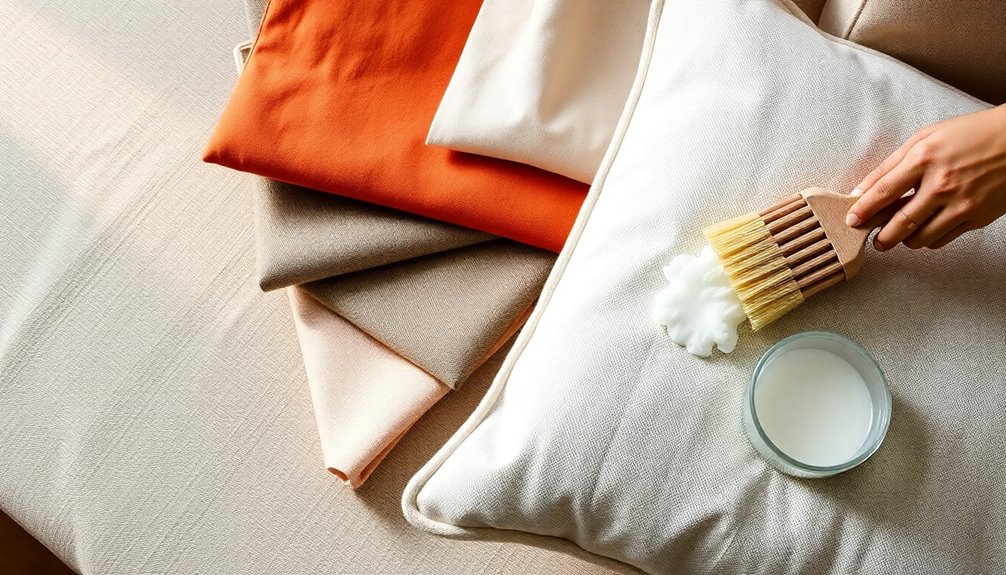
When it comes to cleaning sofa cushions, knowing your fabric type is essential. Each type has different levels of fabric durability and stain resistance, which can affect your cleaning approach.
For instance, cotton cushions are typically durable but can stain easily, while polyester offers better stain resistance and is often easier to clean. If you have microfiber, it’s both soft and resilient, making it a popular choice for families.
Leather, on the other hand, requires special care to maintain its appearance and longevity. By identifying your fabric type, you can choose the right cleaning method and products, ensuring you protect your cushions while effectively removing dirt and stains. This knowledge helps keep your sofa looking fresh and inviting, and regular maintenance can further enhance its longevity.
Essential Tools for Cleaning Sofa Cushions
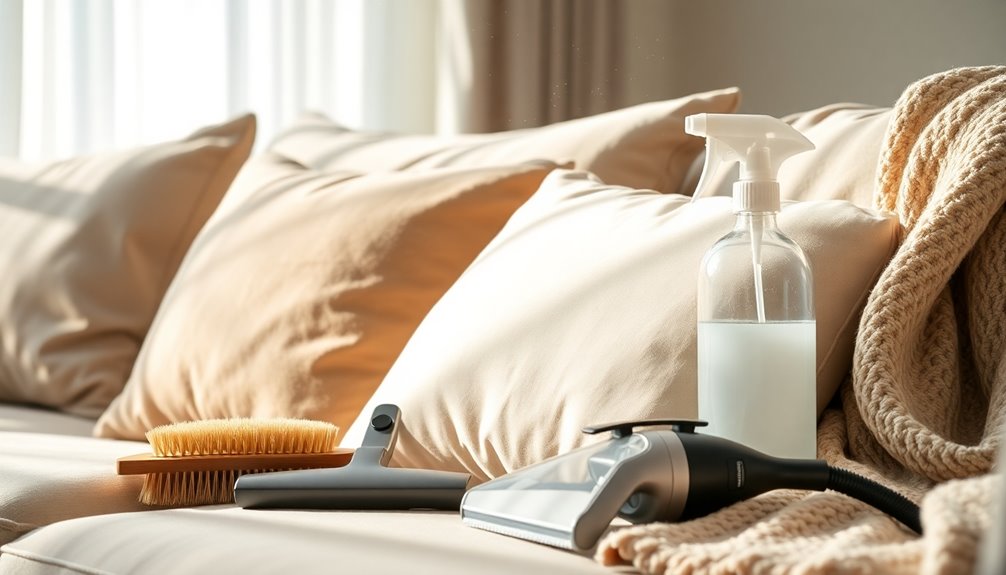
Cleaning sofa cushions effectively requires the right tools at your disposal. Start with upholstery brushes to remove dust and debris, ensuring you choose ones suitable for your fabric type.
Stain removers are essential for tackling specific marks, so have a few on hand. For regular maintenance, establish a cleaning frequency that fits your lifestyle, and keep fabric protectors nearby to shield against future stains. Additionally, using a brush attachment can enhance your cleaning by agitating and loosening dirt embedded in the fabric.
Don’t forget cushion fluffing tools; these help maintain shape and comfort. Additionally, familiarize yourself with proper drying methods to prevent water damage.
With these essential tools, you’ll be well-equipped to employ effective cleaning techniques and keep your sofa cushions looking fresh and inviting.
How to Check for Cleaning Codes on Upholstery?
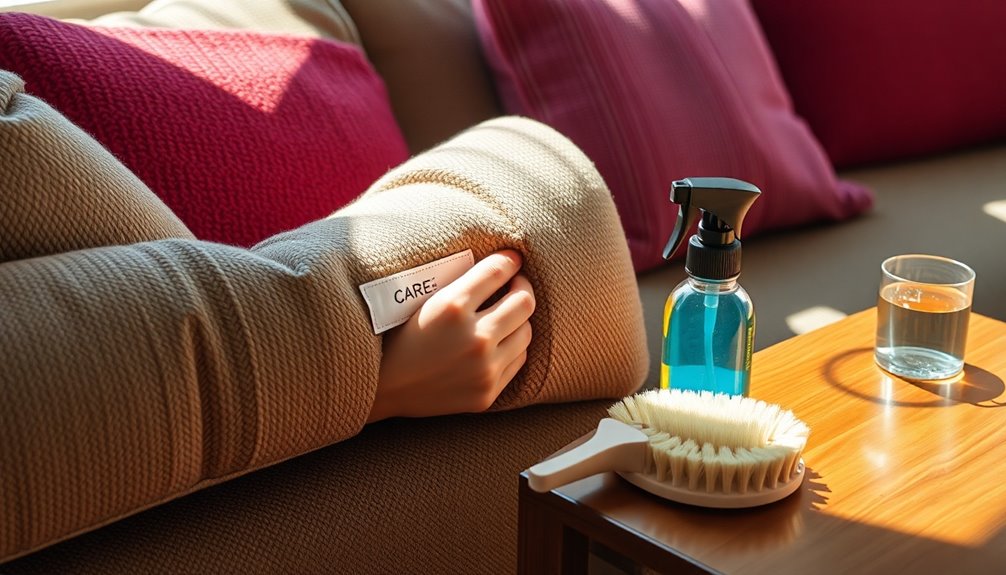
Before you start cleaning your sofa cushions, it’s essential to check the care tag for cleaning codes. These codes will help you decode the symbols that indicate the best cleaning methods for your upholstery. Knowing this information guarantees you choose the right approach and avoid damaging your furniture. Additionally, using non-toxic cleaners ensures a safe cleaning process that protects both your upholstery and your family’s health.
Locate Care Tag
To guarantee you’re using the right cleaning methods for your sofa cushions, start by locating the care tag, which is often hidden beneath a cushion or on the frame.
This tag provides essential information about fabric care, including cleaning codes that specify the best cleaning techniques for your upholstery.
Once you find it, take a moment to read through the instructions.
Different fabrics require different cleaning frequency and methods, so understanding these details is vital for maintaining your sofa’s appearance.
Following the care tag’s guidelines helps prevent damage and guarantees your cushions stay fresh and clean.
Understand Code Symbols
Understanding the cleaning code symbols on your sofa’s care tag is essential for proper maintenance. These codes guide you on which cleaning products are safe to use, ensuring you don’t damage the fabric.
For instance, “W” means you can use water-based cleaners, while “S” indicates you should stick to solvent-based products. If you see “WS,” you’re in luck—you can use either type. “X” suggests only vacuuming or professional cleaning is safe.
Familiarizing yourself with these symbols helps you choose the right cleaning method, protecting your upholstery and extending its lifespan. Always refer to the care tag before you start, as using the wrong cleaning products can lead to irreversible damage.
Prioritize fabric care for best results!
Match Cleaning Method
Checking the cleaning codes on your upholstery is essential for maintaining its appearance and longevity. These codes indicate the best cleaning methods for your specific fabric sensitivity.
Look for tags that display letters like “W,” “S,” or “X,” which guide you on whether to use water-based solutions, solvent-based cleaners, or if vacuuming is the only option.
Understanding these codes helps you choose the right cleaning frequency as well; delicate fabrics may require less frequent cleaning, while sturdier materials can withstand more regular upkeep.
Always follow the manufacturer’s instructions to avoid damaging your sofa. By matching your cleaning method to the fabric code, you’ll keep your cushions looking fresh and extend their lifespan.
The Importance of Regular Maintenance for Sofa Cushions
While it might be easy to overlook sofa cushions during your cleaning routine, regular maintenance is essential for keeping them fresh and inviting.
By incorporating a simple maintenance routine, you can enhance cushion longevity and guarantee your sofa remains a cozy centerpiece in your home.
Incorporating a simple maintenance routine ensures your cushions last longer and keeps your sofa as the inviting centerpiece of your home.
Consider these key maintenance tasks:
- Fluff your cushions regularly to maintain their shape and comfort.
- Rotate cushions to prevent uneven wear and fading.
- Spot clean stains immediately to avoid permanent damage.
- Check for loose threads or zippers to address issues before they worsen. Additionally, remember that regular cleaning helps reduce allergens that can affect indoor air quality.
How to Vacuum Sofa Cushions Effectively
Vacuuming your sofa cushions effectively can make a noticeable difference in their appearance and hygiene.
Start by using the right vacuum techniques; choose a nozzle attachment designed for upholstery to avoid damaging the fabric.
Begin at the top of the cushions and work your way down, making sure to get into crevices and seams where dust and debris often hide.
Don’t forget to flip the cushions over and vacuum the underside as well.
For delicate fabrics, use a low suction setting to guarantee you’re gentle during your upholstery care routine.
Regularly vacuuming not only keeps your cushions looking fresh but also helps extend their lifespan, making your sofa a more inviting space. Additionally, using a vacuum with ergonomic design features can enhance comfort during your cleaning routine.
Spot Cleaning Techniques for Minor Stains
When you spot a minor stain on your sofa cushions, start by identifying the type of stain. Using gentle cleaning solutions is key to avoiding damage, so choose wisely. Remember to blot the stain instead of rubbing it; this prevents spreading and helps lift the stain effectively. Additionally, consider using a mild disinfectant solution to ensure that any bacteria are eliminated during the cleaning process.
Identify Stain Type First
Before tackling stains on your sofa cushions, it’s essential to identify the type of stain you’re dealing with, as this will influence your cleaning approach.
Use these stain identification techniques to guide you:
- Food and Drink: Look for greasy residues or colorful marks from sauces or beverages.
- Ink: Check for darker spots that may spread when touched.
- Dirt and Mud: Identify earthy stains, often crumbly or gritty.
- Pet Accidents: Notice any lingering odors or discoloration that suggests urine or feces.
Recognizing these common stain types helps you determine the best method for spot cleaning.
The right approach not only targets the stain effectively but also protects your fabric from damage.
Use Gentle Cleaning Solutions
Once you’ve identified the type of stain, it’s time to tackle it with gentle cleaning solutions.
Start by mixing a small amount of gentle detergent with warm water. This creates a mild cleaning solution safe for most fabrics. If you prefer store-bought options, look for fabric safe cleaners specifically designed for upholstery.
Test your solution on a hidden area first to verify it won’t damage the fabric. Once you’re confident, apply the solution to the stained area using a clean cloth or sponge.
Blot, Don’t Rub Method
As you tackle minor stains on your sofa cushions, remember the key principle: blot, don’t rub. The blot technique is essential for fabric preservation, as rubbing can push stains deeper into the fibers.
Here’s how to effectively use this method:
- Gather your supplies: Soft cloth or paper towel, mild detergent, and water.
- Dab the stain: Lightly press the cloth onto the stain, absorbing the liquid without scrubbing.
- Repeat if needed: Continue blotting with a clean section of the cloth until the stain lightens.
- Rinse and dry: Use a damp cloth to remove any soap residue, then let the area air dry completely.
Using a Steam Cleaner on Sofa Cushions: Pros and Cons
Using a steam cleaner on sofa cushions can be a game-changer for deep cleaning, but it’s important to weigh the pros and cons.
The steam cleaner advantages include its ability to kill dust mites, bacteria, and allergens, all while using minimal chemicals. This method can effectively refresh your cushions, making them look and smell like new. Additionally, regular cleaning methods can help maintain the overall hygiene of your home.
However, steam cleaner drawbacks exist; high heat and moisture can damage certain fabrics, like silk or velvet. It’s essential to check your fabric care tags before proceeding.
Additionally, improper technique can lead to water stains or mold growth if cushions aren’t dried thoroughly. Always test on a small, inconspicuous area first to verify your cushions can handle the steam treatment.
DIY Cleaning Solutions: Natural Recipes for Sofa Cushions
If you’re looking for effective DIY cleaning solutions for your sofa cushions, natural ingredients can work wonders. A vinegar-based cleaning solution can help tackle tough stains, while a baking soda freshener mix is perfect for eliminating odors. Additionally, using eco-friendly methods can ensure that your cleaning process is safe for both your home environment and the planet. Let’s explore how to whip up these easy recipes for a fresh and clean sofa.
Vinegar-Based Cleaning Solution
A vinegar-based cleaning solution is a simple and effective way to freshen up your sofa cushions.
Vinegar benefits include its ability to eliminate odors and break down dirt without damaging fabric through harsh chemicals. To make your own solution, mix equal parts of white vinegar and water in a spray bottle.
Here’s what you’ll need:
- White vinegar
- Water
- A spray bottle
- A soft cloth
Spray the mixture lightly onto the cushions, focusing on stained areas. Allow it to sit for a few minutes before blotting with a soft cloth.
This method guarantees a gentle fabric interaction, leaving your cushions clean and refreshed without the worry of harm.
Baking Soda Freshener Mix
Baking soda is a fantastic natural option for freshening up your sofa cushions. It’s great at absorbing odors, making it a perfect choice for a quick refresh.
To create your baking soda freshener mix, combine one cup of baking soda with a few drops of your favorite essential oils, like lavender or lemon. This not only helps eliminate smells but also adds a pleasant scent to your cushions.
Sprinkle the mixture generously over your cushions and let it sit for about 15 to 30 minutes.
After that, vacuum it up thoroughly to remove the baking soda and any absorbed odors. You’ll love how fresh and inviting your sofa feels afterward!
Commercial Upholstery Cleaners: What to Look For
When searching for the right commercial upholstery cleaner, how do you verify it meets your needs?
Start by considering these key factors to guarantee effective stain removal while being mindful of your fabric:
- Eco-friendly options: Look for cleaners with biodegradable ingredients that won’t harm the environment.
- Versatility: Choose a product that works on various fabrics, from cotton to synthetic blends.
- Stain removal power: Confirm it’s effective against common stains like wine, coffee, and grease.
- User reviews: Check customer feedback to see how well the cleaner performs in real-life situations.
Additionally, prioritize products that are certified by the EPA Safer Choice to ensure they adhere to health and environmental standards.
How to Remove Pet Hair From Sofa Cushions
Removing pet hair from your sofa cushions doesn’t have to be a hassle.
With the right tools and a simple step-by-step process, you can keep your furniture looking fresh. Regular inspection for pilling helps manage appearance over time and ensures your cushions stay in great shape. Let’s explore how to tackle that pesky pet hair effectively.
Effective Tools To Use
To effectively tackle pet hair clinging to your sofa cushions, having the right tools on hand can make all the difference. Here’s a list of effective cleaning tools you’ll want to take into account:
- Lint rollers: Quick and easy for picking up loose hair.
- Vacuum attachments: Ideal for reaching crevices and corners.
- Fabric brushes: Great for loosening stubborn hair from the fabric.
- Microfiber cloths: Perfect for wiping down surfaces and collecting stray hairs.
Don’t forget to use upholstery sprays to refresh your cushions and stain removers for any marks.
Additionally, think about using protective covers to keep your sofa safe from future pet hair accumulation.
With these tools, you’ll make pet hair removal a breeze!
Step-By-Step Removal Process
With the right tools ready, you’re all set to tackle pet hair on your sofa cushions.
Start by using a rubber glove; simply rub it over the fabric. The static will attract pet hair, making it easier to collect.
Next, grab a lint roller for those stubborn strands, rolling it over the cushions until they’re clear.
If your cushions are machine washable, remove the covers and wash them according to the care label.
After cleaning, don’t forget cushion fluffing to maintain their shape.
For added fabric protection, consider using a pet-friendly spray to repel future hair.
Regular maintenance will keep your sofa looking fresh and free of pet hair!
Dealing With Odors: Freshening up Your Cushions
Even if your sofa cushions look clean, they can still hold onto unpleasant odors over time. To freshen them up, consider using odor neutralizers and fabric sprays specifically designed for upholstery.
Even clean-looking sofa cushions can trap unpleasant odors; using specialized odor neutralizers can help freshen them up effectively.
Here’s how to tackle those pesky smells:
- Sprinkle baking soda on the cushions and let it sit for a few hours to absorb odors.
- Use a fabric spray with a pleasant scent, lightly misting the surface.
- Vacuum the cushions thoroughly after letting the baking soda sit, ensuring you remove all residue.
- Consider placing activated charcoal nearby, as it effectively absorbs lingering odors.
These simple steps will help keep your cushions smelling fresh without damaging the fabric.
Tips for Drying Your Sofa Cushions Safely
When it comes to drying your sofa cushions, ensuring they dry safely is essential to prevent mold and mildew.
Start by using effective drying techniques like air drying in a well-ventilated area. Avoid direct sunlight, as it can fade your fabric.
When placing your cushions, lay them flat on a clean, dry surface to maintain their shape. If possible, prop them up slightly to allow air circulation on all sides.
You can also use fans to speed up the drying process. If you’re in a hurry, a low-heat setting on a hair dryer can help, but keep it moving to prevent overheating.
Protecting Your Sofa Cushions After Cleaning
After drying your sofa cushions, protecting them from future wear and stains is key to maintaining their fresh appearance.
Protecting your sofa cushions from wear and stains is essential for keeping them looking fresh and inviting.
Here are some effective strategies to guarantee longevity:
- Apply fabric protectors: Use a suitable fabric protector to create a barrier against spills and stains.
- Invest in cushion covers: These can be easily removed and washed, helping to keep your cushions clean.
- Establish maintenance routines: Regularly vacuuming and spot-cleaning will help maintain your cushions’ look.
- Practice stain prevention: Promptly treat any spills with appropriate cleaners to avoid long-term damage.
Common Mistakes to Avoid When Cleaning Sofa Cushions
While cleaning your sofa cushions might seem straightforward, it’s easy to make mistakes that can lead to damage or ineffective results. One common error is neglecting fabric compatibility; always check the cleaning codes on your cushions before using any products. Using the wrong cleaner can lead to discoloration or deterioration.
Additionally, be mindful of cleaning frequency. Waiting too long between cleanings can result in built-up dirt and odors, making the job harder.
Don’t soak your cushions either; excessive moisture can cause mold or mildew, especially in natural fabrics.
Finally, avoid scrubbing too hard, as this can damage the fibers. By steering clear of these pitfalls, you can maintain your cushions’ appearance and lifespan effectively.
When to Consult a Professional Cleaner for Your Sofa?
If you notice persistent stains, odors, or wear that regular cleaning can’t fix, it might be time to consult a professional cleaner.
Here are some signs that you should seek professional services for your upholstery care:
- Stains that remain despite your best efforts
- Unpleasant odors that linger
- Fabric fraying or excessive wear
- Allergies or sensitivities triggered by your sofa
Professional cleaners have the expertise and tools to handle tough stains and deep-clean your upholstery without damaging the fabric.
They can also provide specialized treatments for various materials, ensuring your sofa looks fresh and lasts longer.
Don’t wait too long; catching issues early can save you money and keep your sofa in great condition!
Conclusion
By keeping up with regular maintenance and knowing how to clean your sofa cushions properly, you can make them last longer than the most durable fabric known to mankind! Remember to always check the cleaning codes before diving in and to use the right tools. With a little care, your cushions can stay fresh and inviting, turning your living space into a cozy haven. Don’t hesitate to reach out to a pro if you’re unsure—your couch deserves it!