To make a cleaning schedule that sticks, start by evaluating your home’s needs and high-traffic areas. Break down tasks into manageable chunks, focusing on daily priorities. Choose a cleaning frequency that fits your lifestyle, and don’t shy away from using tools like apps and checklists to stay organized. Stay motivated by gamifying chores and involving family members. With a bit of customization and flexibility, you can turn cleaning into a routine that feels effortless. Discover even more tips to get started!
Why a Cleaning Schedule Can Transform Your Home
When you implement a cleaning schedule, you’re not just organizing your space; you’re creating a more peaceful home environment. The cleaning benefits extend far beyond tidiness; you’ll experience significant stress reduction as clutter disappears.
By prioritizing time management, you’ll find yourself more productive and less overwhelmed. A well-structured routine promotes consistent routine maintenance, ensuring that your home stays in shape.
You can also involve your family in the process, turning chores into a bonding activity. This collective effort enhances home organization and fosters responsibility.
Ultimately, a cleaning schedule allows for space optimization, making every corner of your home functional and inviting. Transforming your space this way enhances your overall well-being and creates a happier, healthier living atmosphere. Additionally, utilizing visual tools like wall planners can further streamline your cleaning tasks and reinforce daily habits.
Assessing Your Cleaning Needs: What to Consider

To create a cleaning schedule that works for you, start by identifying your home’s high-traffic areas. Next, evaluate your time constraints to see how much you can realistically commit. Finally, consider the roles of everyone in your household to guarantee cleaning responsibilities are shared effectively. Additionally, recognizing the importance of daily cleaning tasks can help establish a strong foundation for your schedule.
Identify High-Traffic Areas
Identifying high-traffic areas in your home is vital for an effective cleaning schedule. These spots accumulate dirt and clutter quickly, so focusing on them helps maintain overall cleanliness.
Consider these areas:
- Entryways: Guarantee entryways cleanliness to prevent dirt from spreading throughout your home.
- Kitchen: Prioritize kitchen maintenance, where spills and messes happen often.
- Living Room: Keep up with living room organization, as it’s a gathering spot for family and friends.
- Bathroom: Regular bathroom hygiene is essential for a fresh and inviting space.
Don’t forget about hallways, pet areas, and your office space—they can also benefit from your attention.
Evaluate Time Constraints
Focusing on high-traffic areas sets a solid foundation for your cleaning efforts, but understanding your available time is just as important.
Evaluate how much time you can realistically dedicate to cleaning each week. It’s essential to set aside specific blocks of time for tasks, ensuring effective time management.
Think about your routine and identify when you can fit these chores in without feeling rushed. This helps you establish realistic expectations for what you can achieve.
Remember, it’s better to commit to a few manageable tasks each day than to overwhelm yourself with an exhaustive list.
Consider Household Members’ Roles
While you craft your cleaning schedule, it’s essential to take into account the roles of everyone in your household. Understanding family responsibilities can help create a more effective plan.
Here are some strategies to contemplate:
- Assess Cleaning Preferences: Find out what tasks each member likes or dislikes to make role assignments easier.
- Task Delegation: Distribute tasks based on age and ability, ensuring everyone contributes.
- Involvement Strategies: Engage family members by discussing the importance of a clean home and how they can help.
- Teamwork Approach: Encourage accountability partners to support each other in completing assigned tasks.
Choosing the Right Cleaning Frequency for Your Space
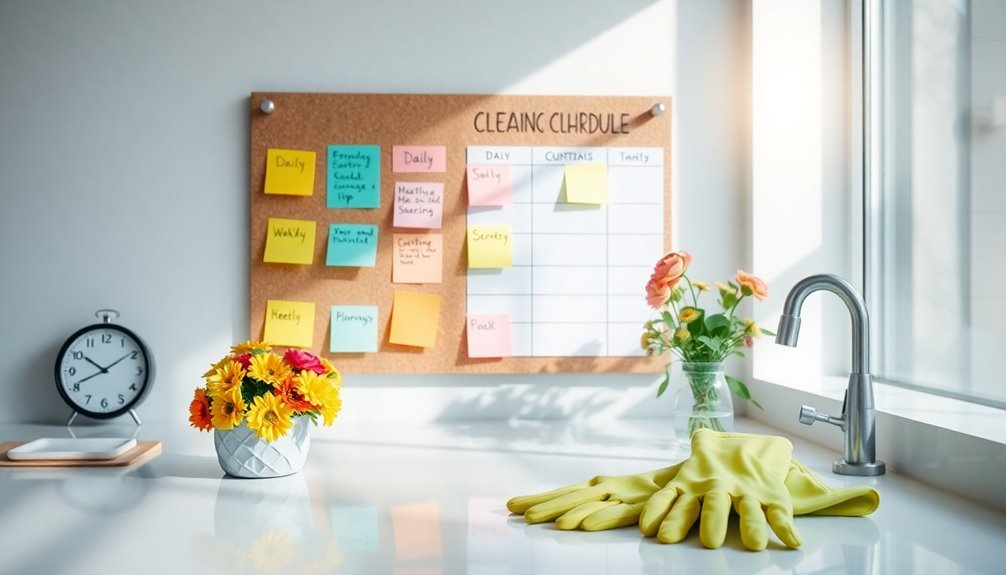
How often should you clean your space to keep it looking its best? The answer depends on your cleaning preferences and how you use your space.
If you have a busy household, your cleaning frequency might need to be higher to accommodate family dynamics and personal habits. For instance, high-traffic areas like kitchens may need weekly attention, while less-used rooms can be cleaned less frequently.
Consider seasonal changes, too; spring might prompt a deep clean, while winter could call for lighter maintenance routines. Evaluating your lifestyle and the specific needs of your space will help you choose the right cleaning frequency, ensuring you keep everything tidy without feeling overwhelmed. Additionally, a well-structured cleaning checklist can streamline your efforts and keep you organized throughout the cleaning process.
How to Break Down Cleaning Tasks Into Manageable Chunks
Breaking down cleaning tasks makes your routine feel less overwhelming.
Start by prioritizing key areas that need attention, then set time blocks to keep you on track.
Finally, create daily tasks that fit into your schedule, ensuring everything gets done without stress. Incorporating a cleaning checklist boosts motivation and provides a sense of accomplishment.
Prioritize Key Areas
Cleaning doesn’t have to feel overwhelming; by prioritizing key areas, you can tackle tasks more effectively. Focus on the spaces that impact your daily life the most. Here’s how to break it down:
- Kitchen Cleanliness: Start with surfaces and appliances; a clean kitchen sets the tone for the whole home.
- Bathroom Upkeep: Regularly scrub sinks and toilets; a fresh bathroom feels inviting.
- Bedroom Organization: Declutter by keeping only what you need; a tidy bedroom promotes relaxation.
- Living Room Tidiness: Create an inviting space by managing clutter and maintaining cleanliness.
Don’t forget to schedule laundry management and seasonal deep cleaning to keep everything under control, including pet areas.
Prioritizing these tasks makes cleaning manageable!
Set Time Blocks
Setting time blocks can transform your cleaning routine from challenging to doable. By breaking your tasks into manageable chunks, you enhance your time management skills and boost productivity.
Start by determining how much time you can realistically dedicate to cleaning each day. For instance, set 20-minute blocks for specific tasks—like dusting or vacuuming. Use a timer to keep yourself focused and motivated.
After each block, take a quick break to recharge. This method not only helps you stay organized but also makes cleaning feel less overwhelming.
Incorporating these productivity hacks allows you to see progress quickly, making it easier to stick to your schedule. Soon, cleaning will feel like a breeze rather than a chore!
Create Daily Tasks
While it might seem overwhelming to tackle your entire home at once, creating daily tasks can simplify the process considerably.
By breaking down your cleaning into manageable chunks, you’ll make it easier to keep everything organized. Start using daily checklists to stay on track and implement a task rotation to avoid monotony.
Here’s a simple list to get you started:
- Monday: Dust surfaces and vacuum common areas.
- Tuesday: Clean bathrooms, including toilets and sinks.
- Wednesday: Wipe down kitchen counters and appliances.
- Thursday: Tidy bedrooms, making beds and organizing clutter.
Tools and Resources to Help You Stay Organized
Getting organized can feel overwhelming, but the right tools make all the difference. Start by exploring cleaning apps that help you manage tasks and set up reminders.
Getting organized doesn’t have to be daunting; the right apps can streamline your tasks and set helpful reminders.
Use organizational tools like digital planners and checklist apps to create visual charts of your cleaning schedule. Schedule templates can simplify planning your weekly or monthly tasks, while task trackers guarantee you stay on top of each chore.
Implement reminder systems to nudge you when it’s time to clean specific areas. Don’t forget about home inventory tools to keep track of your cleaning kits and supplies. Incorporating daily cleaning tasks into your routine will help you maintain a consistent and effective cleaning schedule.
With these resources, you’ll find it easier to maintain an organized cleaning routine that truly sticks!
Tips for Customizing Your Cleaning Schedule
To create a cleaning schedule that truly fits your lifestyle, start by evaluating your unique needs and preferences. Here are some tips for customizing your cleaning routines:
- Assess your space: Consider the size and layout of your home. Larger spaces may require more frequent cleaning.
- Identify priorities: List areas that need more attention, like kitchens or bathrooms, and focus on them in your personalized checklists.
- Set realistic goals: Don’t overwhelm yourself. Break tasks into manageable chunks to make cleaning less intimidating.
- Adjust frequency: Decide how often each task needs to be done—daily, weekly, or monthly—based on your lifestyle and preferences. Incorporating a chore chart can help distribute responsibilities and keep everyone accountable.
With these steps, you’ll create a cleaning schedule that truly works for you!
Staying Motivated: Making Cleaning a Fun Routine
Creating a personalized cleaning schedule is just the first step; keeping yourself motivated is key to making it stick. To stay engaged, consider adding cleaning rewards for completing tasks.
Use music motivation to energize your routine—create a playlist that gets you moving! Visual reminders, like colorful charts, can help you track progress.
Engage family involvement by turning chores into fun cleaning challenges or themed cleaning days. You can even gamify chores by setting time limits or racing with cleaning buddies.
Seasonal themes can add excitement, making it feel fresh each time. By mixing these strategies into your routine, you’ll find cleaning becomes less of a chore and more of an enjoyable part of your day! Additionally, implementing a systematic approach to your tasks can enhance efficiency and keep you on track.
Adjusting Your Schedule: When Life Gets Busy
Even when life gets hectic, adjusting your cleaning schedule can keep your home tidy without adding stress. Effective time management is key to making this work.
Adjusting your cleaning schedule can help maintain a tidy home, even amidst the chaos of life.
Here are four simple strategies to help you adapt:
- Prioritize Tasks: Focus on high-impact areas, like kitchens and bathrooms, to maximize cleanliness.
- Set a Timer: Dedicate short bursts of 10-15 minutes to tackle specific tasks, making cleaning feel less overwhelming.
- Delegate Responsibilities: Involve family members or roommates to share the load, enhancing teamwork and efficiency.
- Be Flexible: If you miss a day, reschedule it rather than feeling guilty. This promotes stress reduction and keeps you on track.
Additionally, incorporating a systematic cleaning approach can help streamline your efforts and ensure no areas are overlooked.
With these adjustments, you’ll maintain a clean space, no matter how busy life gets!
Common Mistakes to Avoid in Your Cleaning Schedule
While a cleaning schedule can simplify your chores, common mistakes can undermine your efforts. One major pitfall is setting unrealistic expectations. If you cram too many tasks into one day, you’re likely to feel overwhelmed and discouraged. This can lead to cleaning procrastination pitfalls, where you put off chores altogether.
Instead, break your tasks into manageable chunks and spread them throughout the week. Another mistake is neglecting to adjust your schedule as needed. Life happens, and flexibility is key. Additionally, involving family members in cleaning tasks can lighten your workload and foster teamwork.
Ultimately, don’t forget to include breaks; they’ll keep you motivated and prevent burnout. By avoiding these common errors, you’ll create a cleaning schedule that truly works for you, making your home a more pleasant place to be.
Conclusion
Creating a cleaning schedule is like planting a garden; it requires consistent effort, but the blooms of a tidy home are worth it. Just as you wouldn’t expect flowers overnight, don’t stress if the schedule needs tweaking. Remember, even the best gardeners face unexpected storms. Embrace flexibility, and soon, you’ll cultivate a space that feels fresh and inviting. Stick to your routine, and watch how your home transforms into a sanctuary you love coming back to.