Cleaning up snack and meal messes doesn’t have to be a chore. For crumbs, use a handheld vacuum or damp cloth. Tackle sticky residues with a vinegar solution or baking soda paste. For spills, block the area and gently blot with towels. Encourage kids to pitch in with cleanup, and regularly maintain surfaces to prevent future messes. Want more clever hacks and strategies to keep your kitchen and dining areas spotless? Let’s explore further!
The Best Way to Clean up Crumbs From Tables and Counters
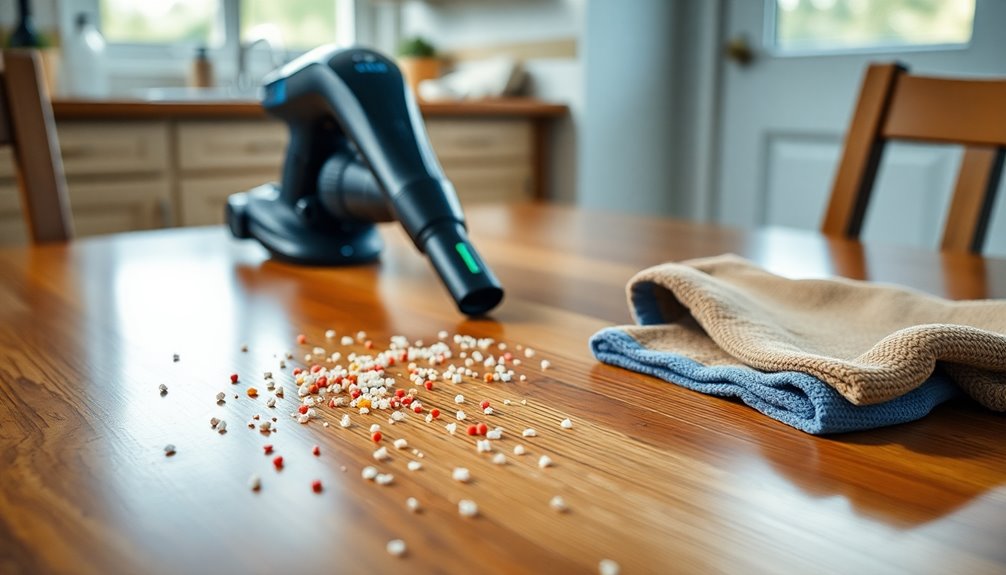
When it comes to cleaning up crumbs from tables and counters, a quick and efficient approach can save you time and effort. You can use simple crumb catching techniques to make the task easier.
Start with a handheld vacuum or a crumb brush, which lets you quickly gather debris without needing to wipe everything down first. Another effective method is to use a damp paper towel; it picks up crumbs while leaving surfaces clean.
For table cleaning hacks, consider placing a placemat or tray under your dishes to catch spills and crumbs during meals. After eating, simply shake it out or wipe it clean. Regular maintenance of your baseboards can also help in keeping your kitchen area clean and dust-free.
With these tips, you’ll tackle crumbs in no time, keeping your space tidy and inviting!
How to Tackle Sticky Residues on Surfaces
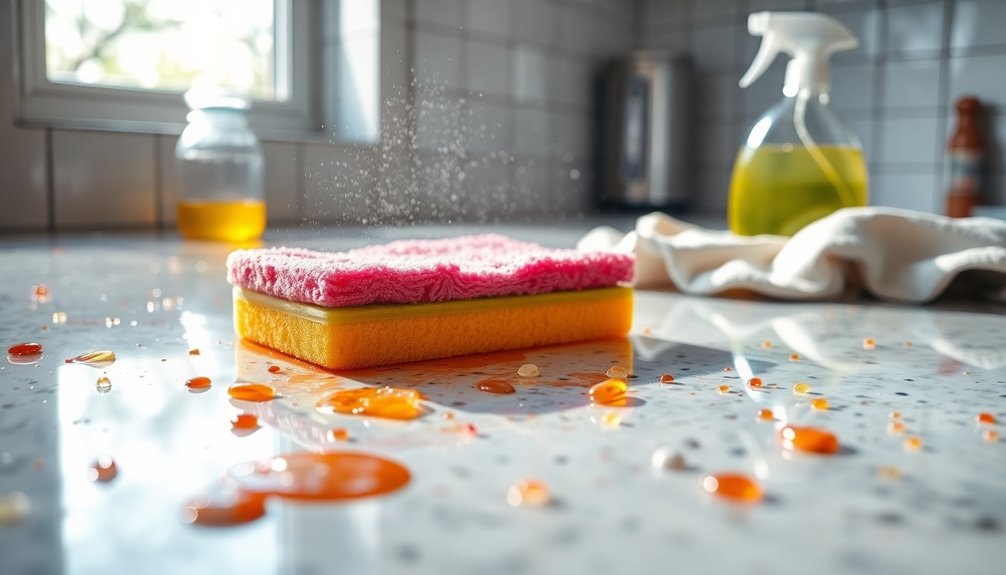
When it comes to sticky residues, you’ll want to know the best cleaning solutions and tools to tackle them effectively. We’ll also share some prevention tips to keep your surfaces looking their best. Regular cleaning habits can help prevent grease buildup and make your cleaning routine easier and more efficient! Let’s get started on making your cleaning routine easier and more efficient!
Effective Cleaning Solutions
Although sticky residues can be frustrating, tackling them effectively doesn’t have to be a hassle. For quick and efficient cleaning, consider using natural cleaning solutions.
A simple mix of equal parts vinegar and water works wonders on most surfaces. Just spray it on the sticky area and wipe with a cloth.
If you prefer a more powerful solution, try baking soda. Sprinkle it on the residue, add a few drops of water to create a paste, and scrub gently.
Both methods are eco-friendly solutions that are safe for your family and the environment. Don’t forget to rinse the area afterward to remove any lingering scents.
With these tips, you’ll have your surfaces spotless in no time!
Tools For Sticky Residues
Dealing with sticky residues can be a breeze if you’ve got the right tools on hand. Start with a reliable residue remover; these products are specifically designed to break down stubborn stickiness without damaging your surfaces.
For quick fixes, keep sticky tape handy; it’s great for lifting away small bits of residue from tables and countertops. Simply press the tape down onto the sticky area and pull it up to remove the gunk.
Microfiber cloths are also essential, as they effectively wipe away any leftover cleaner or residue without scratching your surfaces.
With these tools in your cleaning arsenal, tackling sticky messes becomes quick and easy, leaving your kitchen and dining areas spotless.
Prevention Tips For Surfaces
To prevent sticky residues from becoming a hassle, it’s essential to adopt a few simple habits in your kitchen and dining areas.
Start by using surface protection like placemats or tablecloths during meals to catch spills before they reach your surfaces. Clean up spills immediately—don’t let them sit and harden!
Regularly apply a protective sealant to countertops to create a barrier against sticky substances. For mess prevention, encourage family members to use coasters for drinks and to wipe their hands before touching surfaces.
Finally, make it a routine to inspect and clean surfaces daily, ensuring that any stickiness gets addressed right away. These small steps can save you time and effort in the long run!
Quick Tricks for Removing Food Stains From Fabrics
Food stains can be a real headache, but you don’t have to panic. Knowing how to treat common stains and applying effective cleaning methods can save your favorite fabrics. Let’s explore some quick tricks to tackle those pesky marks. Quick action is vital for successful stain removal, as prompt action increases the likelihood of effectively lifting fresh stains before they set in.
Common Food Stains Explained
Stains from common snacks and meals can quickly turn your favorite fabrics into eyesores.
Whether it’s fruit juice from a morning smoothie or coffee spills on your shirt, these mishaps happen to everyone.
Chocolate smudges from dessert, sauce drips during dinner, and grease spots from fried foods can all leave their mark.
Ice cream can melt into a sticky mess, while pasta sauce often results in deep, red stains.
Wine stains can be particularly tricky, and mustard marks are notorious for sticking around.
Don’t forget about those pesky sticky fingers that leave traces of every fun snack.
Knowing how to tackle these stains will keep your fabrics looking fresh and clean, making your dining experiences much more enjoyable.
Pre-Treatment Techniques Overview
When those pesky food stains strike, acting quickly can make all the difference.
Start with simple pre-treatment methods to tackle stains before they set in. First, gently blot the stain with a clean cloth to remove excess food; avoid rubbing, which can spread the stain.
Next, rinse the fabric with cold water to help lift the stain. For tougher spots, apply a small amount of liquid laundry detergent directly to the stain and let it sit for about five minutes.
You can also use a homemade solution, like a mix of white vinegar and water, for extra stain removal power.
Effective Fabric Cleaning Methods
While dealing with unexpected spills can be frustrating, knowing effective fabric cleaning methods can save your favorite clothes.
First, act quickly. Blot the stain with a clean cloth to absorb excess liquid—don’t rub!
For grease stains, sprinkle baking soda to absorb it, then brush off before laundering.
If it’s a fruit or sauce stain, mix equal parts vinegar and water, apply it directly, and rinse.
For tougher stains, a commercial stain remover can work wonders; just follow the instructions.
Always check the care label for any specific fabric care guidelines.
Finally, wash the fabric in cold water to prevent setting the stain.
With these quick tricks for stain removal, you’ll keep your fabrics looking fresh and clean!
Dealing With Spills: Effective Methods for Quick Cleanup
Spills can happen in the blink of an eye, but quick action can save your surfaces from lasting damage.
Start with spill containment by blocking off the area to prevent further mess. Grab paper towels or a clean cloth and gently blot the spill—don’t wipe, as that can spread it.
If it’s a sticky substance, use a plastic scraper to lift it without scratching your surface. For liquids, a quick emergency cleanup involves dabbing until the cloth comes away mostly clean.
If any residue remains, mix a mild detergent with water, apply it, and wipe clean. Finally, rinse the area with plain water and dry it thoroughly. Regularly cleaning surfaces helps maintain a safe and healthy environment in your kitchen! This guarantees you’re left with a clean, spill-free space!
Best Practices for Cleaning Up After Kids’ Mealtime
Cleaning up after kids’ mealtime can feel overwhelming, but you can make it easier with a few smart strategies. Gather essential cleaning supplies and involve your little ones in the process to teach them responsibility. Involving kids in cleaning not only fosters accountability but also enhances their self-esteem through the completion of tasks. Let’s explore quick cleanup tips and ways to encourage their participation!
Quick Cleanup Strategies
After mealtime with kids, it’s easy to feel overwhelmed by the mess that’s left behind, but a few quick strategies can make the cleanup process smoother.
Start with a quick tidy by gathering all the dishes and utensils first. Encourage your kids to help—having them toss their scraps in the trash can make a big difference.
Next, use a damp cloth to swiftly wipe down surfaces, targeting crumbs and spills. If you have a handheld vacuum, it’s perfect for quick cleanups of the floor.
Finally, create a routine that involves everyone; the more hands on deck, the faster the cleanup.
With these strategies, you’ll achieve a swift cleanup and regain control over the chaos of mealtime!
Essential Cleaning Supplies
When tackling the aftermath of a mealtime with kids, having the right cleaning supplies on hand can make all the difference. Stocking up on these cleaning essentials will help you breeze through the mess with ease:
- Microfiber cloths for quick wipe-downs
- All-purpose cleaner to tackle sticky surfaces
- A sturdy broom and dustpan for crumbs
- Wet wipes for fast cleanups on-the-go
These must-have supplies not only simplify the process but also guarantee you’re prepared for anything your little ones throw your way.
Remember, a well-equipped cleaning station makes it easier to maintain your sanity while keeping your kitchen and dining areas tidy.
With the right tools, you’ll find cleanup can be a breeze, leaving you more time to enjoy moments with your kids.
Encouraging Kids’ Participation
Having the right cleaning supplies sets the stage for a smoother cleanup, but getting kids involved can make the process even easier and more enjoyable.
Start by assigning kid-friendly chores that match their abilities, like wiping down tables or sorting utensils. Turn cleanup into fun cleaning games where they can race against the clock or collect points for each task completed. You might say, “Let’s see who can pick up the most crumbs in one minute!”
This not only makes the process engaging but also teaches responsibility. Celebrate their efforts with small rewards, like stickers or extra playtime.
How to Efficiently Sanitize Kitchen Utensils and Surfaces
To keep your kitchen safe from harmful bacteria, it’s essential to efficiently sanitize your utensils and surfaces.
Here are some effective methods to guarantee cleanliness:
- Use hot, soapy water for utensil sanitization methods.
- Rinse with a vinegar solution for extra disinfection.
- Wipe down surfaces with a bleach solution or commercial disinfectant.
- Allow utensils and surfaces to air dry to prevent bacterial regrowth.
Additionally, incorporating microfiber cloth sanitizing techniques can enhance your cleaning efficiency by effectively trapping and removing dirt and bacteria.
The Right Tools for Wiping Down Kitchen Appliances
When it comes to wiping down your kitchen appliances, having the right tools makes all the difference.
You’ll want to gather essential cleaning supplies and know specific tips for each appliance to guarantee a thorough clean. Regular maintenance by wiping down appliances with a damp cloth after each use is crucial for keeping them in top shape.
Let’s explore what you’ll need for a sparkling kitchen!
Essential Cleaning Supplies
The right cleaning supplies can make all the difference when it comes to effectively wiping down kitchen appliances. Having a solid cleaning checklist is essential to guarantee you tackle every surface without missing a spot.
Here are some essential tools you’ll want to have on hand:
- Microfiber cloths for streak-free shine
- All-purpose cleaner to cut through grime
- Baking soda for gentle scrubbing
- Disinfectant wipes for quick cleanups
With these supplies, you’ll be well-equipped to maintain your kitchen appliances.
Regularly using the right tools not only keeps your appliances looking great but also extends their lifespan.
Appliance-Specific Cleaning Tips
Different kitchen appliances require specific cleaning techniques to keep them in top shape. For your refrigerator, use a mixture of water and vinegar to wipe down surfaces, ensuring you tackle spills immediately to prevent odors.
When it comes to your microwave, a simple bowl of water with lemon can help loosen grime—just heat it for a few minutes before wiping. For your toaster, unplug it and use a soft brush to remove crumbs, ensuring thorough appliance maintenance.
Don’t forget your dishwasher; run a cycle with vinegar to clear buildup.
Finally, keeping your appliances organized makes cleaning easier, so regularly declutter and rearrange items to maintain an efficient kitchen space. Your efforts will pay off in both cleanliness and functionality!
How to Organize and Dispose of Leftover Snacks
Here are some simple steps to manage your snacks:
- Use clear containers for leftover storage to easily identify what’s inside.
- Label your snacks with dates to keep track of freshness.
- Practice snack rotation: place older snacks in front so you use them first.
- Dispose of expired items promptly to avoid waste.
- Keeping your kitchen dry and clean can help prevent unpleasant odors from lingering around leftover snacks.
Tips for Keeping Your Dining Area Dust and Dirt-Free
To keep your dining area dust and dirt-free, start by establishing a regular cleaning routine that fits seamlessly into your lifestyle.
Dust control is essential, so make it a habit to wipe surfaces with a microfiber cloth at least once a week. Don’t forget to clean underneath your dining decor, as dust can accumulate there too.
Incorporate air purifiers or plants that help reduce dust levels, enhancing your dining experience.
When you set the table, consider using placemats that can be easily washed, preventing crumbs from settling on your table.
Finally, encourage family members to remove shoes before entering the dining area, further minimizing dirt.
A consistent approach will keep your space inviting and pristine, while effective organization can also contribute to a more enjoyable dining atmosphere.
How to Clean up After a Family Gathering With Ease
After enjoying a lively family gathering, the last thing you want is to feel overwhelmed by the cleanup.
After a joyful family gathering, embrace the cleanup with ease instead of dread.
Use these gathering strategies for a smooth family cleanup:
- Assign Tasks: Delegate specific chores to family members, like wiping surfaces or clearing the table.
- Create a Cleaning Station: Set up a designated area with trash bags, cloths, and cleaning supplies for easy access.
- Use Disposable Items: If possible, opt for disposable plates and utensils to minimize washing.
- Play Music: Keep the mood light and fun with upbeat tunes to make cleaning feel less like a chore.
Incorporating a cleaning caddy can streamline your cleanup process and ensure you have all your supplies at hand.
With these tips, you’ll tackle the mess quickly and efficiently, allowing you to enjoy the memories made rather than stress over the aftermath!
Best Ways to Manage Dishes and Utensils After Meals
When you’ve finished a meal, managing the dishes and utensils can feel challenging, but it doesn’t have to be. Start by gathering all the dishes and utensils into one area, making it easier to tackle the mess.
Use efficient dishwashing techniques, like rinsing items before loading them into the dishwasher or soaking stubborn residue in hot, soapy water. For pots and pans, scrub them right after use to prevent buildup.
Next, focus on utensil organization. Keep a designated container for utensils near the sink, so you can sort forks, knives, and spoons quickly.
After washing, dry them and place them back in their designated spots. Implementing these strategies streamlines your post-meal cleanup, making it a breeze.
How to Remove Grease Stains From Kitchen Floors
Although grease stains on kitchen floors can be stubborn, you can tackle them effectively with the right approach. Here are some grease removal techniques to contemplate:
Grease stains on kitchen floors can be tough, but with the right methods, you can easily restore their shine.
- Dish soap and warm water: A simple mixture can cut through grease quickly.
- Baking soda paste: Mix baking soda with water for a gentle abrasive cleaner.
- Vinegar solution: Combine equal parts vinegar and water for natural floor cleaning solutions.
- Commercial degreasers: Use these for tough stains that resist DIY methods.
Start by applying your chosen solution, letting it sit for a few minutes, then scrub the area gently.
Rinse with clean water and dry thoroughly. With persistence, your kitchen floors will shine again!
Clever Hacks for Preventing Future Messes
To keep your kitchen clean and minimize messes, consider implementing a few clever hacks that make daily tasks easier.
Start with mess proofing strategies like using silicone mats under appliances to catch crumbs and spills. For cooking, always use a splatter screen when frying to prevent grease from flying everywhere.
Invest in spill-proof containers for liquids and snacks; they can save you from unexpected cleanups. When eating, designate a specific spot for kids’ snacks to contain crumbs and wrappers.
Finally, keep a small handheld vacuum or damp cloth nearby for quick cleanups. These simple steps will enhance spill prevention and help you maintain a tidy kitchen with minimal effort.
The Importance of Regular Kitchen Maintenance
Keeping your kitchen tidy isn’t just about preventing messes; it’s also about maintaining the space for long-term efficiency. Regular kitchen maintenance guarantees your cooking area remains functional and inviting. A solid cleaning schedule can help you stay on top of tasks, making it easier to keep everything organized.
- Reduces clutter
- Prevents pests
- Increases safety
- Enhances cooking experience
Investing time in kitchen organization pays off. By regularly cleaning and organizing, you’ll create a more enjoyable cooking environment.
Plus, you’ll save time searching for tools and ingredients when you need them most. Make it a habit to maintain your kitchen, and you’ll notice the difference in both your cooking and dining experiences.
How to Keep Your Dining Area Inviting and Clean?
Creating an inviting and clean dining area can transform mealtime into a delightful experience. Start by decluttering the space; remove items that don’t belong. Dust surfaces and wipe down furniture to guarantee everything sparkles.
Next, pay attention to your dining decor—choose a centerpiece like fresh flowers or a stylish bowl for a warm touch. Regularly vacuum or sweep the floor to maintain cleanliness. Use placemats and coasters to protect surfaces and make cleanup easier.
Don’t forget to keep lighting soft and warm; it enhances the inviting atmosphere. Finally, consider adding personal touches, like family photos or artwork, to create a cozy vibe.
With these simple steps, you’ll keep your dining area both welcoming and tidy.
Conclusion
Cleaning up after meals can feel like chasing a runaway train—just when you think you’ve caught up, more mess comes barreling down the track. But with a few simple tricks, you can keep your kitchen and dining areas on track and tidy. Remember, just like a well-oiled machine, regular maintenance makes the job easier and more manageable. So grab those cleaning supplies and take charge; your space deserves to shine after every snack and meal!