Cleaning your house when you’re tired and overwhelmed can feel intimidating, but you can manage it! Start by prioritizing high-impact areas like the entryway and living room. Break tasks down into smaller chunks and use a timer for short bursts of focused cleaning. Embrace the 15-minute rule to tackle one area at a time, and create a fun cleaning playlist to keep your energy up. With these strategies, you’ll feel more organized and ready for the next steps.
Why Cleaning When Tired Can Be Challenging
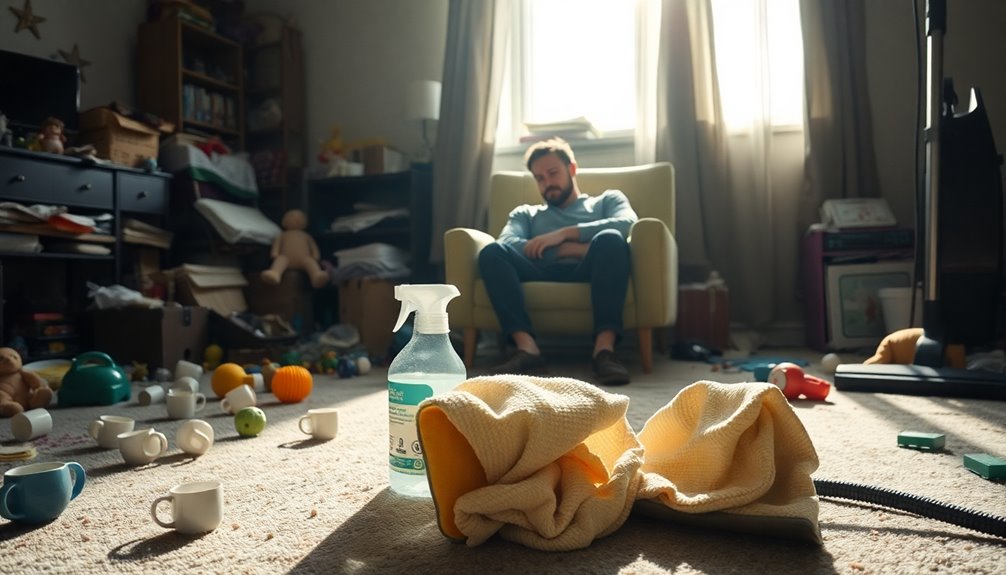
Cleaning when you’re tired can feel overwhelming, especially when your energy levels are low and your to-do list seems endless. It’s easy to get stuck in mental fatigue, making it hard to find the cleaning motivation you need.
When you’re exhausted, even the thought of starting can seem intimidating. This fatigue clouds your judgment, making it difficult to prioritize tasks or even decide where to begin. You might find yourself procrastinating, which only adds to your stress.
It’s essential to recognize that your tiredness is a valid reason to take a step back. Accepting this can help you approach cleaning with a clearer mind, eventually leading to more effective and manageable results when you do find the energy to tackle those chores. Implementing time-saving cleaning strategies can also help you maximize your efforts and minimize overwhelm during these moments.
Prioritize: What to Clean First When Overwhelmed?

When you’re feeling overwhelmed, it’s essential to prioritize your cleaning tasks.
Start by focusing on high traffic areas that need the most attention, and tackle one room at a time to keep things manageable.
This approach helps you regain control and makes the process feel less intimidating. Additionally, incorporating quick daily tasks into your routine can significantly reduce the build-up of dirt and clutter, making cleaning less daunting.
Focus On High Traffic Areas
Focusing on high traffic areas can make a significant difference when you’re feeling overwhelmed.
By targeting these high traffic zones, you’ll manage to create a cleaner and more inviting space with less effort.
Here’s what you should clean first:
- Entryway: Clear shoes, coats, and other clutter to create a welcoming space.
- Living Room: Tidy up the surfaces and fluff the cushions for instant freshness.
- Kitchen: Wipe down counters and load the dishwasher to maintain daily maintenance.
- Bathroom: Quickly clean the sink and toilet to guarantee a hygienic environment.
Tackle One Room At A Time
Even if you’re feeling drained, tackling one room at a time can make the cleaning process feel more manageable.
Start with the room that needs the most attention—often the living room or kitchen. Focus on quick room organization: declutter surfaces, put items back in their place, and wipe down high-touch areas. This approach makes it easier to establish effective cleaning routines.
Once you finish one room, take a short break, then move on to the next. You’ll find that each completed space boosts your motivation and sense of achievement.
Don’t overwhelm yourself with the whole house; by concentrating on one area at a time, you’ll create a cleaner, calmer environment without the exhaustion.
Break It Down: The Power of Small Tasks

While tackling a messy house can feel overwhelming, breaking it down into small, manageable tasks makes the process much easier.
By focusing on one small task at a time, you can effectively practice energy management and prevent burnout. Consider using task batching to group similar chores together for efficiency.
Here’s how to get started:
- Choose one area – Focus on a single room or space.
- List specific tasks – Identify what needs cleaning, like dusting or vacuuming.
- Set a time limit – Give yourself 10-15 minutes for each task.
- Celebrate small wins – Acknowledge your progress to stay motivated.
Involving family members can also lighten the workload and make cleaning more enjoyable, as it fosters teamwork and builds responsibility. These small steps will help you regain control without feeling overwhelmed.
Set a Timer: How to Clean Efficiently in Short Bursts?
Setting a timer can transform your cleaning routine by making it more manageable and efficient.
By breaking tasks into short bursts, you can stay focused and avoid burnout.
Let’s explore some effective timer techniques to help you make the most of your limited energy. Incorporating speed cleaning into your routine can further enhance your efficiency and reduce feelings of overwhelm.
Benefits Of Time Management
When you’re feeling tired, managing your time effectively can make a world of difference in how you tackle cleaning tasks. By implementing time allocation and scheduling techniques, you can boost your productivity, even when you’re low on energy.
Consider these benefits:
- Focused Efforts: Short bursts of cleaning allow you to concentrate on specific tasks without feeling overwhelmed.
- Reduced Stress: Knowing you have a set time for each task can ease anxiety about cleaning.
- Increased Motivation: A timer creates a sense of urgency, pushing you to complete tasks quickly.
- Better Organization: Scheduling your cleaning helps you prioritize what needs to be done first, ensuring efficient use of your time.
Use these strategies to make cleaning a breeze!
Suggested Timer Techniques
Using a timer can revolutionize how you approach cleaning, especially on those days when your energy is low. By implementing timer techniques, you can break tasks into manageable cleaning intervals, making it easier to stay focused.
Start with a 15-minute interval: set your timer, tackle a specific area, and give it your all. When the timer goes off, take a 5-minute break to recharge. Repeat this cycle until you feel accomplished. You’ll be amazed at how much you can get done in short bursts.
If you’re feeling particularly drained, adjust the intervals to suit your energy level—maybe 10 minutes of cleaning followed by a longer break. This method keeps you motivated while preventing burnout.
Create a Cleaning Playlist to Boost Your Energy
Music can be a powerful motivator, especially when tackling household chores.
To create a cleaning playlist that boosts your energy, follow these steps:
- Choose Your Genre: Pick uplifting genres, like pop or dance, that get you moving.
- Add Cleaning Beats: Look for songs with a strong, steady rhythm to keep you motivated.
- Incorporate Energizing Tunes: Select tracks that you love, making the task feel less like a chore.
- Mix It Up: Include a variety of songs to prevent boredom and keep your energy levels high.
With the right playlist, you’ll find yourself cleaning faster and enjoying the process. Additionally, consider incorporating upbeat tracks that elevate mood and energy levels, making cleaning enjoyable.
Use the Right Tools: Simplifying Your Cleaning Process
Creating an energizing cleaning playlist is just the start; having the right tools can make a world of difference in simplifying your cleaning process.
Invest in efficient tools that’ll save you time and energy. A good vacuum with attachments can tackle dust and debris quickly, while microfiber cloths trap dirt effectively without needing harsh chemicals.
Don’t forget about your cleaning supplies—keep a caddy stocked with all your essentials like all-purpose cleaner, sponges, and brushes. This way, you won’t waste time searching for what you need.
A sturdy broom and mop also help keep hard floors spotless with minimal effort. Consider adding a spin mop to your cleaning arsenal for easy wringing and hygienic results.
With these tools at your disposal, you’ll find that cleaning becomes less of a chore and more manageable, even when you’re tired.
Enlist Help: How Can Family or Friends Make It Easier?
While you might feel overwhelmed by the thought of cleaning when you’re tired, enlisting help from family or friends can lighten the load considerably.
Having cleaning buddies can turn a challenging task into a fun bonding experience, and family support can provide the motivation you need. Here are some ways to make it easier:
Enlisting cleaning buddies can transform a daunting chore into a fun and motivating experience.
- Divide and Conquer: Assign specific tasks to each person.
- Make It Fun: Play music or turn it into a game to keep spirits high.
- Set a Timer: Work in focused bursts, like 20 minutes, then take a break.
- Share Snacks: Provide refreshments to keep energy levels up and encourage teamwork.
Incorporating age-appropriate chores ensures everyone can contribute effectively, making the task more manageable.
With a little help, cleaning doesn’t have to feel so overwhelming!
Focus on High-Impact Areas: Where to Concentrate Your Efforts
When you’re tired, it’s smart to focus on the areas that make the biggest impact.
Concentrate on common areas like the living room and kitchen, which are often the heart of your home.
Don’t forget high-traffic zones like hallways and entryways that can quickly get messy and set the tone for the rest of your space. Regularly decluttering visible surfaces can also help maintain order and reduce cleaning time.
Prioritize Common Areas
Focusing on high-impact areas can make a significant difference when you’re tired and short on time.
By prioritizing common spaces, you’ll create a cleaner, more inviting environment with minimal effort.
Concentrate on these key areas:
- Living Room: Tidy up cushions and clear clutter from surfaces.
- Kitchen Cleanup: Wipe counters and load the dishwasher to keep things organized.
- Entryway: Declutter shoes and bags to make a better first impression.
- Bathroom: Quickly wipe down surfaces and restock essential supplies.
Tackle High-Traffic Zones
After prioritizing common areas, it’s time to address high-traffic zones that see the most daily use.
Focus on areas like entryways, kitchens, and living rooms where dirt and clutter accumulate quickly. Start your cleaning routines by gathering your essential supplies—multi-surface cleaner, microfiber cloths, and a broom or vacuum.
Begin with quick tasks: sweep or vacuum the floors, wipe down surfaces, and declutter any items lying around. You don’t need to deep clean everything; just make these areas more presentable.
Set a timer for 15-20 minutes to keep you motivated and prevent burnout. By tackling these high-impact areas first, you’ll instantly feel a sense of accomplishment and make your home more inviting without overwhelming yourself.
Embrace the 15-Minute Rule: Quick Wins for a Tidier Space
Although cleaning the house might feel overwhelming, the 15-minute rule can transform your approach to tidying up. By breaking tasks into manageable 15-minute challenges, you’ll find quick cleaning isn’t only effective but also energizing.
Here’s how to get started:
- Set a timer for 15 minutes and pick a specific area.
- Focus on one task—like dusting or decluttering—that you can complete quickly.
- Gather supplies beforehand to eliminate distractions during your quick cleaning session.
- Celebrate small wins after each timer goes off, allowing yourself a moment to appreciate your progress. Incorporating time-saving cleaning hacks into your routine can further enhance your efficiency and effectiveness.
Reward Yourself: How to Stay Motivated Through Cleaning?
How can you keep your motivation high while cleaning? One effective strategy is to set up simple reward systems. Break your cleaning tasks into manageable chunks and promise yourself a small treat after completing each one.
Set up reward systems by breaking cleaning tasks into chunks and treat yourself after each completion.
Whether it’s a few minutes of your favorite show or a snack you love, these rewards can boost your spirits.
You might also find inspiration in motivational quotes. Keep a few that resonate with you nearby, reminding you why you’re tackling the mess.
For example, “Success is the sum of small efforts, repeated day in and day out.” This mindset can help you view cleaning as a series of achievable goals rather than an overwhelming chore. Additionally, consider implementing a January Declutter Checklist to systematically track your progress and keep you on target.
Stay focused, reward yourself, and enjoy the process!
Maintain Momentum: Tips for Keeping Your Home Tidy Long-Term
To maintain momentum in keeping your home tidy long-term, it’s essential to establish consistent habits that fit seamlessly into your daily routine.
Here are some effective tips to help you:
- Create a Cleaning Schedule: Designate specific days for different tasks, like vacuuming or dusting, to keep your space fresh.
- Use Decluttering Strategies: Tackle one room at a time, focusing on items you use regularly, and donate or discard the rest.
- Set a Timer: Dedicate just 15 minutes daily for quick clean-ups; it’s manageable and helps maintain order.
- Involve the Family: Assign small tasks to everyone, fostering teamwork and making tidying up a shared responsibility.
When to Seek Professional Help: Knowing Your Limits?
Keeping up with a tidy home can be an ongoing challenge, and sometimes, you might find that your efforts just aren’t enough. If you’re feeling consistently overwhelmed or recognizing burnout, it may be time to contemplate professional cleaning services.
There’s no shame in admitting when you need help; it’s a smart way to reclaim your space and peace of mind.
Evaluate your situation honestly. Are you struggling to keep up with daily tasks? Is clutter causing you stress?
If cleaning feels like an insurmountable task, seeking professional help can provide relief and allow you to focus on other important areas of your life.
Conclusion
Cleaning when you’re tired and overwhelmed can feel like climbing a mountain, but it doesn’t have to be an intimidating task. By prioritizing, breaking down chores into small tasks, and using timers, you can tackle your space without burning out. Create a lively cleaning playlist, embrace quick wins, and reward yourself to keep motivation high. Remember, it’s all about finding what works for you and maintaining that momentum. With a little effort, you can turn chaos into calm!