The 7-Day Busy Parent Home Reset is your path to reclaiming order in your home. By dedicating a week to declutter and organize, you’ll tackle living spaces, kids’ rooms, and the kitchen efficiently. You’ll also set up a family command center to keep everyone on track. This simple plan not only reduces stress but promotes better family dynamics. Stick around, and you’ll uncover more tips for staying motivated and involving the whole family in the reset!
Understanding the 7-Day Home Reset Concept
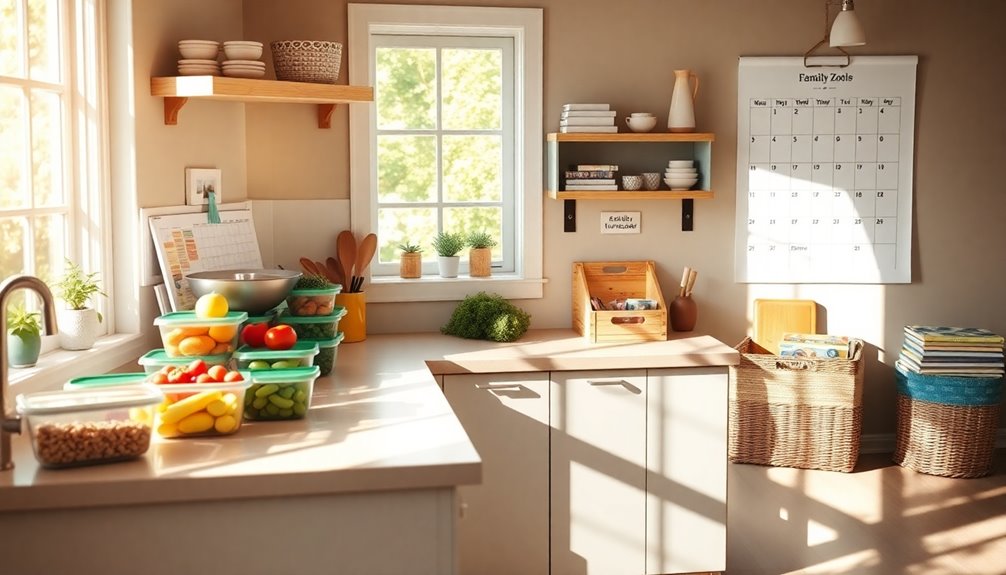
If you’ve ever felt overwhelmed by the chaos at home, the 7-Day Home Reset concept might be just what you need.
This approach focuses on simplifying home organization to ease family dynamics. By dedicating just one week, you can tackle various aspects of your home, leading to a more harmonious environment.
Each day targets specific areas or tasks, helping you prioritize what matters most. You’ll find that small, consistent changes can have a significant impact on the overall atmosphere of your home. Additionally, reducing clutter can lower stress levels and improve emotional well-being for the entire family.
As you reset your space, you’ll also foster better communication and cooperation among family members. Embrace this structured plan, and watch as your home transforms into a more organized, peaceful haven for everyone.
Day 1: Declutter Your Living Spaces

To kick off your home reset, start by identifying clutter hotspots in your living spaces. Next, sort through items and organize what you truly need. Incorporate regularly declutter sessions to maintain organized living areas and reduce cleaning time.
Identify Clutter Hotspots
As you begin your decluttering journey, identifying clutter hotspots in your living spaces is essential for creating a more organized home.
Start by using clutter identification techniques to pinpoint areas that collect the most mess. Common clutter sources include items like shoes by the door, mail on countertops, or toys in the living room.
Conduct a room by room assessment to determine where these sources linger. Pay attention to seasonal decluttering strategies, as certain items may accumulate during specific times of the year.
Sort and Organize Items
Once you’ve pinpointed your clutter hotspots, it’s time to tackle the sorting and organizing process.
Begin by implementing effective sort strategies. Start with one area, like a living room or bedroom, and create designated categories: keep, donate, and toss.
As you sort, focus on space management by maximizing storage options. Use bins, shelves, or baskets to neatly store items you decide to keep. This not only clears physical space but also helps you visualize what you truly need.
Don’t overthink decisions—if you haven’t used it in a year, it’s likely time to let it go.
Maintain a Minimalist Mindset
While embracing a minimalist mindset, it’s essential to start with your living spaces, where clutter often accumulates the fastest.
Begin by evaluating what you truly need and what adds value to your life. The minimalist philosophy encourages intentional living, so ask yourself if each item serves a purpose or brings you joy.
Tackle one room at a time, focusing on surfaces and hidden corners. Sort items into keep, donate, or discard piles, ensuring you only hold onto essentials.
As you declutter, create a sense of openness and tranquility. Remember, maintaining this mindset isn’t just about physical space; it’s about fostering clarity and reducing stress in your daily life.
A decluttered home leads to a decluttered mind.
Day 2: Organize Kids’ Rooms and Play Areas
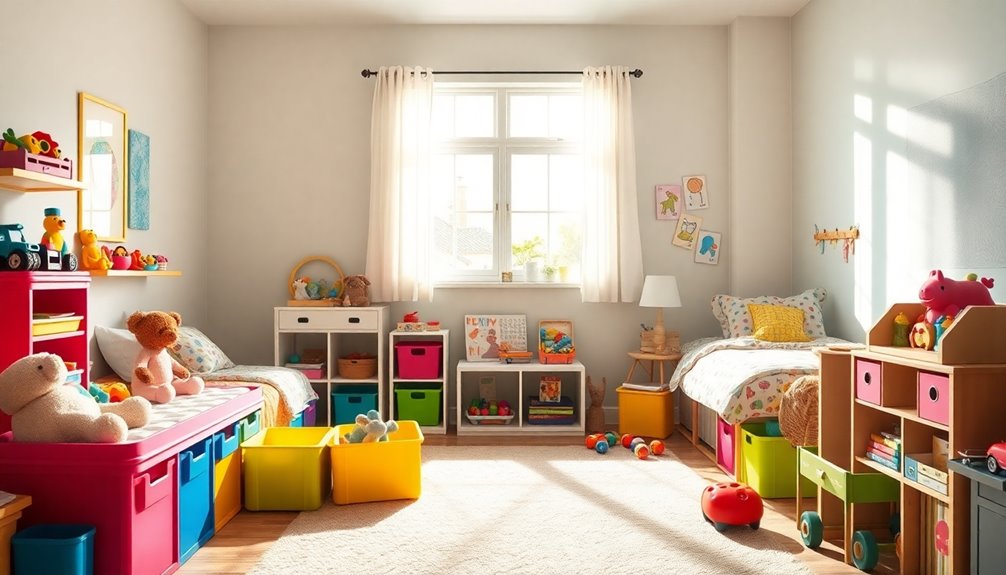
Getting your kids’ rooms and play areas organized can feel overwhelming, but tackling it one step at a time makes it manageable.
Start by sorting through toys and items. Create three bins: keep, donate, and trash. Involve your kids in this process; they’ll enjoy helping decide what stays.
Once you’ve decluttered, focus on kids’ organization. Use clear bins or baskets to store toys and books, labeling each for easy access. Designate specific spots for art supplies and games in the play area, making cleanup a breeze. Consider implementing a color coding system for their toys to enhance visual appeal and streamline the organization process.
Organize with clear bins and labels for easy access, designating spots for art supplies and games to simplify cleanup.
Encourage your kids to put things away after playtime. With a little effort today, you’ll create a space that’s not only tidy but also enjoyable for your family, fostering a sense of ownership and responsibility.
Day 3: Streamline the Kitchen for Efficiency
Today, you’re focusing on making your kitchen work for you.
Start by decluttering your countertops, organizing pantry essentials, and optimizing the placement of your cooking tools. Implementing drawer dividers can help you keep utensils organized and easily accessible.
These simple adjustments can save you time and make meal prep a breeze.
Declutter Your Countertops Effectively
As you tackle the clutter on your kitchen countertops, you’ll find that a streamlined space not only enhances efficiency but also brings a sense of calm to your busy routine.
Start by clearing everything off your countertops, then categorize items into keep, donate, or discard piles. For countertop organization, keep only the essentials like your coffee maker, knife block, and a cutting board.
Use trays or baskets to group smaller items, ensuring clutter free surfaces. Remember to store away items you don’t use daily, creating a more functional workspace.
Finally, maintain this organization by performing quick daily checks. With these strategies, your countertops will be a welcoming, efficient area that inspires you to cook and create!
Organize Pantry Essentials Smartly
With your countertops now clutter-free, it’s time to turn your attention to the pantry.
Start by doing a quick pantry inventory. Check expiration dates and toss anything that’s gone bad.
Next, group similar items together—canned goods, snacks, grains, and baking supplies. This not only saves time but also helps you see what you have at a glance.
For smart storage, use clear containers to hold dry goods, making it easy to spot what you need. Label everything to guarantee everyone knows where to find items.
Finally, consider using shelf risers or bins to maximize vertical space. A well-organized pantry not only enhances efficiency but also makes meal prep a breeze.
Optimize Cooking Tools Placement
To create a more efficient cooking environment, start by evaluating the placement of your cooking tools.
Look at your kitchen layout and identify frequently used items like pots, pans, and utensils. Position these tools within arm’s reach of your prep area to enhance tool accessibility during meal prep.
For example, keep knives on a magnetic strip or in a drawer near the cutting board. Store pots and pans close to the stove, so you can easily grab them when needed.
Consider using drawer organizers or wall-mounted racks to maximize space.
Day 4: Create a Family Command Center
Creating a Family Command Center can transform chaos into order, making daily life easier for everyone.
Start by designating a specific area in your home, like a wall or a small table, to house important items. Use this space to display family schedules, including school events, appointments, and activities.
Incorporate organization tips like color-coding schedules for each family member to quickly spot what’s happening. Add a bulletin board or calendar for reminders and a basket for paperwork that needs attention. Additionally, consider including a checklist for weekly cleaning tasks to keep your home running smoothly amidst the busy schedule.
Day 5: Establish Daily Routines for Everyone
Establishing daily routines can make a huge difference in your family’s life.
Start with morning essentials to set a positive tone for the day, and don’t forget to incorporate evening wind-down activities to promote relaxation.
You’ll find that these routines help everyone feel more organized and connected. Additionally, implementing daily cleaning habits can further enhance your family’s sense of structure and cleanliness in your home.
Morning Routine Essentials
As your family navigates the busy mornings, having a structured routine can transform chaos into harmony.
Start with mindful mornings by waking up just 15 minutes earlier. This extra time allows everyone to engage in a calming activity, like stretching or reading, setting a positive tone for the day.
Next, outline clear tasks for each family member, from getting dressed to packing lunch. Use visual charts for younger kids to keep them engaged.
Incorporate productivity tips like preparing breakfast the night before or laying out clothes. These small adjustments can notably streamline your mornings.
Evening Wind-Down Activities
After busy mornings, winding down in the evening is just as important for maintaining family harmony. Establishing evening rituals can create a peaceful shift from day to night.
Start tech-free time where you engage in mindful activities together. Consider quiet reading sessions, allowing everyone to immerse themselves in a good book. You might also introduce gratitude journaling, prompting each family member to reflect on the day’s highlights.
To enhance relaxation, play calming music softly in the background. These practices not only foster family bonding but also help everyone unwind. Incorporating relaxation techniques like deep breathing can further ease stress.
Day 6: Tidy Up the Bathroom and Laundry Areas
While you may feel overwhelmed by the chaos in your bathroom and laundry areas, a quick tidy-up can transform these spaces into organized havens.
Start by decluttering your bathroom; toss expired products and group similar items together. Use baskets or bins for easy bathroom organization, making it simple to find what you need.
Next, tackle the laundry area. Sort through any clothes lying around and establish a designated spot for dirty laundry. Implement a laundry management system by designating days for washing, folding, and putting away clothes.
Wipe down surfaces to keep things fresh. Additionally, consider cleaning your kitchen sponge every few days to prevent bacteria growth, as sponges can harbor millions of germs, including coliform bacteria. By taking these small steps, you’ll create a more inviting environment that makes daily routines smoother and stress-free.
Day 7: Refresh and Maintain Your New Setup
With your bathroom and laundry areas now organized, it’s time to focus on keeping that momentum going.
Start by establishing a simple home maintenance routine. Set aside a few minutes each week to check in on your newly organized spaces. This will help you catch any clutter before it builds up again.
Next, consider implementing system updates to streamline your cleaning tasks. Use a digital calendar or app to schedule reminders for regular cleaning and decluttering. This way, you won’t forget those important maintenance tasks.
Finally, involve your family in this process to make it a team effort. By working together, you’ll create lasting habits that keep your home organized and running smoothly long after this reset. Additionally, remember to prioritize high-traffic areas for consistent cleanliness and efficient management of cleaning responsibilities.
Tips for Staying Motivated Throughout the Week
To stay motivated throughout the week, it’s essential to set clear, achievable goals that resonate with you. Break your goals into smaller tasks to make them less overwhelming and more manageable.
Use various motivation methods, like creating a vision board or tracking your progress daily. Celebrate small wins to keep your spirits high.
Don’t underestimate the power of accountability partners. Share your goals with a friend or family member who can encourage you and check in regularly.
When you feel tempted to stray from your plan, your partner can help you refocus. Remember, it’s okay to adjust your goals as needed. Stay flexible, and keep your eye on the prize! Additionally, consider implementing a chore chart to visually display responsibilities and enhance engagement within your family.
How to Involve the Whole Family in the Reset
How can you get everyone in your family excited about your home reset? Start by holding family meetings to discuss the reset plan, encouraging family involvement from the get-go.
Delegate tasks based on each person’s strengths, making sure everyone has shared responsibilities. Incorporate fun activities, like a cleaning contest or organizing challenge, to keep spirits high.
Establish accountability partners to support each other during the reset, fostering a sense of teamwork. Use positive reinforcement to celebrate each small victory, ensuring everyone feels valued for their contributions. Additionally, utilizing a wall planner can visualize tasks and motivate family members to stay on track throughout the reset.
Common Challenges and How to Overcome Them
Even with everyone on board for the home reset, challenges can arise that threaten to derail your efforts. Time management becomes vital; if tasks aren’t prioritized, chaos can ensue.
To combat this, establish clear boundaries around work and family time, ensuring everyone knows when to focus and when to engage. Effective communication is key—check in regularly with family members to gauge their feelings and ideas.
Stress reduction is essential, so incorporate self-care strategies into your routine. Encourage family cooperation by assigning age-appropriate tasks, making everyone feel involved.
Celebrating Your Home Reset Success
Celebrating your home reset success is essential for reinforcing the positive changes you’ve made. Take a moment to reflect on how far you’ve come and acknowledge the effort you put in.
Share your achievements with your family; it strengthens your bond and motivates everyone to maintain the new habits. Consider celebration ideas like a family movie night, a special dinner, or even a small weekend getaway.
Sharing your achievements with family not only strengthens bonds but also inspires everyone to embrace new habits together.
You could also create a vision board that showcases your reset success, reminding you of your goals. Whatever you choose, make it meaningful.
These celebrations not only honor your hard work but also encourage a continued commitment to a harmonious home environment. Enjoy every moment of this well-deserved recognition!
Conclusion
In just seven days, you can transform your home into a more organized and peaceful space, making daily life easier for your family. Did you know that a clutter-free environment can boost productivity by up to 40%? By actively involving everyone in the reset process, you’ll not only tackle chaos but also strengthen family bonds. Celebrate your success at the end of the week, and enjoy the newfound harmony in your home!