To reduce pet allergens, create pet-free zones and use barriers to keep them out of certain areas. Regularly vacuum with a HEPA filter, dust surfaces, and wash pet bedding weekly. Invest in high-quality air purifiers to filter allergens and control humidity levels to minimize growth. Consider allergy-proof covers for your bedding and educate guests about pet allergens. With these practices, you can improve your home’s air quality and stay comfortable. There’s more to discover!
Understand Pet Allergens and Their Sources
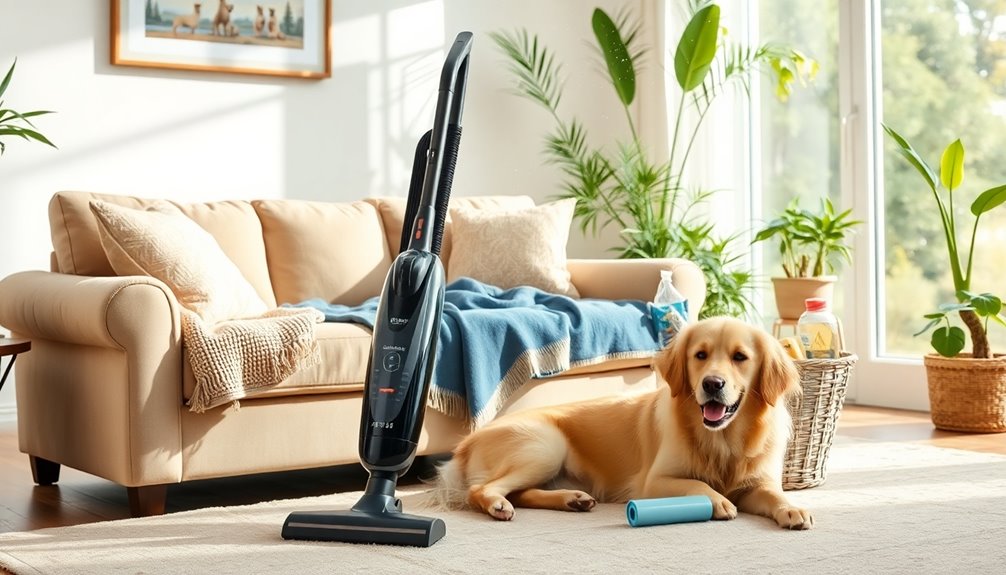
Although pets bring joy to many households, they can also be a source of allergens that trigger reactions in sensitive individuals. To effectively manage allergies, you need to understand the different allergen types associated with pets.
Common sources include pet dander, saliva, and urine. Dander, tiny flakes of skin, is often the most problematic, as it can linger in the air and settle on surfaces. Regular grooming of pets helps minimize dander and odors, which can significantly reduce allergen levels in the home. Saliva can also be a significant allergen, especially when pets groom themselves. Source identification is essential for creating a plan to minimize exposure.
Create a Pet-Free Zone in Your Home
Creating a pet-free zone in your home can greatly reduce allergen exposure, making it easier for sensitive individuals to breathe and feel comfortable.
Establishing these zones is essential for effective allergy management. Choose areas where pets aren’t allowed, like bedrooms or designated spaces, to help minimize allergens.
- Use barriers like gates to keep pets out.
- Invest in furniture and decor that are easy to clean.
- Regularly vacuum and dust pet-free zones.
- Communicate with family and guests about these areas.
Additionally, maintaining a clean environment can reduce stress and anxiety related to allergy symptoms, contributing to overall well-being.
Invest in High-Quality Air Purifiers
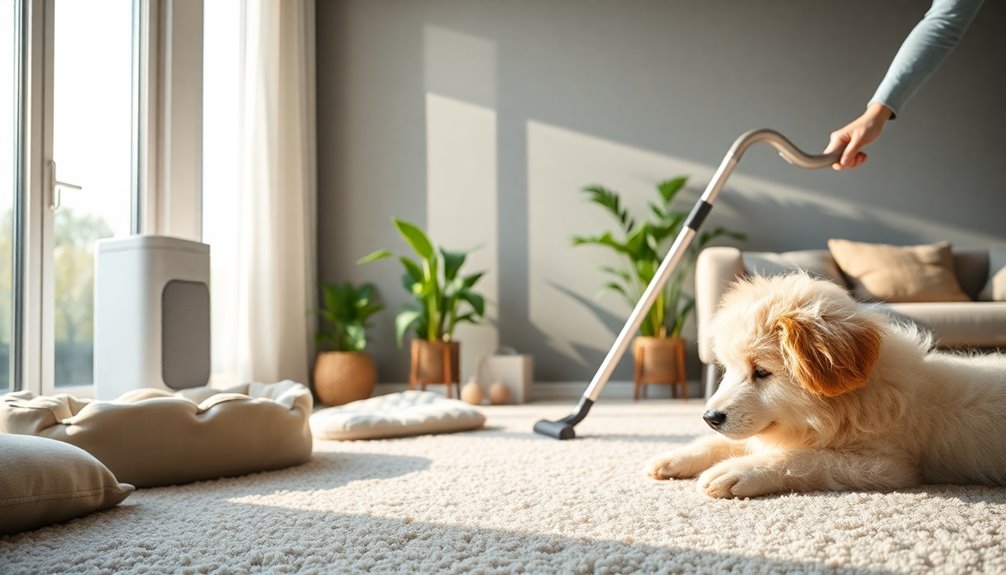
Investing in high-quality air purifiers can greatly enhance the air quality in your home, especially if you’re dealing with pet allergens.
These devices effectively filter out pet dander, hair, and other particles that contribute to allergies. When choosing an air purifier, consider the different air purifier types available, such as HEPA filters, activated carbon filters, and UV light purifiers.
HEPA filters are particularly effective at capturing small allergens. Make sure to select a model suited for the size of your room to maximize efficiency. Regularly replacing filters will also help maintain peak performance. By incorporating a reliable air purifier into your cleaning routine, you’ll breathe easier and create a healthier environment for both you and your pets. Additionally, maintaining indoor air quality is crucial for reducing allergens and promoting overall well-being.
Regularly Vacuum With a HEPA Filter
To further reduce pet allergens in your home, regularly vacuuming with a HEPA filter is a smart move.
HEPA filters are designed to trap tiny particles, including pet dander, ensuring better allergen control. By incorporating this practice into your cleaning routine, you’ll create a healthier environment for everyone.
- Choose a vacuum with a true HEPA filter.
- Vacuum high-traffic areas and under furniture weekly.
- Empty and clean the vacuum bag or container regularly.
- Use attachments for upholstery and drapes. Additionally, using a vacuum with a HEPA-filter can significantly improve indoor air quality by capturing small particles.
Use Washable Pet Bedding and Blankets
When it comes to reducing allergens, using washable pet bedding and blankets can make a big difference. Choose hypoallergenic materials to minimize reactions, and set up a regular washing schedule to keep things fresh and clean. This simple step not only helps with allergies but also keeps your pet comfortable. Additionally, maintaining regular cleaning routines can significantly reduce the accumulation of dust and dander, further alleviating allergy symptoms.
Choose Hypoallergenic Materials
Choosing hypoallergenic materials for your pet’s bedding and blankets can greatly reduce allergens in your home.
Opting for hypoallergenic fabrics guarantees that you’re minimizing the amount of dust, dander, and other irritants that can affect your health.
Look for pet friendly materials that are designed to repel allergens and are easy to clean.
- Select bedding made from synthetic fibers
- Choose tightly woven fabrics that trap allergens
- Opt for washable materials to keep things fresh
- Consider hypoallergenic blankets for added protection
Establish Regular Washing Schedule
A regular washing schedule for your pet’s bedding and blankets is essential in reducing allergens in your home. Aim to wash these items at least once a week to keep allergens at bay.
Adjust the washing frequency based on your pet’s shedding habits—more frequent washes might be necessary during heavy shedding seasons. When you do wash, use ideal temperatures; hot water helps eliminate dust mites and allergens effectively.
Make sure to follow care labels to avoid damaging the fabric. Additionally, using a hypoallergenic detergent can further minimize allergens.
Bathe Your Pet Frequently
Bathe your pet frequently to help reduce allergens around your home. Regular pet bathing not only keeps your furry friend clean but also minimizes dander and dust. Aim for a schedule that suits your pet’s needs and your lifestyle.
- Use pet-friendly shampoos to avoid skin irritation.
- Rinse thoroughly to remove all soap residue.
- Maintain a warm environment during and after bathing.
- Dry your pet completely to prevent dampness that can lead to odor.
Incorporating effective grooming techniques during bath time can further enhance the cleaning process. Additionally, establish a grooming routine to minimize odors and maintain a clean environment.
Groom Your Pet Regularly and Properly
While bathing your pet is essential, regular grooming plays an important role in managing allergens too. By incorporating effective grooming techniques into your routine, you can markedly reduce the amount of dander and hair that accumulates in your home.
Brush your pet at least once a week to remove loose fur and dead skin cells. This not only keeps your pet looking tidy but also minimizes allergens in your environment. Consider using specialized pet grooming tools designed for your pet’s coat type, as these can help capture more allergens. Additionally, regular grooming helps to maintain a healthy coat and reduces shedding and dander, ensuring your pet stays healthy and comfortable. Ultimately, a well-groomed pet means a cleaner, more allergen-free home.
Clean and Maintain Your HVAC System
Keeping your home allergen-free involves more than just grooming your pet; it also requires attention to your HVAC system.
Regular HVAC maintenance is essential for reducing allergens like pet dander circulating in your home. Here are some HVAC maintenance tips to take into account:
- Replace air filters every 1-3 months to trap allergens effectively.
- Schedule professional inspections annually to guarantee your system runs efficiently.
- Clean ductwork regularly to remove built-up dust and dander.
- Use high-efficiency particulate air (HEPA) filters for better allergen capture. Additionally, incorporating allergen-proof bedding covers can further enhance your home’s allergy-friendly environment.
Use Hard Flooring Instead of Carpets
Switching to hard flooring can make a big difference in managing allergens from your pets. Unlike carpets, hard surfaces are easier to clean and don’t trap hair and dander as much. This simple change can help create a healthier environment for you and your furry friends. Additionally, regular maintenance of hard floors, such as sweeping or vacuuming weekly, can further reduce allergens and improve air quality in your home.
Easier To Clean Surfaces
If you want to reduce allergens from your pets, opting for hard flooring instead of carpets can make a significant difference.
Hard surfaces are easier to clean and maintain, allowing you to minimize the buildup of pet dander and hair. They’re often made from easy to clean materials that won’t trap allergens like carpets do.
Here are some benefits of choosing hard flooring:
- Easier to vacuum and sweep
- Quickly wiped down with a damp cloth
- Less likely to harbor dust mites
- Low maintenance surfaces that last longer
Reduced Allergen Trapping
Choosing hard flooring not only simplifies cleaning but also greatly reduces allergen trapping compared to carpets.
Carpets can harbor pet dander, hair, and dust, making it difficult to maintain a clean environment. With hard surfaces, you’ll have fewer allergen barriers, allowing you to eliminate allergens more effectively.
When using appropriate cleaning techniques, such as sweeping or mopping, you can quickly remove accumulated allergens without the hassle of deep cleaning carpets.
Regular maintenance on hard floors means you can keep your space fresher and healthier for you and your pets.
Implement a Cleaning Schedule for Your Home
Implementing a Cleaning Schedule for Your Home
Establishing a regular cleaning schedule can greatly reduce allergens in your home, especially if you share your space with pets.
By sticking to a cleaning checklist, you can guarantee that you tackle the most important tasks. Here are some essential weekly tasks to include:
- Vacuum carpets and upholstery to remove pet hair and dander.
- Dust surfaces, including shelves and furniture, to minimize allergen buildup.
- Wash pet bedding and blankets to eliminate trapped allergens.
- Clean floors with a damp mop to capture dust and dander effectively.
Additionally, incorporating short bursts of cleaning throughout the week can help maintain a consistent level of cleanliness and further reduce allergens.
Wash Pet Toys and Accessories Regularly
To keep allergens at bay, you should wash your pet’s toys and accessories regularly.
Aim for at least once a week, but adjust the frequency based on your pet’s activity level and shedding.
Use safe cleaning methods to guarantee their toys stay germ-free without harming your furry friend.
Frequency Of Washing
Regularly washing your pet’s toys and accessories can greatly reduce allergens in your home. The right washing frequency is key to maintaining a clean environment.
Make it a habit to clean these items weekly to minimize allergen buildup. Here are some laundry tips to keep in mind:
- Use hot water for effective allergen removal.
- Add a pet-safe detergent to eliminate odors.
- Dry toys thoroughly to prevent mold and mildew.
- Rotate toys so you can wash some while others are in use.
Best Cleaning Methods
Keeping your pet’s toys and accessories clean is essential for reducing allergens in your home. Regularly wash toys, bedding, and collars to keep allergens at bay. Use eco-friendly products when cleaning to guarantee a safe environment for both you and your pet.
For deep cleaning, soak toys in warm, soapy water, then rinse thoroughly to eliminate dust and dander. Don’t forget to check labels for non-toxic ingredients.
For fabric items, toss them in the washing machine on a gentle cycle. Remember to clean hard surfaces with a damp cloth to trap allergens effectively.
Keep Windows Closed During High Pollen Seasons
When pollen counts soar during certain seasons, it’s wise to keep your windows closed to minimize allergens entering your home. Staying informed about pollen forecasts can help you decide when to seal up your space.
It’s also essential to stay on top of your allergy medications during these times to combat any symptoms that might arise.
Here are some tips to help you manage allergens effectively:
- Check pollen forecasts daily to anticipate high-count days.
- Use air purifiers to improve indoor air quality.
- Schedule cleaning sessions after peak pollen hours.
- Limit outdoor activities when pollen levels are high.
Use Allergen-Reducing Cleaning Products
When it comes to reducing allergens from pets, choosing the right cleaning products can make a big difference.
You should opt for hypoallergenic products and pet-safe cleaners to keep your home healthy.
Also, steer clear of fragrance-heavy solutions that can irritate allergies even more.
Choose Hypoallergenic Products
To effectively manage allergens in your home, choosing hypoallergenic cleaning products can make a significant difference.
These allergen-free products help reduce the number of pet-related allergens and improve your indoor air quality. By opting for hypoallergenic materials, you create a safer environment for everyone in your home.
Here are some benefits of using these products:
- They minimize dust and dander accumulation.
- They’re less likely to irritate sensitive skin.
- They often contain fewer harsh chemicals.
- They help maintain a fresher, cleaner atmosphere.
Incorporating hypoallergenic cleaning products into your routine can lead to a noticeable reduction in allergens, allowing you to enjoy more time with your furry friends without the sneezes and sniffles.
Use Pet-Safe Cleaners
Using pet-safe cleaners not only protects your furry friends but also effectively reduces allergens in your home.
When you opt for products from pet safe brands, you’re choosing solutions that are gentle on your pets and tough on allergens. Look for cleaners that feature natural ingredients, as they minimize harsh chemicals that can irritate your pet’s skin and respiratory system.
You can find sprays, wipes, and detergents made with plant-based components that safely clean surfaces while keeping allergens at bay. Regularly using these pet-safe cleaners helps create a healthier environment for both you and your pets.
Plus, you’ll enjoy peace of mind knowing you’re making safe choices for your beloved companions.
Avoid Fragrance-Heavy Solutions
Fragrance-heavy cleaning products might seem appealing, but they can actually exacerbate allergy symptoms for both you and your pets.
Instead of reaching for these heavily scented solutions, opt for natural cleaning products that effectively reduce allergens without irritating your system.
Here are some benefits of using allergen-reducing cleaning products:
- They contain fewer harmful chemicals.
- They can be made with essential oils for a pleasant, natural scent.
- They help create a healthier indoor environment for you and your pets.
- They’re often biodegradable and eco-friendly.
Designate Specific Areas for Pet Activities
Establishing specific areas for pet activities can considerably reduce allergens in your home. By creating designated spaces for your pets, you can better control where dander, fur, and allergens accumulate.
Designating specific areas for your pets can significantly help in controlling allergens and maintaining a cleaner home environment.
Choose areas that are easy to clean and away from high-traffic zones. For example, a corner of the living room or a dedicated space in the kitchen could work well.
Make sure these areas are comfortable for your pets, using washable bedding or mats that you can easily clean. This way, you can contain pet activity and minimize the spread of allergens throughout your home.
Regularly vacuum and clean these designated spaces to maintain a healthier environment for both you and your furry friends.
Avoid Upholstered Furniture in Pet Areas
While it may be tempting to include upholstered furniture in areas designated for your pets, doing so can greatly increase allergen accumulation. Upholstered fabrics trap pet dander, hair, and dust, making them difficult to clean.
Instead, consider furniture alternatives that are more manageable and less allergenic.
- Opt for leather or faux leather, which can be wiped clean easily.
- Choose hardwood or metal furniture, as these surfaces don’t trap allergens.
- Use removable and washable covers on furniture to simplify cleaning.
- Look for synthetic fabrics that resist stains and allergens.
Limit Access to Bedrooms and Living Spaces
To reduce allergens, it’s important to create pet-free zones in your home, especially in bedrooms and living spaces.
You can use baby gates to keep your pets out of these areas and designate specific spots where they can relax.
This simple step can help minimize allergen exposure and improve your overall comfort.
Establish Pet-Free Zones
Creating pet-free zones in your home is essential for reducing allergens and improving your indoor air quality. By limiting your pet’s access to certain areas, like bedrooms and living spaces, you can considerably decrease the amount of dander and hair around you.
Establishing these zones not only benefits your health but also helps you manage pet behavior by creating a routine.
- Designate specific rooms as pet-free areas.
- Use doors or barriers to enforce these boundaries.
- Keep bedding and furniture in these zones pet-free.
- Clean these areas regularly to maintain low allergen levels.
Use Baby Gates
Using baby gates can be an effective way to limit your pet’s access to bedrooms and living spaces, helping to control allergen levels in your home.
By placing baby gates strategically, you create pet containment areas that reduce the spread of fur and dander in the most frequented areas. This not only keeps your living spaces cleaner but also makes it easier to manage allergens.
Additionally, baby gate benefits extend beyond allergen reduction; they also provide a sense of security for both you and your pet. With a simple barrier, you can enjoy more peace of mind while maintaining a comfortable environment.
Designate Specific Areas
Limiting your pet’s access to specific areas in your home can markedly reduce allergen accumulation, especially in bedrooms and living spaces where you spend the most time.
By designating areas where your pet can roam, you can control the spread of allergens. Consider the following tips to manage pet activities and keep your space cleaner:
- Create a designated pet zone with their bed and toys.
- Use baby gates to restrict access to bedrooms.
- Establish a routine for cleaning these designated areas.
- Train your pet to stay out of certain rooms.
This way, you’ll maintain a healthier environment and enjoy your home without the constant worry of allergens from your furry friends.
Consider Allergy-Proof Covers for Bedding
One effective way to reduce pet allergens in your home is by investing in allergy-proof covers for your bedding. These covers, made from allergy-proof materials, create a barrier that prevents pet dander, hair, and dust mites from infiltrating your sheets and pillows.
This makes a significant difference in your overall air quality and comfort while you sleep.
In addition to using these covers, regular bedding maintenance is essential. Wash your bedding weekly in hot water to further eliminate allergens.
Educate Guests on Pet Allergens
While you may love having pets, it’s important to educate guests about potential allergens they might encounter in your home. Pet dander can trigger allergy symptoms for some individuals, so being upfront helps create a comfortable environment for everyone.
Here are a few tips to share with your guests:
- Inform them about your pets and any common allergens.
- Encourage them to take allergy medications if they’re prone to symptoms.
- Offer a designated pet-free area where they can relax away from dander.
- Remind them to wash their hands after petting your furry friends.
Control Humidity Levels in Your Home
Controlling humidity levels in your home is essential for minimizing pet allergens and creating a healthier living space. High humidity can lead to excess pet dander and mold growth, both of which can trigger allergies.
Invest in a good dehumidifier to help with moisture management, especially in damp areas like basements or bathrooms. Aim for a humidity level between 30% and 50% to keep allergens at bay.
Regularly check and maintain your HVAC system, as it plays an important role in humidity control. You can also use exhaust fans while cooking or showering to reduce moisture.
Consult With Your Veterinarian About Allergies?
To effectively manage pet allergies, it’s crucial to consult with your veterinarian about potential allergens affecting your furry friend. Your vet can help identify specific allergies and recommend strategies to minimize their impact.
Consult your veterinarian to identify and manage your pet’s allergies effectively for a healthier, happier furry friend.
You might also want to consult an allergy specialist for more targeted insights.
Here are some key points to discuss during your appointment:
- Symptoms your pet is experiencing
- Possible allergens in your home environment
- Recommended allergy tests
- Treatment options, including medications or dietary changes
Conclusion
By implementing these practical strategies, you can transform your home into a sanctuary, free from the discomfort of pet allergens. Think of it like crafting a cozy nest—each step you take helps build a safer environment for you and your loved ones. From creating pet-free zones to investing in air purifiers, you’ll find that a little effort goes a long way. So roll up your sleeves, and let’s make your home a healthier place together!